Entertainment
Christopher Nolan’s Near-Perfect ‘Dark Knight’ Opening Heist Is Pulled From This 10/10 Thriller

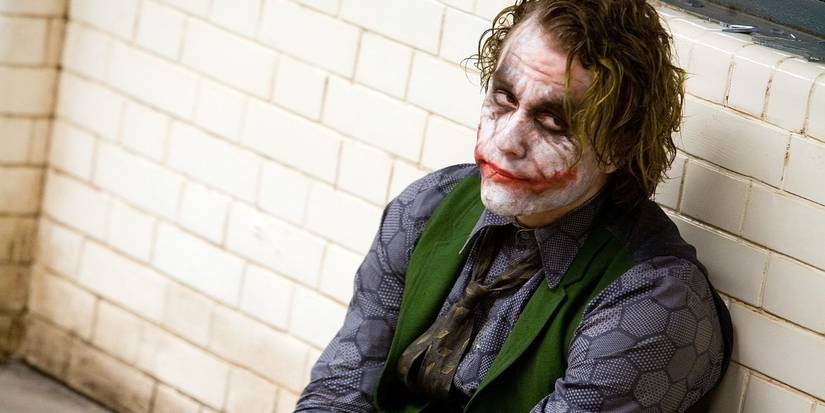
Christopher Nolan‘s The Dark Knight is considered a masterpiece of the comic book movie genre, taking Batman and placing him in a world that felt tangible and gripping. The film’s opening statement was the devastatingly choreographed heist at the beginning of the film, which introduced Heath Ledger‘s unforgettable Joker.
Nolan is a student of film, and many (including the film’s creatives) have pointed to 1995 crime classic Heat as a big inspiration for the sequence, and the film in general. Michael Mann‘s tense, methodical filmmaking made Nolan realize he could make a superhero movie his way, and the results were electrifying.
Christopher Nolan Introduces Us to Heath Ledger’s Joker in the Most Perfect Way
Set to the anxious strings of Hans Zimmer‘s opening theme, titled simply “Bank Robbery,” a balletic chain of events unfolds as a gang of masked criminals rob a mafia-owned bank in Gotham. In each step of the robbery, the criminals are instructed to betray each other, unwittingly wiping themselves out until only the orchestrator remains. When questioned by a bank manager (William Fichtner) about what he believes in, the leader removes his mask, revealing the Joker. “I believe whatever doesn’t kill you makes you… stranger,” he replies, before laughing and escaping with the bank’s money.


‘The Dark Knight’s Most Famous Line Wasn’t Written by Christopher Nolan — and It Still Bothers Him
Nolan was not the hero in this circumstance.
In just over six minutes, the robbery sets the tone for the film, a comic book movie viewed through the lens of a crime thriller. A villain who is vicious enough to commit such crimes, but also treats chaos as an ethos, meticulously planning an event that is meant to throw Gotham’s criminal underworld into disarray. Nolan’s approach doesn’t copy Heat‘s homework, but it speaks the same cinematic language. The military organization of the Gotham Bank robbery echoes that of Neil McCauley’s (Robert De Niro) crew as they rob over a million dollars from an armored car. Both crews wear masks, both time their plans (and the response to them), and both use urban geography as a canvas. Disrupting the regular hum of a city, only to use it as the perfect getaway disguised as everyday transport (in Heat it’s an ambulance, while the Joker uses an empty school bus).
Christopher Nolan Proudly Claimed ‘Heat’ as an Influence on ‘The Dark Knight’
Part of why we know The Dark Knight was inspired by Heat is that the filmmakers themselves are so open about it. Jonathan Nolan, who wrote the script for the film, told Josh Horowitz about its impact during an interview in 2024. “That movie made such an impression on me,” he said, citing the film’s grounded tone as a major influence from the beginning. “Could you bring that feeling into the Batman universe? Could you tell a story like Heat? To me, that early draft was a bit of: ‘this is what I think a Batman movie should be!’”
It would seem his brother agreed, as in 2023, Christopher Nolan appeared on the YouTube interview channel, Kombini, with regular collaborator Cillian Murphy, and the subject of the film came up. “Heat! Absolute classic,” Nolan exclaimed while picking up a DVD of the movie. “I’ve been talking about this film for years, because I kept ripping it off,” he joked, before adding: “Big influence on The Dark Knight!” Alluding to the similarities, Murphy replied: “That shootout sequence?” “Incredible shootout,” Nolan confirmed.
‘Heat’s Impact Stretches Beyond the Bank Robbery Scene in ‘The Dark Knight’

Stylistically, the opening sequence of The Dark Knight and the heist in Heat are the most obvious comparison, but the DNA of Mann’s film exists in the very philosophy of Nolan’s story. Heat follows weary LAPD Robbery Homicide Lieutenant Vincent Hanna (Al Pacino) on the tail of lifelong criminal McCauley, with both men seeing parts of themselves in the other. Hanna cannot leave the life of chasing criminals, just as McCauley seems tethered to a life of crime. During the infamous diner scene between the two leads, they ruminate on how they can’t walk away from who they are. “I don’t know how to do anything else,” says Hanna. “Neither do I,” replies McCauley. “I don’t much want to either,” adds the cop. “Neither do I” agrees the criminal.
That philosophy is present in Bruce Wayne (Christian Bale) and Joker, two men committed to their own codes: Batman the law of justice, and Joker the law of chaos. Two sides of the same coin, and two men unable to walk away from their principles. “This is what happens when an unstoppable force meets an immovable object,” Joker claims toward the end of the film. “You won’t kill me out of some misplaced sense of self-righteousness. And I won’t kill you because you’re just too much fun. I think you and I are destined to do this forever.”
It’s there that the parallels between the movies become clear — two men on separate sides of the law, unable to back down from what they need to do. With The Dark Knight, Christopher Nolan set a new standard in comic book movies, by making audiences rethink what a superhero movie could be. When the lore of Batman is told in the language of classic cinema, an age-old rivalry is reinvented.


- Release Date
-
December 15, 1995
- Runtime
-
170 minutes
- Director
-
Michael Mann
- Writers
-
Michael Mann
You must be logged in to post a comment Login