Entertainment
Did Sci-Fi’s Greatest Master Write A Racist Book About Wakanda?
By Joshua Tyler
| Published


Robert A. Heinlein is, without question, one of the greatest science fiction writers of all time. That’s especially evident when you look at his earlier work.
Heinlein changed as he aged. His work became more pointed, more bitter, and the sexual freedom he espoused in his work turned into something more libidinous. He never stopped creating great works, though, and he never stopped coming up with innovative ideas.


Heinlein’s early and mid-career work is regarded as genius, and he’s one of the original fathers of meaningful, modern science fiction. Robert A. Heinlein was called the “Dean of Science Fiction” and he’s also written a lot of books, forty-plus years of material.
Not all of his books have aged well, though. In particular, activists have a problem with Farnham’s Freehold.
The Controversy Around Farnham’s Freehold
So what is all the controversy about? The book takes place in a dystopian world where people with dark skin are the most technologically advanced and powerful on the planet. In a sense, it’s even a little like Wakanda. Or, Wakanda if the Wakandans were evil slave owners.

Critics argue that Heinlein’s portrayal of the dominant black culture in the novel reinforces negative stereotypes about African-descended people, depicting them as cruel and barbaric. Was that his intention? Or was it his intention to portray African-descended people as super smart, advanced, and the most successful? That’s where the questions start.
Heinlein Had Africans Enslaving Whites
In the future of Farnham’s Freehold, technologically advanced African-descended people have enslaved whites. This has been interpreted by some as a reactionary fantasy, reinforcing the fear of a reversal of racial power structures. This aspect of the novel has been criticized for its potential to perpetuate white supremacist fears.
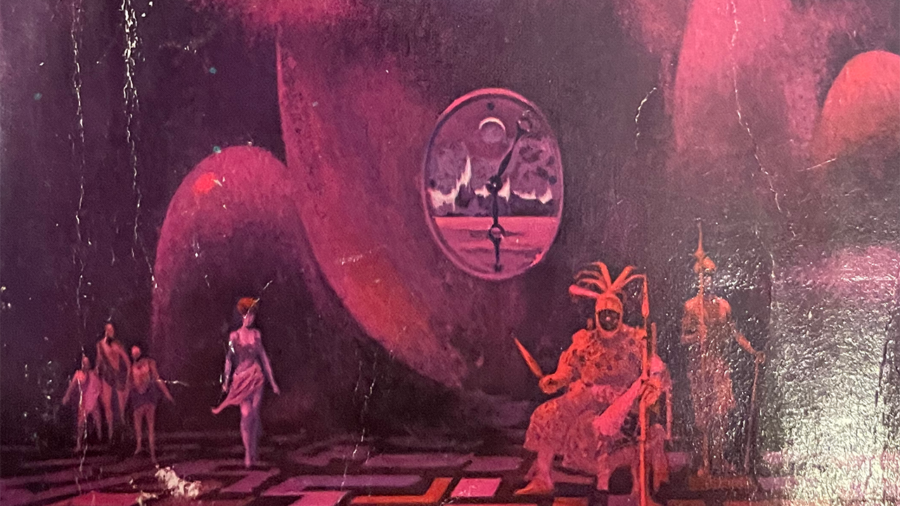
It seems somewhat unlikely that this was Heinlein’s intention. Supporters of his writing argue that he was attempting a satirical critique of people’s views of racial power dynamics. Heinlein himself never spoke on the controversy. He died in 1988, and back then, no one interpreted the book as it is today, in modern cancel culture. For years after Heinlein’s death, Farnham’s Freehold was viewed as a satirical critique of racism, intended to challenge readers’ assumptions about race and power.
Robert A. Heinlein’s First Allegiance Was To Freedom
Given the nature of his other work, it’s hard to imagine Heinlein actually set out to write some sort of crazy racist narrative. His other books were symbols of the free-love hippie movement, which challenged cultural norms back when it wasn’t acceptable to do so.
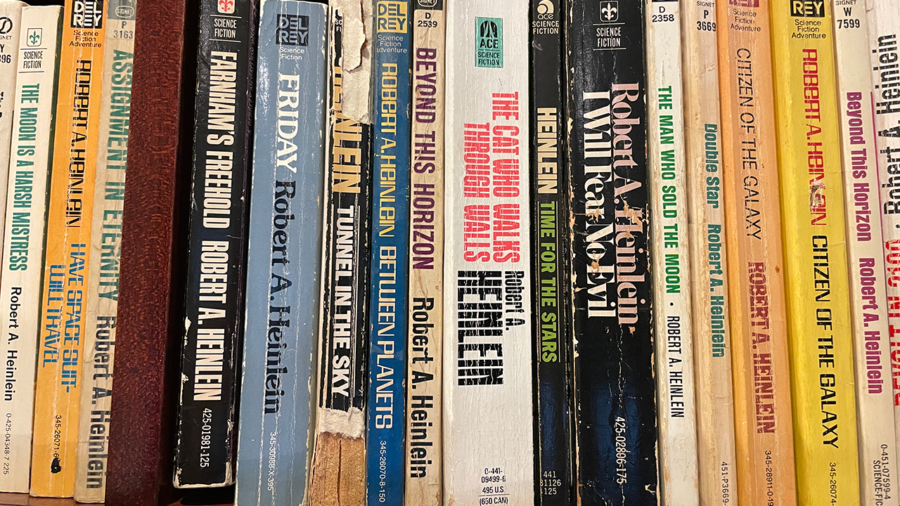
Heinlein’s entire ethos, in everything else he wrote, is built around total personal freedom and total equality for everyone. Those ideas were pretty radical at the time. Some of them still are.
The Story Of Farnham’s Freehold
On the level of the quality of Heinlein’s writing, Farnham’s Freehold was one of his better efforts. The book begins with a Cold War-era tale of a family hiding inside a home-constructed bomb shelter when the doomsday clock strikes midnight and nuclear war lands right on top of them.
The interesting thing about Heinlein’s writing, perhaps here more than in anything else he’s ever done, is how he manages to convey a vivid picture of what’s happening without bothering with actual visual descriptions of the environment in which he thrusts his characters. Rather than describing the way his world looks, Heinlein chooses to describe how his characters react to it, and through them, his readers not only get the picture, but sometimes a deeper understanding than they’d get had he simply described surface knowledge.
Emotions Come Alive In The Destruction Of Everything
In Farnham’s Freehold, the book’s most mind-blowing moment happens early on, as Heinlein’s male and female leads huddle inside their homemade bomb shelter, the floor shaking and the world above them exploding, and with nothing but death awaiting them, they engage in a kiss, which leads to hinted at sex. Heinlein is often sexual in his later writing, but this specific book was written in 1964, and anything more than a makeout session in mid-explosion probably would have been deemed pornography by that era’s censors.

What’s amazing about it is the way he threads their fear, terror, passion, lust, and all of their emotions at that moment into the fabric of his story to make their horrible, terrifying situation come vibrantly alive. For that moment, you’re there in that bunker with them, with the world ending all around you, in a place where none of the things you used to care about matter since, at best, you’ll be dead in a few hours.
Time Traveling To A Future Run By Wakanda
Of course, the entire book doesn’t take place in a bomb shelter, and if you’ve read the dust jacket on it, then you know that the nuclear explosions above somehow slam their little shelter forward in time to a future where white people live in slavery, and everything we’ve ever known is buried under thousands of years of dust. The book never works quite as well once Farnham and his little group are forced to interact with that future, but for the controversy-free first half, when they’re alone and trying to eke out an existence, the novel soars.
Farnham’s Freehold is worth reading for that first half alone. The rest is, perhaps, worth reading too, if only to decide for yourself that controversial, modern-biased interpretation of his work is what Robert A. Heinlein actually intended. If you’re asking me, I doubt it.


FARNHAM’S FREEHOLD BOOK SCORE
You must be logged in to post a comment Login