Entertainment
‘Doctor Who’ Is Reinventing Itself in Ways Fans Haven’t Seen in 20 Years

Doctor Who‘s 2025 season ended with a considerable surprise, even by its twisty standards. Without preamble or explanation, the Fifteenth Doctor (Ncuti Gatwa) regenerated into a face identical to that of former companion Rose Tyler (Billie Piper). Showrunner Russell T. Davies was equally tight-lipped for the next 11 months, only promising that this year’s Christmas special contained answers to viewers’ burning questions.
However, on June 10, the BBC announced their decision to cancel the annual special, separate from Davies and the Bad Wolf company, and “put” Doctor Who “out to competitive tender.” Even though the word “cancelled” strikes fear in fans’ hearts, the BBC has merely paused the franchise while they search for their next collaborators. If the stars align, this artistic rejuvenation may be exactly what the United Kingdom’s most valuable IP needs — both for Doctor Who‘s overall sake, and to ensure the TARDIS survives streaming’s precarious landscape.
Competitive Tenders Are Common Practice for the BBC
Competitive tenders are a normal part of the BBC’s “governance and regulatory” requirements, according to their Charter with the UK government. When the BBC releases a property to tender, any interested companies can pitch suggestions for its creative direction, financials, and everything in between. The BBC Board then assesses their shortlist and gives the other bidders “8-10 working days” (per Radio Times’ breakdown) to challenge their first choice. Once the results are ironed out, all parties sign on the dotted line.
The BBC’s June statement arrives nine months after the broadcaster and Disney+ dissolved their partnership. The recent press release explains the BBC is “choosing to push forward to invest in the long-term future of the show” rather than “bridge the gap with a one-off special.” Davies’ concurrent Instagram post reveals he “never wrote [a Christmas special script], and no actor was ever approached to play the next Doctor.” Given that context, the BBC utilizing one of their regular business practices is a prudent strategy.
It helps matters that Doctor Who‘s intimately familiar with major obstacles and overhauls alike. In 1989, three years after the longstanding sci-fi serial endured a rare 18-month hiatus, executives elected to quietly cancel the Classic run. The TARDIS spent 16 years in stasis before Davies and Bad Wolf’s shrewd 2005 revival catapulted Doctor Who from beloved British staple to international phenomenon. Even when the show’s active popularity cooled under Chris Chibnall‘s supervision, the BBC’s backing still secured a streamer as gargantuan as Disney+.
‘Doctor Who’ Has Pioneered Creative Flexibility Since Day One
Doctor Who has always thrived thanks to its inherent capacity for transformation and adaptability. When original lead actor William Hartnell departed three years in, the BBC recast the Doctor and invented an in-universe explanation for Hartnell’s successor. The stars aligned, and their risky swing pioneered Doctor Who‘s wholly unique tradition. Performers and writers routinely switch out, while the series’ atmosphere evolves to match each showrunner’s distinct inventions (settings, characters, lore) and the thematic material they prefer to explore.
All that said, this transition period might be trickier than usual. The streaming modus operandi frequently determines artistic opportunity, scope, and distribution access, even for network television. Davies’ last two seasons feature some of his career’s strongest individual scripts, but squeezing Doctor Who‘s 10-to-13-episode seasonal format into Disney+’s 8-episode default contributes to the seasons’ rushed arcs and shaky payoffs. Even taking the structural limitations into consideration, incorporating Piper into the current cliffhanger arguably strays from celebrating the show’s past for its landmark 60th anniversary (i.e., David Tennant, Catherine Tate, a modernized Hartnell-era villain) to over-relying on attention-seizing nostalgia.


Two More Fan-Favorite ‘Doctor Who’ Companions Will Return to the Franchise, but There’s a Catch
Karen Gillan and Arthur Darvill appeared in Seasons 5 through 7 of ‘Doctor Who.’
Make no mistake — Piper’s contributions are woven into sci-fi history, and she’d make a magnificent Doctor. Likewise, Davies’ original guidance ignited an enthusiastic momentum that surpassed all expectations. Timing is the situation’s Achilles’ heel. Davies uses the same tactic twice within three years, starting with Jodie Whittaker‘s regeneration into Tennant’s secret return. Fan favorites bookend and almost overshadow the tremendous Gatwa’s too-short tenure when keeping the Doctor’s new face a mystery would’ve been a sufficient tease. For Doctor Who to flourish like it deserves, it needs new camera-facing and behind-the-scenes voices.
Admittedly, it’s possible the show’s immediate future is more dire than the press release indicates. The tender bidding could also yield no harmonious matches. If the worst-case scenario unfolds, the 2005 relaunch proves there’s no such thing as a definitive nail in Doctor Who‘s coffin. Its enduring renown doesn’t arise from blockbuster visuals. Doctor Who soars whenever it channels the same experimental vision, starry-eyed imagination, and dependable, resilient, thoroughly sincere heart that overcame its humble budget in 1963 and 2005. After running for 21 uninterrupted years, the BBC is taking the time to reconsider its trajectory and invite fresh perspectives to the table, which speaks to the care they hold for their most cherished mainstay.

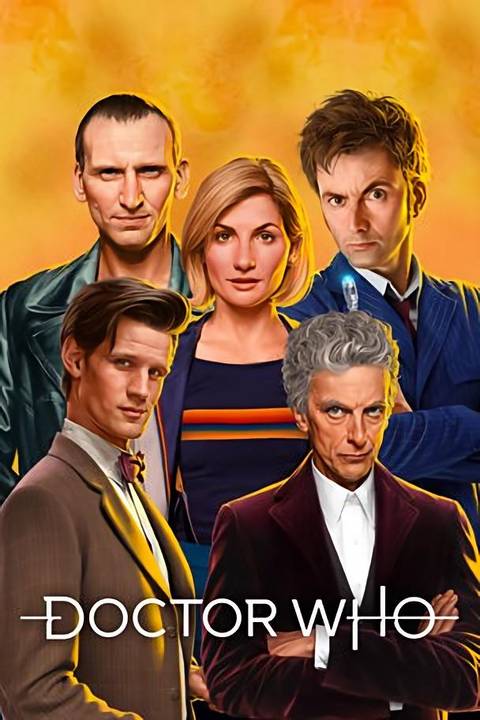
Doctor Who
- Release Date
-
2005 – 2021-00-00
- Network
-
BBC
- Directors
-
Graeme Harper, Euros Lyn, Douglas Mackinnon, Jamie Magnus Stone, Charles Palmer, Rachel Talalay, Joe Ahearne, James Strong, Jamie Childs, Saul Metzstein, Toby Haynes, Wayne Che Yip, Nick Hurran, Richard Clark, James Hawes, Daniel Nettheim, Colin Teague, Keith Boak, Azhur Saleem, Adam Smith, Andrew Gunn, Nida Manzoor, Lawrence Gough, Paul Murphy
You must be logged in to post a comment Login