Entertainment
Emerald Fennell’s ‘Wuthering Heights’ Removes a Critical Piece of the Original Novel That Hurts the Movie

Editor’s note: The following contains spoilers for ‘Wuthering Heights.’An adaptation has no obligation to honor its source material, but it does need to ensure that any changes made to the original text are justified. Emerald Fennell crafted a jarring new version of Emily Brontë’s beloved classic Wuthering Heights that only depicts half of the story in the novel. The romance between Catherine Earnshaw (Margot Robbie) and Heathcliff (Jacob Elordi) that Fennell focuses on only constitutes the first half of the book, with the second part centered on their respective children. While previous versions of Wuthering Heights have also ignored the second half of the novel, Fennell’s willingness to brush over the younger characters removes the haunting depiction of generational trauma that makes the material so haunting. Without seeing how the unrequited love between Catherine and Heathcliff manifests, Fennell’s Wuthering Heights is a standard period romance that lacks bite.
Fennell’s Wuthering Heights immediately announces its disregard for the source material because the character of Hindley Earnshaw, Catherine’s brother, is removed entirely. Hindley is not only a bully who subjects Heathcliff to physical and emotional torment, but the target of vengeance. It’s by treating Hindley’s son, Hareton, as an uneducated servant that Heathcliff subjects the descendant of the Earnshaw family to the same misery that he experienced. Fennell’s film instead uses Cathy’s father, Mr. Earnshaw (Martin Clunes), to fulfill the role of Heathcliff’s tormenter, but he isn’t a major factor in the film once she is wedded to Edgar Linton (Shazad Latif). While these decisions may have been for the sake of simplifying the text, character motivations become more confusing once their motivations are made more foggy.
Emerald Fennell Only Told Half of ‘Wuthering Heights’
Wuthering Heights is an epic tragedy because Heathcliff and Catherine are never allowed to be intimate with one another, as they each become locked in unexpected marriages. The importance of Catherine’s marriage to Edgar and Heathcliff’s wedding with Isabella (Alison Oliver) is to show how they are locked away from each other by societal rules; despite seemingly being given fulfilling relationships with considerable wealth, Catherine and Heathcliff are miserable because they have loved one another since childhood. Taking out the second generation of characters means that Wuthering Heights doesn’t show the ramifications of the separation. Instead, Fennell seems to stage the drama as a series of love triangles. Cathy only marries Edgar because of Heathcliff’s departure, which is prompted by a deception on the part of her maid, Nelly Dean (Hong Chau). Likewise, Heathcliff marries Isabella as an opportunity to torment Cathy. However, Fennell’s film doesn’t actually create any suspense because Catherine and Heathcliff are intimate, meaning that their respective marriages didn’t suppress their affections for one another.


The inclusion of the second generation of characters is necessary in creating dramatic irony because the novel shows how each of the children comes to suffer as a result of their parents’ sins. Heathcliff’s son, Linton, does not have any of his father’s strength and thus never gets to enjoy the pleasures of his father’s fortune; Catherine’s daughter, Catherine Linton, is born when her mother dies in childbirth, and is denied knowledge of her heritage by her father, Edgar. The eventual tragic love story that emerges between Linton and Cathy is meant to be a dark mirror to that of their parents, as it is Linton who dies of sickness, and Cathy who is left to marry another. Even the other versions of Wuthering Heights that only adapted half the book, such as the 1939 masterpiece directed by the great William Wyler, were able to show the loneliness Heathcliff feels when he’s haunted by the ghosts of the past. Fennell’s version, despite being much longer, doesn’t even include the flashes forward to the future, as it instead ends with a montage of a younger Catherine (Charlotte Mellington) and Heathcliff (Owen Cooper).
‘Wuthering Heights’ Doesn’t Have a Clear Motivation for Heathcliff
That Hindley, and by extension, Hareton, are not included means that there’s not a significant reason why Heathcliff returns to seek revenge after acquiring a fortune. Heathcliff’s treatment of Hareton, whom he values less than his own son, would have mirrored how he himself was treated by Mr. Earnshaw in comparison to Hindley. To see Heathcliff’s failures as a parent is important because he is simultaneously unable to protect his own child and faces the ultimate humiliation when Catherine’s daughter falls in love with Hareton, whom he despises. As a result, Elordi’s version of Heathcliff is simply a petty, petulant spurned lover whose separation with Catherine all comes down to a misinterpretation. It not only denies agency to both Catherine and Heathcliff, but also makes the Lintons into less interesting characters; Fennell only sees Edgar as a villain, and depicts Isabella as being vapid and childish.
Although Fennell has proven to be a polarizing figure because of her provocative stylistic choices, Wuthering Heights isn’t all that shocking because it distills a complex story of psychosexual, incestuous desire into a standard weepie. There was an opportunity to make a new version of Wuthering Heights that became the definitive adaptation, as it had the chance to include the knottier themes of the second half of the book that weren’t seen in the cinematic versions in 1939, 1970, 1992, and 2011. That so much of Brontë’s prose was ignored doesn’t just make Wuthering Heights an unfaithful adaptation, but turns it into a shallow, incomplete film in its own right. Unlike the way the romance should have been depicted, Fennell’s Wuthering Heights only skims the surface.
Wuthering Heights is now playing in theaters.

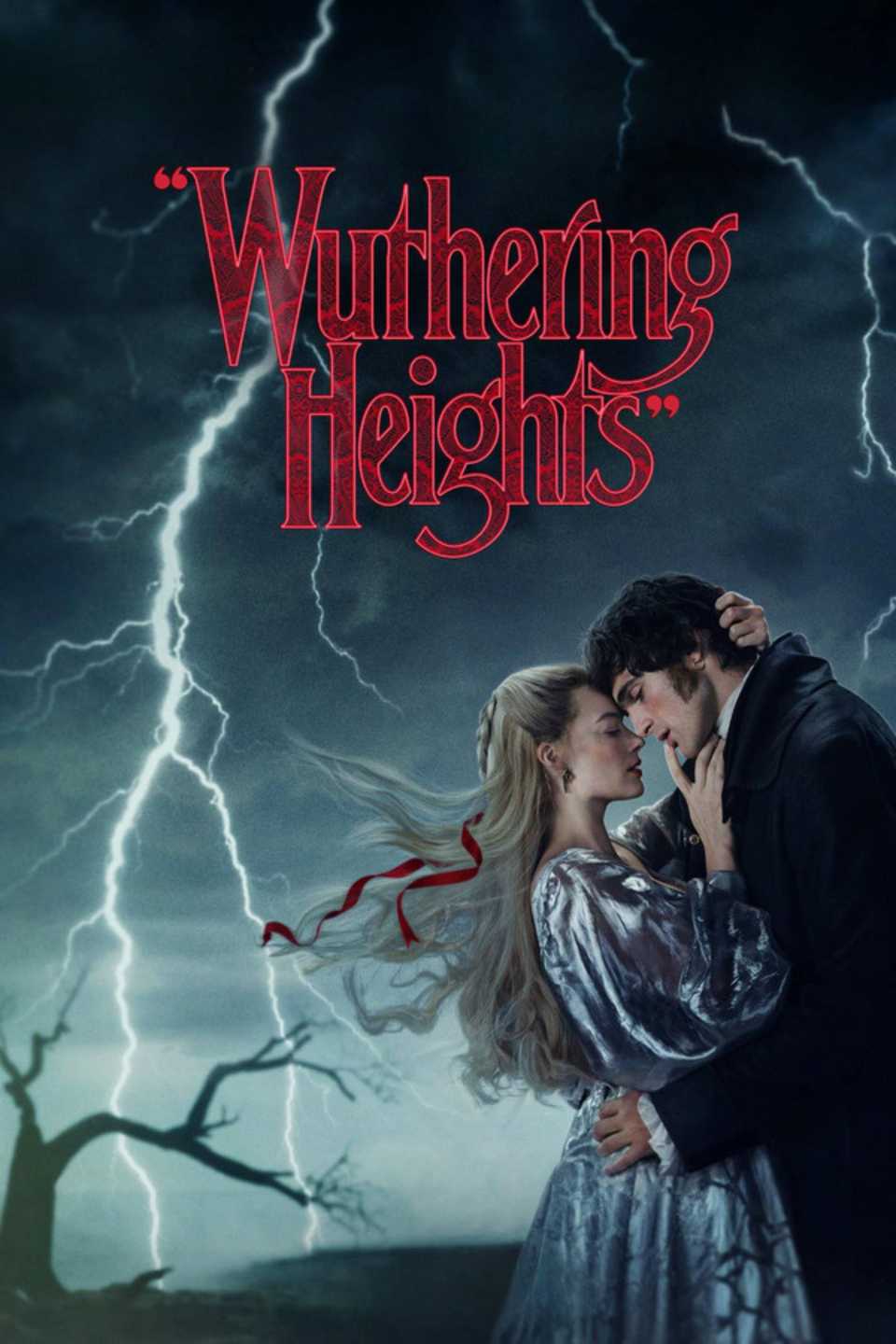
- Release Date
-
February 13, 2026
- Runtime
-
136 Minutes
- Director
-
Emerald Fennell
- Writers
-
Emerald Fennell, Emily Brontë
- Producers
-
Margot Robbie, Tom Ackerley, Emerald Fennell, Josey McNamara
You must be logged in to post a comment Login