Entertainment
Every Best Picture Winner Since 2020, Ranked

The Academy Awards serve an important role in the entertainment industry because they encourage studios to make high-quality films that contend for trophies. While it might seem like a simplistic justification for giving filmmakers the authority to make projects that aren’t purely motivated by financial returns, the ecosystem of fall festivals, awards coverage, and campaign discourse does help to put a spotlight on films that would not have attracted as much attention otherwise. Although it can be frustrating when certain films are completely shut out of the conversation and the seasons last for over half the year, it does have an important function ensuring that these films are made.
There is the complication that the Oscars don’t always get it right, and are sometimes completely off-base. There are some instances in which a perfectly fine film ends up beating a masterpiece, as was the case when The King’s Speech won Best Picture over The Social Network, or when Dances With Wolves beat Goodfellas. There are also examples of films that are both bad and legitimately harmful are validated by the Oscars; Driving Miss Daisy and Crash are two notable examples of films with disparaging racial commentary. In looking at the most recent decade of Best Picture winners, it’s interesting to note of how significantly the Oscars have evolved in terms of their voting body and what type of films are awarded.
6
‘CODA’ (2021)


CODA won Best Picture in a truly bizarre year that oddly paralleled the infamous case of Crash beating Brokeback Mountain. In both cases, there was an LGBT Western viewed as a masterpiece on the festival circuit that seemed destined to win after being showered with praise by critics, only to have it beat by a sloppy, Lifetime Channel-quality melodrama that did nothing but maintain the status quo. Even if CODA’s victory didn’t come at the cost of The Power of the Dog, it’s a shallow and one-note film that seemingly evokes the perspective of the deaf community, but only to affirm a hearing character whose artistic ambitions are lifted straight out of a ‘90s teen dramedy.
CODA is the first streaming film to win Best Picture, and there is something decidedly uncinematic about it, despite the fact that it was acquired at the Sundance Film Festival. This isn’t a case like The Irishman or Roma where a great film just happened to be released by Netflix; CODA is best viewed passively at home because of its bland visuals and basic characterization, which isn’t engaging enough to sustain interest in a theatrical format. Its win, which came without nominations for Best Director or Best Editing, is an anomaly for stats obsessives.
5
‘Everything Everywhere All At Once’ (2022)

Everything Everywhere All At Once is the film likely to age worse among recent Best Picture winners because there isn’t a single emotional moment that isn’t broadcast to the audience in the most identifiable strokes. Characters speak in Reddit posts and declarations, as the dialogue isn’t all that different from what would show up in the films of Anthony and Joe Russo (who helped produce it). The moments of seemingly bizarre spontaneity involving hot dogs and dildos might have seemed amusing at first, but they significantly dampen the rewatchability factor of a film that simply isn’t profound.
The best thing that can be said about Everything Everywhere All At Once is that it’s a well-shot action film, and serves as a break from tradition when considering how opposed the Oscars have traditionally been to genre fare. Yet, the degree to which Everything Everywhere All At Once affirms its quirks as being profound can be exasperating, showing that sincerity alone is not a hallmark if the message is no more complicated than a greeting card.
4
‘Nomadland’ (2020)


Nomadland is among the strangest Best Picture winners ever because it is a completely atmospheric, existential road film that doesn’t have obvious commercial appeal. Although it may have only been able to win Best Picture in 2020, a year where people were feeling more alone than ever and not able to leave their homes to see films in theaters, Nomadland is beautifully made and deceptively simple. Chloe Zhao is at her best as a director when riffing on the naturalism of environments and working with non-professionals and it’s remarkable how much more comfortable she is with Nomadland compared to her work on Eternals.
Nomadland might be a film that is destined to be admired, but not loved, as it purposefully eschews monumental moments of emotion for quieter instances of truth. It’s a case where the totality of the experience has tremendous value, even if the pacing can occasionally drag. Although it’s silly to debate the ethics of what Nomadland is doing (a ridiculous hate campaign at the time claimed it was “Amazon propaganda”), Zhao is ultimately trying to connect with an aspect of reality that she can come very close to replicating, even if it there will always be some distance with the subject.
3
‘Anora’ (2024)

Anora is among the most entertaining Best Picture winners of its time because of the pure emotional rollercoaster ride that it creates. Sean Baker has traditionally made small-scale character dramas about low-income communities, and Anora attains the same intimate focus while expanding into a raucous road trip adventure that goes in unexpected places. It’s a surprisingly reserved film that does not ask the audience to feel anything that isn’t earned, and the sheer versatility of Mikey Madison’s leading performance makes it all the more riveting.
Anora is a far more complex film than it seems at first due to the nuance given to its side characters, with Yura Borisov being a particular standout. Baker has a clear admiration for cinematic classics, and his ability to weave in a highly personal story about loss of self among young people with a greater commentary on the American experience feels directly linked to past Best Picture winners like On the Waterfront and Midnight Cowboy. Although there is a risk that Baker’s continued obsessions with the same subject material of sex workers and paycheck living could grow derivative over time, Anora at least feels like an elevation of the work that he has done before.
2
‘One Battle After Another’ (2025)
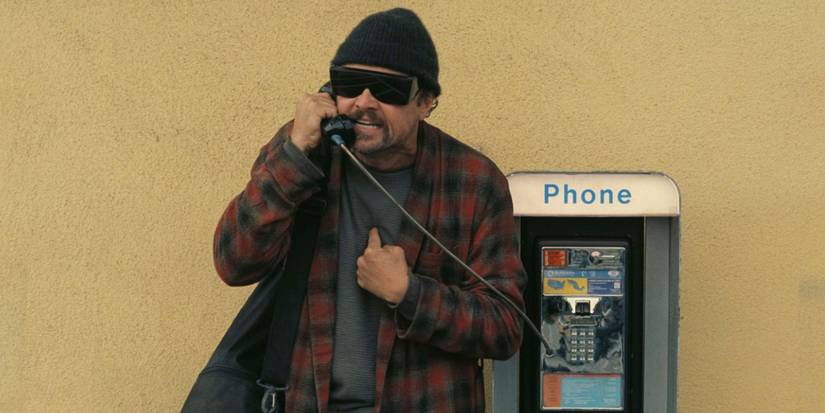
One Battle After Another is a true epic that follows Paul Thomas Anderon’s tradition of complex family sagas, and feels specially attuned to the world as it exists within the 2020s. It’s both a condemnation of the failed efforts of past resistance movements and a notice of hopefulness about what this generation can achieve, but it also doesn’t feel bitter in its sentiments. Anderson assembles an electrifying thrillride that manages to never fall into dry periods, a truly remarkable achievement for a film that is almost three hours long. It’s also a better sign than ever that there is no director working today who is better with actors; Leonardo DiCaprio is at his funniest and most endearing, Sean Penn creates one of the greatest modern cinematic villains, Chase Infiniti is a true discovery, and there are also plenty of unknowns and non-professionals who make the film even richer.
One Battle After Another is the platonic ideal of a Best Picture winner because it is filled with subtext that makes it worthy of analysis and revisitation, yet also exists as an entertaining work of spectacle with a truly sincere father-daughter story. If Everything Everywhere All At Once was an encapsulation of temporary trends that will soon fall out of fashion, One Battle After Another is so grounded in modern sentiments that it is bound to be timeless.
1
‘Oppenheimer’ (2023)
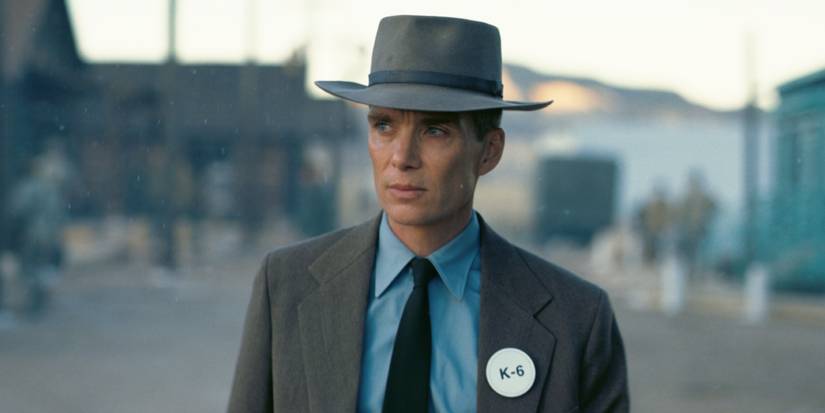
Oppenheimer is a film that only Christopher Nolan could have made, as there is not another filmmaker with the ability to create a towering historical epic about the moment in which human history changed forever. Approaching such complex subject material would seem untenable, but Nolan structures Oppenheimer in a thoughtway way that allows for multiple narrative arcs to exist at once before congealing into a powerful thesis. It’s simultaneously the story of a single man and his flaws, portrayed in an all-time great performance by Cillian Murphy, that also takes advantage of a brilliant ensemble where even one-scene characters are portrayed by great actors. Robert Downey Jr. may have won an Oscar and Matt Damon delivered a scenery-chewing performance, but Oppenheimer is littered with standouts; Jason Clarke has a brutal single scene, Rami Malek delivers a career-best monologue, and Josh Hartnett provides a moral clarity to the first act.
Nolan leaves no stone unturned with a film that somehow manages to address everything about the creation of the atomic weapon, questioning if such a device was truly necessary to prevent the technology from falling into the hands of fascists. Enough time may not have passed to unpack all of the political theory and modern connections that Nolan packed into the film, but Oppenheimer is a completely deserving winner that is destined to be viewed as one of the century’s greatest classics.


You must be logged in to post a comment Login