Entertainment
Every Stephen King Book That Needs an Adaptation ASAP, Ranked

One day, I wanted to know how many Stephen King novels hadn’t been adapted into TV shows or movies. And so I went through them all, and, at the time of writing, it’s… actually, it’s complicated. The Dark Tower complicates things. Let’s just address that first and foremost. It’s obvious that Salem’s Lot has been adapted as both a miniseries and a movie, while The Stand has had two miniseries, and Pet Sematary has had two movies, and so on, but The Dark Tower only kind of has The Dark Tower (2017).
But then that adaptation isn’t really an adaptation of one specific book. For present purposes, maybe it’s best to say that it kind of lines up with book #1, The Gunslinger, though not really. And so all the other books definitely remain unadapted, but if they were to be adapted, it would make sense to do them as one big adaptation, like a multi-season-long TV show. So, multiple unadapted books = one potential adaptation that’ll hopefully come out one day. Taking those unadapted books as one story, and almost imagining the unadapted Gwendy books as getting one adaptation, there are 22 unadapted stories, not counting novellas or short stories that haven’t been adapted. And if you separate out the Gwendy and Dark Tower books, there are 29 (out of 66) novels that haven’t yet been adapted into a movie or miniseries. That’s a higher number than expected, in all honesty, even if many of those novels are more recent ones that’ll likely get adapted eventually.
There are also some older books mentioned here that might, post-2026, have adaptations. This whole endeavor will likely age faster than most rankings, but for now, it’s accurate and thorough. For now, you can only really experience these Stephen King novels on the page, or as audiobooks, and that’s one of many good reasons why reading every now and then (like, generally) is worthwhile. Those still-to-be-adapted novels are ranked below, starting with the messy/not-so-good ones and ending with those where it’s surprising adaptations don’t yet exist.
22
‘The Regulators’ (1996)


It would make the job easier to skim over the Richard Bachman books that Stephen King wrote under his pseudonym, as of the seven, only three have been adapted to film (The Running Man twice, though, for what that’s worth). Still, we know Bachman is King now, and vice versa, and in 1996, people knew that, so King releasing The Regulators as a Bachman novel was sort of him being cute.
And he also did so in order for it to be a companion novel with the slightly better Desperation, which has a TV movie adaptation. The Regulators is an incomprehensible book, though, and so it would likely make for a similarly frustrating movie. Points for trying something weird, and the act of comparing and contrasting The Regulators and Desperation is sort of interesting if you’re a big King fan, but The Regulators on its own is just not a particularly good read (sorry).
21
‘Holly’ (2023)

Even if Holly might not look too long, compared to other very long Stephen King novels, it feels agonizingly drawn out, and is among his weaker books overall. It’s the first novel of his to give Holly Gibney a central role, after she was a supporting player in a handful of other Stephen King books, most of them crime/mystery-focused, but not all without horror elements altogether.
Some of those books have had adaptations, like the Mr. Mercedes TV series that ran for a few seasons, meaning it could also adapt Finders Keepers and End of Watch, and then also The Outsider, which Gibney was a supporting player in. There’s one other Holly book after Holly that’s also unadapted, and is a little better overall (still not perfect, but an improvement nonetheless is still worth appreciating).
20
Two Books in the ‘Gwendy Trilogy’ (2017–2022)

It wouldn’t take much to make the stories in the Gwendy trilogy equal to the books, in terms of quality, were they adapted, though one has to wonder who’d want an adaptation in the first place. This is also a bit of a Dark Tower situation where things get complicated. Here, it’s because there are three books, and no indication of how they’d be adapted if an adaptation were attempted, and also, King didn’t write or co-write the second one, as that was a solo effort by Richard Chizmar.
Honestly, Gwendy’s Button Box is a decent enough read, only really suffering because it’s short and very, very reminiscent of other books by Stephen King. The third book, Gwendy’s Final Task, almost feels like a practical joke, and then the second, written only by Chizmar (and called Gwendy’s Magic Feather) is very forgettable. Judging the series as a whole, it’s not very good, but that first book on its own is just fine (still wouldn’t really ever need an adaptation, though).
19
‘From a Buick 8’ (2002)

You can write about From a Buick 8 multiple times, and it never gets easier. The same can sort of be said for The Tommyknockers and Dreamcatcher, but even those somehow got adaptations (a two-part miniseries and a movie, respectively). From a Buick 8 might well be unadaptable, since it’s even weirder, despite being shorter and so technically not having as many strange directions it can rampage off in.
But just as the characters in Seinfeld have “got to see the baby,” anyone talking about From a Buick 8 has got to try and say what’s more or less about. A spooky car? Alien life? The nature of storytelling? Policing? It’s far more common to come away from a Thomas Pynchon novel not knowing what the hell you read, but for a storyteller like King, who usually lays everything out so smoothly, to deliver something this weird… well, maybe it’s a sign of range? If you really want a silver lining.
18
‘Sleeping Beauties’ (2017)

The idea of Sleeping Beauties is interesting, like, premise-wise. And then it’s also nice that Stephen King wrote a novel with one of his sons, Owen King. As a duo, they made something that wasn’t terrible, and yeah, the premise is good. Sleeping Beauties is about women all being affected by some sort of unknown event that makes them fall into comas, and get cocoons wrapped around them.
The men left conscious all panic, especially because bad things happen whenever someone tries to wake up one of the women. Once answers start being revealed, Sleeping Beauties falls apart a bit, and that’s a problem for obvious reasons. It’s one of those “King started it well, but didn’t really know how to finish it” books. Or, more specifically, “two Kings started things well, but then neither had a great idea of how to finish things.”
17
‘Elevation’ (2018)

Keeping it short when it comes to Elevation, because this book is tiny, it’s basically about a guy who starts becoming lighter and lighter. That also happened in Thinner, which was a Richard Bachman book (the last of King’s Bachman books before people found out the truth), but that had a horror slant to the premise, whereas this one’s kind of trying to be a tearjerker?
It’s weird, how sentimental Elevation tries to be, not because it plays out more like a fantasy story than a horror one, but because it’s really sappy and just absurd at the same time. Is it a novella or a novel? Different sources define it differently, but that length (or lack thereof) does mean it could be adapted pretty directly. Question is, would anyone want it? Is anyone really that much of an Elevation fan?
16
‘The Girl Who Loved Tom Gordon’ (1999)

The Girl Who Loved Tom Gordon is another Stephen King book that keeps things on the shorter side, for better or worse. Or for better and worse? It’s for the better, because it’s about a young girl who gets lost in the woods on her own, and you can only do so much with that premise. But maybe also for the worse, because King’s taken a simple adventure and/or survival story and expanded it in significantly more interesting ways before.
There are also a few more fans of The Girl Who Loved Tom Gordon, it seems, compared to Elevation, but still probably not many girls or boys or women or men who love The Girl Who Loved Tom Gordon. It’s a bit too slight, but it’s not bad. It has its moments. And it would translate well to film (not a TV series, or even a miniseries; there’s just not enough here to adapt).
15
‘Rage’ (1977)
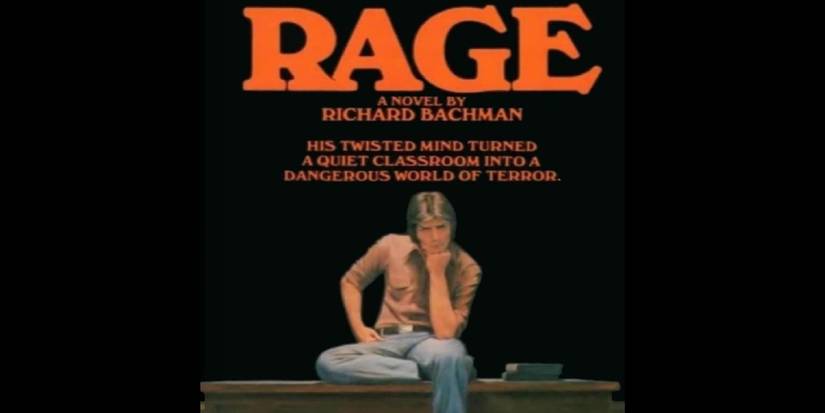
Given how King feels about Rage, and his stance on it being a good thing that it’s out of print, a movie or TV adaptation of it feels like it might well be the least likely unadapted book of the author’s to ever get one. It’s about a student who brings a gun to school, killing two teachers with it before taking his class hostage, and then that whole situation is what most of the story is devoted to.
As for the quality of Rage itself? It’s not terrible for an early work by the author.
It’s understandable why King feels the way he does about Rage, even if movies dealing with similarly upsetting subject matter have been made before (see Polytechnique and Elephant). As for the quality of Rage itself? It’s not terrible for an early work by the author, and you can sort of admire what it’s going for to some extent, but it’s not handled ideally, and even with its relatively short page count, Rage does end up feeling a little drawn-out.
14
‘Roadwork’ (1981)

While not quite as disturbing as Rage, Roadwork is a similarly angry and intense book, and it has some flaws as well, like that other early Bachman book with a single-word title (and that word starts with “R”). It’s also the case that Roadwork would probably work better as a movie, or be a little easier to tackle, even if adapting it, you’d run the risk of making something too similar to Taxi Driver or Falling Down.
That’s because Roadwork is one of those stories about a man pushed to some kind of limit, and then he lashes out because of the injustice he feels in society. Here, he just has a run of very bad luck, and King gets some engaging material out of the whole “How far do you want to go before you start seeing him as a villain more than a victim” kind of thing (see also any number of more recent TV shows about anti-heroes).
13
‘Never Flinch’ (2025)

Two years on from Holly, Holly Gibney herself was also the protagonist of Never Flinch, and it feels a bit silly to include it on this ranking at this present time, since it’s very recent and adaptations usually take time… unless it’s Christine, for whatever reason. That Stephen King book came out in the first half of 1983, and the movie adaptation came out right near the end of the very same year.
But to stay focused on Never Flinch, this one might be difficult to adapt because it’s sort of a messy combination of two ideas that might have been two novellas on their own, or overall neither was long enough to be fleshed out into a novel. So King threw them both together here, and had Holly Gibney tackling two different cases that are interesting on their own, but don’t really cross over or come together in an especially satisfying way. It’s a novel that’s less than the sum of its parts, though at least many parts of it are pretty good.
You must be logged in to post a comment Login