Entertainment
From ‘M*A*S*H’ to ‘Happy Days,’ These ’70s Sitcoms Are Truly Timeless

Before the 1960s gave way to the 1970s, sitcoms were generally seen as an escape from the turbulent reality of the decade. At a time of civil and international unrest, we had sitcoms such as The Andy Griffith Show still showing us what America was, wholesome and down-to-earth. But going into the 1970s, show creators could no longer showcase that Andy and Opie vibe in a truthful way. Social change was afoot, whether people liked it or not, and sitcoms of the decade began to reflect that change.
Whereas sitcoms of the ’50s and ’60s featured women who largely stayed at home and took care of the kids and the home, the ’70s featured a proud single woman putting her career first. Instead of the occasional African American, we had an entire Black family who showed suburban America that life in the inner cities at the time was no picnic. To punctuate how uncomfortable societal change was to those who were used to the peace and tranquility of the ’50s, the ’70s brought us a sitcom about a grumpy old man who longed for the “good old days.” Sitcoms of the ’70s aimed to be daring, a vehicle for how American society truly was, not what it once was; and that made some of the decade’s biggest shows truly timeless to this very day.
1
‘Happy Days’ (1974–1984)


While sitcoms in the ’70s leaned hard into the social changes of the decade, there was a segment of the TV viewer who longed for the days sitcoms were sanitized. Enter Happy Days, created by Gary Marshall, Happy Days saw a market in giving viewers the scenes of a time that once was, when kids hung out at the diner and the coolest kid dressed and acted like Fonzie (Harry Winkler).
Happy Days fostered the ideal view of what the 1950s were all about, and it kick-started the ’50s nostalgia craze, and it certainly was more family-friendly than most sitcoms of the decade. With Happy Days winning over audiences with its unflinching nostalgia, it brought the apolitical, clean-cut sitcom back into vogue, which would become a staple of shows in the 1980s. Happy Days is timeless because it was a prime example of escapism TV, a bit rebellious, yet harmless.
2
‘The Mary Tyler Moore Show’ (1970–1977)
In the 1960s, Mary Tyler Moore was the lovable housewife on The Dick Van Dyke Show, fitting the common character trope for women in the ’50s and ’60s. While women did land starring roles in sitcoms, they were always the sidekick to the husband, and presenting to America that women cared more about taking care of the home than chasing a career. Then the calendar flipped to the ’70s, and Mary Tyler Moore was done being a housewife.
Premiering in 1970, The Mary Tyler Moore show presented a different kind of woman, one that was more career-focused than home-focused. The show redefined how women were portrayed on TV, tackling such issues as feminism, equal pay, and gay rights through fascinating characters rather than preaching to the audience. Not only that, but The Mary Tyler Moore Show was also the first successful workplace sitcom, in which the sitcom was mainly set within Mary Richard’s workplace, with her co-workers just as important to the show as Mary herself. In the end, The Mary Tyler Moore Show cemented its status as a timeless sitcom of the decade.
3
‘Sanford and Son’ (1972–1977)
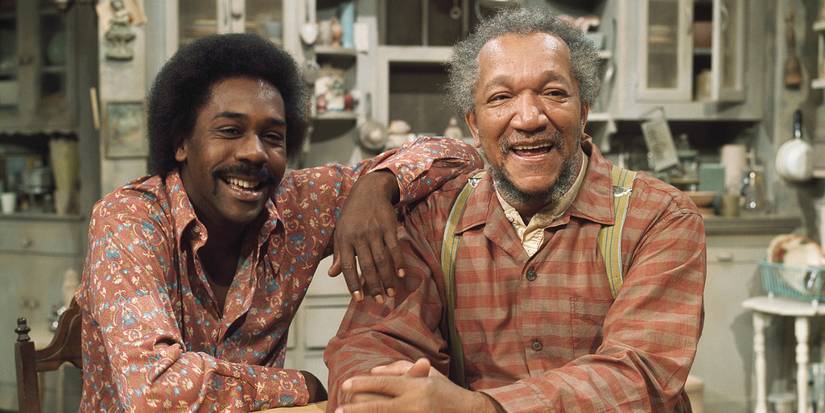
In the 1970s, a major cultural shift was happening on the television landscape. Instead of the landscape being mainly white, television finally wised up to the fact that African Americans had stories that needed to be told as well. Enter the late Norman Lear, who, alongside Bud Yorkin, created Sanford and Son, the pioneering sitcom that focused on the working-class life of African Americans.
Starring comedian Red Foxx, the show followed a father and son who ran their own business in South Central Los Angeles. In some respects, Sanford and Son was the Black version of All in the Family, although it wasn’t nearly as bigoted as that famous show (more on this later). It was bold, brash, and unapologetic, and it also broke down barriers. It showed TV executives that African American leads could rake in Nielsen success. Sanford and Son wasn’t just a success in Black homes, it achieved something that few thought it could at the time, crossover success, thanks to its edgy comedy, mainly provided by Foxx. Sanford and Son‘s legacy is very much secured, a timeless sitcom that had a major impact on the sitcom genre as a whole.
4
‘WKRP in Cincinnati’ (1978–1982)

As soon as you read the title of this entry, you immediately thought of the iconic theme song, didn’t you? Of course, you did, and who could blame you if you’re humming it now. But WKRP in Cincinnati was a lot more influential beyond that famous theme song. The sitcom was iconic in its character-driven ensemble cast, and it further cemented the workplace sitcom as a major part of the genre’s base.
WKRP in Cincinnati was a timeless sitcom in the fact that it was a very real depiction of the radio business. I feel like a lot of readers may not know this, but the main plot followed the station as it transitioned from Top 40 to rock to lift sagging ratings, and the station’s DJs having to adapt to the change in formats, with hilarious results. Radio stations suddenly changing formats is a real thing, and WKRP in Cincinnati captured the struggle that comes with having to switch formats, especially as a small business. This was one of those sitcoms that actually got more popular in syndication, which makes it timeless thanks to its perfect blend of humor and workplace social commentary.
5
‘M*A*S*H’ (1972–1983)
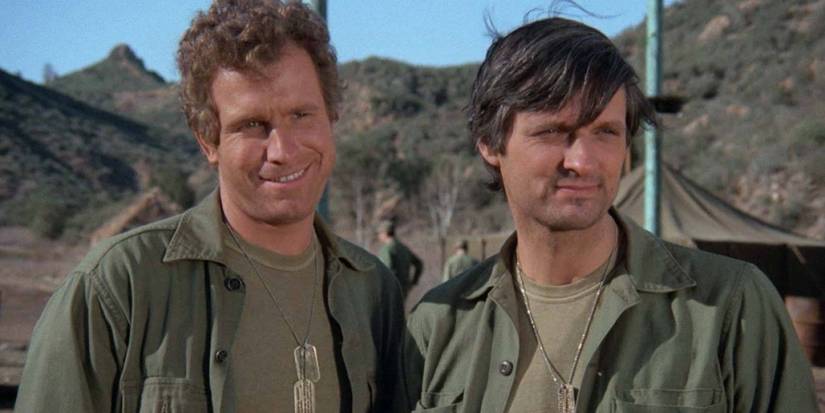
While the “dramedy” sitcom has become quite commonplace on television today, it was nuanced in the 1970s. Before M*A*S*H premiered in 1972, sitcoms followed a general script: introduce a problem the main protagonists had to solve, keep the audience laughing, and make sure everything was solved at the end of each episode. That all changed with M*A*S*H, which refused to follow the same sitcom tropes, and pioneered the dramedy, which blended the intense drama that comes with war, with traditional sitcom humor.
By molding serious subject matter with humor, it formed an whole new subgenre that would later become a staple within the sitcom genre. Make no mistake, M*A*S*H was very much aware of the social upheaval that was happening during the time. The sitcom reflected the anti-war sentiment of the decade, realistically showing the changing views of morality and conflict. As much as M*A*S*H had heavy dramatic moments, it certainly didn’t let you forget that it had comedy as well, creating a timeless classic that many sitcom fans will forever remember.
6
‘Good Times’ (1974–1979)

With Sanford and Son breaking down the door for black-led sitcoms, Norman Lear went to work creating his next big hit surrounding the plight of an inner-city Black family. This time, he teamed up with Eric Monte to create one of the decade’s most timeless sitcoms, Good Times. While Sanford and Son provided edgy, rapid-fire jokes, Good Times was a family sitcom that, for the first time, featured a Black household that had two parents, the tough and caring James Evans (John Amos) and the loving but stern Florida Evan (Esther Rolle).
Despite their seemingly dire financial situation, the Evans proved that as long as you had fight and family, you could get through any challenge, and the Evans family certainly went through challenges. The sitcom was mirrored into what society was like for Black families, but it also made sure to show its resilience. And, we can’t talk about Good Times without mentioning J.J. Evans (Jimmy Walker), James and Florida’s eldest child who became the breakout star of the series with his trademark catchphrase “Dyn-o-mite!” Despite some iffy seasons after Amos left the series, Good Times is still an influential sitcom with a very, very catchy theme song. Oh, and for what it’s worth, that final lyric in the theme was “hanging in a chowline.” You’re welcome.
7
‘All in the Family’ (1971–1979)
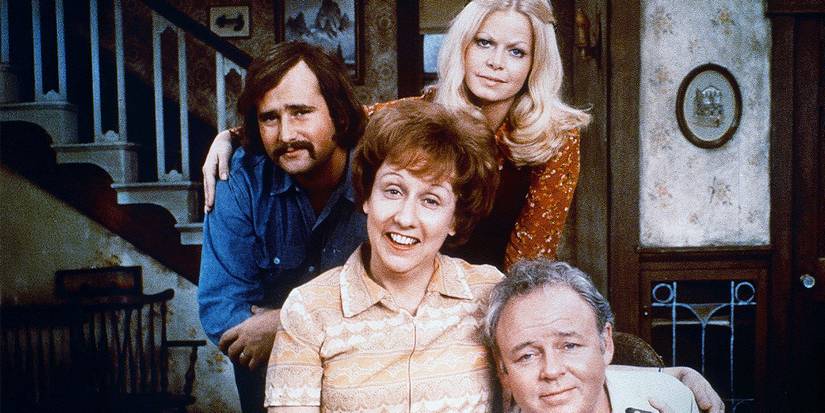
“Those were the days.” You can hear the theme song that the Bunkers were wishing for the “good old days” to come back after a decade of social change. Let’s be real for a second — a sitcom like All in the Family would be cancelled in a heartbeat, as modern audiences would probably be repulsed with the main protagonist being classified as a “lovable bigot.” But, what many modern audiences would miss is how Norman Lear, the show’s creator, used the Bunker family to tell raw, socially relevant storylines.
In a sense, All in the Family was the anti-Happy Days. There was no lighthearted escapism celebrating nostalgia. This was a show that broke taboos and showed, in an unflinching way, the struggle between an American culture that was changing and the older generation that was struggling to adapt to the changing times. All in the Family showed the sitcom world that it could tell relevant social commentary without the fluff, and still be humorous in the process. The ’70s sure were the days, weren’t they?

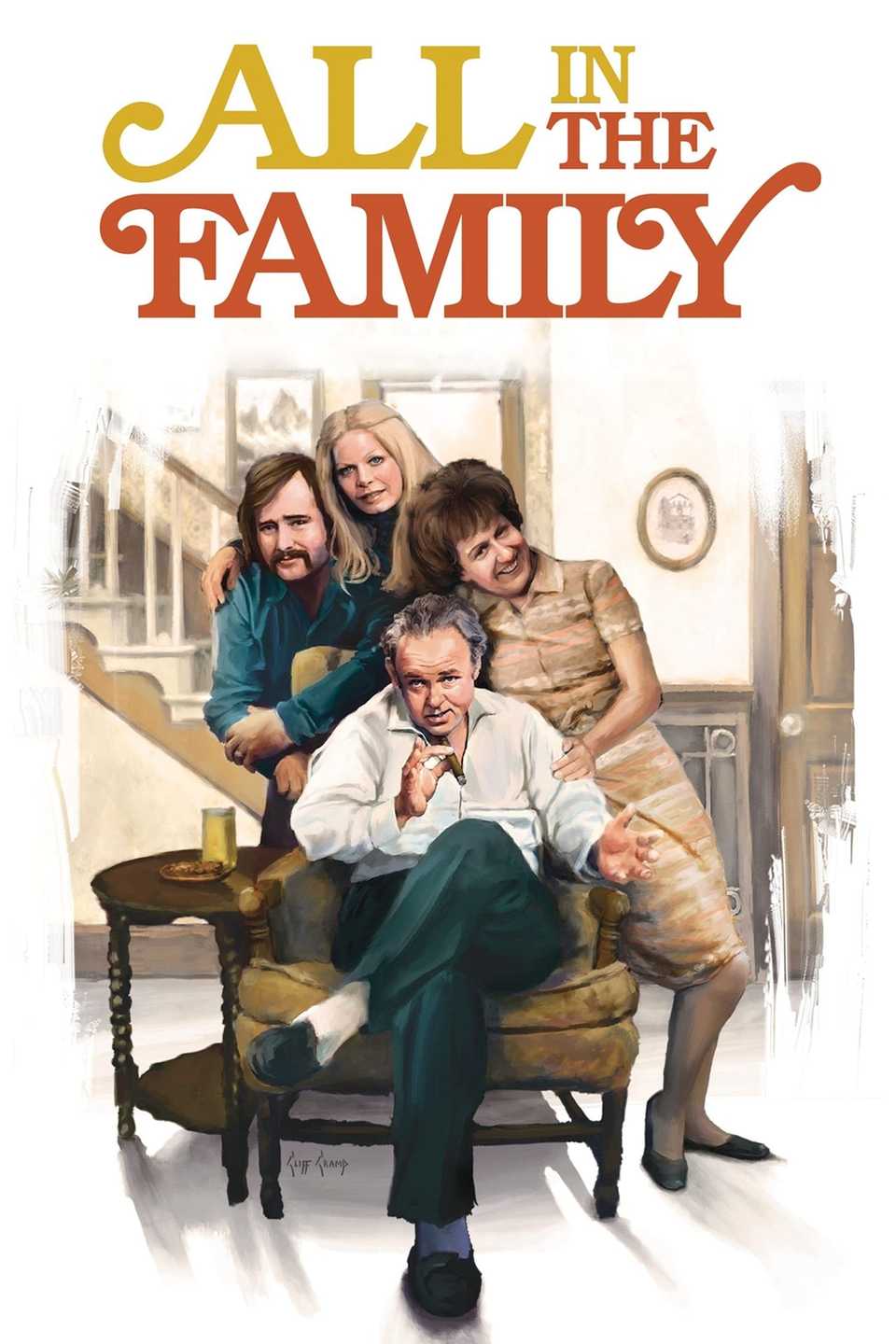
All In The Family
- Release Date
-
1971 – 1979-00-00
- Showrunner
-
Norman Lear
- Directors
-
Norman Lear
-

Carroll O’Connor
Archie Bunker
-
Jean Stapleton
Edith Bunker
