Entertainment
George Lucas Predicted Why The Last Jedi Would Fail
By Chris Snellgrove
| Published


Here’s something that will get me thrown out of the nearest airlock on a Star Destroyer: I really love The Last Jedi. It’s a flawed film, but I will always give it credit for being the only movie in the Star Wars Sequel Trilogy to actually take some creative risks. On paper, I understand what fans disliked: Rey being a nobody, Luke being a defeated crank who dies at the end, the entirety of the Canto Bight storyline, and so on. Still, this movie was effectively the beginning of the end for the franchise, which is a big indication of just how much fans hated it.
Accordingly, I’ve spent years wondering where it all went wrong. I still enjoy The Last Jedi, but I can’t help but ponder why it turned so many fans off completely. Today, I believe I’ve discovered the answer. It’s common knowledge that George Lucas created Star Wars as a kind of modern mythology, one that built off the popular epics of yesteryear. Rian Johnson tried to do the same thing with his hated Star Wars sequel. But based on old interviews, it seems there was a very fundamental difference. Lucas was writing myths for children, and Johnson was writing myths for adults, creating a tonal whiplash throughout our favorite galaxy far, far away.
The Hero’s Journey Comes To An End

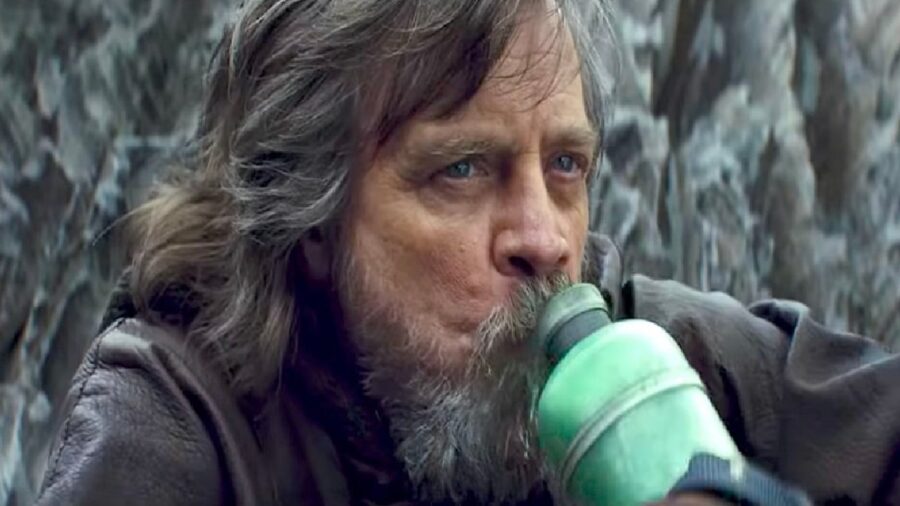
Back in 2018, Rian Johnson gave an interview to The Hollywood Reporter about The Last Jedi. One of the topics they covered was what the fans and even Mark Hamill hated most about the movie: the portrayal of Luke Skywalker as a depressed and beaten old man who throws his own lightsaber away and disses the Jedi of the Old Republic. On this subject, Johnson evoked the idea of “the classic hero’s myth” that Star Wars is based on. Notably, George Lucas was heavily influenced by Joseph Campbell, who famously wrote about how all famous literary epics were chronicling the same stages of the same heroic journey.
Johnson implied that earlier Star Wars films followed the earlier parts of a hero’s journey, like King Arthur pulling the sword from the stone and uniting the kingdoms. But “when it deals with the hero’s life as they get into middle age and beyond, it always starts to get into darker places. And there’s a reason for that: It’s because myths are not made to sell action figures,” he said. “Myths are made to reflect the most difficult transitions we go through in life.” Therefore, The Last Jedi is showing Luke at the end of his journey, and his dark, brooding personality is a reflection of his inner struggle.
Right About Myths, Wrong About Star Wars
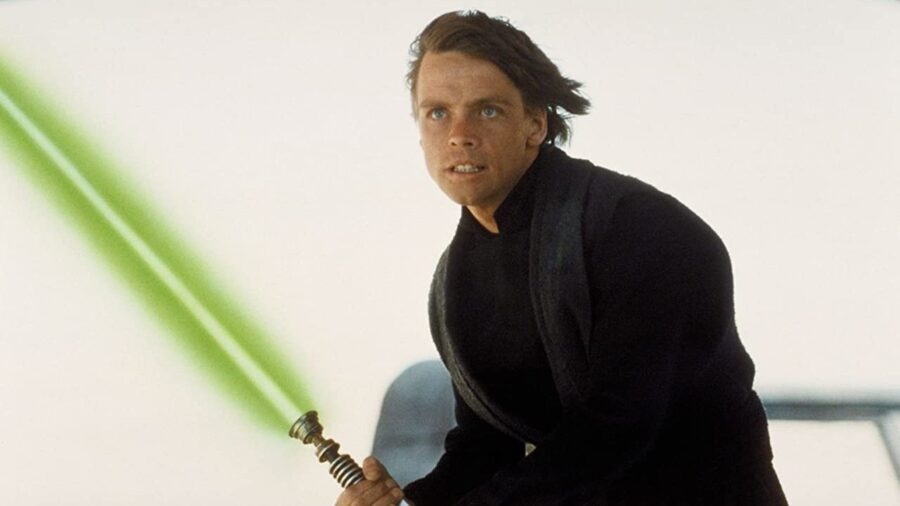
Incidentally, Rian Johnson is right about this. The hero’s journeys of ancient myths really do take their heroes to dark places, and what Luke Skywalker is going through certainly reflects his own depressing journey. Based on Johnson’s quote, it seems like he wanted Luke to resonate with the audiences that grew up watching Star Wars. That is, now that we are middle-aged (or older), we’re all dealing with our own inner struggles and would like to see those struggles reflected in our favorite hero. Unfortunately, this represents a catastrophic misunderstanding of why fans love these movies and how myth actually works in Star Wars.
First off, at the risk of stating the obvious, nobody comes to a Star Wars movie because they want to see something dark and depressing. If we wanted to be bummed out, we wouldn’t drive to the theater; we’d just doomscroll on our phones! Second, and more importantly, Johnson is wrong about how myths have historically functioned in Star Wars. In a 2020 interview with GQ, The Mandalorian showrunner Jon Favreau revealed advice he had gotten from George Lucas: “the real audience for all stories and all myths is the kids that are coming of age.”
Star Wars, Like Wu-Tang, Is For The Children
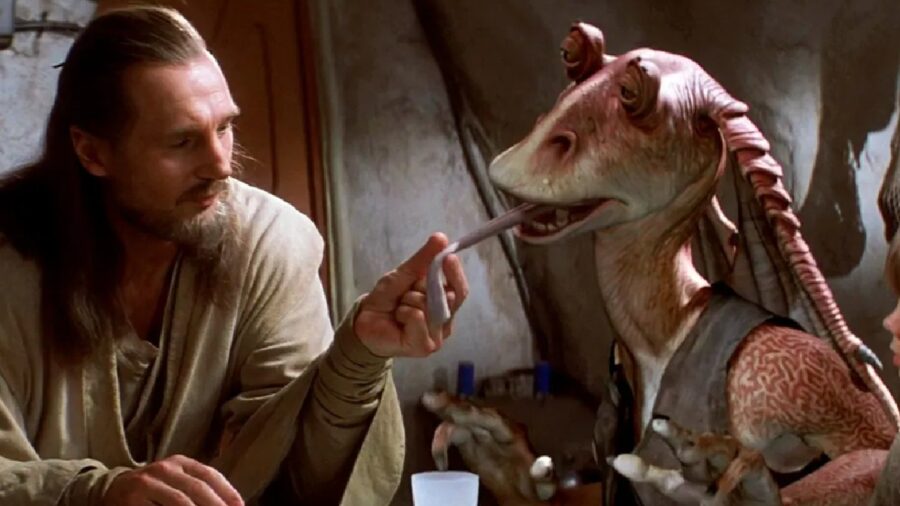
This is where the disconnect comes in. Lucas deliberately aimed his Star Wars films at children, which is why the prequels had fart jokes and slapstick Jar-Jar Binks humor. The director basically gambled that this approach would work on everyone: the actual children who wanted to be like Luke Skywalker and the young at heart who could remember what it was like to be young. These groups enjoyed seeing Luke enact the early days of King Arthur (he gets a magic sword from a wizard, storms a castle, saves a princess, etc.) because the would-be Jedi is reenacting the coolest and most exciting part of the myth.
Johnson thought that Star Wars fans who had grown older would enjoy seeing Luke Skywalker’s Arthur-like decline. In mythology, Arthur gets betrayed by his friend, his wife, and his illegitimate kid. The Last Jedi even shows Luke dying like Arthur did, succumbing to death after a battle with a hotheaded upstart. But fans rejected this movie because they didn’t want to see the depressing end of the hero’s journey. They wanted to see more of what made them fall in love with Star Wars in the first place: heroes overcoming great odds and saving the entire galaxy from evil.
Is There A New Hope?

Again, Rian Johnson wasn’t wrong about how myths reflect different stages of life and the different struggles we all experience. But he was wrong about what audiences actually wanted from their favorite sci-fi franchise. Sure, the hero’s journey almost always ends in tragedy, but we don’t want too much tragedy from our goofy pew-pew laser movie. We certainly don’t want to see old, depressed people; we get enough of that in the mirror every morning! He tried to cater to our inner struggles instead of our inner child, and it was all downhill from there.
Now, for better or for worse, the fate of Star Wars is in the hands of Dave Filoni, the new head honcho of Lucasfilm. Filoni studied directly under George Lucas, so he may be able to avoid some of the rookie mistakes Rian Johnson made when it came to creating modern myths. Based on the performance of The Mandalorian and Grogu, though, it may be too late. Now, all of us might be watching Star Wars experience the last stage of its own heroic journey: the part where it dies.
You must be logged in to post a comment Login