Related: Loose Dresses Don‘t Have To Be Frumpy Thanks to These Luxe-Looking Gems
Advertisement



Us has affiliate partnerships. We receive compensation when you click on a link and make a purchase. Learn more!
If you’ve ever wondered how Hamptons rich moms look polished through the cool mornings and warm afternoons, it’s because they have the perfect transitional dress. Gwyneth Paltrow is borrowing the aesthetic — as are we — for only $39!
In a TikTok recap of her off-duty wardrobe, Paltrow blessed Us with a “seven days of vacation outfits.” The whole video had her signature class, but one look had Us hitting pause. Her Tuesday outfit was a breezy, button-front shirtdress, and we found the luxe look hiding on Amazon.
Get the LifeShe Midi Shirtdress for $39 (was $43) at Amazon! Please note, prices are accurate at the date of publication but are subject to change.
This LifeShe Midi Shirtdress channels Paltrow’s coastal-luxe energy, featuring vertical stripes, short sleeves and a midi length that hits your calf at a flattering spot. Whether you’re grabbing an oat milk latte or meeting your boo for cocktails, you’ll look and feel your best.

There’s nothing worse than a tight dress that squeezes all the wrong places. But the tent-looking alternative isn’t much more appealing, either. I felt the same way until I discovered these loose, expensive-looking dresses. They’re proof that ‘flowy’ doesn’t inherently mean ‘frumpy.’ With dreamy prints, billowy silhouettes and boutiquey details, these drapey dresses are arguably […]
Speaking of feeling great, the strategic stripes elongate your figure without even trying, and the shirtdress silhouette is forgiving in all the right places. The dreamy fabric is just a bonus.
One Amazon reviewer shared, “It’s 100% cotton and so comfortable. It feels like long staple cotton; very soft. It is lightweight and unlined but not see-through.”
Another happy shopper put it best: “Perfect way to feel good and look good and be comfortable all at once.”
This chic, expensive-looking dress is what you’ll see on Hamptons moms this time of year — the ones who’ve mastered the art of dressing for 78 degrees at noon and 62 by dinner. Throw it on with white sneakers now, then add tights and ankle boots in October, and you’ve stretched a $39 purchase across two seasons. No matter how you style it, you’ll look like you own a home in Sagaponack.
Get the LifeShe Midi Shirtdress for $39 (was $43) at Amazon! Please note, prices are accurate at the date of publication but are subject to change.
Looking for something else? Explore more chic dresses, and don’t forget to check out all of Amazon’s Daily Deals for more great finds!
UsNow Fall Sale Alert: These chic fashion finds are up to 60% off – plus free shipping
Welcome to fall with our biggest sale of the season. Our favorite dresses, tops, handbags, and shoes are all on sale + free shipping. Inventory is limited so hurry before they’re gone.

Choosing what to wear from now through November isn’t an easy task, but Jennifer Lopez makes it incredibly simple, wearing a loose, polished shirtdress that stuns with flip-flops, sneakers and booties alike. Somehow, her chic look is only $36! Exploring Italy with her kids, Lopez wore a striped shirtdress with easy sandals and a headband. […]
:max_bytes(150000):strip_icc():format(jpeg)/scream-courteney-cox-drew-barrymore-neve-campbell-090326-6b514299feee4722a6535373e3710376.jpg)
After decades of satirical meta-horror, “Scream”-mania is still going strong. Here’s our ranking of all seven installments, from worst to best.
Everybody loves a good plot twist, and crime television has proven itself at being adept at delivering some of the very best that the medium has ever seen. The genre’s ability to combine high-stakes tension with propulsive, energy-charged story pacing while exploring profoundly interesting characters in extraordinary depth imbues it with a penchant for delivering shocking revelations that completely recalibrate the narrative while leaving viewers in a state of shock.
Ranging from murder mystery miniseries that end on soul-shattering twists to long-running descents into the criminal underworld that never stop shifting the narrative, each of these crime series offer a masterclass in how to execute a perfect plot twist. Some are viscerally disturbing; others present relentlessly exciting tales of life-and-death drama. All of them are must-see masterpieces of the genre.

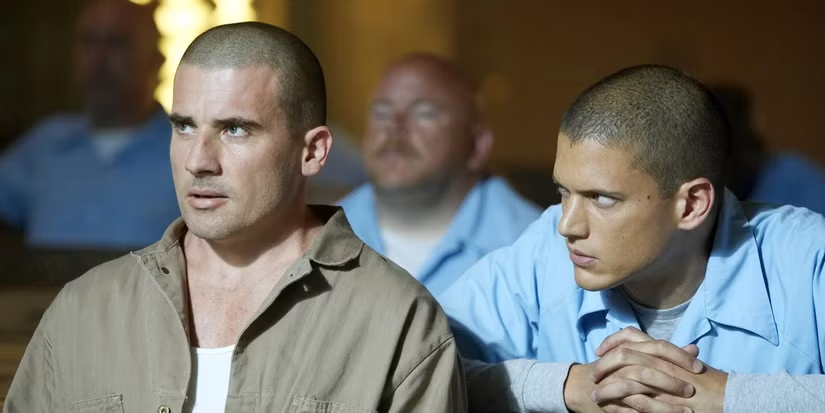
Prison Break is a fascinating series to analyze. Its first season is a masterclass in taut tension and excellent thriller storytelling as it operates as a high-stakes heist tale in reverse of sorts. However, its premise proved to be difficult to sustain over a longer run, even when the series returned for a sixth season in 2017. However, there is no doubt that, while elements of the show do falter, it always has a talent for delivering a terrific twist.
Following an engineer as he breaks into jail to help his falsely accused brother escape and avoid facing the death penalty, Prison Break excels at placing highly intelligent characters in pressurized situations where every little mistake has drastic consequences. From character decisions that alter the course of the story to major reveals that completely dismantle the audience’s perception of what they’re seeing, Prison Break’s brilliance is largely defined by its ability to implement twists that serve and further the narrative rather than just surprising the audience.

Combining its unique real-time approach with a frenetic, action-packed premise, 24 is a hallmark of high-octane television intensity. It follows Jack Bauer (Kiefer Sutherland), an officer for L.A.’s counterterrorism unit, as he thwarts everything from assassination attempts on the U.S. President to the imminent threat of nuclear attack. Each season of 24 focuses on a different crisis, with each episode of the 24 episodes covering one hour of the day.
At its best, 24 excels at delivering exhilarating plot twists en masse, be it the shocking reveal of a traitor among Bauer’s colleagues or a chilling discovery that some of the atrocities being investigated and prevented are actually being conducted by those in the U.S. government. Every success from Bauer and his team immediately unearths new depths to the conspiracy, ensuring 24 maintains a propulsive and absorbing energy through its chaotic, twisty storytelling.

Addictive, taboo, and brimming with plot twists that left fans gobsmacked, You has become one of the defining small-screen thrillers of the past decade. As ceaselessly gripping as it is frightfully tumultuous, it centers on Joe Goldberg (Penn Badgley), a man whose charming and accessible demeanor conceals an intense obsession that sees him inject himself into the lives of women who allure him with deadly consequences.
Its five-season run is a procession of jaw-dropping moments that range from revelations of characters being hallucinations, morbid twists that showcase innocent figures might not be so innocent, and even a shocking instance in which a thought-to-be-dead character turns out to be alive. While there is a definite reach for shock value in some of its narrative beats, You uses this endeavor wisely to conjure a series of absorbing unpredictability that revels in ideas of lust, love, and desire at their most horrific.

Released by HBO, Mare of Easttown marks one of the defining miniseries of the 2020s thus far. Imposing itself on viewers with its air of bleak despair and hopelessness that revels in the economic depression of modern working-class America, the series follows jaded detective Marianne Sheehan (Kate Winslet) as she investigates the recent murder of a teenage mother while navigating a litany of family issues including her son’s suicide and custody of his child, her own divorce, and the community disapproval of her skills tied to an unresolved missing persons case from a year prior.
The seven-part series occupies an air of atmospheric gloom with sublime conviction and craft. It serves less as a thrilling crime mystery and more as a devastating human drama laced with twists that only add to the weight and severity of the story. Some are abrupt and shocking, like the murder of one of Mare’s fellow cops, while others are more subdued and disturbing, such as the revelation of the actual killer. All of them work to make Mare of Easttown an intriguing albeit confronting triumph of crime drama television.

While the series is defined by the brilliance of its impeccable first season, True Detective as a whole has maintained a penchant for rewarding and surprising plot twists even as subsequent releases haven’t been as strong in other respects. Each of True Detective‘s seasons thus far has focused on horrific crimes and the complex personal lives of the detectives who investigate them, with each new lead bringing about a twist that leaves viewers stunned.
Whether it’s Season 1’s reveal that the occult murderer they’re looking for is being protected by institutional powers, Season 2’s winding descent into urban corruption, or the uncovering of what truly happened to the Purcell kids in Season 3, True Detective is adept at building towards major twists with suspense and then unveiling them at the perfect time. At its best, it is the most compelling and shocking crime series television has seen.

In 1996, the Coen Brothers released Fargo, a quirky crime-comedy that uses the filmmakers’ unique, eccentric style to present a fiendishly enjoyable and delightfully twisty thriller. Inspired by the movie, FX’s hit TV show of the same name excels in the exact same fashion, with the anthology series delivering five invigorating stories that revolve around criminal ambition, honest and morally decent cops, and opportunistic ordinary people caught in the midst of the chaos.
With each season featuring an ensemble of major characters, Fargo creates an air of unpredictable energy that suggests any character can die at any time. Furthermore, with each character having their own aspirations, each season conjures a web of clashing motivations that always lead to eruptions of violence and chaos that completely reset the trajectory of the story. From abrupt character shifts to absurdist spins like the appearance of a UFO, Fargo keeps viewers on their toes to make for a remarkably arresting viewing experience.

One of the most underrated series of recent decades in any genre, Line of Duty soars as a viscerally compelling police procedural crime show revolving around an internal affairs unit working within Britain’s Central Police. With each season featuring different stars, the show maintains a ferocious unpredictability as any character can be killed off at any point in time, a quality the series uses to perfection to ensure every scene is a masterclass in suspense.
Furthermore, while individual seasons explore different cases of police corruption, the series as a whole centers on the unit’s investigation of a high-ranking official in the department with ties to organized crime. Every step towards revealing “H”s identity offers a revelation that completely recontextualizes key elements of the story and the danger primary characters find themselves in.

Based on the Gillian Flynn novel of the same name, Sharp Objects enraptures viewers with its slow-burn intensity and overwhelming Southern Gothic atmosphere while delivering one of the greatest twists in television history. It follows Camille Preaker (Amy Adams), a crime reporter who returns to her hometown to investigate the murder of two young girls. As she grapples with the horrors of the case, she must also confront demons from her own traumatic past and tumultuous family life, which come flooding back.
The eight-part miniseries as a whole is rife with clever revelations that pry deeper into the characters and their pasts, but its climactic reveal of whom the actual killer is—delivered only moments before the credits roll—is entrenched as one of the most viscerally striking plot twists television has ever seen. In many ways, it defines the impact and piercing intelligence of the series while doing a phenomenal job of bringing Flynn’s disturbing story to the screen with every ounce of gravitas it deserves.

A masterpiece of surrealist drama, Twin Peaks epitomizes David Lynch at his enigmatic and enthralling best as it follows FBI agent Dale Cooper’s (Kyle MacLachlan) investigation of a murdered teenage girl in the small town of Twin Peaks. It thrives as a transfixing crime mystery, but it also incorporates elements of supernatural dread, piercing black comedy, and profound character drama, making for a series that leaves viewers with no idea what will happen next.
The genre-blending brilliance sets the scene for a winding, mystifying procession of surprising revelations. Everything from Cooper’s discovery of an alternate realm to the uncovering of the true culprit of Laura Palmer’s murder is handled expertly, allowing the series to be consistently shocking and ceaselessly engaging. Such is its enduring popularity, Lynch returned to make Twin Peaks: The Return in 2017, with the legacy sequel series being every bit as spellbinding and stupefying as the original.

Heralded by many as being the greatest TV show of all time of any genre, Breaking Bad delivers an engrossing story of moral decline and ambition that features plot twists in abundance. When high school science teacher Walter White (Bryan Cranston) is diagnosed with inoperable lung cancer, he applies his knowledge of chemistry to the manufacturing of crystal meth, hoping to make some quick money for his family. As he is dragged deeper into the drug trade, however, he begins to develop an egomaniacal lust for power that sees him go from a family man to a cutthroat criminal.
Every step of his descent into inhumanity is marked by shocking turns that reveal both the brutality of the world he is stepping into and his own diminishing morality. Walter watching Jane (Krysten Ritter) overdose and the revelation that he poisoned a child just to manipulate Jesse Pinkman (Aaron Paul) are just two of the more memorable abrupt twists that make the series the most shocking crime series in the history of television.

2008 – 2013-00-00
AMC
Vince Gilligan
Vince Gilligan, Michelle Maclaren
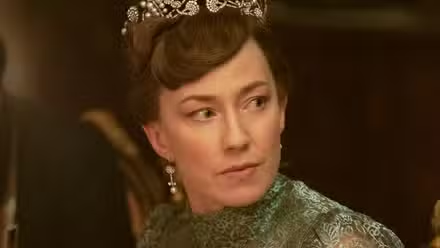
The Gilded Age and Downton Abbey might share the same creator in Julian Fellowes, but the former series has actually been a bit more successful when it comes to living up to the full title of “historical drama.” It’s fairly easy for shows in this type of genre to fall into the bubble of the wealthy families that they follow, which makes going the extra mile and spotlighting what was going down outside of that bubble that much more important.
In Season 2 of The Gilded Age alone, we’ve seen the growing power of labor union workers, gender discrimination within the engineering industry, the differing treatment of Black people between the South and New York City, as well as the constantly changing education system. Sure, the opera wars might have dominated the headlines, but those stakes could not be more moot in comparison to the conflicts that were actually happening right beyond the eyesight of wealthy socialites like Bertha Russell (Carrie Coon) and Agnes van Rhijn (Christine Baranski), both in real life and on the screen.
Since its first season, The Gilded Age has set itself apart from other historical dramas like Downton Abbey by doubling down on the full picture of the period it depicts, instead of getting tangled up in bottomless conflict like a pair of cheap headphones. The daily lives and struggles of the staff who work literally and figuratively underneath both the van Rhijns and the Russells have been featured since the beginning, adding a great dichotomy to the series, with subsequent seasons taking things a step even further.
George Russell (Morgan Spector) was certainly sitting pretty atop his throne in Season 1 of The Gilded Age, but that all went out the door as soon as his workers decided to unionize and go on strike. Facing a work shutdown as well as the possibility of a violent skirmish between the union workers and higher-ups, George had to make the much-toiled-over decision to grant his workers higher pay — though only temporarily. This entire situation could’ve simply occurred in the background of the series, but the writers chose to put it front and center; especially during the real-time SAG-AFTRA and WGA strikes, this was an extremely important move for the series.
Meanwhile, Peggy Scott (Denée Benton) and T. Thomas Fortune’s (Sullivan Jones) trip down to Alabama to the Tuskegee Institute revealed the full scope of racism outside of New York City, as the two had to evade being killed by a horde of White men who were running them out of town. Even Peggy — having spent most of her life in New York City — was taken aback by the horrific treatment, especially against the backdrop of the success of the Tuskegee Institute. Just as Peggy was inspired to use her position at the New York Globe to shine a light on education in New York City following her time in Alabama, The Gilded Age shone a light on the importance of the real-life institution.
The construction of the Brooklyn Bridge became an avenue to introduce discrimination against women in more male-dominated fields in the 1880s, such as engineering. Emily Warren Roebling (Liz Wisan) took over the construction of the Brooklyn Bridge after her husband was unable to continue his duties, though her involvement was very hush-hush, as others involved in the process feared that no one would want to cross the bridge if they knew it was largely constructed by a woman. The thing is, this wasn’t just another interesting plot point: the story about Emily is a factual one, making the impact hit that much harder for viewers.
The Gilded Age‘s return might still be a couple of months away — with Season 4 officially confirmed to release this November — but judging by the show’s continuing #1 status on HBO Max within the TV genre, it’s likely that the series’ depiction of social issues will only be ramping up. Between George’s ongoing business expansion and the struggles that have resulted, Peggy being poised to deal with her future in-laws after saying yes to Dr. William Kirkland’s (Jordan Donica) marriage proposal, and even U.S. President Grover Cleveland (Jim Gaffigan) set to make an appearance, there’s quite a bit more that The Gilded Age can explore.
As the 1880s truck on and the U.S. gets further and further into the Second Industrial Revolution (the Technological Revolution), the characters in The Gilded Age‘s lives are going to get even more complex, just as we saw with the van Rhijn’s former footman, Jack Trotter’s (Ben Ahlers), foray into the watch-making business catapulting him into a new tax bracket. Revolutions can take many forms, and though an industrial revolution might seem mostly cordoned off from the conflicts of daily life, things always end up trickling down to every last facet of society in the end.

California, here we come? The O.C. has been off the air for almost 20 years, but that hasn’t stopped fans — and former cast members — from speculating about a possible reboot.
After Rachel Bilson (a.k.a. Summer Roberts) and Melinda Clarke (a.k.a. Julie Cooper-Nichol) launched their rewatch podcast, “Welcome to the OC, Bitches,” back in 2021, interest in another round of Newpsie drama increased.
For the podcast, which concluded in 2024, the pair rewatched old episodes of the show and shared their memories of filming, with guest appearances from fellow cast members, including Tate Donovan and Peter Gallagher.
“Watching it, I’m just so impressed with how good everybody is,” Bilson told Nylon in April 2021 of revisiting the series. “I feel like it worked because of the natural chemistry and people’s talents, and it’s fun to see that.”
The O.C. followed Ryan Atwood (Ben McKenzie), a troubled teen who moved in with the wealthy Cohen family after he got caught trying to steal a car. The Cohens’ son, Seth (Adam Brody), introduced him to comic books and Death Cab for Cutie, while their next-door neighbor Marissa (Mischa Barton) introduced him to Ferris wheel makeouts and shoplifting.
Clarke played one of the most infamous characters on the show — Marissa’s mom, Julie, whose many nefarious deeds included sleeping with her daughter’s 18-year-old ex-boyfriend.
“Julie really is one of the original Housewives,” the Gotham alum told Bustle in April 2021. “She’s a villain but you never play a villain as a villain. You believe your character’s truth — and her truth was maintaining this beautiful façade.”
In the years since the 2007 series finale, the cast has kept busy with other projects, but that hasn’t stopped people constantly former cast members if the time could be right for a return to the Bait Shop.


While The O.C. creator Josh Schwartz has said he has no plans to revive the series, fans are still making the same wish every Chrismukkah. As Julie put it in season 2: “Surf, sex and scandal. It’s a recipe for a cultural phenomenon, don’t you think?”
Keep scrolling to read everything The O.C. cast has said about the idea of a reboot:
The Far Side is easily one of the best comic strips of all time, and it’s iconic enough that it probably doesn’t need much of an introduction. You’ve surely seen at least one Far Side strip before, even if not by choice, because they were made pretty consistently by Gary Larson between 1980 and 1995, with this period seeing the publication of more than 4000 strips. They appeared in newspapers, and then were further circulated thanks to books that compiled large numbers of cartoons, and also old-fashioned calendars, where you’d be greeted, every new day, by a different Far Side comic.
Most of these comics or strips were just a single panel, and they’d keep things pretty minimal in terms of text, dialogue, and captions, for the most part. Larson demonstrated a knack for being surreal, funny, and observant in ways that could be appreciated in seconds, because most Far Side strips are instantly amusing and the kind of things that make you go, “Hey, why didn’t I think of that joke before?” The Far Side could be about almost anything, but there were a particularly high number of jokes about scientists, and of those, the following strips were the funniest.

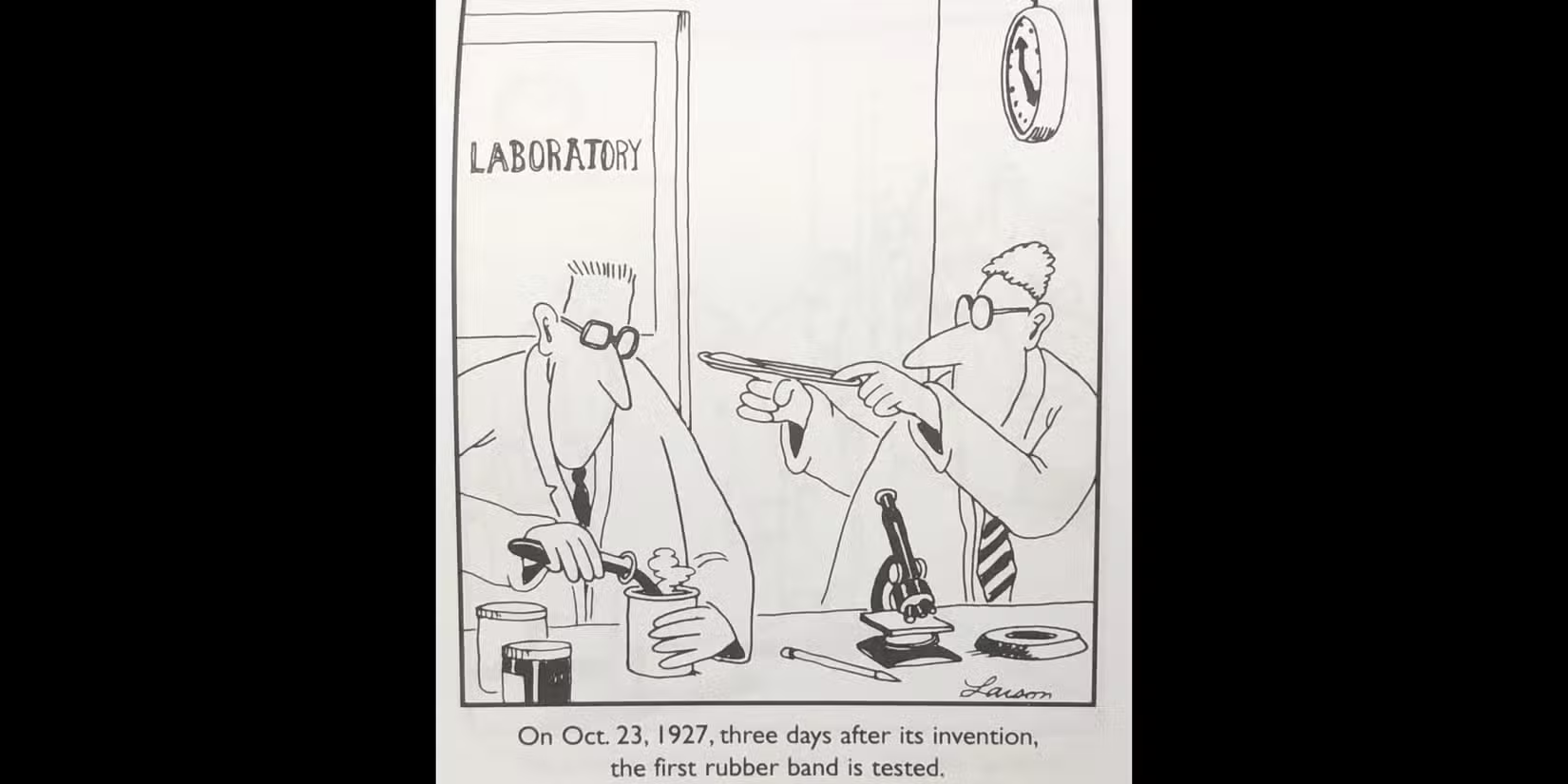
Within his Far Side comics about scientists, painting them out to be immature seems to be what Gary Larson most enjoys doing. You can take offense at that, as a scientist, or be more impartial and recognize that that’s what comedy is, or can be. It’s objectively true that subversions, when done well, are funny, or else humor wouldn’t surprise, and then it wouldn’t be much. So, scientists, being typically known for being sticklers for rules and regulations while also being incredibly smart, acting like children in The Far Side? It can’t help but be funny.
Larson does appear to have plucked the date out of nowhere, because important years for the development/refinement of the rubber band appear to be 1845, 1923, and 1957. Oh well. That’s something scientists might pick up on, if they weren’t busy flicking each other with rubber bands, which The First Rubber Band implies was the main reason for such an invention coming to fruition. Honestly, if you’ve survived middle school, then you’re probably most familiar with either deploying – or being on the receiving end of – a rubber band as a weapon, rather than… uh, whatever else you’re supposed to use them for or whatever.

For a bit of history now, alongside all the science, The Far Side has run a little further than 1995. That was the year it officially ended, after debuting in 1980, and running consistently all that time, aside from Larson’s 1989 hiatus. Then, post-1995, there were still some Far Side comics published, and many of them thanks to an official revival online in late 2019. As for some isolated strips, you’ve got 1998’s Scientist Hell, which is more of a one-off, and yet it still very much feels in line with classic-era The Far Side. As you’d imagine from the title, Scientist Hell is indeed depicted.
It also raises the question of whether Scientist Hell is actually Psychics, Astrologists, and Mediums Heaven? Since all those people there, in their discussion group, look like they’re having a pretty good time.
Gary Larson loves going to Hell, at least in his comics. There are all sorts of comics he’s done that poke fun at the idea of Hell being a certain way or, in the case of this strip, personally horrifying for just one particular kind of person. It’s probably the “Eternal Discussion Group” part that makes it extra funny. It also raises the question of whether Scientist Hell is actually Psychics, Astrologists, and Mediums Heaven? Since all those people there, in their discussion group, look like they’re having a pretty good time, and also don’t seem too concerned about the idea that it’s going to last an eternity. Also, shout-out to the guy wearing the T-shirt that just says “Pisces.” He looks like he’s having a fun time.

Early Microscope is right on the border of being about scientists, or science, since it more fits in with that other recurring Far Side topic: cavemen. Cavemen and science collide; these are a few of Larson’s favorite things and stuff. This strip looks at a comically crude “early” microscope that’s limited enough it feels like it’s worse than just looking at the thing entirely. Oh wait, there’s the joke. That’s the joke. Seriously, these jokes are easy to get/explain. Trying to write further feels a bit like going mad.
The only other things that can be observed would be asking questions along the lines of, “How did they get the mammoth to sit under the early microscope without realizing they were putting a mammoth under an early microscope?” That’s if you want the whole thing to feel even more surreal. It happens, with The Far Side. You look for longer, and you find yourself both more confused and more amused at the same time (conmused? Or afused?).

Those immature scientists are returned to, in You’re Being Facetious, Andrews (sorry about the lack of a clean name/title for this one). In fact, Andrews might well be the guy who had the rubber band fired at him in The First Rubber Band. They look pretty similar. He’s sticking up for himself, maybe, after getting humiliated by the first rubber band ever. And he’s wrapped up in a conflict with another scientist (again, in the unlikely event that Andrews is a genuine recurring character throughout The Far Side), this time involving who gets to ride the dinosaur skeleton.
Well, if you want to get technical, they’re probably paleontologists, which is a kind of scientist, but also, the idea that they’re not paleontologists and have snuck out of their laboratory to play around in someone else’s field/workspace makes it funnier. Anyway, this is probably the best of Larson’s strips about immature scientists. The continued use of formal language (saying words like “facetious” and “distinctly”) while the argument at hand relates to who gets to misuse the carefully constructed dinosaur skeleton is great. And the guy not wrapped up in the argument is great, and having the time of his life, much like that aforementioned dude with the Pisces shirt.

This one does read a bit confusingly if you’re below a certain age, but looking up the term “meat market,” it appears such an event served the same purpose, in a pre-internet age, that short-term dating apps serve in this internet age. People would go to a meat market, or it would sometimes be called a slightly nicer thing: a meet market, and they would try to find people who were looking for something physical and short-term. Hook-ups, basically. Not saying scientists couldn’t go, or wouldn’t want such a thing, but typically, you’d not really expect someone who acts like a stereotypical science guy (or gal) to be at a meat/meet market.
So, Gary Larson asked, “What if they did, and what if such a meat market was specifically made for scientists?” This all necessitates a bit more of an explanation than your average Far Side strip, just because there are people who get kind of gatekeep-y about The Far Side, having known it when it was still active (you have been seen, commenter, and you are being acknowledged; do you like that spotlight? It was made extra-bright). People sometimes get gatekeep-y about music, too. It’s weird and annoying. The term in this strip is outdated, but once you learn it, Scientific Meat Markets is made hilarious. If “Your lab or mine?” was the only speech bubble, it’d already be iconic, but the other cheesy scientist pick-up lines are also excellent, as are the scientists making eye contact instead of looking through their stereo microscope (as opposed to an early microscope) together. Is it a microscopic mammoth under there, though? That’s the real question.

October 26, 1994
Marv Newland
gary larson

While Daniel Radcliffe is often praised for his unconventional career moves following the conclusion of the Harry Potter franchise, let’s not forget that he was making bold creative choices even at the peak of his success and fame. This was during the resurgence of the superhero genre, when it seemed like nearly every actor of a certain age was auditioning for roles in major superhero films. However, after the Harry Potter series wrapped up in 2011, Radcliffe stayed away from franchise filmmaking for a while. Now, the first movie he headlined following the Harry Potter franchise’s climax is streaming for a new generation of fans on Paramount+.
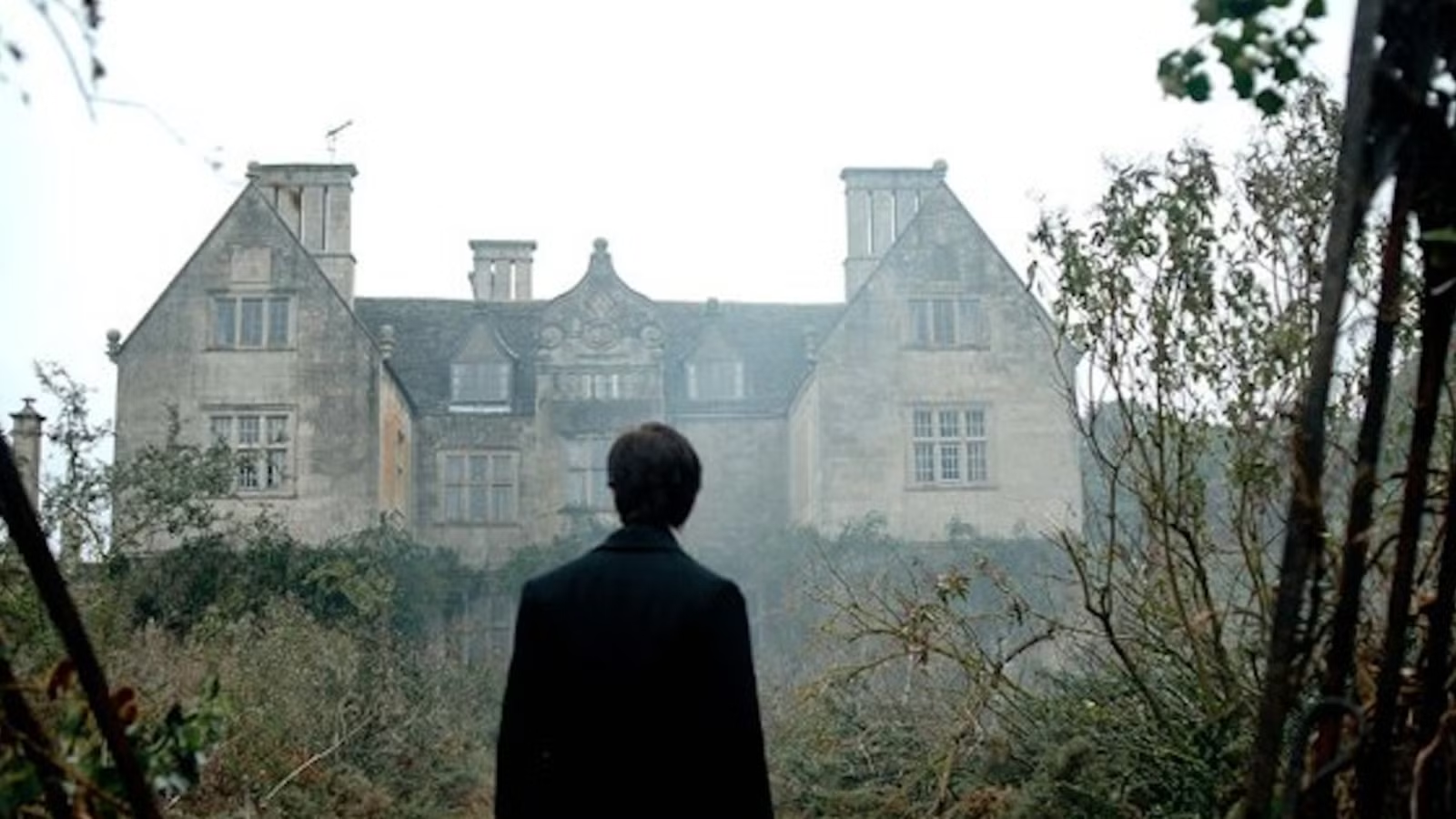
Funnily enough, it was marketed as a return to the kind of horror movies that were popular back in the 1950s and 1960s. It was a concerted effort on the part of the filmmakers to take audiences back to that era, at a time when the most popular horror hits were the Conjuring movies. Radcliffe, who played an attorney sent to a foreboding British manor house to retrieve documents left behind by its deceased owner, was joined in the cast by Ciarán Hinds and Janet McTeer. The movie was directed by James Watkins, who went on to make the hit horror remake Speak No Evil, and is gearing up for the release of DC’s Clayface.
We’re talking about The Woman in Black, which was co-produced by Hammer Films — a British company that became known for Gothic horror beginning in the 1950s. The movie was a box-office hit, grossing around $130 million worldwide against a reported budget of $15 million. It received mixed reviews and is now sitting at a 66% score on the aggregator website Rotten Tomatoes, where the consensus reads, “Traditional to a fault, The Woman in Black foregoes gore for chills — although it may not provide enough of them for viewers attuned to more modern, high-stakes horror.” The film was followed by a sequel, titled The Woman in Black: Angel of Death, which was headlined by Jeremy Irvine and directed by Tom Harper. Radcliffe’s movie was added to the Paramount+ library this September. Stay tuned to Collider for more updates.

February 3, 2012
95 minutes
James Watkins
Jane Goldman
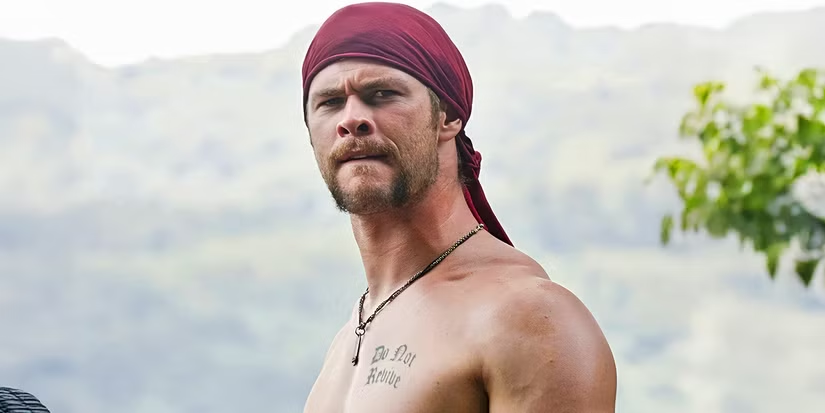
Note: The following contains spoilers for A Perfect Getaway.
Writer-director David Twohy had a hand in creating an incredible number of Hollywood genre pics from the early ’90s, including writing credits on Critters 2, Terminal Velocity, and even Harrison Ford‘s stone-cold action classic The Fugitive. He made a name for himself as a director, though, with the sleeper sci-fi/horror film Pitch Black, which also happened to help put star Vin Diesel on the map. Twohy’s gritty, vibes- and action-first franchise yielded two sequels: The Chronicles of Riddick and, later, Riddick.
His single foray into pure suspense filmmaking came with 2009’s A Perfect Getaway, and he proved as adept as any Hollywood craftsman at selling both physical danger and psychological complexity, armed with a cast of greats that included a young Timothy Olyphant. A Perfect Getaway is a simple sell: Two couples on a tropical vacation realize they’re being stalked by killers. Twohy, and the cast, inject the premise with remarkable life, though, through sheer sturdy filmmaking and charismatic acting, with Olyphant proving himself early on as a compelling leading man — and genre veteran Steve Zahn showing that he’s capable of surprising the audience.

A Perfect Getaway begins with a perfect bait-and-switch that the audience can likely already sense — as in, it’s too “perfect.” Zahn’s Cliff and Milla Jovovich‘s Cydney, alleged newlyweds, head to a tropical honeymoon, making cute videos and heading for the hills with a trail leading to a secluded beach. Twohy cuts in handheld shots from their wedding, showing groomsmen wishing them well and immediately establishing Cliff as an aspiring filmmaker. The warmth is there from the beginning; Zahn’s dorky, well-meaning character pulls a lot of weight as the couple has an unnerving encounter with a pair of hitchhikers (one of whom is a young Chris Hemsworth), before they befriend Nick (Olyphant) and Gina (Kiele Sanchez), attempting the same trail they’re hiking
Twohy derives a considerable amount of tension from the clearly on-location photography, emphasizing these characters’ isolation in every high-angle shot, and the whole thing has a fun and tense, colorful vibe that continues even when things get bloody. And things get bloody indeed, once the foursome receive word of a double-murder, allegedly committed by a man and a woman. By this point, the audience is likely already on board with both couples and scouting for dangers just outside the frame, but Twohy shoots everything impassively until the film takes its crucial turn, with Zahn and Jovovich’s characters revealed as a psychotic, meth-fueled killer couple looking to steal the identities of Nick and Gina.
From then on, Twohy doesn’t shy away from subjective, muddy close-ups and hand-held shots, as well as frank views of gory injuries. The film starts to sing, in a way that will remind fans of Sam Raimi’s recent Send Help.
Relatively early in his career, Olyphant already radiates a criminal amount of charm in what could have been a stock role. With his southern drawl, warmly needling relationship with his girlfriend, and gentle prodding of Zahn and Jovovich’s villains, Olyphant’s former military protagonist injects a real warmth and sense of stakes into an increasingly dangerous vacation. He evinces the credibility and magnetism of a young Kurt Russell or Harrison Ford, even as most audiences likely only knew him as Sheriff Seth Bullock on HBO’s gone-too-soon masterpiece of a revisionist Western, Deadwood.
Early on, Olyphant earnestly asks Zahn’s undercover psycho about his supposed work in the film industry before the film’s big turn, even musing that if a film were to be made about his life, he’d like to be played by Nicolas Cage. It’s well-written stuff, performed realistically by Olyphant. And when Nick’s apparent special forces training comes out, and Twohy fills the frame with Olyphant’s sweaty, bloodied face, ragged clothes, and cut physique in the film’s latter half, it’s clear there’s an action star in the making.
Twohy’s thriller will likely end up a footnote in his otherwise sci-fi-centric filmography, alongside his unsung contributions to modern action cinema at large, but it remains the kind of three-star classic it would be a sin to miss when streaming. The film itself is refreshingly unfussy and unpretentious, loaded with juicy performances, beautiful location work, and rough violence. And the forgotten tropical thrill ride is streaming today on YouTube and Prime Video.

August 7, 2009
98 minutes
David Twohy
David Twohy
Camille Brown, Ken Halsband, Mark Canton, Robbie Brenner, Tucker Tooley, Ryan Kavanaugh
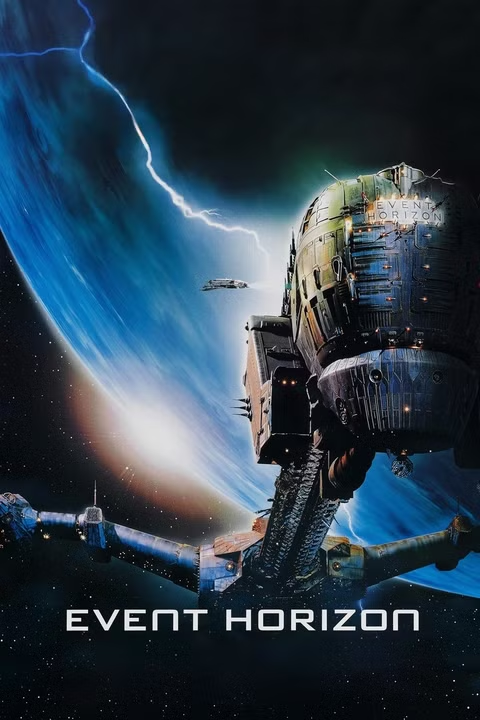
Science fiction and horror have always been a natural combination, particularly when filmmakers use the isolation of space to trap characters with something they don’t understand. Alien remains the obvious benchmark, but sometimes when the plot goes in a more supernatural direction, it’s worth paying attention to. That’s what happened in this film, and now you can watch it again as Paramount+ is bringing one of the 1990s’ most notorious sci-fi horror movies back to a major platform.
Seven years earlier, the pioneering research spacecraft Event Horizon mysteriously vanished without a trace on its maiden voyage. But then, in the darkness of deep space, a persistent signal prompts a rescue crew to wing its way through the galaxy on a bold rescue mission. What they uncover is an unimaginable interstellar horror that will test the entire team’s sanity and souls.
The cast is led by Laurence Fishburne (The Matrix) as Captain Miller, alongside Sam Neill (Jurassic Park) as Dr. William Weir, Kathleen Quinlan (Apollo 13) as Peters, Joely Richardson (Nip/Tuck) as Starck, Richard T. Jones (The Rookie) as Cooper, Jack Noseworthy (Breakdown) as Justin, Jason Isaacs (Harry Potter and the Chamber of Secrets) as D.J., and Sean Pertwee (Gotham) as Smith. Directed by Paul W. S. Anderson (Resident Evil), the 1997 movie failed to find an audience in theaters but has since become a cult favorite.
Event Horizon wasn’t well received when it arrived in theaters and currently holds a 37% critics’ score on Rotten Tomatoes. Its reputation has changed considerably over the years, with the movie developing a loyal following among horror fans and becoming widely regarded as a cult classic. The movie was also a major box office disappointment, earning approximately $42 million worldwide against a reported $60 million production budget. Its success on home video helped give Event Horizon a second life, with its combination of science fiction and supernatural horror finding an audience that it couldn’t attract during its original theatrical run.
The legendary critic Roger Ebert stated that Event Horizon starts off feeling like a proper sci-fi classic in the making — sleek ships, eerie sound design, and that slow, creeping sense of dread that pulls you right in — but that’s all surface level. The atmosphere does a lot of heavy lifting early on, with the cold, empty ship and strange signs of life setting up something genuinely unsettling.
Event Horizon is streaming now on Paramount+.

August 15, 1997
95 minutes
Paul W. S. Anderson
Andrew Kevin Walker, Philip Eisner
Jeremy Bolt, Lawrence Gordon, Lloyd Levin
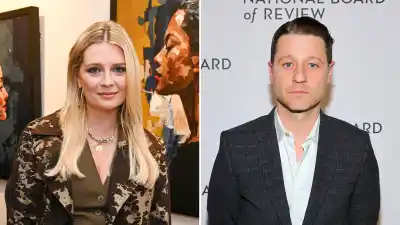
The O.C. alum Ben McKenzie isn’t necessarily shutting the door on his time as Ryan Atwood for good.
Speaking to Australia’s KIIS 1065 on Friday, September 4, McKenzie, 47, admitted he would be open to a reboot of the series.
“I don’t know that there has ever been serious talks, but I’d be up for it,” he said. “Yeah, I think so, under the right circumstances. It was a great show. We had a great time. I learned a lot. I was so young, we were all young.”
McKenzie shot to fame on the teen series, which premiered in 2003 and ran for four seasons until 2007. He starred alongside Mischa Barton, Adam Brody and Rachel Bilson.

After years of denying that things went down between Mischa Barton and Ben McKenzie on set of The O.C., the actress is changing her story about the “whole ordeal.” “It was kind of complicated for me,” Barton, 38, began on the “Call Her Daddy” podcast episode on Wednesday, February 21, when discussing her breakout role […]
Meanwhile Barton, who portrayed McKenzie’s love interest Marissa Cooper, teased that there could one day be a return on the horizon during an interview with RTL last month. (Marissa was killed off at the end of season three.)
“There might be a reunion coming up; we’ll see,” she cryptically told the outlet. After being pressed for more details, she said again, “We’ll see.”
Bilson has also expressed potential interest in reviving her character Summer Roberts.
“I would always be up for it. But it’s also this thing that people still watch and are still discovering,” the actress, 45, told Variety in June 2024. “So do you just leave that special moment as it is?”
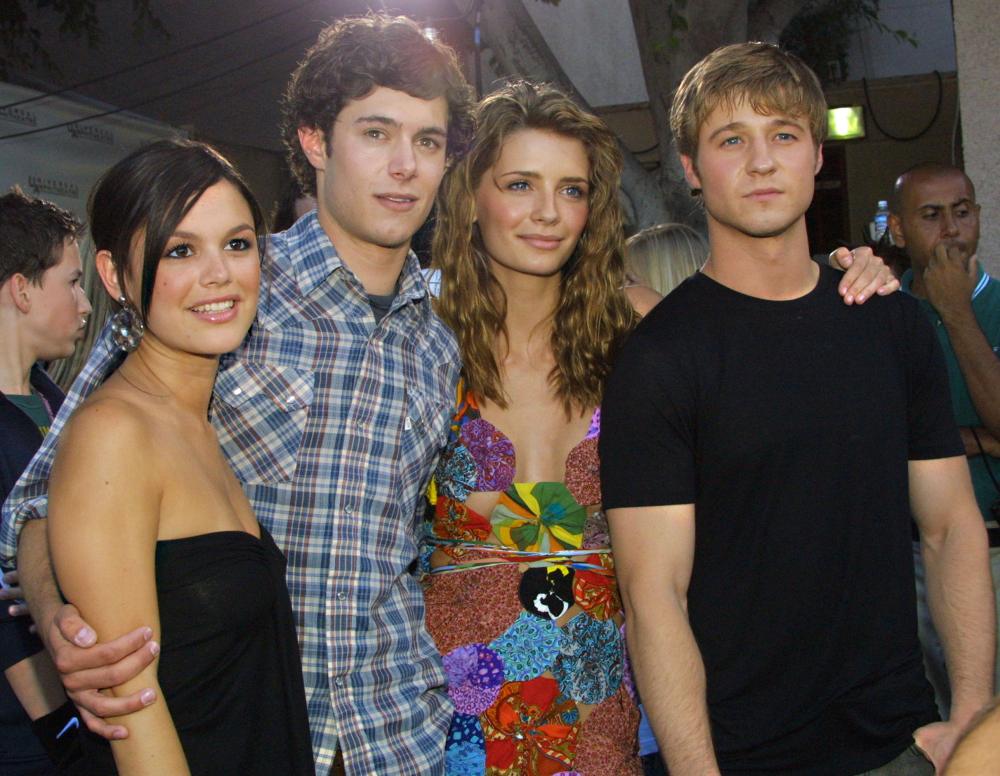
Rachel Bilson, Adam Brody, Mischa Barton and Ben McKenzie. (Photo by Frederick M. Brown)
She added, “You weigh both sides because obviously it would be fun and I love everybody and it would be awesome to go back and we need to somehow bring Marissa back to life and do the whole thing if we do it. But also leaving it for what it was and how special it kind of was, is also a positive.”
Brody, who played Seth Cohen, has been less enthusiastic about bringing back the beloved characters — suggesting it may not work as well decades after the show’s peak popularity.
“I kind of don’t think it can be done because I feel like, socially, I think we’re in a different place. And I think we’re in a more conscious place,” Brody, 46, explained on the “Welcome to The O.C., Bitches!” podcast in October 2021.

A reunion worth celebrating! Rachel Bilson crossed paths with her former The O.C. costar Adam Brody at an airport on Tuesday, August 13. “Ran into my ol buddy from jfk to lax #californiaherewecome,” Bilson, 37, captioned a selfie on Instagram that she took with Brody, 39. The chance encounter attracted attention from Josh Schwartz, the […]
He continued, “I feel like The O.C., while it claims to be in a similar sense of Gossip Girl, while it would sort of say it’s a critique [of affluence], it’s not. It’s a celebration. It’s a celebration of affluence, in my opinion.”
Brody argued that the world is such a different place than it was in the 2000s that it would likely be hard for audiences to stomach some elements as easily as they once did.
“But I guess my point is like, for me, in a post-Donald Trump America, to go, ‘Let’s go to Orange County,’ I feel like you have to have a real reckoning politically and socially,” he continued. “And is that what people want to see with this show? I don’t know. And is there a way to do both? I mean, there is I suppose, but in my eyes, I’d probably want to torch it more than, like, the fans would want. So, I don’t know who would be happy.”
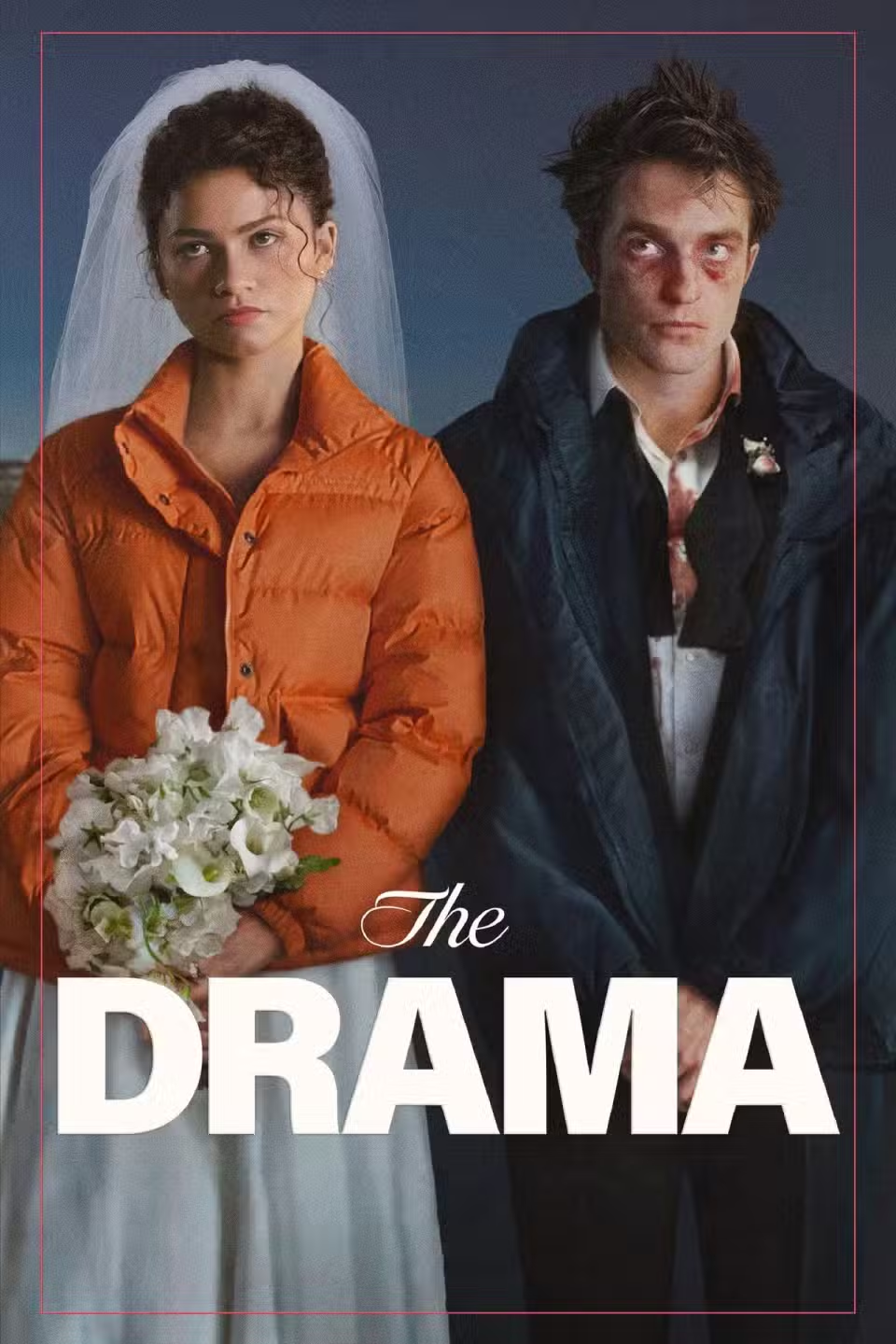
This summer of cinema has been dominated by two names: Zendaya and Tom Holland. Alongside Jon Bernthal, the pair have featured in the two biggest films of the year so far, both of which have smashed several important box office records. First came Christopher Nolan‘s ambitious adaptation of Homer‘s historical epic The Odyssey, which sailed onto global screens and earned the director’s highest-grossing film ever as well as the highest-grossing R-rated movie of all time, surpassing the $1.5 billion mark.
But The Odyssey would prove a mere starter for Zendaya and Holland, as the real-life married couple would then debut not just the biggest film of the year but the biggest film of the decade so far in Spider-Man: Brand New Day. After opening with the biggest first weekend in domestic box office history, Brand New Day has since obliterated a number of eye-catching box office records, currently sitting in third place on the all-time list with a total haul of $2.335 billion. For Holland, these two movies were his first of 2026, but Zendaya had already delivered one of the year’s early gems back in April.
The film in question is The Drama, which stars Zendaya opposite her Odyssey crewmate Robert Pattinson in a twisted anti-rom-com that follows a couple on the verge of getting married, whose relationship is turned upside down when one reveals a dark secret. Directed by Kristoffer Borgli, this clever, indulgent drama earned an impressive critical response and scored a strong box office haul of $105 million against a reported budget of just $28 million. Five months later, The Drama is still a hit, officially ranking as the third most-streamed movie on HBO Max in the U.S. at the time of writing.
Just when this year couldn’t get any more remarkable for Zendaya, she’s back alongside Pattinson this December for 2026’s most exciting sci-fi release. Released on the same day as Avengers: Doomsday, Dune: Part Three, the final installment in Denis Villeneuve‘s acclaimed adaptation of Frank Herbert‘s Dune novels, will see Zendaya reprise her role as Chani alongside a typically stacked cast. This includes Pattinson as Scytale, Timothée Chalamet as Paul Atreides, Javier Bardem as Stilgar, Rebecca Ferguson as Lady Jessica, Anya Taylor-Joy as Alia Atreides, Florence Pugh as Princess Irulan, and Jason Momoa as Hayt.
The Drama is streaming on HBO Max. Make sure to stay tuned to Collider for all the latest streaming stories.

April 3, 2026
105 minutes
Kristoffer Borgli
Kristoffer Borgli
Ari Aster, Lars Knudsen, Tyler Campellone






Bitcoin price stalls near $82K as key resistance holds


Best Gaming Laptops, CPUs, TVs, And Keyboards To Upgrade Your Set Up For GTA VI


The Birds Outside, Drawn For You Automatically


IMF Says El Salvador’s Post-Review Bitcoin Purchases Used No Public Funds

U.S. added stronger than expected 162,000 jobs in August as labor market bounced back


Alexandre Pato consortium’s Northampton Town investment approved


Golden Eaglets Drawn in Group B for 2026 WAFU B U17 Championship


Commanders’ Chig Okonkwo is a top breakout fantasy football candidate

XRP price breaks falling channel as bulls target $1.53

Weekend Open Thread: Beyond Yoga


A new European chapter for Gibraltar


The House | Bin the lectures, bring gossip and be ready to banter: how the new PM should prepare for his Trump encounter


How To Avoid Winter Colds: 4 Everyday Habits That Spread Germs, Says Pharmacist


From warning to listing: UK’s largest retail investment platform opens access to crypto ETNs

A Worthy Android Ereader, With Some Tradeoffs


FinCEN flags $12.7B tied to Southeast Asia crypto investment scams


Trezor Data Breach Impacts 67,000 More US Customers


33 Cosy Autumn Home Decor Ideas: Blankets, Pumpkin Decorations, And Candles
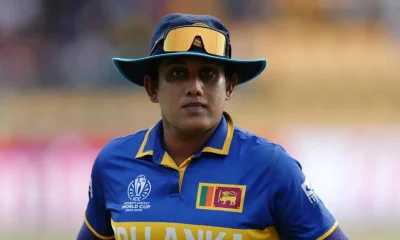

Seven wickets in 21 balls: Sri Lanka’s Chamari Athapaththu scripts history with record-breaking spell


How To Edit Claude’s Memory

You must be logged in to post a comment Login