Entertainment
Hannah Einbinder and Gillian Anderson’s Bloody, Steamy Slasher Is a Cannes Horror Standout

Much like the very experience of being human, in Jane Schoenbrun’s movies, there are no easy answers. We’re All Going to the World’s Fair is a hypnotic journey through the darkest corners of the internet and how a young girl’s loneliness and alienation set her on this path. I Saw the TV Glow is an odyssey of two souls exploring their identities through the power of television and fandom.
While Schoenbrun’s trippy imagery and non-linear narratives toy with the conventions of horror, sci-fi, and thriller, the story always traces back to the relationships we have with ourselves, our identities, and our desires. Opening the Un Certain Regard section at this year’s Cannes Film Festival, Teenage Sex and Death at Camp Miasma is Schoenbrun’s most horror-leaning outing yet, but Schoenbrun remains true to their confounding but awe-inspiring lamentations on belonging and one’s journey to finding and accepting who they really are.
‘Teenage Sex and Death at Camp Miasma’ Is a Movie Made for Slasher Fans


Hannah Einbinder stars as Kris, a queer filmmaker and slasher buff who has been given the reins to reboot the “Camp Miasma” film series, a long-running, backwoods slasher franchise à la Friday the 13th. The series needs reviving with a new “woke” direction due to the transphobic origins of its central killer, Little Death. It’s a not-so-subtle reference to the distasteful and downright hateful twist of 1983’s Sleepaway Camp, a film that attributes the killer’s psychotic thirst for blood to their gender confusion. Kris is set on casting the actress who played the original final girl, Billy Prestley (Gillian Anderson), who has not worked since and resides deep in the snowy mountains on the set of the original movie. Kris travels to stay with her, and, over the next couple of days, the two watch the “Camp Miasma” movies, eat candy, and reveal more of themselves to each other than they ever have before.
It’s easy to describe Teenage Sex and Death at Camp Miasma as a movie made for slasher fans, but that’s exactly what it is. Just about every famous slasher series and final girl is mentioned, and the original “Camp Miasma” film hits every trope of the genre imaginable. But Schoenbrun’s film is not a slasher itself. Far from it. It’s an odyssey of the self that the audience is led through, and Hannah Einbinder’s Kris is the vessel. We see how horror movies have shaped the underlayer of Kris, forming their deepest desires and fantasies, which bring them both solace and great shame. It’s here that Teenage Sex and Death at Camp Miasma shifts into one of the most nuanced depictions of eroticism and desire in recent years. Schoenbrun understands that movies shape who we are, but so too does sex and how we derive pleasure. Much of the film exists in the mind of someone on the edge of climax, experiencing discomfort and eroticism in equal measure. Shame permeates Schoenbrun’s filmography, and Teenage Sex and Death at Camp Miasma is a glorious crescendo that sees the filmmaker confidently revel in and celebrate what gets us off.
Director Jane Schoenbrun’s Latest Is More Conventional but Still Wildly Original

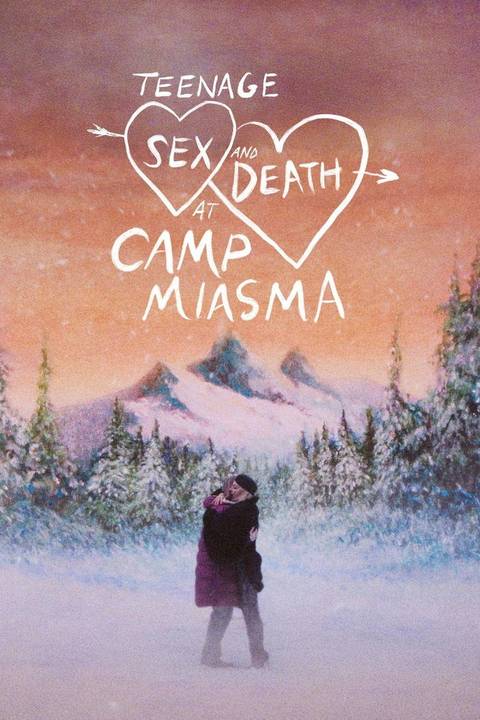
Teenage Sex and Death at Camp Miasma also sees Schoenbrun’s visual style at its most conventional but still mesmerizing. Some sets are your classic backwoods horror settings, but the painted landscapes in the backdrop conjure up a Wes Anderson feel that suits Schoenbrun’s reality-bending vision. Sequences filled with splatter and gore are given a tender melody as the Counting Crows croon while Little Death fights back against a world that has alienated them. Slasher fans will delight in the woods scenes with copious amounts of fog and outrageous levels of blood squirting, with some sequences feeling straight out of a video game or reminiscent of the fight scenes in Malignant. But it’s in the intimacy scenes where Schoenbrun’s grip feels the most present, zooming in on Kris’ and Billy’s faces and drawing us into the intoxicating pull between the two leads. It all works to create a truly engulfing experience, giving the themes of intimacy and selfhood the palpability they require.
Hannah Einbinder’s lot in life seems to be playing opposite maddening older women, and Gillian Anderson is yet another castmate she creates irresistible chemistry with. As our protagonist, Einbinder subtly creates a hidden torment within Kris, one that they slowly unveil as they become closer to Billy. Schoenbrun’s filmography has given us some dynamic characters who grapple with their identity, and Einbinder more than accomplishes the task in her portrayal of Kris. Anderson is a propulsive force of alluring melancholy, brushing off her Blanche DuBois accent that leaves you hanging on every delicious word. There’s a great deal of humor in Anderson’s characterization of Billy, while always returning the character to a place of pain and misunderstanding. While brilliant as their own characters, they bring out the best in each other, and Schoenbrun draws out another two magnetic performances.
Any horror aficionado knows that sex is a key ingredient to any good slasher, and Teenage Sex and Death at Camp Miasma reckons with the effect that has on the viewer, especially queer folk who have been led to believe that their desires are something to bury deep at the bottom of the lake, with the likes of Jason Vorhees and Little Death. Pacing issues somewhat hurt the second half, but no one should expect a conventional narrative structure from Schoenbrun. That said, overall, this is their most conventional film yet, and it further cements Schoebrun as one of the pre-eminent queer filmmakers of today, one who continues to bring clear vision and nuance to themes of identity, sex, and selfhood.
Teenage Sex and Death at Camp Miasma premiered at the 2026 Cannes Film Festival. It releases in theaters in the U.S. on August 7 before arriving on Mubi.

- Release Date
-
August 6, 2026
- Runtime
-
112 minutes
- Director
-
Jane Schoenbrun
- Writers
-
Jane Schoenbrun
- Producers
-
Dede Gardner, Jeremy Kleiner
- Gillian Anderson and Hannah Einbinder have palpable chemistry.
- The film is a treat for horror and slasher fans.
- Jane Schoenbrun creates another tender story of belonging and identity.
- The pacing can sometimes feel stilted in the second half.
You must be logged in to post a comment Login