Entertainment
HBO Max’s Unhinged Thriller Masterpiece ‘Backrooms’ Deserves Kudos for Being Bold and Experimental

Backrooms is the little movie that could. With a miniscule budget of around $10M (an amount of money that, on a Marvel movie, would be allocated for purchasing the baby powder to get actors into their super suits), first-time director Kane Parsons was able to bring the labyrinthine yellow walls of his YouTube series of the same name to the big screen with the effectiveness of an old pro, grossing nearly $400M worldwide for studio A24. But this feat of cinematic terror would never have been fully realized without the help of a dedicated VFX crew.
“We went in knowing this was a lean budget film with quite an expansive vision,” production visual effects supervisor Edward Douglas says. “We also knew that much of the aesthetic was driven by what Kane Parsons had done in his YouTube shorts, which were all 100% him in [computer graphics software program] Blender, other than a few little live-action bookends. One of the first things we set about doing was figuring out how we can take advantage of that kind of process and pipeline in a cinematic feature film environment. If we could do long stretches of CG backrooms the same way Kane did in his YouTube series, that would set us so far ahead. If I phone up a VFX vendor and say, ‘We have five minutes of full CG,’ there goes our entire movie budget.”
Building 100,000 Square Feet of Backrooms —On Set and With VFX

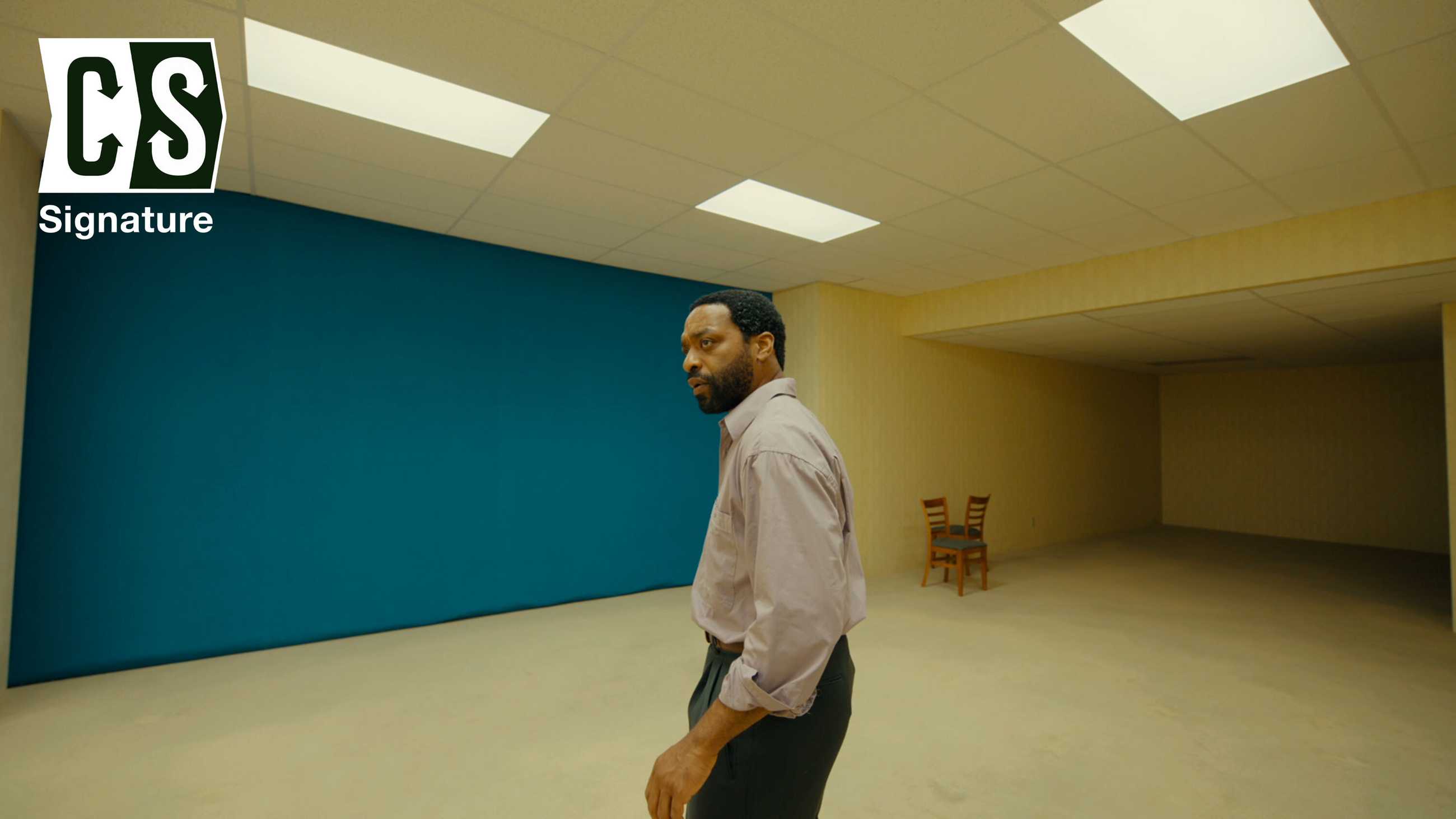
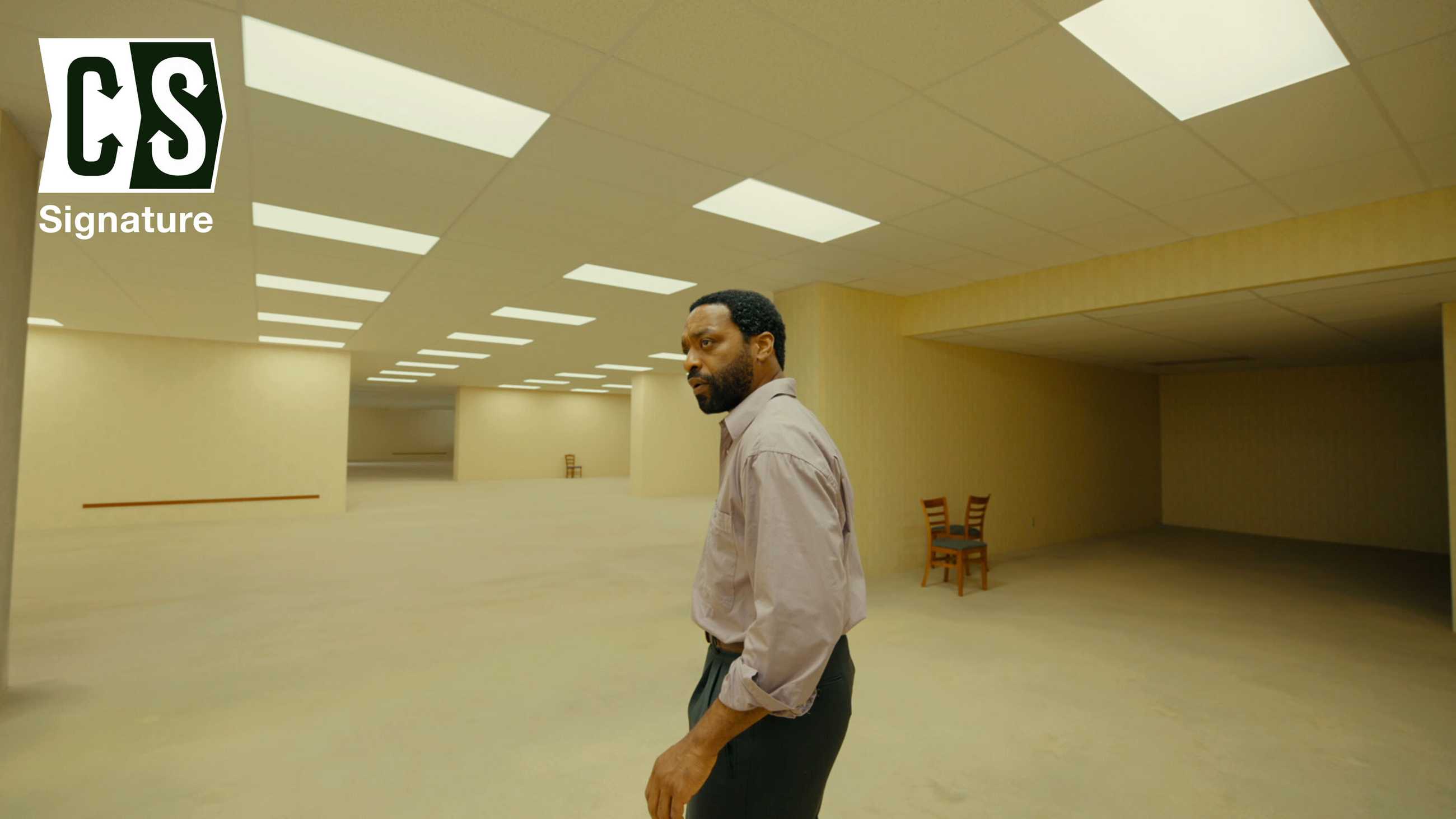
Instead, Douglas’ first call was to associate VFX supervisor Calvin Romeyn, who he’d previously worked with on films like The Monkey and Longlegs. Romeyn bridged that high/low-end gap, with his extensive background working in the big studio realm (Avengers: Endgame, Star Wars: Rise of Skywalker) as well as his experience making short films using Unreal Engine and Blender. “Ed’s like, ‘It’s this internet thing, you probably never heard of it, called The Backrooms’… I was like, ‘Hold up, are they doing a movie?’” Romeyn remembers. “I was very excited to be part of it. Having worked in Blender a lot in recent short films — but also my current company that I run now, Roxel Creative, uses Blender for all of our CGI — it was a very easy process transferring Kane’s working Blender files from older YouTube shorts, and then elevating that into feature quality.”
Parsons handed in files he created with 100,000 square feet of yellow-tinted backrooms he wanted shown in the film, which initially crashed the film team’s computer. Although production designer Danny Vermette was able to construct 30,000 square feet of that as physical sets across four stages, the VFX team took up the slack in adapting the rest of the director’s files to work within Will Soodik’s screenplay.
It’s a real testament to Kane and Ed and Calvin that those set extensions feel seamless… We’re looking at every pixel to make sure no stone is left unturned.
As Douglas recounts, “Once we realized our set footprint, we started breaking down what had to be visual effects. What’s a set extension? Where do actors interact? How far do the actors go? What do we want to light and have for our director of photography to work within, and what do we extend in visual effects? The proven methods from Kane Parsons in Blender saved us thousands of square feet of set we don’t have to build, that we never actually see our feature actors Chiwetel Ejiofor or Renate Reinsve interact with.”
“When we did a lot of the yellow wallpaper room extensions in [3D graphics software] Maya, we had this wealth of Blender files to build off of,” adds John Pierce, visual effects supervisor at Mr. Wolf VFX, which worked on Backrooms. “You had these style frames that were already there, and we were able to make that stuff blend seamlessly. That speaks to tremendous efforts Kane put into all of the detail of imagining this world in such depth. It was not a huge overall budget, but it all came together and you wouldn’t be able to tell what that film cost if you didn’t have the information. It’s a real testament to Kane and Ed and Calvin that those set extensions feel seamless. We had a lot of practical wallpaper, and you’re trying to marry those together. At Mr. Wolf, this is our business. We’re looking at every pixel to make sure no stone is left unturned.”
How Chiwetel Ejiofor and Renate Reinsve Walked Through Walls
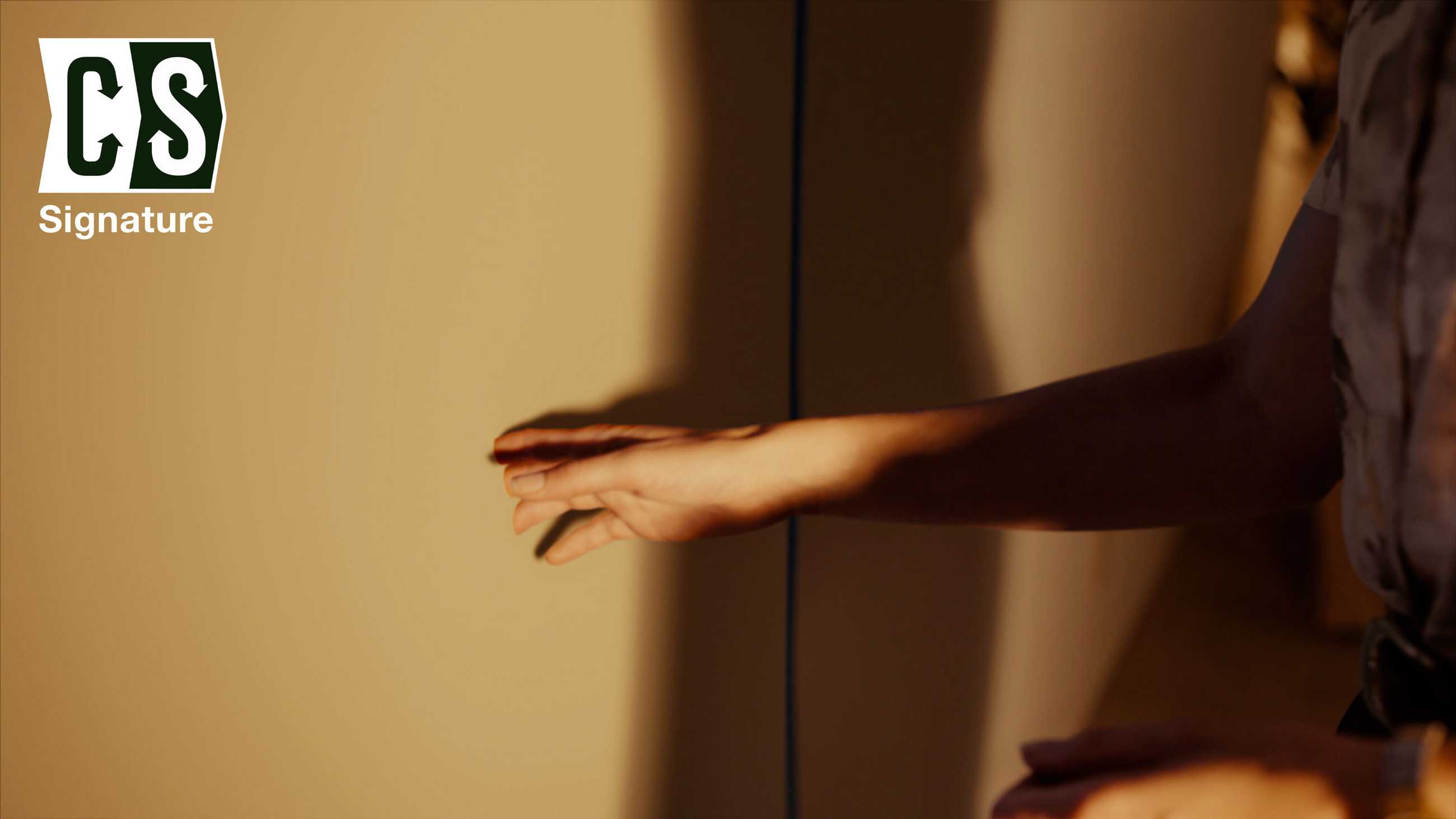
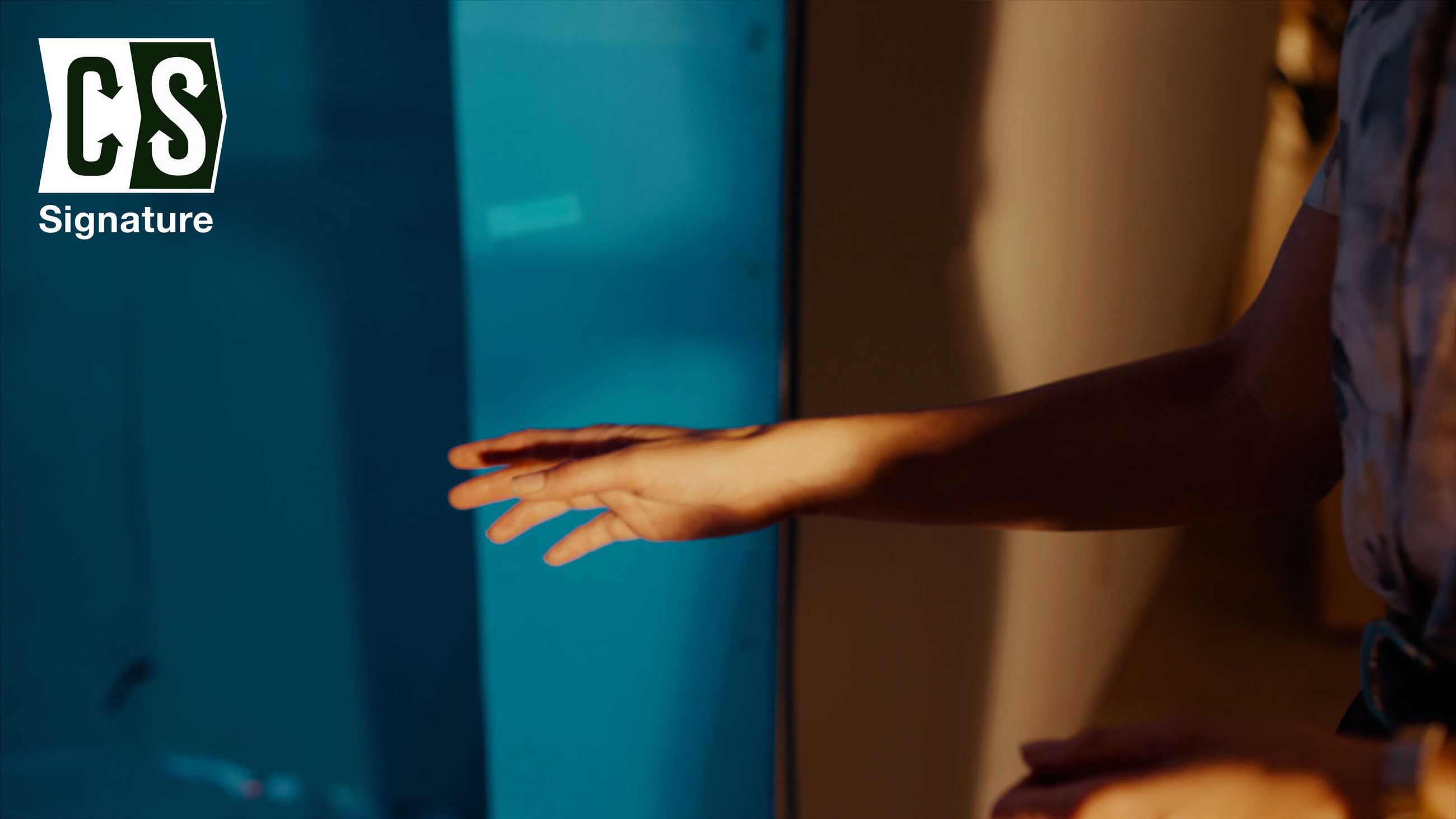
A major aspect handled by Mr. Wolf was the film’s “wall clipping,” when various characters pass through what appears to be a solid wall to enter or exit the backrooms.
“It’s this minimalist, simplistic concept and yet achieving it ended up being complex,” says Pierce. “We built out all the geometry of the specific room where the clipping plane was taking place to make sure that we could see, and we also had scans and match moves of the actors to see specific points where they were actually crossing the plane itself, getting that alignment exactly correct. Taking into account the anatomy of the specific limb that was going through the wall at a given point, all of the specific fall off of the lighting, ambient or key.”
In the end, Douglas and his team wound up delivering 600 effects shots, which does not sound like much compared to your average studio movie — but considering the slow-paced Backrooms was made up of only 830 shots altogether, those VFX shots encompassed 75% of the film. The fact that the then-20-year-old Parsons knew CGI so intimately proved a huge advantage to the process.
-
“I had a workstation in my server closet that Kane was able to log into. He had a Parsec connection and he would log in sometimes at night or during the day and make little tweaks or update the camera, or be like, ‘Oh, I found a new asset for this thing’ and swap it out,” says Romeyn. “The director was a VFX artist, so we were able to speak the same language.” Another advantage that worked with the budget was the fact that many sequences were shot as low-res found footage, eventually transferred onto VHS tape for processing. Not a “VHS filter”…actual VHS.
“That was another little trick we had,” explains Douglas. “We didn’t have to deliver at full-res 4K for some of these sequences. It wasn’t a digital version made to look like old analog. [Technical coordinator] David Rice and our tech team spent a lot of time figuring out what kind of tapes [we needed] — extended play versus slow play for different looks — and we were able to get that analog sheen over all the footage. We knew where we had to put the details. We could let go of the exact tiny detailing you might put into a 4K cinematic render.”
One major sequence that benefited from this was the opening scene of scientists investigating the backrooms, which was originally shot in fully cinematic widescreen but then, late in the game, was switched to entirely 4:3 VHS found footage. The creative reason behind this was to launch the movie in the oner style of the YouTube videos, as opposed to a classically shot scene with multiple edits. This involved putting Parsons on a capture stage in Vancouver with a virtual camera.
-


“The big challenge with that sequence was the area we’re covering was close to a kilometer of actual distance from one end of the backrooms to the other… but the space that we had in the volume is like 40-feet long or something,” Romeyn says. “Kane would run from one side diagonally across the volume to the other, then we’d move the virtual set to meet up where he ended his last motion, and then he would continue the next one. We ended up with 15 separate passes that would all eventually be stitched together, with hand animation to clean up the transitions. It feels like one continuous segment of a person running through the backrooms when it’s really just Kane running around in circles in a volume.”
‘Backrooms’ Most Horrifying Effects Were Actually Practical
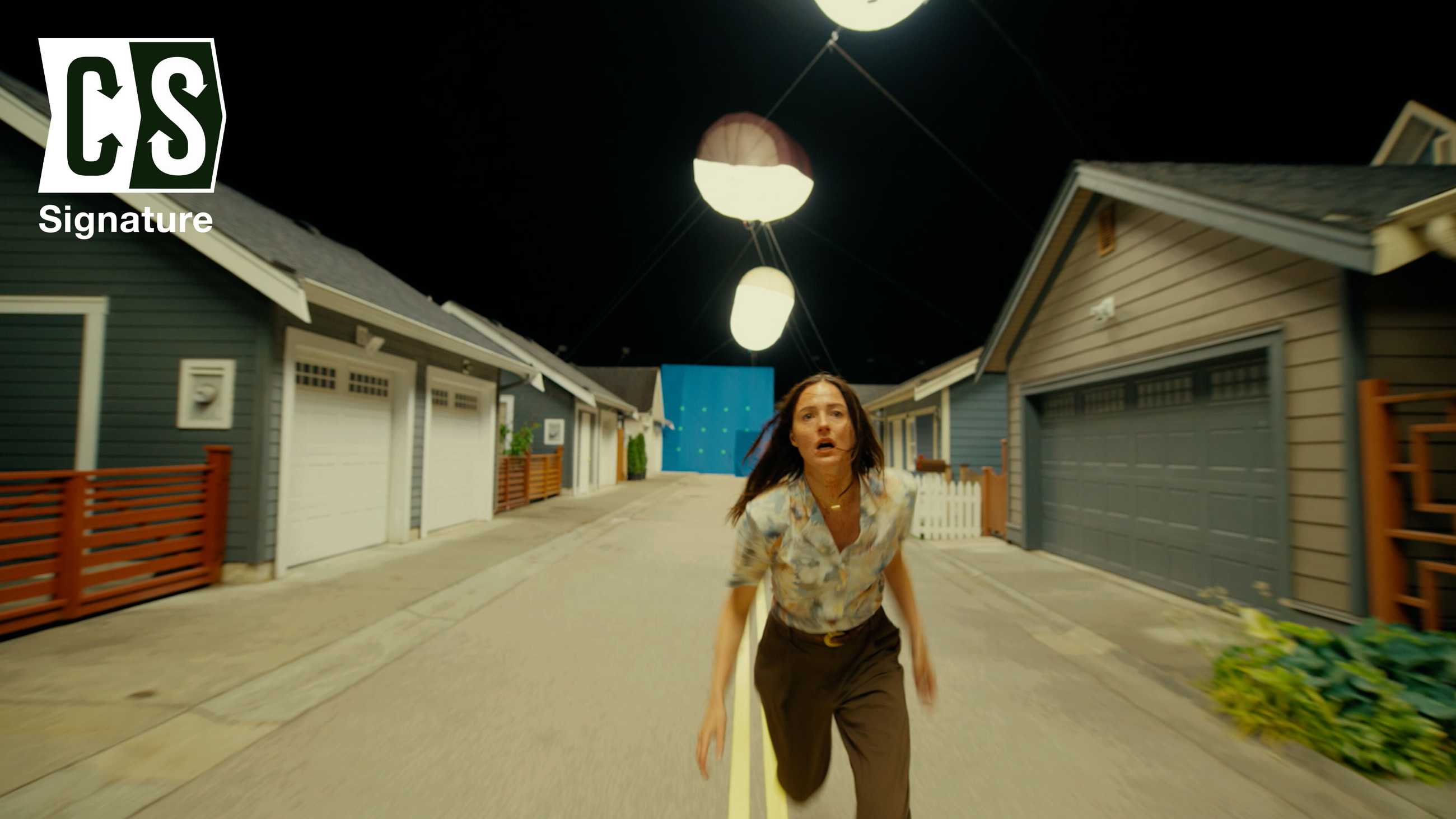
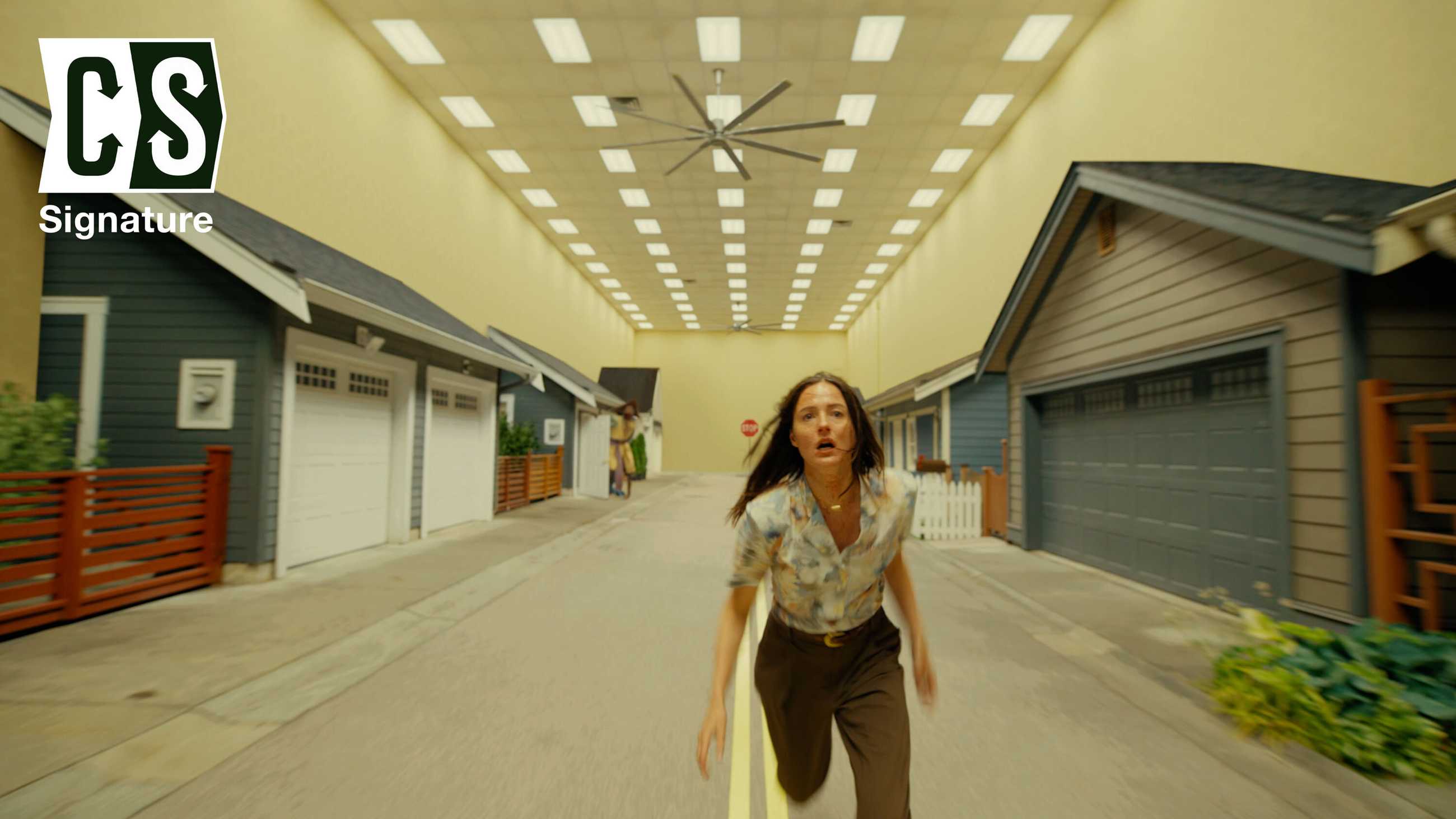
Lest you think that all of Backrooms was rendered in a computer farm somewhere, several in-world characters who look like horrifying AI hallucinations were actually created with traditional, practical techniques.
Werner Pretorius, the film’s special makeup effects designer, said that the three malformed “still life” characters who appear in the kitchen scene — the bearded cake man, the red-headed woman, and the wheelchair man — were originally meant to be CGI creations, but evolved into practical makeup effects used on live actors due to budget constraints.
Pretorius explains, “I said to Kane, ‘What do these things look like?’ And he’s like, ‘I don’t know. It’s the backrooms, we’ll figure something out.’ He came back at us with some Photoshop designs he had done himself, which were very much like the warp function in Photoshop. Some of those elements would be really difficult to do practically. We can’t go from ear-to-ear with someone’s eye. That becomes problematic, so we reined them in a little bit. Then I said, ‘Hey, have you ever seen the sculpts of Evan Penny?’ He does these oversized hyper-realistic sculptures, and he does repetition. Basically, as AI would see things, the AI slop, the mistakes. Kane jumped on that. He’s like, ‘Oh my God, yeah, this is great! I love this because this is exactly what I was thinking for the backrooms where the AI makes mistakes. It just imagines stuff.’”
-

Robert Bobroczkyi, Edward J. Douglas (Visual Effects Supervisor), Jennifer Latour (Key Makeup Effects Artist) Edward J. Douglas / A24Robert Bobroczkyi, Edward J. Douglas (Visual Effects Supervisor), Jennifer Latour (Key Makeup Effects Artist)
-
This uncanny valley effect was taken to the nth degree with the backrooms character of Pirate Clark, a monstrously exaggerated version of Ejiofor’s character who, again, looks CG but is actually a live actor with a few CG enhancements. Pirate Clark is portrayed by 7-foot-7 Romanian actor Robert Bobroczkyi of Alien: Romulus fame. When the character went from a planned CG creation to live-action a mere three weeks before shooting, Pretorius suggested Bobroczkyi at a Thursday meeting and the actor was hired by Monday.
“We managed to source the original scans from Alien: Romulus through Legacy Effects in Los Angeles, who kindly donated those to us so we could get started on sculpting him,” says Pretorius. “Kane was working on a design for what Pirate Clark would ultimately look like, and [costume designer] Mica Kayde was working on the wardrobe for that. Blinks and facial movement were always going to be digital, that was always the plan.”

Pretorius continues, “We sculpted this thing and then 3D printed the mask, made everything so it fits the actor. We met Robert a week later, it was a really rushed timeline. There were some specific things we had to do to make Robert comfortable. We made some gloves so it’s quick on and off on set with the multi-fingers with an ‘AI made them’ vibe — but they still had to sort of move, which is a bit of a trick when it comes to gloves. I think he had a fitting the day before we shot.”
“Ed came to us at Zoic and challenged us to completely replace Pirate Clark’s head,” adds Zoic Studios VFX supervisor Edwin Rivera. “The desire was to get it to look more like Chiwetel and also have it emote more, which would have been challenging for the mask as it was originally conceived. It was a pretty compressed timeline, but the team did a pretty good job of not only making it look like Chiwetel but making it look not like Chiwetel?
There are other versions of the backrooms out there in the various wikis that have some vastly different environments, but this was very much grounded in Kane’s with the yellow wallpapered spaces, and everything reflecting that aesthetic.
“There’s a delicate balance because his proportions were gargantuan, and we wanted to save the practical hat,” Rivera continues. “So, given that his practical mask head was taller and more elongated, everything now gets proportionally wider as it gets taller. Ed was describing the backrooms as a memory, that these still lifes were misremembrances. One of the other analogies he made was a Star Trek transporter accident…that this poor character has been put together poorly, had animalistic urges, and was in terror the entire time.”
The peg leg of Pirate Clark was also rendered in CGI. Rivera recalls, “Tracking the peg leg was a bit of a challenge because we were tracking it to the ball of his foot, to his heel, because that was a direct connection that never slid or moved around while he was walking. Then we had to destroy it as well. Zoic’s effects department worked on creating the splinters and actually replacing the coat rack that she hits it with, as well. That shot at some point became almost entirely CG.”
Building the Next ‘Backrooms’

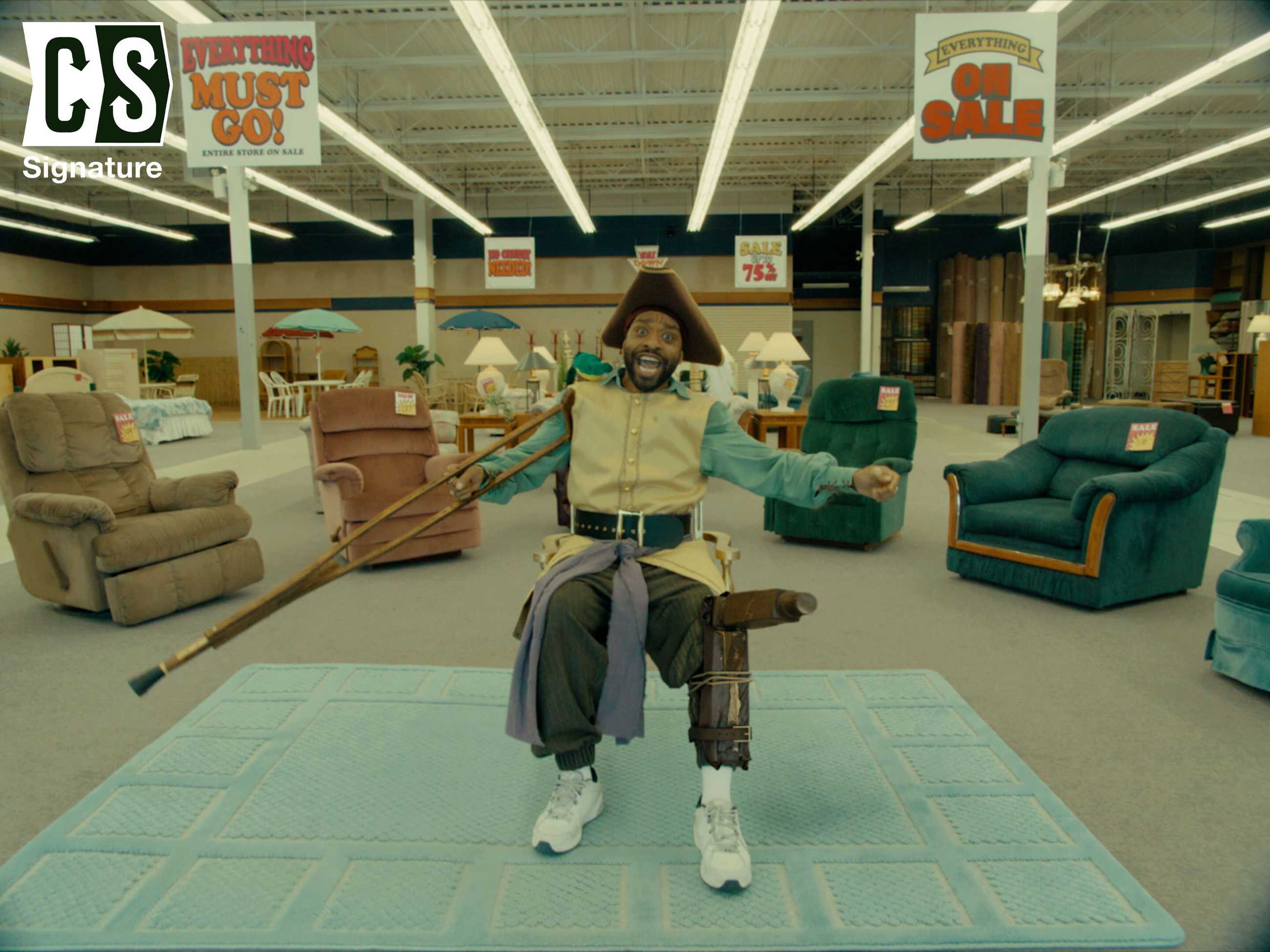
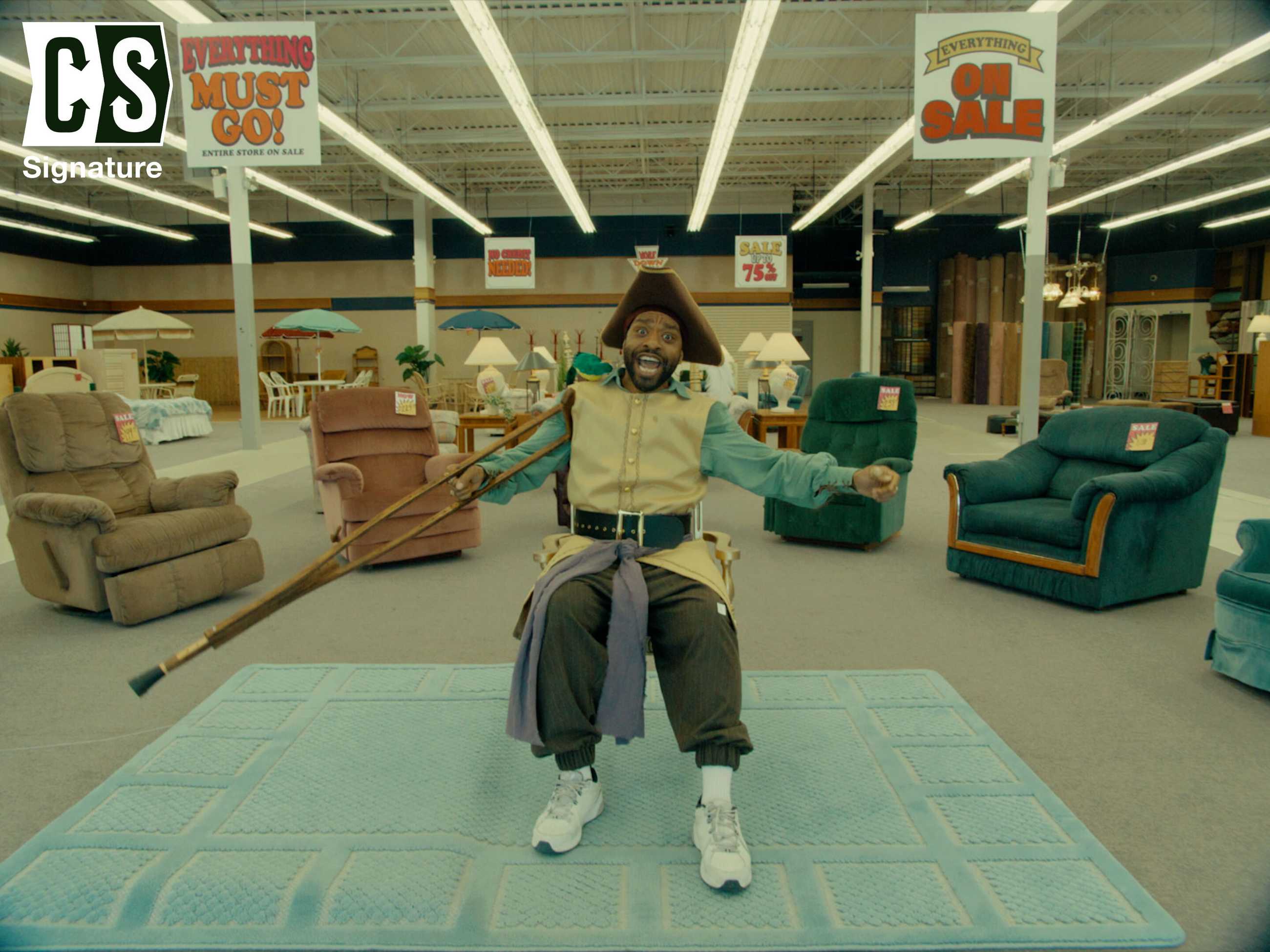
Because the concept of the backrooms is shared lore which sprang out of online threads, there have been some wildly expansive versions created, including cities in the sky and architecturally vast ocean floors amid the vast backroom mazes. With the success of the Backrooms film, a sequel seems assured, but the makers of the $10M original do not think an expanded budget will necessarily mean wildly fantastic new environments in the future.
“It’s Kane Parsons’ interpretation of the backrooms lore,” says Douglas. “There are other versions of the backrooms out there in the various wikis that have some vastly different environments, but this was very much grounded in Kane’s with the yellow wallpapered spaces, and everything reflecting that aesthetic. There wasn’t really a question of [including] some of these enormous, very different spaces from some of the other wikis, but I can imagine those sequels will absolutely expand out scope and build new and different things that fit into that world and be able to go bigger.”
Pierce concludes, “You’re just trying to make sure everything looks fantastic, and get everything done on time. What’s the sequel where the budget maybe explodes? One of the greatest things about Kane’s aesthetic is the minimalist approach. I imagine these new versions of the world that come out are still going to have this minimalist approach, not doing everything just for the sake of a huge budget and really being mindful. Whatever the next vision is could be super cool, because I think it’s still going to stay within that minimalist approach.”
-
“Kane is a great example of an artistic creator with tremendous restraint,” adds Romeyn. “It can be easy to get carried away with dumping the kitchen sink, but his worlds are minimal and they’re very purpose-built. As we were developing some of these scenes, like the Vertigo Room, we were learning a lot about his style. And it really is about what’s important in the scene and what’s going to tell the story.”
Pierce concludes, “You’re just trying to make sure everything looks fantastic, and get everything done on time. What’s the sequel where the budget maybe explodes? One of the greatest things about Kane’s aesthetic is the minimalist approach. I imagine these new versions of the world that come out are still going to have this minimalist approach, not doing everything just for the sake of a huge budget and really being mindful. Whatever the next vision is could be super cool, because I think it’s still going to stay within that minimalist approach.”
-


Backrooms will be available to stream on HBO Max beginning September 25, and is currently available to rent or buy on streaming as well as Blu-ray/DVD through A24.


You must be logged in to post a comment Login