Henry Cavill as Solo in The Man from UNCLEImage via Warner Bros.
The first Star Wars movie in seven years, The Mandalorian and Grogu, is eying nearly $100 million in its extended four-day opening weekend. This is a massive number, but it’s the worst showing for a Star Wars live-action movie since Disney’s takeover of the franchise. It’s also under the $103 million four-day opening of Solo: A Star Wars Story, which was released in 2018 and is now remembered for being the only flop in the franchise’s decades-long history. The good news is that The Mandalorian and Grogu wasn’t as expensive to produce as Solo, which suffered through a difficult production and was released amid negative fan campaigns. Whether it turns out to be a hit or a flop, The Mandalorian and Grogu will always dominate the discourse. However, a more shocking event took place at the box office this weekend.
Yes, even more shocking than the second-weekend haul of Obsession — the horror movie made history by grossing more in its sophomore frame than it did in its opening weekend. The terrific buzz surrounding the film is expected to push it past the $100 million mark worldwide, against a reported budget of under $1 million. This would make it one of the biggest hits of all time by return on investment. Scratch beneath these two headlines, and you’ll discover that the new Guy Ritchie movie, In the Grey, has dropped out of the domestic top 10 list entirely after just one week despite featuring stars such as Henry Cavill, Jake Gyllenhaal, and Eiza González.
Advertisement
Advertisement
Collider Exclusive · Action Hero Quiz Which Action Hero Would Be Your Perfect Partner? Rambo · James Bond · Indiana Jones · John McClane · Ethan Hunt
Five legends. Five completely different ways of getting out alive — with style, with muscle, with charm, with luck, or with a plan so intricate it probably shouldn’t work. Ten questions will reveal which action hero was built to have your back.
🎖️Rambo
🍸James Bond
🏺Indiana Jones
Advertisement
🔧John McClane
🎭Ethan Hunt
Advertisement
01
You’re dropped into a dangerous situation with no warning. What do you need most from a partner? The first few seconds tell you everything about who belongs beside you.
Advertisement
02
You have to get somewhere dangerous, fast. How do you travel? How you get there is half the mission.
Advertisement
03
You’re pinned down and outnumbered. What does your ideal partner do? This is when you find out what someone is really made of.
Advertisement
04
The mission is paused. You have one evening to decompress. What does your partner suggest? Who someone is when the pressure drops is who they actually are.
Advertisement
05
How do you prefer your partner to communicate mid-mission? Good communication is the difference between partners and a liability.
Advertisement
06
Your enemy is powerful, well-resourced, and has the upper hand. How should your partner approach them? The approach to the enemy defines the partnership.
Advertisement
07
Things go badly wrong and you’re captured. What do you trust your partner to do? Who someone is when you need them most is the only thing that matters.
Advertisement
08
What does your ideal partner bring to the table that you couldn’t replace? A great partner fills the gap you didn’t know you had.
Advertisement
09
Every partnership has a cost. Which of these can you live with? No one comes without baggage. The question is whether you can carry it together.
Advertisement
10
It’s the final moment. Everything is on the line. What do you need from your partner right now? The last question is the most honest one.
Advertisement
Your Partner Has Been Assigned Your Perfect Partner Is…
Your answers have pointed to one action hero above all others. This is the person built to have your back — for better or considerably, spectacularly worse.
Advertisement
Rambo
Your partner doesn’t talk much, doesn’t need to, and will have assessed every threat in your immediate environment before you’ve finished your first sentence. John Rambo is not a man of plans or politics — he is a force of nature shaped by survival, loyalty, and a capacity for endurance that goes beyond anything training can produce. He will not leave you behind. He has never left anyone behind who deserved to come home. What you get with Rambo is the most capable, most quietly ferocious partner imaginable — one who has been through things that would have broken anyone else, and who chose to keep going anyway. You’ll never need to ask if he has your back. You’ll just know.
James Bond
Advertisement
Your partner will arrive perfectly dressed, perfectly briefed, and with a cover story so convincing it’ll take you a moment to remember what’s actually true. James Bond is the most professionally dangerous person in any room he enters — and the most disarmingly charming, which is the point. He operates in a world of layers, where nothing is what it appears and every advantage is used without apology. You’ll never be bored. You’ll occasionally be furious. But when it matters — when the mission is genuinely on the line and the margin for error has collapsed to nothing — Bond is exactly the partner you want. He has survived things that have no business being survivable. He does it with style. That is not nothing.
Indiana Jones
Your partner will know the history, the language, the cultural context, and exactly why the thing everyone else is ignoring is actually the most important thing in the room. Indiana Jones is brilliant, reckless, and occasionally impossible — but he is also one of the most resourceful, most genuinely knowledgeable partners you could find yourself beside. He approaches every situation with a scholar’s eye and a brawler’s instinct, which is an unusual combination and a remarkably effective one. He hates snakes and gets personally attached to objects of historical significance, both of which will slow you down at least once. It doesn’t matter. What Indy brings is irreplaceable — and the adventures you’ll have together will be the kind people write books about. Assuming you survive them.
Advertisement
John McClane
Your partner was not supposed to be here. He does not have the right equipment, the right information, or anything approaching the right odds. He has a sarcastic remark and an absolute refusal to accept that the situation is as bad as it looks. John McClane is the greatest accidental hero in the history of action cinema — a man whose superpower is stubbornness, whose contingency plan is improvisation, and whose capacity to absorb punishment and keep moving would be alarming if it weren’t so useful. He will complain the entire time. He will make it significantly more chaotic than it needed to be. And he will absolutely, unconditionally, without question come through when it counts. Yippee-ki-yay.
Advertisement
Ethan Hunt
Your partner has already run seventeen scenarios by the time you’ve finished reading the briefing, and the plan he’s settled on involves at least two things that should be physically impossible. Ethan Hunt operates at the absolute edge of human capability — technically, physically, and intellectually — and he brings the same relentless precision to protecting his partners that he brings to dismantling organisations that shouldn’t exist. He is not easy to know and he will never fully tell you everything. But he will carry the weight of the mission so completely, so absolutely, that your job is simply to trust him — and the remarkable thing is that trusting him always turns out to be the right call. The mission will be impossible. He will complete it anyway.
Advertisement
Guy Ritchie Is Staring at His Worst Bomb Since ‘Revolver’
Ritchie is still an above-the-title filmmaker and his output remains hugely popular on streaming. He has three shows running concurrently, and has been on a particularly prolific run in the last few years. However, In the Grey has emerged as his fourth flop in a row after Operation Fortune: Ruse de Guerre, The Covenant, and The Ministry of Ungentlemanly Warfare. In fact, In the Grey is shaping up to be one of the biggest flops of its kind in recent memory. The movie grossed less than $3 million in its opening weekend, which marked Ritchie’s worst domestic debut in nearly two decades. On its first Thursday, it averaged just $83 per theater and was outgrossed by Project Hail Mary and The Super Mario Galaxy Movie, which were released several weeks ago. The movie has so far grossed only around $5 million, which is around one-eighth of what Ritchie and Cavill’s The Man from U.N.C.L.E made in 2015. The espionage thriller was supposed to start a new franchise, but wasn’t a big enough hit to warrant a sequel. Stay tuned to Collider for more updates.
Advertisement
Advertisement
Release Date
May 13, 2026
Advertisement
Runtime
98 minutes
Producers
Advertisement
Ivan Atkinson, Dave Caplan, Guy Ritchie, John Friedberg
Have you ever watched something so downright dumbfounding that you didn’t know how to put it into words? 2012’s Hyperfutura falls squarely into that wheelhouse, and I still haven’t decided whether it’s lightning in a bottle or a flash in the pan. It’s a psychedelic journey centering on an unemployed man named Adam (Eric Kopatz), who signs up for a paid three-day medical experiment, and then everything goes off the deep end. The best way to describe what happens in this film is to compare it to that scene in A Clockwork Orange, when Alex has his eyes taped open while watching a wall of televisions, forced to witness and absorb all the horrors of the world as intensely as humanly possible.
The problem here is that there’s no real agenda or objective. Every film site says that Adam becomes a prototype for the first half-man, half-machine, but writer-director James O’Brien shock-cuts his way through the entire thing with such reckless abandon that I’d argue there’s hardly even a plot here. While I admit some of the footage is kind of cool to look at, it’s pretty much just a doomscroll of a movie that repeatedly visits upsetting moments in history while our protagonist is needlessly tortured throughout the film’s entire runtime.
Fortunately, this independent effort is only an hour long, so at the very least you can go into this one knowing that any suffering you’ll experience will be temporary.
Genius Or Pretentious? I Honestly Can’t Tell
Here’s the entire plot to Hyperfutura: Adam gets fired from his machinist job at a factory. He sees a suspicious flyer hanging on a telephone pole stating that if he signs up for a three-day medical experiment, he’ll be compensated. He shows up, is given a pill by a clearly evil doctor (Gregory Kiem), and is then monitored from a surveillance room by a guy known only as the Specialist (Brando McClure), who’s so evil that he even has a twirly mustache to drive the point home.
Adam meets a woman named Simone (Karen Corona), who’s undergoing the same treatment, which, to the best of my knowledge, involves getting tapped with plastic tools while being electrocuted, some drug-addled sensory deprivation, and also overstimulation, depending on how far along they are in the process. I think there’s a romantic bond here, but I can’t tell you for certain. I’m not lying when I say that this movie is basically an hour of stock footage with inverted effects while a bunch of jumbled, disastrous world events are tossed into the editing software as haphazardly as possible.
Cool To Look At, For A Minute
I wanted to check out Hyperfutura because I love vibe pieces that operate in a fugue state. In my mind, I was expecting another film in the same vein as Beyond the Black Rainbow, which also has a barebones plot but vibes so hard that it’ll put you in a straight-up trance. This plays out more like a film student who just got a new computer, complete with free editing software, and decided to cram in as much footage as the free trial would allow. For this joke to work, the free trial lets you render a final product that’s exactly as long as this movie, but not a minute longer.
Advertisement
Hyperfutura’s Wikipedia page cites influences like Ed Wood, The Church of the SubGenius, and even references to James Orin Incandenza, the fictional experimental filmmaker who lives in the pages of David Foster Wallace‘s Infinite Jest. I’ve spent the last two weeks revisiting the audiobook after first reading the novel in college, and I’m failing to see any connection here beyond the possibility that whoever curated the information for that rundown thought name-dropping in this fashion would give the film some clout.
Hyperfutura is cool to look at for about a minute. If you can make it through the full hour, you’ll probably wish you’d grabbed a few screenshots to make a cool desktop wallpaper, but outside of that, I’d hardly call it a movie. And if you’re going for that weird “experimental, drug-induced, soul-wrecking odyssey that’s drenched in neon and high-contrast filters” kind of vibe, there’s plenty of brainrot on Instagram that does it better and only takes 30 seconds out of your day. Personally, I’d recommend Nutter Butter’s social media pages because they effortlessly pull off what James O’Brien is trying so hard to do here.
As of this writing, you can stream Hyperfutura for free on Tubi. Seriously, don’t pay for it.
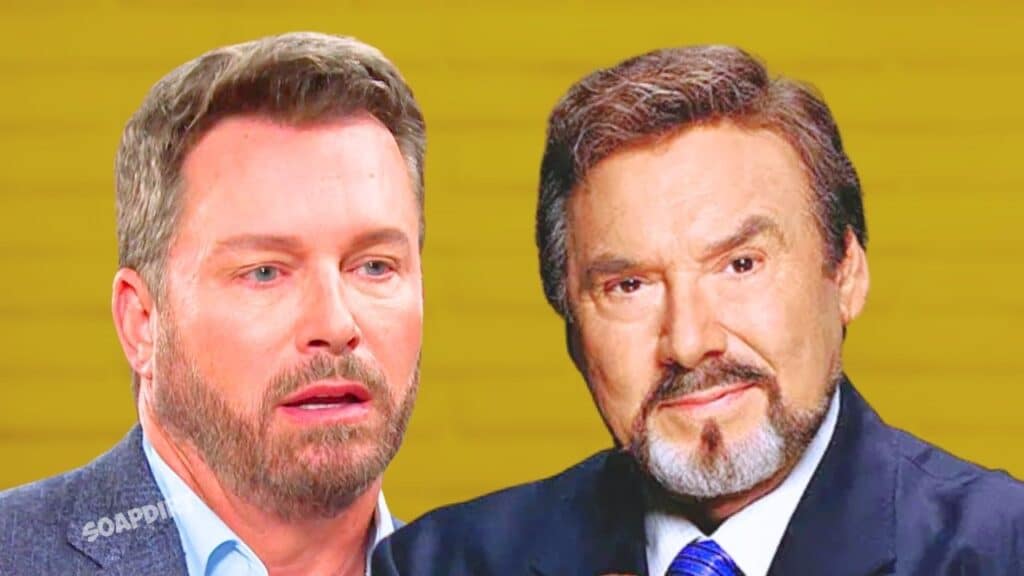
Days of Our Lives shocks with a pawn missing from Stefano DiMera’s (Joseph Mascolo) chess set that he bequeathed to Marlena Evans (Deidre Hall) and John Black (Drake Hogestyn) in his will. And now Brady Black (Eric Martsolf) and Chad DiMera (Connor Floyd) and Belle Black (Martha Madison) are all really interested in the chess set and exactly what was meant by this gift.
We’re going to talk about the missing pawn in Chad and Belle’s theory about another pawn and whether it might be Brady Black or somebody else equally interesting who’s supposed to take his dad’s place.
Days of Our Lives: The Missing Pawn Mystery
So, initially the assumption was that the missing pawn in the chess set referred to John Black, the original pawn himself. But then Chad pointed out this week that the chessboard and pieces were an inheritance meant for both Marlena and John.
And Chad pointed out that Stefano, his dad, would have no idea that John wouldn’t be alive to receive the bequest personally. So, then Chad and Belle were discussing whether it might have been a mystery meant for John rather than being about John.
Advertisement
And that leads us to the question of is there another pawn right now versus another pawn in the past? Marlena recently gave her daughter Belle permission for her and Chad to investigate the mysterious chessboard that Stefano gifted his queen of the night and his original pawn John.
However, Marlena was clear she didn’t want to know what Belle and Chad discover. So once they started thinking it through, Chad and Belle decided the missing game piece isn’t just symbolic of John Black’s past as Stefano’s brainwashed mercenary.
Chad and Belle are thinking that the pawn could reference a whole other person altogether. Maybe a new person. After all, there’s 16 pawns on the board. Eight on each side, eight in each color, not just a single pawn.
DOOL: Stefano’s Operatives and the Key Discovery
This suggests that Stefano had in the past or still has right now another operative or operatives or possibly a victim that he’s using as a pawn in this sick twisted game he’s playing from beyond the crypt. We’ve also gotten other hints recently with EJ DiMera (Dan Feuerriegel) and Theo Carver (Tyler Joseph Andrews) playing a frustrating game of chess this week in the living room under Stefano’s portrait while talking about his will and inheritances.
Advertisement
This week, Theo and Chad are looking over the chess set together at Brady Pub. And a key falls out into Theo’s hand. And that key could be the first step into figuring out who this pawn is.
We’re wondering if there’s a chance that it’s Belle’s brother, John’s son, Brady Black, who may be some sort of unwitting pawn in Stefano’s twisted final game. He’s playing with the family of Marlena and John Black.
Days of Our Lives: The Phoenix and His Chess Obsession
We all know The Phoenix loved chess and he loved manipulation and the deliberately missing pawn is no accident. It’s a puzzle or some sort of secret message that was meant to be solved. If you recall when Marlena first refused the bequest, the pawn and the queen were there and they were standing out from the rest of the set. So, I’m thinking this missing pawn signals that an undiscovered player may have already been on the board and John and Marlena just never knew it or a new pawn is soon going to emerge.
But Stefano had no way to know John would suffer the untimely and tragic death that he did. So, there is a chance absolutely that there is another pawn out there. Maybe somebody that Dr. Wilhelm Rolf (Richard Wharton) may have brainwashed for Stefano, much like was done to John Black back in the day. And this mysterious pawn could be lurking around any corner in Salem. And they may not even know that they’re the pawn. They may be basically a sleeper cell that hasn’t been activated.
Advertisement
Days of Our Lives: Brady Black as the New Pawn
And this may all link back to the coin that was left at John’s grave site that Marlena found. If you remember. And the next clue, of course, is the key that Chad and Theo discover while playing around with the chess set this week. So, Brady Black, as John and Isabella Kiriakis Black’s son, has deep family ties to Stefano’s rival and enemy.
So, Brady seems a fairly likely candidate as the new pawn. Plus, his closeness to Marlena, his bonus mom, I think, would also appeal to the late Phoenix. And it’s something that Stefano knew about. So Brady could be positioned to become the new pawn.
He also has a connection to Stefano through Kristen DiMera (Stacy Haiduk) and their daughter Rachel Black (Lorelei Olivia Mote). However, if Days of Our Lives really wanted to twist things up, skipping a generation and Rachel being the pawn would be really wild. But assuming it’s an adult, Brady could very well be the next generation pawn if you think about it.
John was Stefano’s pawn. But he also did dirty work for Victor Kiriakis (John Aniston), who eventually became John Black’s father-in-law when he married Isabella. And of course, Stefano and Victor were sworn enemies. And they were pretty much cut from the same type of villainous cloth as we’ve seen.
Advertisement
Stephanie Targets Brady on Days?
Plus, Brady ran his dad’s company, Basic Black, before he teamed up with Steve Johnson (Stephen Nichols) at Black Patch. So, already Brady is following in his dad John’s footsteps. Plus Brady and Sarah Horton (Linsey Godfrey) are soon investigating DiMera Enterprises Pharmaceuticals’ roles in the deaths of Destiny and her sister Clea. So this puts Brady at odds with Stefano’s heir wicked son EJ. But I don’t think Stefano’s heir apparent really knows anything about this new pawn game.
Days of Our Lives: Stefano DiMera – Brady Black
Days of Our Lives: Other Possible Pawns and Theories
However, Dr. Rolf probably is neck deep in with Stefano’s new pawn. And if it isn’t Brady, maybe it’s wicked little Rachel since she seemed so enamored of the Arabian Nights book. That’s of course one of Stefano’s tools when he played mind games with Marlena.
And of course there’s Tate Black (Leo Howard). He could always be an unsuspecting sleeper agent, especially with him getting all these hand-to-hand combat skills. Brady’s son with Theresa Donovan (Emily O’Brien). If you remember, was manipulated in the womb by Kristen and Dr. Rolf. If you recall, Tate was ripped out of Theresa’s womb and implanted in Kristen’s, who raised Tate as an infant.
Kristen even named Tate after herself, calling him Christopher with a K like Kristen. So, Tate could very very well be used as the new pawn in this story arc. But I feel like he’s a longer shot. Because the actors were fired and are leaving and they’re neck deep in another story line right now. However, it is supposed to be DiMera adjacent. So we’ll see.
Days of Our Lives: Stefano Had No Limits
And I will say Stefano wasn’t opposed to messing with his own family. So that leaves other options open. Including EJ, Tony DiMera (Thaao Penghlis), not so dead Peter Blake (Dan Gauthier), not so dead Stefan DiMera (Brandon Barash). Heck, even Theo could be the next pawn in whatever endgame Stefano is playing from the afterlife. But I tend to think that Stefano wouldn’t have done that to Theo.
Advertisement
Now, we know from the big summer promo that somebody is sitting behind a computer watching them play this game. They are manipulating them, dropping hints, dropping little keys and clues. So, I think it could be pretty cool if that was Brady Black and he didn’t even know he was doing it. But since Rolf snuck in and gave Peter that shot to kill him, Stefano’s adopted son might have been kept in a person pod awaiting a role to play in this new game. So, we’ll just have to wait and see.
Jordyn Woods brought her “lucky bag” out one more time — and New York loved every second of it.
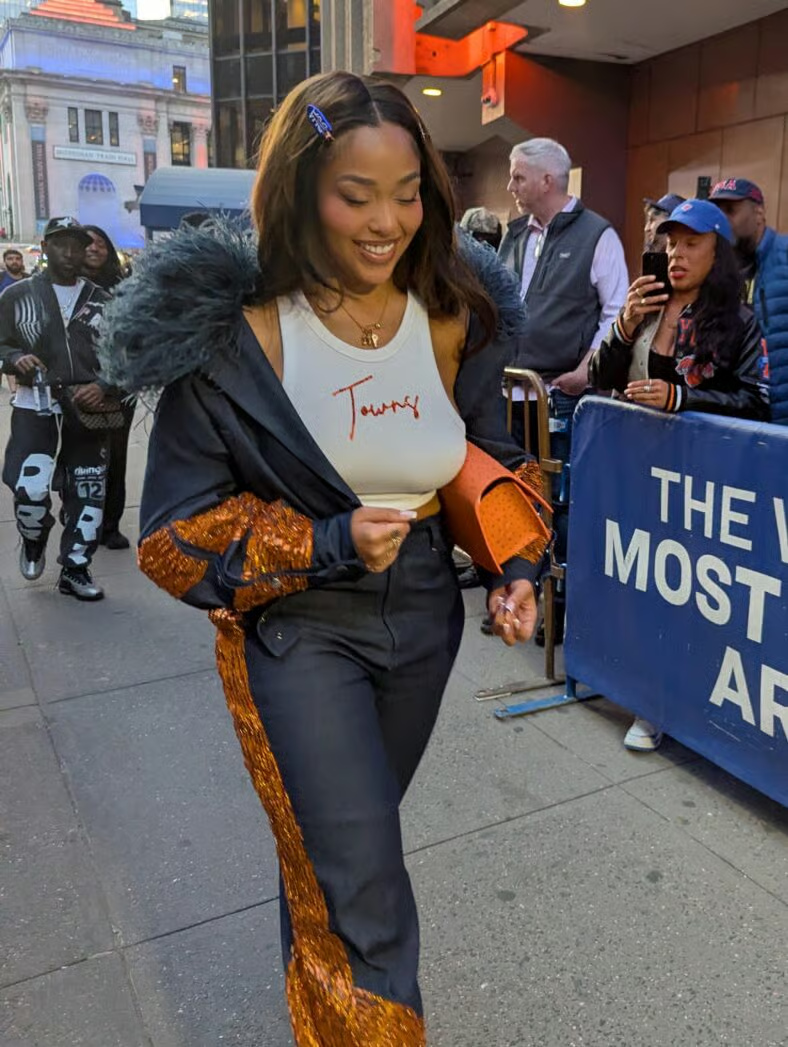
The fashion entrepreneur showed up to the Knicks championship parade on June 18 dressed head to toe in custom gear, with her now-iconic orange clutch firmly in hand. The internet could not get enough.
Jordyn Woods has become one of the most talked-about figures of the entire 2026 NBA season. Her bag, her outfits, and her unwavering courtside presence have made her a story all on their own.
Advertisement
Woods arrived at the Knicks victory parade rocking a full custom ensemble. She paired Towns’ No. 32 jersey with a Knicks hat and white jeans that read “Mrs. Towns” across the back.
The orange mini clutch from her brand, Woods by Jordyn, was once again strapped across her body. The bag, which had been courtside for every Knicks playoff game, had already sold out following the championship win.
Woods posted a celebratory photo of Towns holding the championship trophy on Instagram, with the lucky bag visible in the frame. The post quickly racked up hundreds of thousands of likes.
The Superstition Behind The ‘Lucky Bag’ That Helped Win New York A Championship
D J / MEGA
The orange clutch became the bag of legend after the Knicks lost Game 4 of the Finals, the one game Woods attended without the bag due to a strict no-bag policy at Madison Square Garden, as Page Six noted. Fans immediately connected the dots.
Woods revealed on the “TODAY” show that the superstition grew organically after that loss. “When you’re with someone, their dream becomes yours,” she said of supporting Towns through the playoff run.
Advertisement
The $125 accessory, now completely sold out, is only available for pre-order with a September ship date. Towns himself credited the bag publicly, saying on “Good Morning America” that New York had Woods and her clutch to thank.
Jordyn Woods Watched Her Brand Explode Overnight
D J / MEGA
The bag’s viral moment did not just deliver a championship — it delivered a business breakthrough. The Blast reported that Woods’ brand saw an overwhelming surge in orders immediately after the Knicks sealed their title.
TMZ reported that the mini clutch sold out entirely within hours of the final buzzer sounding. Woods’ manufacturing partners confirmed they were prepared for the growth and remained positioned to scale the brand accordingly.
The fashion designer said she was grateful for the response and hoped the momentum would push her brand beyond the basketball world. Woods by Jordyn also offers apparel and expanded into inclusive footwear in 2025.
Woods Was Not A Fan Of The Knicks Owner’s Unusual Championship Strategy
Spread Pictures / MEGA
Woods made headlines during the playoff run for more than just her outfits. The Blast reported that Towns revealed his fiancée’s reaction to Knicks owner James Dolan’s surprising request that players abstain from sex to gain a competitive edge.
Appearing on “The Howard Stern Show,” Towns said he is a “happily engaged man” before admitting that Woods was less than thrilled when he broke the news. “When I came home, and I told my fiancée what he said, she didn’t like to hear that one,” he said.
Advertisement
Other Knicks players also weighed in publicly on Dolan’s unusual ask. The request quickly became one of the most talked-about storylines of the entire 2026 Finals run.
Karl-Anthony Towns Makes Clear Jordyn Woods Is More Than Just A Courtside Presence
Beyond the bag and the fashion, Towns made sure the world understood the depth of what Woods means to him. The Blast reported that during the post-game press conference, the NBA champion delivered an emotional tribute to his fiancée.
Towns revealed that Woods was the person he called before saying goodbye to his mother at the hospital when she passed from COVID-19 complications in 2020. “You always pray you’re going to pick the right woman for you, and I know I did for my fiancée,” he said.
A championship ring, a sold-out bag, and the public devotion of one of the NBA’s biggest stars. At this point, has Jordyn Woods not already earned the keys to New York City?
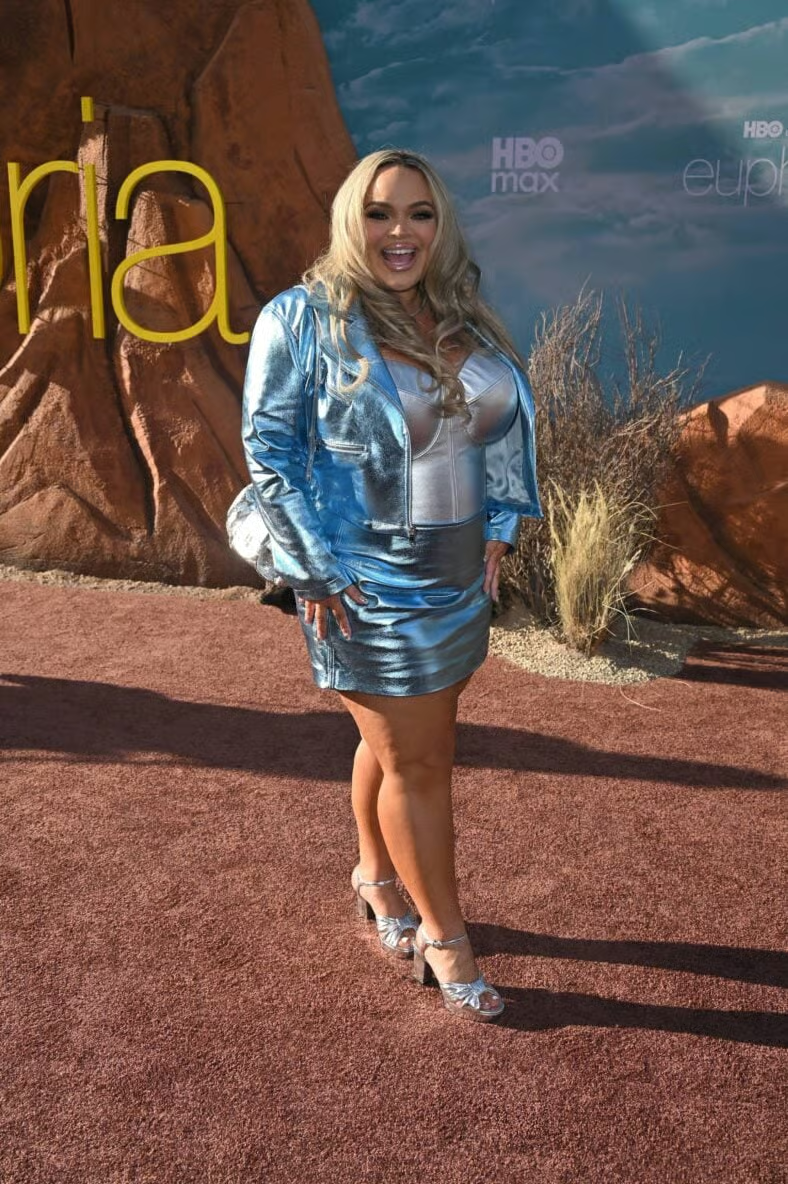
Trisha Paytas is the latest celebrity getting candid about how she achieved her fitness goals with the help of a GLP-1. In a new interview, the internet personality and viral podcast host said that she’s lost more than 20 pounds with the help of the popular medication after struggling with her diet following the birth of her three children.
MEGA
Speaking with PEOPLE, Paytas revealed that she’s been using a GLP-1 medication to help her shed pounds and achieve her fitness goals after months of trying to lose weight on her own. During the interview, the YouTuber said that her diet has always been a big struggle for her, considering she “grew up on fast food and processed foods.”
“I’ve just always eaten out and always overate. Like I’ve never felt full in my life,” Paytas said, adding that she’s been open with her followers about her fitness journey for years. “After I eat one meal, I already think of the next,” she stated.
After gaining 80 pounds following the birth of her three children, Paytas said she decided to take her health seriously; however, it wasn’t working out as she had planned. “I’ve always tried to do it the natural way,” she said, adding that she was “starving” herself and working hard in the gym.
“And I’ve tried everything else in my life, like all the fad diets, so I was like, okay, I should just try a GLP-1 if it’s working for so many people,” she said.
Advertisement
Trisha Paytas Calls GLP-1 Medication ‘Miraculous’
After trying a GLP-1 medication—a glucagon-like peptide-1 receptor agonist that affects satiety, according to the Cleveland Clinic—Paytas revealed how happy the medication has made her.
“It truly is nothing short of miraculous for me because now I can eat the foods that I like and just eat less,” she said, adding that she used to struggle with “food noise.”
“It’s just a wild thing to feel that because I’ve never felt that sensation of being full. It was a miracle. It’s really meant for people like me,” she said.
Since using the medication, Paytas said she’s lost 26 pounds in six weeks.
Trisha Paytas Said She Isn’t Losing Weight For The Public’s Approval … She’s Doing It For Herself
While Paytas is ecstatic about her journey and losing weight at a pace she hasn’t experienced before, the “Just Trish” podcast host said her weight loss has nothing to do with seeking others’ approval.
“I’ve always heard weight comments. That’s always been tough. I was like five months postpartum and people were like, ‘Oh, she’s still pregnant.’ It does kind of weigh on you. But for me, it was never about how I looked. It really was just my performance and my lack of energy on stage,” she said. “So when people were pointing out these photos to mock my weight, what I was seeing was like my knees hurting, me not being able to stand. That’s what motivated me.”
Advertisement
According to Paytas, who has fired back at bodyshamers in the past, her fitness journey isn’t about the number on the scale, but rather how she feels. “And I could tell by looking at those photos I did not feel my best,” she said.
How Else Has Using A GLP-1 Helped Paytas?
Since introducing a GLP-1 into her regular routine, Paytas said that her life has changed in unexpected ways. After losing 26 pounds, Paytas can now play with her three children—Malibu Barbie, Elvis, and Aquaman—at the park and has even incorporated new exercises into her life.
“It’s just given me such a great tool to become my healthiest, fittest self, which is really freeing,” she said. “I went from exercising like twice a week to now I exercise every day. I do at least an hour of cardio every day and Pilates.”
Will Paytas Always Use A GLP-1? She Says…
So, does Paytas see herself using a GLP-1 long-term? In her interview with PEOPLE, the “Beetlejuice” performer said the medication is a “life thing for me.”
While she revealed that she hasn’t been using the medication for that long, she doesn’t see it going anywhere anytime soon for her.
“I eat a normal amount, I don’t overthink food. So because I’ve lived 38 years of my life obsessing about food, it would be nice to live the next 38 just thinking about food a normal amount,” she said.
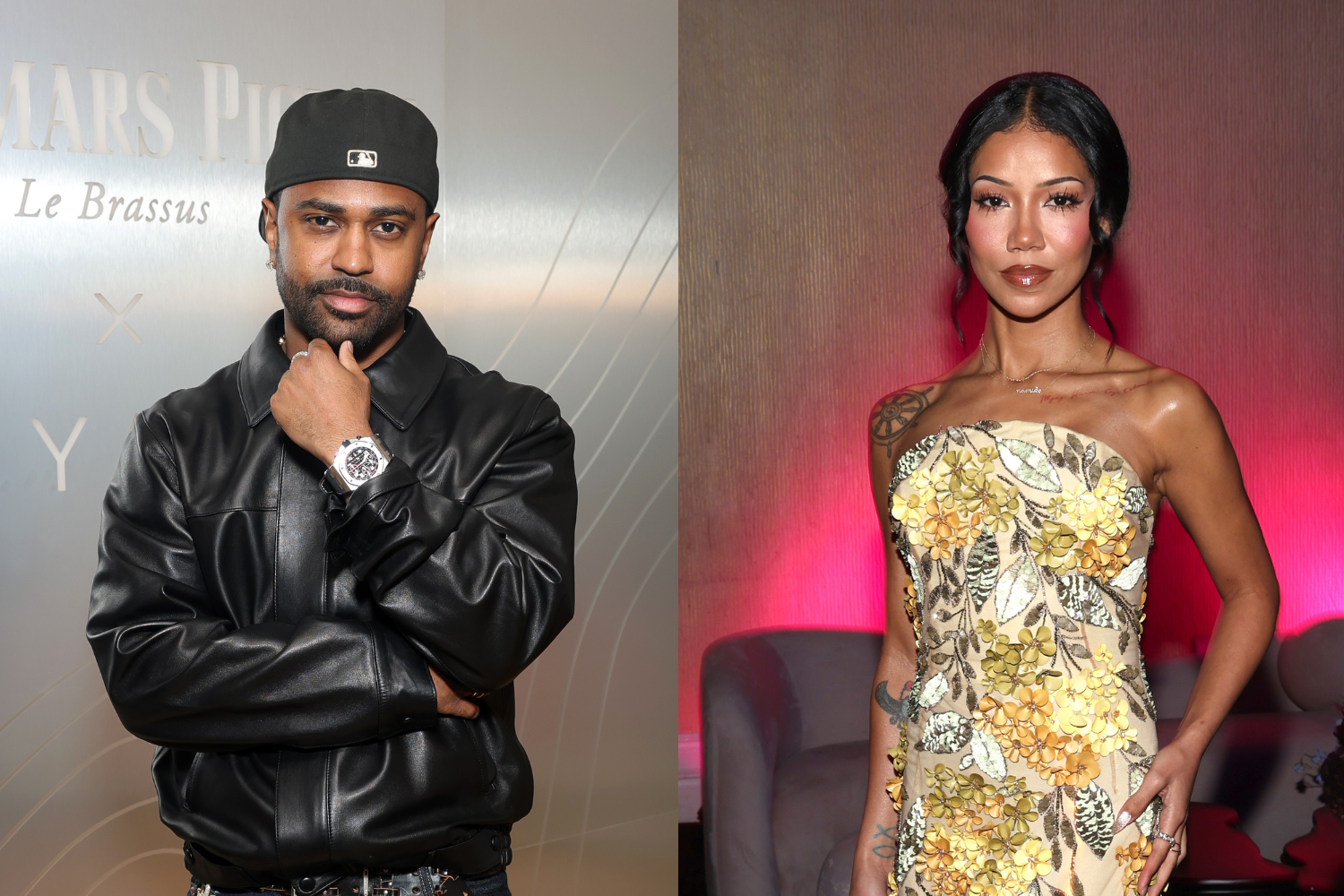
Y’all! Big Sean and Jhené Aiko are once again circling the rumor mill, and this time the timing feels especially noticeable. With Jhené Aiko’s name first in new whispers about a possible fresh relationship, fans have been quick to read between the lines—and naturally, that curiosity has drifted right back to Big Sean and how he might be feeling about it all.
In 2024, Big Sean Addressed Secret Wedding Rumors With Jhené Aiko
During a 2024 appearance on Charlamagne Tha God’s ‘Out of Context’ podcast, Big Sean addressed his long-running, on-and-off history with Jhené Aiko—and more specifically, why marriage still hasn’t happened despite years of connection, collaboration, and even a child together. When asked point-blank if the two had ever secretly tied the knot, Sean shut it down with a laugh. “No, no, there has not been a secret industry marriage,” he said, keeping things light but firm. Still, he didn’t completely dodge the deeper layer of the question, acknowledging that their relationship has never been simple or one-dimensional.
The Rapper Explained Why He Hadn’t Married Jhené
Instead, Sean leaned into reflection, describing their bond as something that’s required constant “navigation” rather than a straight path. He explained that while he sees marriage as the ideal expression of love, he also views the pressure around it through a more cautious lens, pointing to fear and high divorce rates as part of why people rush or hesitate. Even so, he didn’t close the door on the idea entirely—just made it clear that timing and personal work still matter. “There’s a lot of work that needs to be done,” he told Charlamagne at one point.
Advertisement
He also added that he prefers not to overshare the private details of their relationship, signaling that what fans see publicly is only a fraction of what’s actually going on behind the scenes. And while Charlamagne Tha God pushed him to consider the realities of long-term commitment, Sean stuck to his stance that love requires ongoing effort rather than a fixed destination. With fresh rumors now orbiting Jhené’s dating life, fans connect dots, read moods, and wonder whether Sean’s words were just a reflection—or something more pointed.
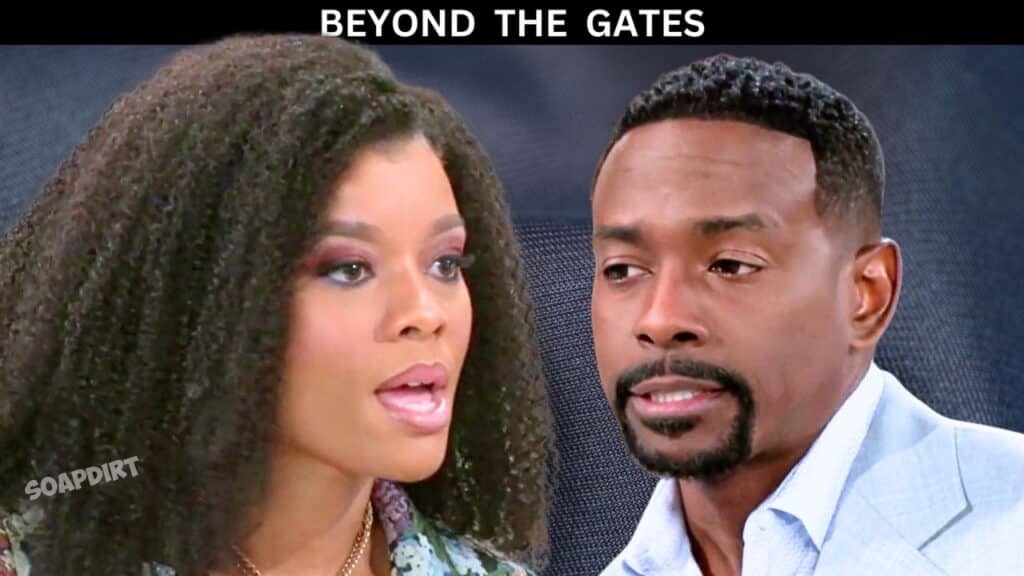
Beyond the Gates early weekly spoilers for June 22nd through the 26th thrill with Kat Richardson (Colby Muhammad) in a horrible dilemma because everybody is pressuring her to get tested and cough up a chunk of her liver to save her problematic sister, Eva Thomas (Ambyr Michelle).
We’ll get into all the action coming the week starting June 22nd when we may also see one marriage end and possibly two. And as we do on early edition day, we start with what’s coming the rest of this week and then we get into the action coming next week, which is when July sweeps kicks off.
Beyond the Gates: Kat’s Liver Donation Dilemma
So, let’s get into it. On Thursday, June 18th, we’ve got Carlton Fitzgerald (Robert Christopher Riley) showing up to alert Dr. Nicole Dupree Richardson (Daphnée Duplaix) to an urgent matter. So, her phone may be off. Obviously, Carlton’s going to find out that Eva is lying at death’s door and that Ted Richardson (Keith D. Robinson) is distraught and that Nicole’s daughter, Kat, is refusing to even get tested. She doesn’t even want to see or know if she’s a match for her dying sister, Eva.
I’m very interested to see if Carlton shows up at Nicole’s door. Since Kial Rollins (Greg Vaughan) is warming her sheets right now, remember he came over to comfort Nicole. And while she has always told both Kial and Carlton that she is not looking for anything serious, I have to say that what happened between her and Kial was very emotionally intimate.
Advertisement
So, if Carlton shows up and sees Kyle rolling out of Nicole’s bed, I think that is definitely going to bother Carlton understandably. And of course, Nicole’s going to want to go check on Ted. But I think Kat is who really needs her mom right now. I know fans are deeply divided and they hate that Eva’s accident put Kat in this position.
Beyond the Gates: Andre Supports Izaiah
We also have Andre Richardson (Sean Freeman) showing up to be there for Izaiah Hawthorne (David Lami Friebe). Already, Andre tried to get up off the couch and hobble to the hospital once he heard about Eva. But then Andre found out that because of the medications that he’s on for his own injury, he is not a viable liver donor. But I can see him having wanted to get tested because he’s related to Eva and he’s friends with her.
And in fact, everybody but Kat has been willing to get tested in the family, especially Martin Richardson (Brandon Claybon) is frustrated with her. They see her hatred of Eva as a sign that she’s willing to let her sister die. But I did think that Kat did well by clapping back about Eva helping cover up for Dana “Leslie” Thomas (Trisha Mann), who tried to kill Laura Peterson (Destiny Love) twice and who deliberately ripped their family apart with help from Eva.
The Elevator Secret and Family Pressure on BTG
Even though she feels bad about it in hindsight, she was right there in the thick of it. It’s messy. But if Andre can’t donate a chunk of his liver, at least he can be there for Izaiah, who loves Eva and is totally distraught. We also have Dani Dupree (Karla Mosley) confronting Bill. If you remember, after they did their elevator sex thing, Dani swore Bill to secrecy. And so far, it is still a secret. But it could be out by the end of this week or into next week when sweeps kicks off.
Advertisement
Eva’s time is rapidly running out. Everybody but Kat has pretty much been tested who’s a relative and who’s viable. And Leslie’s in a panic. But at least Eva is on the public donor registry. But in the end, I think we all know it is going to come down to Kat. And speaking of her, she runs to Chelsea Hamilton (RhonniRose Mantilla), who listens as Kat explains herself.
Chelsea’s not a big fan of Kat’s hatred of Eva. And I tend to think that Chelsea will prod Kat in the direction of at least getting tested to find out, you know, because that seems to be a next step. Looks like she is getting tested by the end of the week because of other spoilers that I’m about to share with you.
Beyond the Gates: Family Comes Together and Marriage Troubles
On Friday, June 19th, Hayley Lawson (Marquita Goings) and Naomi Hamilton Hawthorne (Arielle Prepetit) find some common ground, which is surprising. And this may be sympathy for what Ted’s family is going through with Eva and the aftermath of the terrifying tornado. Or it could be about what’s going on with Dani and Bill because that bombshell is going to explode soon.
We’ve got Andre and Bill locking horns by the end of this week. And if Andre hears from Bill about the elevator cheating with Dani, I think Andre is going to be really hurt rather than if Danny told him herself. If she explained the life and death weirdness of it all as a one-off thing, I think that would be better.
Advertisement
Also, the Hawthornes come together for one of their own with Izaiah panicking over Eva’s ticking clock. I expect Jacob Hawthorne (Jibre Hordges), Elon Hawthorne (Malachi Malik), and even his mom, Darlene Hawthorne (Monique Mosee), to show up for Isaiah. Hopefully, Leslie will keep a civil tongue in her mouth if Darlene shows up at Garland Memorial.
Kat’s Huge News on BTG
Also, Kat’s life-changing news, and that could be that she’s a match, or it could be that Ted tells her that Eva will die in the next 24 hours without a transplant. There’s going to be some urgency. Ted may beg Kat again to please help her sister. Anita Dupree (Tamara Tunie) has advice for Kat.
I’m sure Anita is the voice of reason, asking Kat, “As much as you hate Eva and hate Leslie, could you live with yourself if Eva died when you might have been able to save her?” It’s not a fair situation at all for Kat to be in. But that is what makes it oh so soapy, as we know.
Leslie gets good news that’s then snatched away. So, they may find out there’s a donor available for Eva, maybe from the public registry. But then it turns out it’s not viable or there’s a complication. We all know it’s going to come down to Kat.
Advertisement
Beyond the Gates: July Sweeps and Marriage Implosions
The week of June 22nd through the 26th, we’ve got July sweeps kicking off on Thursday, June 25th. So, I think the transplant drama is going to drag out until then. This is clearly supposed to be a redemption story for Leslie when honestly she’s irredeemable. But something to break through her awful, devious nature. But I’m honestly not sure if Eva’s mom is capable of change. She is wicked to the bone. But right now, Leslie’s falling apart and vulnerable. And when faced with Eva’s inevitable death, Leslie’s going to break.
Meanwhile, with the clock running out, Kat’s definitely going to get tested. No doubt she’s going to be a match. But then there’s the step of will she let them cut her open and take a chunk out of her liver to save Eva. In terms of organ donation, you would think that donating part of an organ is better than a whole one, like a liver versus a kidney. But in terms of surgical risk and recovery and potential complications, donating part of your liver is actually more dangerous than giving up a whole kidney. Weird, right?
Beyond the Gates Spoilers: Ted Richardson – Eva Thomas
Beyond the Gates: Kat & Ava Bond as Sisters
So, Kat would literally be putting her own life on the line to save Eva. But in the end, I’m certain she’ll do it. And this is going to be a road to Kat and Eva bonding as sisters because she will literally owe Kat her life. I don’t expect an easy road. And I think Eva should do the heavy lifting. Also, Leslie may find some chill if Kat saves her precious Eva.
But there’s other family drama afoot in sweeps. I don’t think that Heather Armstrong (Ashley Jones) really left town. And I think she’s setting up shop again nearby, right under Joey Armstrong’s (Jon Lindstrom) nose. And Heather seems honestly even more ruthless than Joey and not the type to go away quietly. Plus, they cast somebody who’s a big name from Bold and the Beautiful. She’s been on a lot of other stuff. So, with them bringing in Ashley Jones, I don’t think it’s going to be a couple of episodes and she’s gone.
Beyond the Gates: Dani May Lose Andre
We also have the impending implosion of Dani and Andre’s marriage which could trigger Bill and Haley’s marriage to fall apart. So, Andre may walk out on Dani over this Bill thing and run back to his bachelor pad. And the timing on that could be problematic because Ashley is single and grieving and Andre may turn to Ashley for comfort.
Advertisement
The Duprees will rally around Kat for her heroic donation. And I actually hope that she demands some concessions from Leslie before she agrees to donate. Like she’s got to stop the chow crap. Stop stalking Ted. Stop being horrible to Nicole. Basically, a chunk of liver donated if Leslie agrees to stop being Leslie. We’ll see how it goes.
While there will always be attempts by filmmakers to make striking and compelling works of original art, at the end of the day, filmmaking is still a business with the goal of making financial profit, with one of the most concise and effective ways of making box office profits is through franchises and sequels. There have been many notable sequels released over the years, with some of the most prominent and very best sequels crossing over into the lucrative $1 billion club.
Even as recently as films like Zootopia 2 and The Super Mario Galaxy Movie, sequels are continuously finding their way into the $1 billion club as the built-in audience of these beloved movies already sets these films up for success. However, simply having a built-in audience isn’t enough for great success, as the films themselves have to be appealing and well-made to the general audience for them to have such a lasting impact and make a prominent financial success.
Advertisement
8
‘Avengers: Infinity War’ (2018)
Image via Walt Disney Studios Motion Pictures
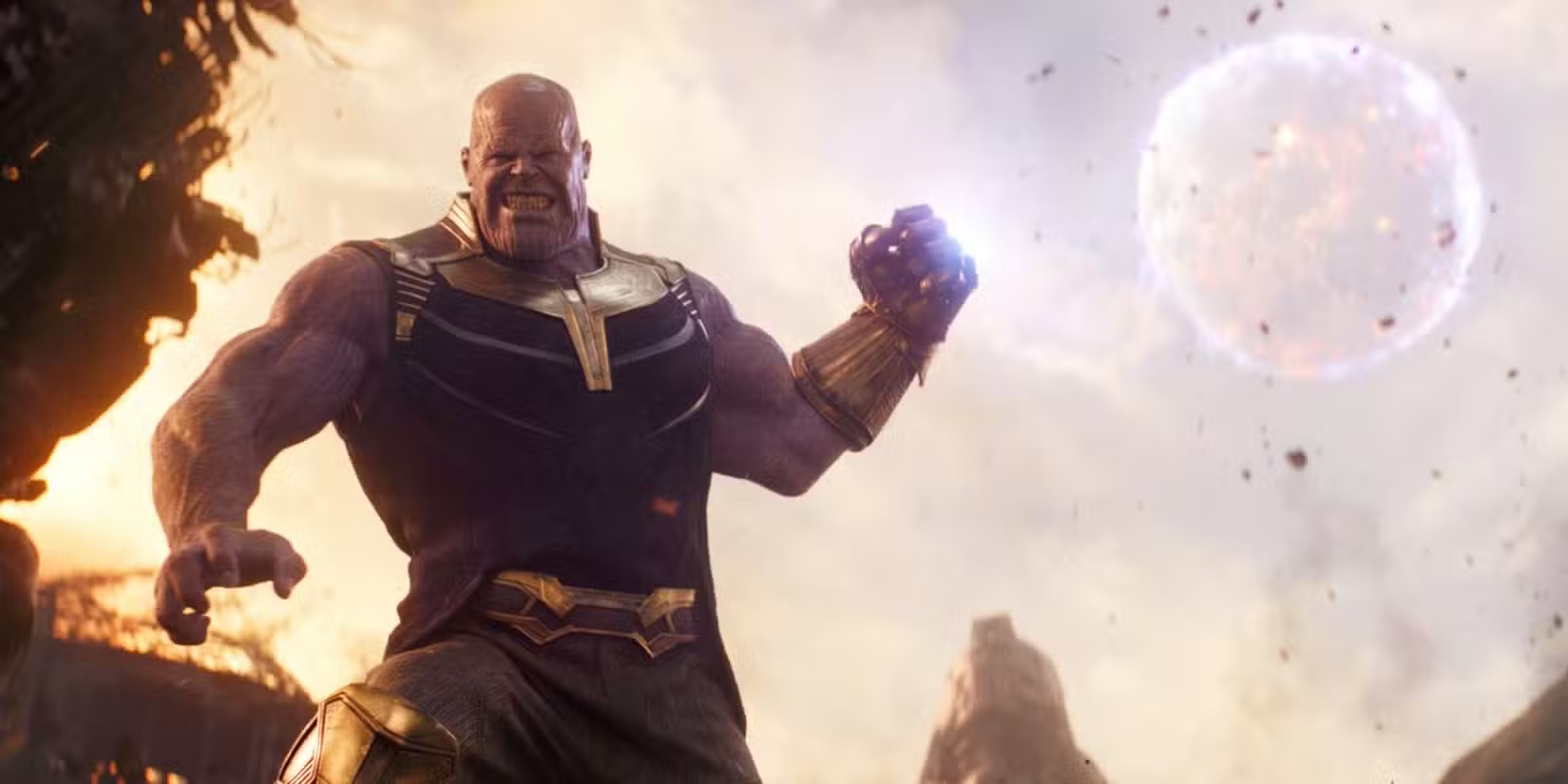
More than just the third film in the Avengers franchise, Avengers: Infinity War in a way acts as a sequel to the entire MCU up to that point, bringing together characters from across the cinematic universe into a glorious love letter with massive stakes and pure passion. It has a lot of the inherent strengths of previous Avengers films, only with an even bigger scale, even more MCU movies to pull from, and one of the most legendary endings in superhero movie history.
The film still stands as one of the absolute highlights of the entire MCU, with great action sequences, a seamless blending of all sorts of memorable characters, and easily the extended universe’s best villain in Josh Brolin‘s Thanos. It stands at the apex of when the MCU was at its most popular, fully realizing the strengths and impact of the franchise in a glorious blend of iconic characters, stellar visuals, and distinct self-aware humor. Even if the MCU never reaches this height again, Infinity War will forever hold a special place in the hearts of the audiences that helped make it one of the few films to gross $2 million at the worldwide box office.
Advertisement
7
‘Skyfall’ (2012)
Daniel Craig as James Bond in SkyfallImage via Sony Pictures Releasing
The highest grossing film in the James Bond franchise to date, Skyfall exemplifies the greatest strengths of the Daniel Craig era with its mixture of style, high-octane action, and effective symbolic theming. It builds upon the most impactful aspects of Casino Royale and Quantum of Solace to create the quintessential modern Bond experience. Even over a decade after its release, the film still has a choke hold over the legacy of modern Bond and continually influences the films, spinoffs, and everything with the 007 name attached to it.
The film acts as this perfect balance between the distinguished strengths inherent to the legacy of James Bond as well as being a massively approachable and widely compelling action thriller. It’s the best of both worlds that resulted in untold amounts of success and cemented Craig’s legacy as one of the greatest to ever take up the mantle of Bond. With a new era of Bond on the horizon, it will be interesting to see just how much this new era will be inspired by films like Skyfall and how it will be able to distinguish from the standard that it set for modern Bond.
Advertisement
6
‘Ne Zha II’ (2025)
Ne Zha is a 2019 Chinese animated fantasy film directed and written by JiaoziImage via Chengdu Coco Cartoon
Both the highest-grossing non-Hollywood film and the highest-grossing animated film of all time, Ne Zha II‘s mixture of exhilarating action sequences and loving tribute to Chinese mythology made it an absolute phenomenon for Chinese audiences. It achieved levels of overwhelming success in a single market that is simply unprecedented, as it’s the only film to have grossed over $1 billion in a single market, as well as managing to gross $2 billion in a single market.
While many American audiences simply passed on the film due to a cultural disconnect, the top-notch action and compelling storytelling makes this an absolute blast to watch and arguably greater than many of the animated films coming out of Hollywood in recent memory. Especially considering this level of animated action is so rarely explored at the cinematic scale, Ne Zha II is highly engaging from start to finish and deserves all the praise and success that it has received.
Advertisement
5
‘Top Gun: Maverick’ (2022)
Tom Cruise driving a motorcycle at a high speed in Top Gun: Maverick (2022)Image via Paramount Pictures
Top Gun: Maverick is a complete anomaly as far as legacy sequels are concerned, as it’s not only one of the very few truly great legacy sequels that lives up to the original, but it’s arguably the only legacy sequel that actually exceeds the quality of the original film. Utilizing exceptional action sequences with real fighter jet action and Tom Cruise at the absolute peak of his modern career, Top Gun: Maverick understood what made the original film such an 80s classic, amplifying and evolving these strengths for the modern era.
These strengths helped make Top Gun: Maverick one of the most successful summer blockbusters of all time, having complete dominance and persistent appeal that lasted throughout the entire summer. Famously the film even managed to retake #1 at the domestic box office on Labor Day weekend in September despite releasing back on Memorial Day weekend in May. Now the film stands as one of the best action movies of the 2020s and one of the faces of 2020s action blockbusters.
Advertisement
4
‘Avatar: The Way of Water’ (2022)
Sam Worthington as Jake Sully in Avatar: The Way of WaterImage via 20th Century Studios
It would be difficult for any film to act as a sequel to the highest-grossing film of all time, let alone a sequel that is releasing a decade after the previous film made cinematic history in its success. However, Avatar: The Way of Water proved to be entirely worth the wait with its prominent upgrade to visual flair, striking motion capture technology, and a compelling evolution of the Avatar characters and world of Pandora. While 3D filmmaking had largely fallen out of favor by the 2020s, The Way of Water still pushes the technology forward as if its at the forefront of culture.
The film’s various underwater sequences are a glorious sight to behold, feeling masterfully crafted in its execution and finding an effective balance between familiarity and striking new ground with the Avatar franchise. It easily lives up to the quality of the original film, and may just be the highlight of the entire trilogy with its effective emotional moments and great evolutions of classic characters.
Advertisement
3
‘Toy Story 3’ (2010)
Image via Pixar Animation Studios
The first animated film to make $1 billion as well as considered to be one of the greatest animated sequels of all time, Toy Story 3 evolves and grows these beloved children’s characters, telling a story not just for children of the next generation, but for those who grew up with the previous films. Considered by some to be the best of the Toy Story franchise, Toy Story 3‘s hard-hitting emotional moments and substantial animation quality upgrade have given it an effective legacy as Pixar’s greatest sequel to date.
It feels fresh and largely distinct from the previous films in its scope, with the entire cast coming together for a compelling prison break plot while dealing with the ramifications and pain of being left behind and forgotten by a child who has all grown up. While the franchise has continued on with subsequent sequels, many people still consider this to be the true finale of the series, acting as a perfect sendoff for these beloved characters that had millions in tears across the world.
Advertisement
Collider Exclusive · Oscar Best Picture Quiz Which Oscar Best Picture Is Your Perfect Movie? Parasite · Everything Everywhere · Oppenheimer · Birdman · No Country
Advertisement
Five Oscar Best Picture winners. Five completely different visions of what cinema can be — and what it can do to you. One of them is the film that was made for the way your mind works. Ten questions will figure out which one.
🪜Parasite
🌀Everything Everywhere
☢️Oppenheimer
🐦Birdman
Advertisement
🪙No Country for Old Men
Advertisement
01
What kind of film experience do you actually want? The best movies don’t just entertain — they leave something behind.
Advertisement
02
Which idea grabs you most in a film? Great films are driven by a central obsession. What’s yours?
Advertisement
03
How do you like your story told? Form is content. The way a story is shaped changes what it means.
Advertisement
04
What makes a truly great antagonist? The opposition defines the protagonist. What kind of opposition fascinates you?
Advertisement
05
What do you want from a film’s ending? The final note is the one that lingers. What do you want it to sound like?
Advertisement
06
Which setting pulls you in most? Where a film takes place shapes everything — mood, stakes, what’s even possible.
Advertisement
07
What cinematic craft impresses you most? Every great film has a signature — a technical or artistic element that makes it unmistakable.
Advertisement
08
What kind of main character do you root for? The protagonist is the lens. Who you choose to follow says something about you.
Advertisement
09
How do you feel about a film that takes its time? Pace is a choice. Some films sprint; others let tension accumulate slowly, deliberately.
Advertisement
10
What do you want to feel walking out of the cinema? The best films leave a mark. What kind of mark do you want?
Advertisement
The Academy Has Decided Your Perfect Film Is…
Your answers have pointed to one Oscar Best Picture winner above all others. This is the film that was made for the way your mind works.
Advertisement
Parasite
You are drawn to films that operate on multiple levels simultaneously — that begin in one genre and quietly, brilliantly migrate into another. Bong Joon-ho’s Parasite is a film about class, desire, and the architecture of inequality that manages to be darkly funny, deeply suspenseful, and genuinely shocking across a single extraordinary running time. Your instinct is for cinema that hides its true intentions until the moment it’s ready to reveal them. Parasite is exactly that — a film that rewards close attention and punishes assumptions, right up to its devastating final image.
Advertisement
Everything Everywhere All at Once
You want it all — and this film gives you all of it. The Daniels’ Everything Everywhere All at Once is one of the most maximalist films ever made: action comedy, multiverse sci-fi, family drama, existential crisis, and a genuinely earned emotional core that sneaks up on you amid the chaos. You are someone who responds to ambition, who doesn’t want cinema to choose between being entertaining and being meaningful. This film refuses that choice entirely. It is overwhelming by design, and its overwhelming nature is precisely the point — because the feeling of being crushed by infinite possibility is exactly what it’s about.
Advertisement
Oppenheimer
You are drawn to cinema on a grand scale — films that understand history not as a backdrop but as a force, and that place their characters inside that force and watch what happens. Christopher Nolan’s Oppenheimer is a film about the terrifying gap between what we can do and what we should do, told with the full weight of one of the most consequential moments in human history behind it. You want your films to feel important without feeling self-important — to earn their ambition through sheer craft and the gravity of their subject. Oppenheimer does exactly that. It is enormous, complicated, and refuses easy comfort.
Advertisement
Birdman
You are drawn to films that foreground their own construction — that make the how of the filmmaking part of the what it’s about. Alejandro González Iñárritu’s Birdman, shot to appear as a single continuous take, is cinema examining itself through the cracked mirror of a fading actor’s ego. You respond to formal daring, to the feeling that a film is doing something that probably shouldn’t be possible. Michael Keaton’s performance and Emmanuel Lubezki’s restless camera create something genuinely unlike anything else — a film that is simultaneously about creativity, relevance, self-destruction, and the impossibility of ever truly knowing if your work means anything at all.
Advertisement
No Country for Old Men
You are drawn to cinema that trusts silence, that refuses to explain itself, and that treats dread as a form of meaning. The Coen Brothers’ No Country for Old Men is a film about the arrival of a new kind of evil — implacable, arbitrary, and utterly indifferent to the moral frameworks we use to make sense of the world. It is one of the most formally controlled films ever made, and its controlled restraint is what makes it so terrifying. You want your films to haunt you, not comfort you. You are not interested in resolution if resolution would be dishonest. No Country for Old Men is honest in a way that most cinema never dares to be.
Advertisement
2
‘The Lord of the Rings: The Return of the King’ (2003)
Image via New Line Cinema
Advertisement
Considering all the excitement and praise that the initial two Lord of the Rings films had received, it would only make sense that the finale of the trilogy would be the biggest box-office success as well as the most widely-acclaimed of the trilogy. The Lord of the Rings: The Return of the King delivers on all the build-up and excitement of the previous films, with the perfect mixture of masterful visuals, compelling action sequences, and powerful emotional through lines.
It caps off the classic film trilogy in the absolute best way possible, delivering a true cinematic epic experience on all fronts that simply demands to be seen on the big screen to witness the glory in all its finality. Its success would cement its legacy as the second film to ever cross the $1 billion mark at the box-office as well as the first film of the 21st century to achieve the feat. However, box-office success is not where its accolades would end, as it would also completely sweep the Academy Awards with its 11 Academy Award nominations and winning every award it was nominated for.
1
‘The Dark Knight’ (2008)
Image via Warner Bros. Pictures
Advertisement
Batman Begins was certainly well-received as far as Batman film adaptations go, but The Dark Knight stands in a league of its own as not just the greatest Batman film, but one of the absolute greatest achievements in superhero filmmaking history. It’s a masterfully concocted action thriller that elevated the genre to new heights and massively influenced blockbuster filmmaking in the wake of its success. Featuring amazing central performances and pitch-perfect pacing, Christopher Nolan‘s superhero masterpiece quickly became a cultural phenomenon and one of the defining cinematic experiences of the 2000s as a whole.
The film delivers everything that one would want out of a sequel, as it ups the ante, takes the beloved characters and delves deeper into their character and psyche, as well introducing a whole new slew of compelling characters that add new, exciting dynamics. Its an action movie that has been analyzed and meticulously picked apart as a masterpiece of the genre ever since its release, as every amazing thing that can be said about the film has been said. Both Batman and superhero movies would never be the same, as The Dark Knight still continues to have an impact on the approach to blockbuster thriller filmmaking.
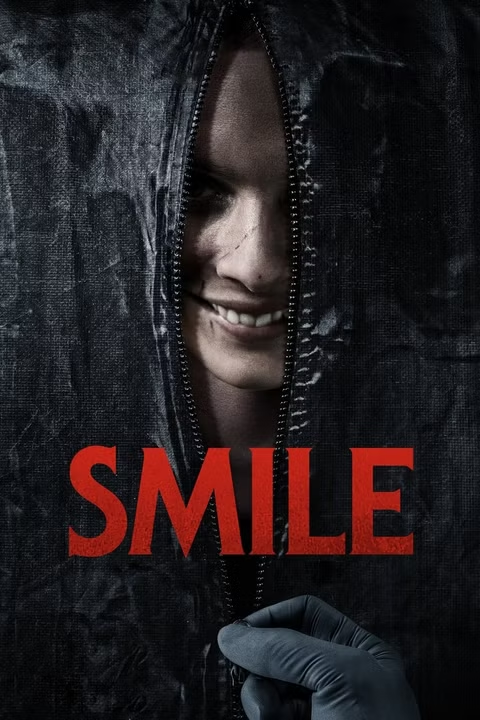
The 2020s are far from over, yet it’s already been a fantastic decade for horror with exciting new creatives and franchises cropping up left and right. From Danny and Michael Philippou and their excellent feature debut Talk to Me and follow-up Bring Her Back, to Ti West and his X trilogy, Zach Cregger with Barbarian and Weapons, and the recent wave of YouTube creators turned horror maestros, including Mark Fischbach, Chris Stuckman, Kane Parsons, and Curry Barker, new terrifying ideas have been spawning from all corners of the industry and reaching wild new levels of success. Among the biggest breakouts of the early 2020s, however, was undoubtedly Parker Finn with his franchise Smile. The first feature, released in 2022 based on a short film, and its 2024 follow-up were massive hits, earning a combined box office haul of over $350 million and rave reviews from critics and audiences.
Both films used two vastly different characters — Sosie Bacon‘s therapist Rose Cotter and Naomi Scott‘s pop star Skye Riley — to explore the same terrifying premise. In Smile, those cursed by a malevolent entity see constant hallucinations of people unnaturally smiling at them and are haunted by increasingly disturbing visions until, inevitably, they take their own life in front of someone with the same awful grin. The curse is passed to any witnesses, creating a seemingly unending chain that stems back to some unknown origin. It’s a flexible premise that Finn has said he’s open to exploring further if there’s a thoughtful, thematic idea to do so, like with the character-driven first two films. Until a third installment is announced, though, IDW Publishing is giving the burgeoning franchise a new chapter on the page.
The comic giant’s horror imprint, IDW Dark, is expanding its collection of works based on Paramount’s biggest properties. Among them is a new comic titled Any Given Smile, which will take the series’ haunting premise to the gridiron in 1995 against the backdrop of the American Arena League football championship. Entertainment Weekly just shared an exclusive look at the story with five new covers that tie into its themes, from a bloody football that appears to be smiling by Jock, to a grinning quarterback illustrated by Ashley Witter, a torn trading card by Pablo M. Collar, and a haunted gambling underworld brought to life by Martin Simmonds and Joëlle Jones. The GLAAD Media Award-winning Collar also crafted the interior art for the new five-issue series, which was penned by Eisner Award-nominee Stephanie Williams and features colors and letters by Triona Farrell and Ariana Maher, respectively.
Advertisement
What Will ‘Any Given Smile’ Be About?
Any Given Smile will depict the run-up to the big AAL championship, a moment that should be a historic occasion for the Sharks in their 20 years of operation. All their hopes ride on a backup quarterback who has emerged as a star when the lights have shone brightest, but he’s feeling the pressure from his teammates, fans, and the gambling underworld to whom he owes a great debt. Before the game, the community is rocked by a string of mysterious suicides, which sends one suspicious sports journalist digging for any correlation to the game and, particularly, the cloud of sports gambling that looms over it. In reality, the Smile Entity is at work, violently sowing distrust among the community at a time when tensions are high, and the payouts are massive.
Williams told EW that the idea to explore the Smile universe through football was tied to both her love of sports, the nature of the people who play the game, and the increasing presence of sports betting giants like FanDuel and DraftKings in advertising and partnerships with the major sports leagues. It was a rare chance to combine her own interests with a bloody idea that feels right at home with how Finn explored trauma and stardom through his cursed horror.
“Because that universe is often about people who are a little bit broken or just have things going on, football players almost always have some type of drama, some type of backstory that is sometimes a little unsavory. And then also…sports gambling. Very big. Didn’t know that would happen after our pitch, but it just all aligned. So this was the perfect chance for me to get my other fandoms and obsessions into a work.”
Any Given Smile is available to pre-order now from your local comic store. Check out the variant covers courtesy of EW in the gallery above.
Advertisement
Advertisement
Release Date
September 23, 2022
Advertisement
Runtime
115 minutes
Director
Advertisement
Parker Finn
Writers
Parker Finn
Advertisement
Producers
Isaac Klausner, Marty Bowen, Robert Salerno, Wyck Godfrey
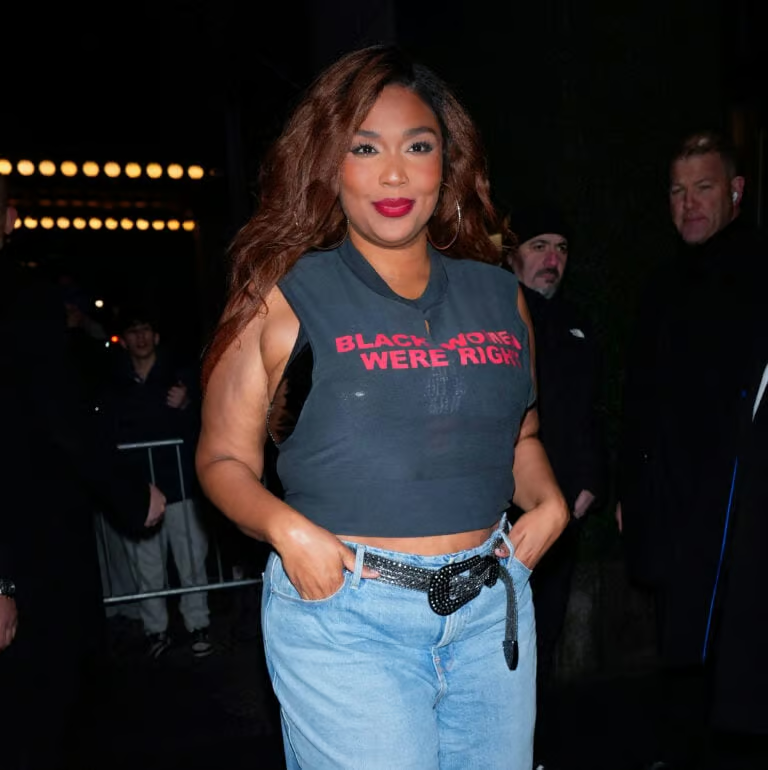
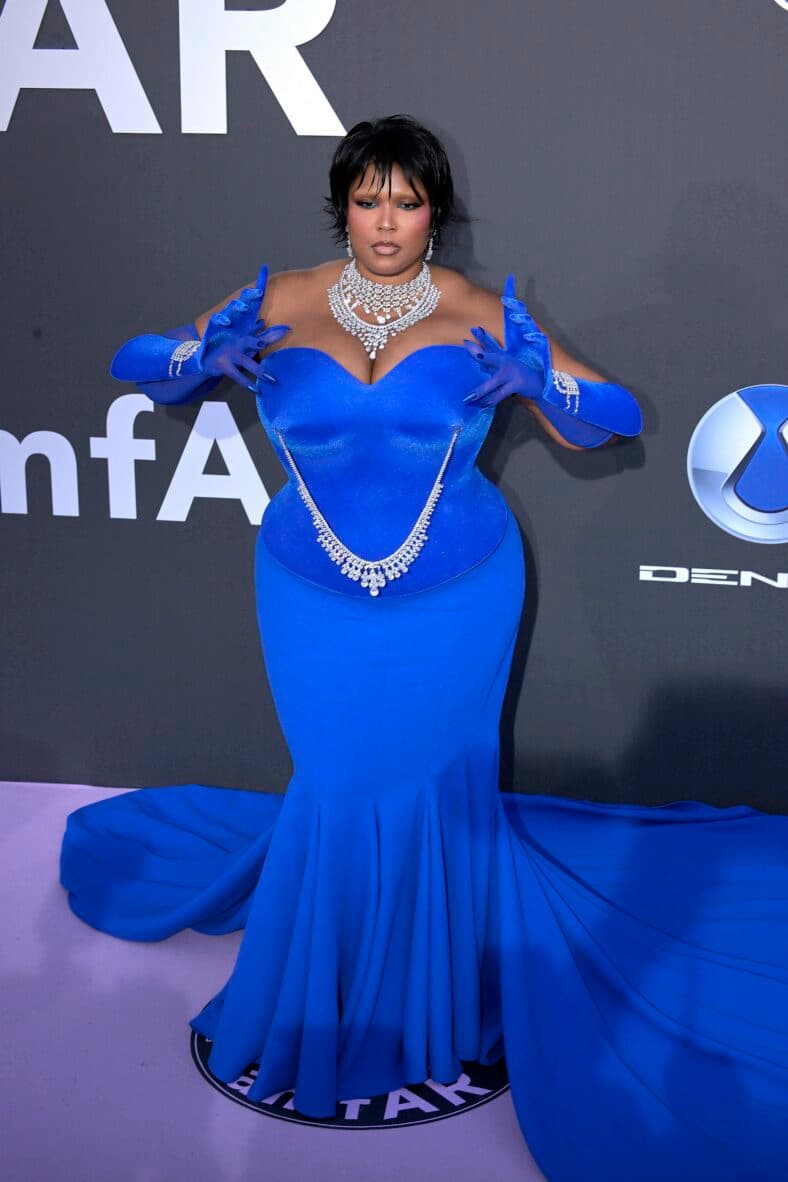
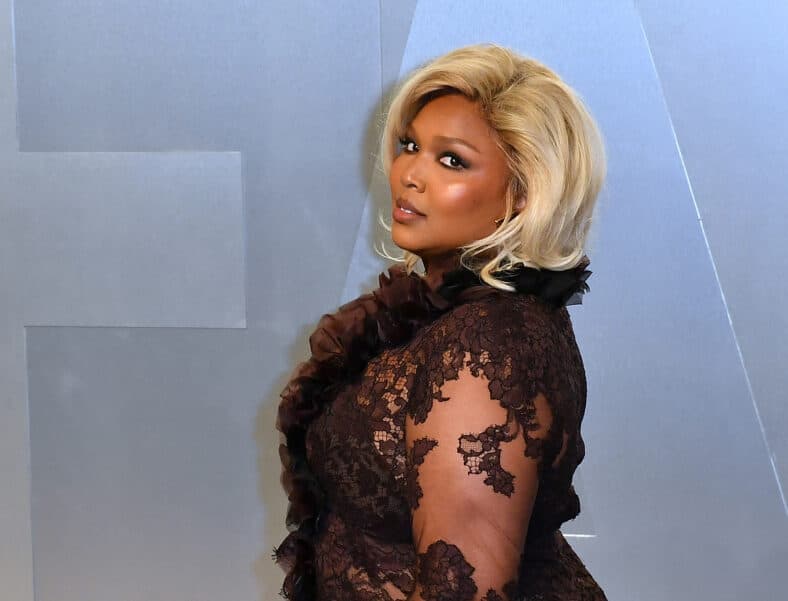
Lizzo released her fifth studio album, “B-TCH,” in June 2026. Leading up to its release, the Grammy-winning songstress called out her label, Atlantic Records, for failing to promote her new music. Now, the album is out, but it failed to chart on the Billboard charts, and Lizzo has been silent since, addressing only the success of her past music.
This has led many on social media to believe that she not only wants to move on from the failure but also to deflect.
XNY/starmaxinc.com STAR MAX/ MEGA
Lizzo released “B-TCH” to decent reviews on June 5. She promoted the project with social media content, album signings, and television interviews. However, despite what would be considered a similar marketing campaign to other high-profile pop stars, the album failed to connect with listeners.
According to Stereo Gum, the album missed the coveted Billboard top 200, which comprises the highest-selling albums on any given week. By most estimates, “B-TCH” sold fewer than 6,000 units in its first week, a figure far lower than her major record label peer.
For comparison, her most recent studio album, 2021’s “Special,” sold 69,000 album equivalent units, including 39,000 traditional albums being sold.
Advertisement
Lizzo Has Stopped Encouraging Fans To Listen To The Album
Europa Press / MEGA
Since the release of “B-TCH,” Lizzo has made multiple social media posts. One came on June 15, which coincided with when many fans learned the album was in danger of missing the Billboard Top 200. She posted on X, “I’m bored.. Let’s stream ‘About Damn Time’ so it can hit a billion.”
The same day, she took to social media to highlight that her song, “Truth Hurts,” was certified diamond, meaning it has sold 10 million or more equivalent units. On TikTok, she posted two videos of herself lip-syncing to the hit song.
Fans Question Why The Change In Focus
LISA OConnor/ AFF-USA.COM / MEGA
First-week album sales are important for any artist, as it’s typically when a new project performs the best. However, a performer with a social media following like Lizzo’s can always find creative ways to introduce it to fans. Because of this, many are questioning why she’s seemingly ignoring the project in recent days.
In response to her post about being “bored,” one person on X said, “Why not tell people to stream your new album?” Another social media user stated, “Already gave up on that flop album after you saw the numbers, huh? Someone else wrote, “So that whole new project of yours is trash now, huh?”
After that, a different person questioned, “Bored?? with a whole new album out??? Why are you ignoring it now, Lizzie?” Then, a different fan responded, “You’re over your new album? What do you mean you’re bored? All that clout chasing for 16 sales?”
In replying to her announcement that “Truth Hurts” was certified diamond, someone said, “Keeping those numbers real close to your chest, are you?”
Advertisement
Lastly, in support of Lizzo, one person wrote on X, “Nothing wrong with this. Not a fan of her music, but I acknowledge success. Plus, I respect her for working her a-s off to become healthier. She did it the right way.”
Lizzo Previously Opened Up About Calling Her Album ‘B-TCH’
Xavier Collin/Image Press Agency/MEGA
Many have questioned Lizzo’s decision to give her album a title that many publications choose to censor, arguing that it could lead to fewer people gravitating toward it. In many interviews, she’s stated that she picked the title because “b-tch” is her favorite word. However, she recently shed more light.
When addressing the album itself with USA Today, she stated, “I don’t think I have to redefine myself. I think this is about reclaiming who I am. A lot of my identity has been manipulated by people outside of me, so this album is me taking that back — showing the Lizzo everybody knows and loves, letting her tell her side of the story, and just letting her play again.”
Regarding where the title came from, Lizzo revealed, “There’s this Katt Williams joke he made about me where he was like, ‘They’ll come for anybody. They came after Lizzo, and she’s unproblematic, but that just goes to show, you could be fat, you could be Black, but you can’t be no fat, Black b-tch.’ And I was like, ‘Whoa, that is the realest.’”
She went on, “Like, God forbid, you’re having a bad day, or God forbid you weren’t rainbows and sunshine one day. You will get crucified, especially as a Black woman in this industry and in society.”
Advertisement
Lizzo Recently Responded To Nicki Minaj
MEGA
The night of her album’s release, Lizzo took to social media to address Nicki Minaj. According to Complex, she did so by reposting a Tweet from the rapper that stated, “Fat Lizzo lost 300 lbs just to sell 300 albums. So now she has loose skin AND a flop album, AND a weird charge. Sheesh.”
The singer captioned the post, “Since I’m blocked…” and also included a video of a new version of her song, “B-TCH,” in which she addressed the “Super Bass” rapper. In one line from the remix, Lizzo can be heard saying, “Used to be the biggest fan, and I lost weight / Wait, wait. Let me fixate.”
This has caused many of Minaj’s fans to celebrate the album’s failure, claiming she only made the post to drum up excitement.












:max_bytes(150000):strip_icc():format(jpeg)/Tay-Keith-061826-eb3a60a599224030bb95a2fce38c8f6f.jpg)
































You must be logged in to post a comment Login