Entertainment
How Gene Roddenberry Made Will Riker’s Family Life Terrible
By Chris Snellgrove
| Published
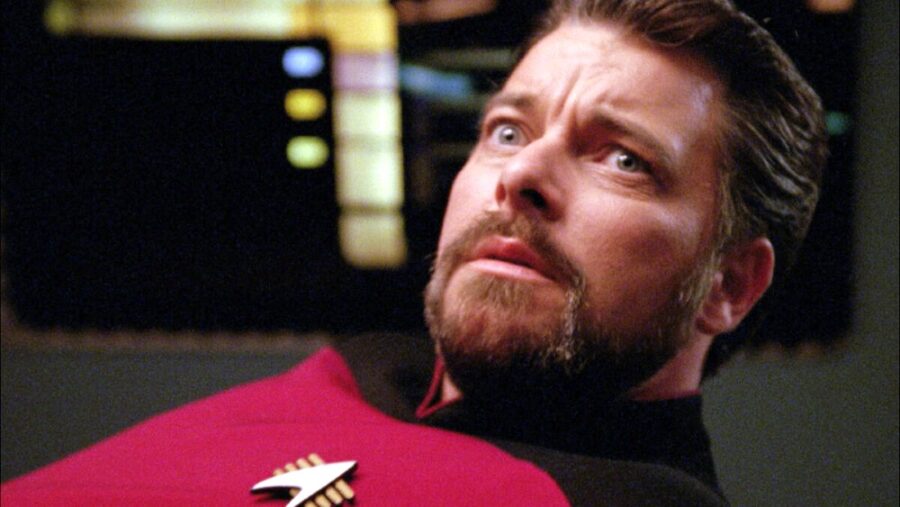

Commander Riker is a fan-favorite character on Star Trek: The Next Generation because he’s a funny, take-charge leader who continues the James T. Kirk tradition of bedding the finest babes in the galaxy. In fact, it’s fair to say that Riker is largely defined by his relationships, including his slow-burning romance with Deanna Troi that culminated in his marriage. However, Troi isn’t necessarily the most important relationship in Riker’s life: instead, the most important relationship is the one he had with his father, who shaped the future Starfleet officer into the man he eventually became.
Unfortunately, the two had a very contentious early relationship, and Kyle Riker abandoned his son when Will was only 15 years old. They reunited and eventually reconciled in the Season 2 episode “The Icarus Factor,” but director Robert Iscove was disappointed in how things played out onscreen. The reason for that is simple: Star Trek creator Gene Roddenberry placed so many restrictions on character conflict that it was impossible to accurately portray the reunion between this contentious father/son duo.
To Seek Out New Life And New Daddy Issues


Iscove was a first-time Star Trek director, and he took the job of directing “The Icarus Factor” because he was a huge fan of The Original Series. That show was set during the 23rd century, while The Next Generation was set in the 24th century, and he learned the hard way what a difference a century can make. According to Iscove (as recorded in Captain’s Logs: The Unauthorized Complete Voyages), Roddenberry believed that “we’ve all kind of resolved those feelings of anger” by the 24th century, and this made it hard to direct “an emotional piece” between a son and the father who “deserted Riker for 25 years.”
The director didn’t mince words about how annoying Roddenberry’s restrictions were, claiming they made the conflict between Kyle and William Riker “very hard to play.” He went on to note that “if you’re not going to serve the resentment and anger, what happens once the two of them get together, you can’t serve any real human drama.” The episode certainly had the potential for major drama: both men were haunted by the death of Will Riker’s mother, and the future commander was doubly tormented by his father ditching him at the tender age of 15.
Fake Sports, Real Emotions

That didn’t really happen, though, as “The Icarus Factor” made their conflict rather literal. The two donned goofy costumes and duked it out in a fictional Japanese sport, with the Starfleet officer venting some of his bitterness before they finally reconciled. That reconciliation was very disappointing to audiences because it didn’t feel earned: they weren’t able to really hash out their differences or overcome lingering resentment, all because the man who created Star Trek thought humanity had moved beyond the kind of emotional conflict that those watching The Next Generation would have preferred.
Director Robert Iscove would have preferred more emotional conflict as well, and he went on to lament that “The Original Series was much more humanistic in its approach.” He was disappointed with how “The Icarus Factor” turned out, and he never returned to the franchise, even though producers kept offering him opportunities to direct additional Star Trek: The Next Generation episodes. Like Riker, powerful people kept pulling out the chair for him, but he had no real interest in sitting down.
A Bittersweet Victory For The Writers

As longtime Star Trek fans know, this is a tale that has a bittersweet ending: after Gene Roddenberry became suddenly ill and then tragically passed away, his old rule about avoiding conflict between humans went out the airlock. The Next Generation began adding more conflict before Deep Space Nine took things to the next level, and NuTrek shows like Starfleet Academy have major character conflict built into their creative DNA.
Sadly, this change was too late for Commander Riker, whose daddy issues and reconciliation were ultimately hampered by the storytelling rule that nearly ruined TNG before it could become must-see TV.