Entertainment
If You Love Queen, Listen to These 10 Rock Artists

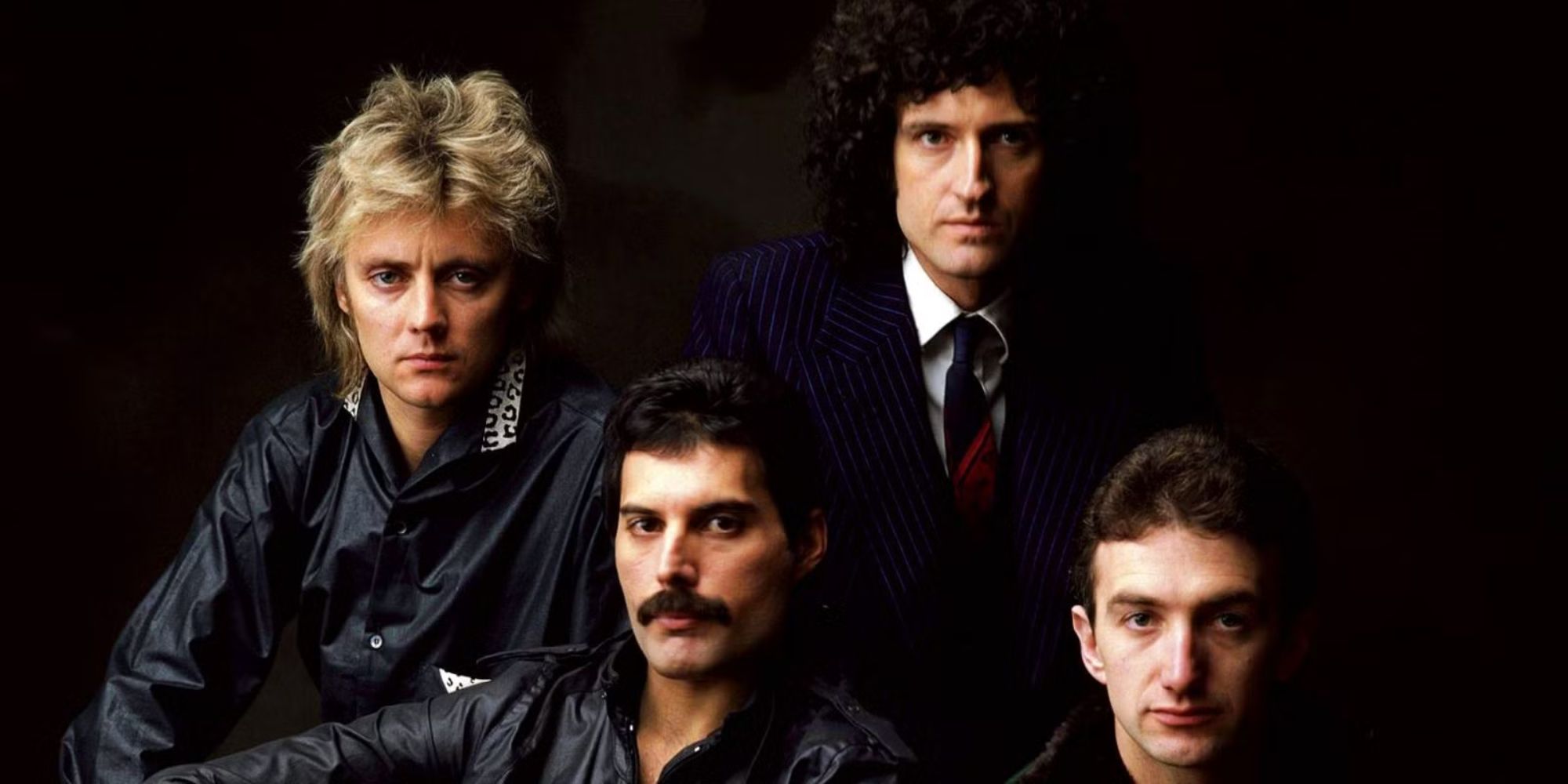

Many bands and artists define classic rock through their impact on the genre. They provide a body of work that is timeless, groundbreaking, and impactful; they continue to influence the future of music. One such band is Queen. Originally comprised of Freddie Mercury, Brian May, Roger Taylor, and John Deacon, Queen has given the world everything from some of the greatest arena rock anthems to karaoke staples, all thanks to their signature sound. Infusing a healthy blend of hard rock, jazz, blues, pop, glam, and much more, Queen had a style that many tried to replicate, but very few could achieve.
If you love Queen, there are ten artists and bands you must listen to. From a soaring vocalist who once fronted the band to a singer who lifted their name from a Queen track, bands who created their own rock rhapsodies to rival bands who never saw the same amount of praise, these incredible artists serve as the perfect companion to Freddie and the boys. How many have you included on your playlists?
1
Adam Lambert
There has always been a stigma around reality television and the value of the individuals who make a name for themselves because of it. Sometimes, especially when it comes to talent competitions, the show simply serves as a launching pad for the next step. Such was the case for Adam Lambert. Appearing on the eighth season of American Idol, Lambert rose to fame as the runner-up of the series. He was a trailblazer as an openly gay contestant, serving as a beacon for the LGBTQ+ community. During his run on the show, he was constantly praised for his powerhouse vocals that reignited modern glam rock in the mainstream. With extraordinary vocal range, a powerful tone, innate theatricality, and a presence that commanded the stage, it was inevitable that he would be compared to Mercury. It’s why May and Taylor eventually chose him to tour as Queen + Adam Lambert. He has never tried to be Mercury, but he is one of the rare few who can sing the songbook with ease.
Before joining Queen, Lambert had a string of successful solo albums that defined his artistry. His Grammy-nominated debut album, For Your Entertainment, kicked off his reign in pop music with the dramatic high-voltage “For Your Entertainment” that introduced his voice to the world and the anthem “Whataya Want From Me” that established him on the pop scene. With every subsequent track and album, from “Ghost Town” to “Trespassing,” Lambert brought an aura of Queen’s signature style. He had a swagger similar to Mercury and a three-octave range that allowed him to soar to the vocal rafters. Chances are, if you’re already a die-hard Queen fan, you’re familiar with Lambert and respect that he’s no imitation of the late, great Mercury. On stage, Lambert brings natural glam rock drama and bold fashion that would certainly have made Mercury proud.
2
David Bowie
Back in the day, being out and proud in rock and roll was quite taboo, but you knew who might be. Like Mercury, David Bowie fell into that camp. Rather than allow it to define them, they used their identity to create incredible art. Like Queen, Bowie provided the blueprint for theatrical glam rock, a shared mastery of massive vocal performances, and a genre-blending sound that never stayed in the same box. Together, Bowie and Queen co-wrote and sang one of rock history’s greatest anthems: “Under Pressure.” Their mutual artistic admiration came alive in the track, becoming a top entry for both. But Bowie’s solo work is equally fabulous.
Like Mercury, Bowie used his artistic platform to constantly reinvent his music, fashion, and persona. He blended underground art trends with catchy pop melodies, broke gender and social norms, and created alter-egos to help establish new sounds. Bowie treated his entire life and career as an evolving piece of performance art. His body of work helped to define glam and pop rock. From infusing some science fiction wonderment in tracks like “Space Oddity” and “Life on Mars?” to epic anthems like “Heroes” and “Changes,” like Queen, storytelling was a major part of Bowie’s work. Even by the time the ’80s rolled around, Bowie did his own thing with “Let’s Dance.” Bowie’s catalog is a brilliant mix of joy, fun, and introspection. Bowie was an iconic glam rock figure who will forever be a perfect companion artist to Queen.
3
Electric Light Orchestra
Rock and roll often stuck with the basic instruments, like guitars and drums. But in the heyday of classic rock, some bands explored and integrated other instruments to mark their signature sound. That’s exactly what Electric Light Orchestra did. The British band, also known as ELO, mixed rock and roll with classical instruments like violins and cellos, eventually infusing futuristic space themes to define their iconic artistry. Originally formed by multi-instrumentalists Jeff Lynne and Roy Wood and drummer Bev Bevan, ELO used their name as a pun that referenced both electric light and “light orchestral music.” ELO took studio craft to the next level to make radio-friendly, grand pop symphonies. In turn, their catalog remains timeless. By easily crossing musical boundaries, ELO was able to transform while delivering anthemic hooks that filled stadiums with euphoria.
To pinpoint their greatest hit is nearly impossible, but if there is one song that reflects their closeness to Queen, it might be “Mr. Blue Sky.” An upbeat, joyful pop masterpiece from Out of the Blue, the heavy pounding piano, famous robotic vocoder, and massive choral harmonies serve as a reminder that rock and roll can be bigger than just the basics. They continued to make hit after hit to create a diverse songbook for every mood. “Don’t Bring Me Down” delivered a punchy, heavy-beat rock track that became one of their biggest chart successes. “Evil Woman” was a funky, piano-driven groove that told the story of complex heartbreak. “Turn to Stone” provided a fast-paced, multi-layered track packed with operatic vocal harmonies and synthesizers. If there is anything that brought out their theatricality like Queen, it was their contribution to the film Xanadu. From the titular track to “I’m Alive” and “All Over the World,” ELO continued their symphonic rock into a narrative that still stood on its own.
4
Lady Gaga
What’s in a name? Well, for Lady Gaga, everything! Stefani Joanne Angelina Germanotta took on the moniker of Lady Gaga all thanks to the iconic queen track, “Radio Gaga.” Her stage name was inspired by her former producer and boyfriend, Rob Fusari, who began calling her “Gaga” because her theatrical vocal style and delivery reminded him of Mercury. She had played as herself, but becoming Lady Gaga was the chance to reinvent herself. Little did she know it was the start of a prosperous career. Lady Gaga combines a powerful, classically trained voice and high-level musicianship with fearless visual reinvention, rich songwriting prowess, and a unique ability to span multiple genres from electric pop to jazz, country to rock and roll. There are quite a few individuals who define the 21st century, but Lady Gaga is a tried-and-true legend, icon, and star. Lady Gaga treats every performance like a theatrical experience. With larger-than-life staging and production, Lady Gaga has made a name for herself because you expect the unexpected.
When it comes to her musical connection to Queen, the clearest one comes in the form of her collaboration with Brian May on “You and I.” The rock anthem from Born This Way samples Queen’s “We Will Rock You” as well as features May on electric guitar. And if you know Queen well, May’s signature style operates as the heartbeat of the track. It’s a downtempo power ballad that evokes the spirit of Queen that established Lady Gaga as more than just a pop star. Like Queen, Lady Gaga’s ability to bring new experimental sounds and styles with every track has allowed her to showcase her skillset. And like Mercury, Lady Gaga is unafraid of inventing her own lyrical language in order to hook the audience. Just listen to “Bad Romance” or “Abracadabra,” and it’ll be reminiscent of Mercury’s gibberish. Like Mercury, she is a powerhouse vocalist who can literally sing anything. Even the classics and standards. Her operatic, dramatic punch makes every song a musical moment. She famously covered “Another One Bites the Dust” on tour. We’re ready to hear her vocal prowess on another iconic Queen song.
5
Mika
If there has ever been the second coming of Freddie Mercury, look no further than Mika. Even in his 2007 single “Grace Kelly,” he was quite aware that comparisons would be made. “So I tried a little Freddie. I’ve gone identity mad!” Fortunately, he followed it up with the vocals to prove it. The Lebanon-born singer has always had the music in him. He learned to play the piano and write music as a young child to cope with bullying and dyslexia. The classically trained singer came on the scene and immediately established himself as a global superstar. Known for a high-energy pop sound with a multi-octave range, Mika blends genres with ease. As a songwriter, Mika infuses deep, satirical themes with catchy, upbeat melodies to create an iconic, colorful style that stands out among male artists.
Mika’s musical styling blends pop, disco, and glam rock, making you want to get up and dance. With a songbook of earworm-worthy hits, Mika is known for timeless pop that is pure joy. By bursting on the scene with “Grace Kelly,” Mika evoked Mercury with his theatricality as a vocalist. The debut album, Life in Cartoon Motion, featured several punchy pop hits with themes similar to Queen’s, like “Love Today” and “Big Girl (You Are Beautiful).” Though much of his success has been found outside of the United States, Mika has continued to deliver extraordinary albums, each bringing a newfound sound. “We Are Golden” made way for an explosive, anthemic pop statement. Both “Origin of Love” and “Tiny Love ” infused experimental operatic sounds into hypnotic tones that had similarities to “Bohemian Rhapsody.” Mika wrote the song “Last Party” as an emotional, direct homage to Mercury. Mika serves as a beacon for representation in music as an openly gay artist, continuing to make music that resonates with the LGBTQ+ community.
6
Muse
Rock and roll at the tail end of the ’90s and beginning of the 21st century was evolving from grunge rock to Alt and emo, but there was one band that established its own sound with a hint of classic rock: Muse. Comprised of Matt Bellamy, Chris Wolstenholme, and Dominic Howard, the British band is known for mixing rock, heavy metal, progressive rock, and electronic music with classical ideals. Famous for big, dramatic live shows and songs with themes of space, science fiction, and government control, Muse seamlessly crossed over between genres. Frontman Bellamy’s virtuosic guitar and classical piano skills paired with his soaring, dramatic falsetto gave the band its theatricality. Considered one of the best live acts in the world, they may not have the same flair as Mercury and Queen did, but their showmanship and presence brought them into the same realm.
Each of their albums features anthemic hits that run the gamut of styles. “United States of Eurasia” features sweeping multi-vocal harmonies and a piano style directly inspired by Queen’s majestic era. “Knights of Cydonia” evokes a wild space-western rock journey with a galloping riff. “Uprising” is a stomping, sci-fi political anthem with a huge synth hook. “Starlight” is a driving, emotional piano-rock singalong. If there’s a song that is most Queen-like, “Madness” is a slow-burning, electronic-heavy ballad that builds into a huge wall of sound, accompanied by Bellamy’s pitch-perfect top notes. One of their underappreciated but symphonic rock anthems is “Survival,” the official song of the 2012 Summer Olympics in London. It’s a thunderous camp cacophony of swelling strings, battle drums, and chugging guitar that evoked the spirit of competition. Muse’s masterful artistry will make you feel as if you’re back in the heyday of Queen.
7
My Chemical Romance
There may be some fans who don’t see the similarities, but My Chemical Romance is an alternative emo rock band with a love for high-drama rock and multi-layered song structures that blend punk energy with cinematic flair. Hailing from New Jersey, My Chemical Romance is made up of lead singer Gerard Way, lead guitarist Ray Toro, bass player Mikey Way, and rhythm guitar player Frank Iero. Combining massive theatrical concepts, deeply emotional and poetic lyricism, and aggressive yet melodic punk instrumentation, MCR has an innate ability to build immersive visual worlds for each album that elevated them beyond the standard rock music of the 2000s. MCR defined epic rock for the 21st century.
MCR continuously evolved their sound across four distinct records, from raw post-hardcore to pop-punk, grand rock, and neon-punk satire. Like Queen, it prevented their sound from ever feeling stale. The essential album is The Black Parade, thanks to its game-changing hit “Welcome to the Black Parade.” Widely celebrated as the band’s magnum opus and grand theatricality, the song’s musical movements brought out the very essence of Queen. Their signature masterpiece mirrors “Bohemian Rhapsody” with the piano intro, sudden shifts in tone, soaring vocal choirs, and complex guitar leads. Other richly theatrical hits include “Teenagers,” “Mama,” “Sing,” and “I’m Not Okay (I Promise).” Though they may be rougher around the edges, MCR’s raw passion and vulnerability provide a vital sense of belonging and comfort for outsiders and those individuals struggling. They made their music sing out to those who needed it.
8
Panic! At the Disco
One of the defining pop rock bands of the 21st century is Las Vegas’ own Panic! At the Disco. Fronted by lead vocalist Brendon Urie and his powerful four-octave vocal range, Panic! At the Disco effortlessly moved from emo and dance-punk to Beatles-esque and big-band electro-punk. Known for their theatrical flair, Panic! At the Disco infused vaudeville, circus aesthetics, and Broadway-style production into alternative rock music. Urie’s enduring vocal prowess helped the band skyrocket to success. Plus, his live-singing stamina and multi-octave range mirrored Mercury in all the right ways. Though the band eventually evolved into a solo project for Urie, his stamp was always heard in his musical ability on various instruments, including guitar, bass, piano, drums, and accordion, which allowed for a tight, creative approach that ignited the appeal for their unique style.
To kick off their run, “I Write Sins Not Tragedies” emerged as the ultimate 2000s emo-pop hit, paired with its unforgettable circus vibes. Then, with a more sunny disposition, Panic! brought a baroque pop shift into “Nine in the Afternoon.” “The Ballad of Mona Lisa” had a driving rhythm and dark cabaret aesthetic like Queen’s “Killer Queen.” During the crooner era, Urie dazzled with his Frank Sinatra-like vocals on the jazz-meets-modern rock “Death of a Bachelor.” And it all ended with “High Hopes,” Panic!’s biggest Billboard chart success. The song was built on massive brass horns and its uplifting message. Like Queen, Panic! At the Disco had its musical quirks. The musicality and high-energy arrangements always felt like a grand show. They twisted and turned through unexpected changes in mood and tempo with bold instruments to capture a signature sound that was beloved by many.
9
Scissor Sisters
Modern glam rock was ushered in by the New York band Scissor Sisters. Comprised originally of Jake Shears, Babydaddy, Del Marquis, Ana Matronic, and Paddy Boom, the band is best known for blending glam rock, disco, and club culture through energetic dance hits. Having had legendary collaborations with the likes of Elton John and Kylie Minogue and turning a Pink Floyd track, “Comfortably Numb,” into a pulsating dance track, Scissor Sisters’ bold musicality and genre-bending sound made them a hit global act. Pioneering modern queer pop music with theatrical flair, sharp wit, and fearless authenticity, Scissor Sisters’ enduring legacy is all thanks to bringing an unapologetic LGBTQ+ nightlife aesthetic to mainstream charts long before it was common.
Throughout their career, glam rock has remained at the core of their sound as they introduced a bevy of different genres along the way. One of their early hits, “Take Your Mama,” was a piano-driven, country-glam singalong. Before that, “Laura” introduced their theatrical, unique sound and established their direct connection to the British classic rock band. They achieved massive appeal with the disco-pop smash “I Don’t Feel Like Dancin’.” With an infectious hook and joyful approach, it became their staple until their viral spoken-word-infused dance bop “Let’s Have a Kiki.” Scissor Sisters is a group effort, but vocally, Shears epitomizes the fearlessness to deliver extraordinary Mercury-like performances. Like Freddie, Shears and co. embrace elaborate costumes, campy humor, and larger-than-life stage presence. Scissor Sisters is all about queer joy.
10
T. Rex
You’ve certainly heard their music, but you may not know them by name. And that’s why T. Rex is perhaps the most underrated band of the classic rock era. Formed in London by singer and songwriter Marc Bolan, the group started as an acoustic folk and psychedelic duo called Tyrannosaurus Rex before shifting gears to become the glam rock pioneers of the early 1970s. The band was celebrated for their irresistible grooves, catchy pop hooks, and a flamboyant, theatrical aesthetic that forever changed music. They invited traditional rock lovers to adopt high-energy, glitter-draped rock and roll. And they did. They mastered infectious, stripped-down boogie rhythms that made their songs instantly recognizable and deeply danceable. Before Mercury brought the razzle-dazzle, it was Bolan. He combined poetic, mystical lyrics with glitter, top hats, and feather boas.
T.Rex set the stage with “Ride a White Swan.” The song bridged the gap between their distinctive style and 1960s psychedelic folk-rock with the swagger of ’50s pop. It pushed Bolan away from his previous image as an acoustic hippie troubadour into a glam rock superstar. Then, they found massive international acclaim with the smash hit “Get It On,” featuring a relentless, driving groove and a catchy, swaggering chorus. Not everything was fast-paced as songs like “Cosmic Dancer” brought an emotionally resonant feeling to their sound. They then tapped into a heavier rock sound with “20th Century Boy” and the defiant stomper “Children of the Revolution.” Bolan broke gender norms with his style, paving the way for Mercury to embrace bold style on stage without fear. T. Rex and Queen rejected gritty, serious realism in favor of larger-than-life musical fantasy worlds populated by royalty and cosmic dancers.
You must be logged in to post a comment Login