Julianne Moore has one of the most dangerous gifts an actor can have. Moore can make emotional exposure feel intelligent. Her characters are rarely simple victims, villains, mothers, lovers, or wives. There is usually something unstable under the surface, something private leaking into public life, and Moore knows exactly how to let that tension show without flattening the person into one clean idea.
That is why this list gets so stacked so fast. Moore fits each world differently, but the charge is always the same. She makes people readable and mysterious at once, which is why her best films keep gaining power the more you sit with them. Other than these six though, Moore has about 70 film credits to her name but these ones win for me.
Advertisement
6
‘The Big Lebowski’ (1998)
Image via Gramercy Pictures
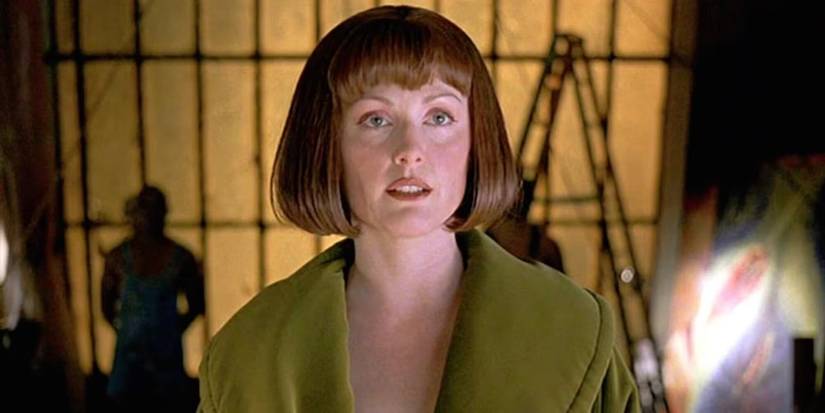
The Big Lebowski is usually discussed through the Dude (Jeff Bridges), Walter Sobchak (John Goodman), bowling, ransom confusion, nihilists, and the Coens turning detective fiction into a stoned maze. Then Maude Lebowski (Julianne Moore) drops into the movie and changes the flavor of the whole thing. Moore takes a character who could have been a one-joke eccentric artist and makes her one of the smartest people in the room. Maude understands money, sex, image, inheritance, and the absurd male panic swirling around Bunny Lebowski (Tara Reid)’s disappearance.
What makes Moore so funny here is the absolute seriousness of Maude’s self-presentation. The flying harness, the art-world language, the clipped delivery, the refusal to treat the Dude’s confusion as important; all of it feels ridiculous and completely controlled. She wants a child, wants no romantic mess, and sees the Dude as useful in a way that somehow becomes both cold and hilarious. The movie’s chaos keeps pretending to be masculine, but Maude reads the situation cleaner than almost anyone.
Advertisement
5
‘May December’ (2023)
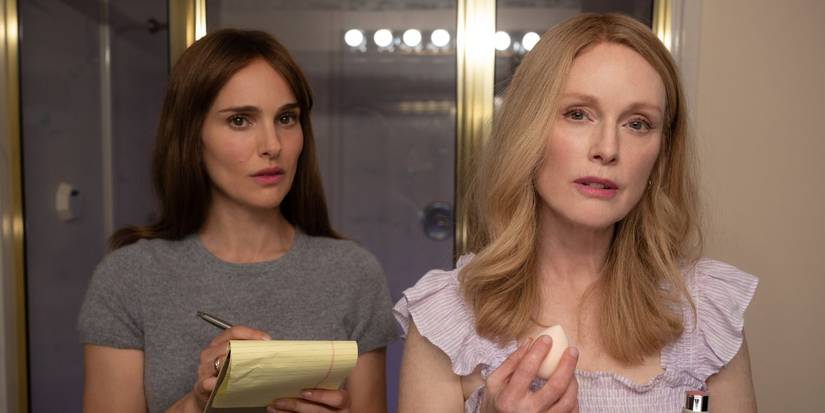
Elizabeth and Gracie looking at each other while facing a mirror in ‘May December’Image via Netflix
May December is brutal because it understands how people turn scandal into a story they can survive. Gracie Atherton-Yoo (Julianne Moore) lives with Joe Yoo (Charles Melton), the man she began abusing when he was thirteen, and the film does something very uncomfortable with that history. It keeps the domestic surface calm enough to show how denial becomes routine. The house, the cakes, the kids, the polite conversations, the neighbors, the smiles; everything has been arranged around a lie that everyone knows and still steps around.
Moore’s Gracie is terrifying in ordinary ways. She can sound fragile, sweet, childish, wounded, maternal, and manipulative within the same conversation. Elizabeth Berry (Natalie Portman) arrives to study her for a movie role, and that turns the whole film into a sick mirror game about performance. Gracie has spent years acting as if her version of events is reality. Elizabeth watches, copies, judges, steals, and exposes the rot without becoming morally clean herself. Moore makes Gracie horrifying without turning her into a monster costume. That restraint is what makes the film sting and one of her best.
Advertisement
4
‘Children of Men’ (2006)
Image via Universal Pictures
Children of Men throws viewers into 2027, where human infertility has pushed the world into despair, authoritarian violence, refugee cages, and dead-end survival. Julian (Julianne Moore) is not in the movie for long, but her absence haunts the whole story. She leads the Fishes, a resistance group fighting inside a collapsing Britain, and she pulls Theo Faron (Clive Owen) back into action through a mission involving Kee (Clare-Hope Ashitey), the first pregnant woman in eighteen years.
Julian matters because the movie needs history before it can have hope. She and Theo once had a child, Dylan, and that loss still sits between them. Their car scene has that rare lived-in ache where jokes, resentment, memory, and old love all pass through the same few minutes. Then the ambush hits, and the film rips away the possibility of repair. Children of Men is a masterpiece of chaos and motion, but Julian’s character is the wound that makes the movement mean something and Moore plays it well.
Advertisement
Collider Exclusive · Oscar Best Picture Quiz Which Oscar Best Picture Is Your Perfect Movie? Parasite · Everything Everywhere · Oppenheimer · Birdman · No Country
Advertisement
Five Oscar Best Picture winners. Five completely different visions of what cinema can be — and what it can do to you. One of them is the film that was made for the way your mind works. Ten questions will figure out which one.
🪜Parasite
🌀Everything Everywhere
☢️Oppenheimer
🐦Birdman
Advertisement
🪙No Country for Old Men
Advertisement
01
What kind of film experience do you actually want? The best movies don’t just entertain — they leave something behind.
Advertisement
02
Which idea grabs you most in a film? Great films are driven by a central obsession. What’s yours?
Advertisement
03
How do you like your story told? Form is content. The way a story is shaped changes what it means.
Advertisement
04
What makes a truly great antagonist? The opposition defines the protagonist. What kind of opposition fascinates you?
Advertisement
05
What do you want from a film’s ending? The final note is the one that lingers. What do you want it to sound like?
Advertisement
06
Which setting pulls you in most? Where a film takes place shapes everything — mood, stakes, what’s even possible.
Advertisement
07
What cinematic craft impresses you most? Every great film has a signature — a technical or artistic element that makes it unmistakable.
Advertisement
08
What kind of main character do you root for? The protagonist is the lens. Who you choose to follow says something about you.
Advertisement
09
How do you feel about a film that takes its time? Pace is a choice. Some films sprint; others let tension accumulate slowly, deliberately.
Advertisement
10
What do you want to feel walking out of the cinema? The best films leave a mark. What kind of mark do you want?
Advertisement
The Academy Has Decided Your Perfect Film Is…
Your answers have pointed to one Oscar Best Picture winner above all others. This is the film that was made for the way your mind works.
Advertisement
Parasite
You are drawn to films that operate on multiple levels simultaneously — that begin in one genre and quietly, brilliantly migrate into another. Bong Joon-ho’s Parasite is a film about class, desire, and the architecture of inequality that manages to be darkly funny, deeply suspenseful, and genuinely shocking across a single extraordinary running time. Your instinct is for cinema that hides its true intentions until the moment it’s ready to reveal them. Parasite is exactly that — a film that rewards close attention and punishes assumptions, right up to its devastating final image.
Advertisement
Everything Everywhere All at Once
You want it all — and this film gives you all of it. The Daniels’ Everything Everywhere All at Once is one of the most maximalist films ever made: action comedy, multiverse sci-fi, family drama, existential crisis, and a genuinely earned emotional core that sneaks up on you amid the chaos. You are someone who responds to ambition, who doesn’t want cinema to choose between being entertaining and being meaningful. This film refuses that choice entirely. It is overwhelming by design, and its overwhelming nature is precisely the point — because the feeling of being crushed by infinite possibility is exactly what it’s about.
Advertisement
Oppenheimer
You are drawn to cinema on a grand scale — films that understand history not as a backdrop but as a force, and that place their characters inside that force and watch what happens. Christopher Nolan’s Oppenheimer is a film about the terrifying gap between what we can do and what we should do, told with the full weight of one of the most consequential moments in human history behind it. You want your films to feel important without feeling self-important — to earn their ambition through sheer craft and the gravity of their subject. Oppenheimer does exactly that. It is enormous, complicated, and refuses easy comfort.
Advertisement
Birdman
You are drawn to films that foreground their own construction — that make the how of the filmmaking part of the what it’s about. Alejandro González Iñárritu’s Birdman, shot to appear as a single continuous take, is cinema examining itself through the cracked mirror of a fading actor’s ego. You respond to formal daring, to the feeling that a film is doing something that probably shouldn’t be possible. Michael Keaton’s performance and Emmanuel Lubezki’s restless camera create something genuinely unlike anything else — a film that is simultaneously about creativity, relevance, self-destruction, and the impossibility of ever truly knowing if your work means anything at all.
Advertisement
No Country for Old Men
You are drawn to cinema that trusts silence, that refuses to explain itself, and that treats dread as a form of meaning. The Coen Brothers’ No Country for Old Men is a film about the arrival of a new kind of evil — implacable, arbitrary, and utterly indifferent to the moral frameworks we use to make sense of the world. It is one of the most formally controlled films ever made, and its controlled restraint is what makes it so terrifying. You want your films to haunt you, not comfort you. You are not interested in resolution if resolution would be dishonest. No Country for Old Men is honest in a way that most cinema never dares to be.
Advertisement
3
‘Magnolia’ (1999)
Image via New Line Cinema
Advertisement
Linda Partridge (Julianne Moore) could have been swallowed by Magnolia’s enormous ensemble. Paul Thomas Anderson has dying fathers, damaged children, quiz-show ghosts, cops, addicts, gurus, regret, coincidence, and biblical weather all fighting for space. Moore cuts through the noise by making Linda’s guilt feel almost unbearable to watch. She married Earl Partridge (Jason Robards) for money, then somehow ended up loving him near the end of his life, and now that love has arrived too late to feel clean.
Linda’s pharmacy breakdown, not asking for sympathy in some neat way, being furious at the pharmacist, at the prescription, at the judgment she hears under every question, and really at herself for needing mercy after living so selfishly — the complete performance is huge, messy, profane, and spiritually naked. That is exactly what Magnolia needed.
2
‘Far from Heaven’ (2002)
Image via Focus Features
Advertisement
Far from Heaven uses the visual language of 1950s melodrama, but the feelings underneath are savage. Cathy Whitaker (Julianne Moore) has the perfect Hartford home, the successful husband, the polite parties, the beautiful clothes, and the social role everyone around her knows how to read. Then she discovers Frank Whitaker (Dennis Quaid)’s hidden sexuality and forms a forbidden connection with Raymond Deagan (Dennis Haysbert), a Black gardener, and the world around her starts showing its real face.
Moore’s Cathy is heartbreaking because she has been trained to turn suffering into manners. She smiles when she is humiliated. She speaks carefully when her life is falling apart. She tries to be decent in a society that treats decency as a scandal once it crosses race, gender, or sexual boundaries. She has played it all beautifully. She shows beautifully that Cathy is a woman of her time slowly discovering that the life she was promised was built on silence.
1
‘Boogie Nights’ (1997)
Image via New Line Cinema
Advertisement
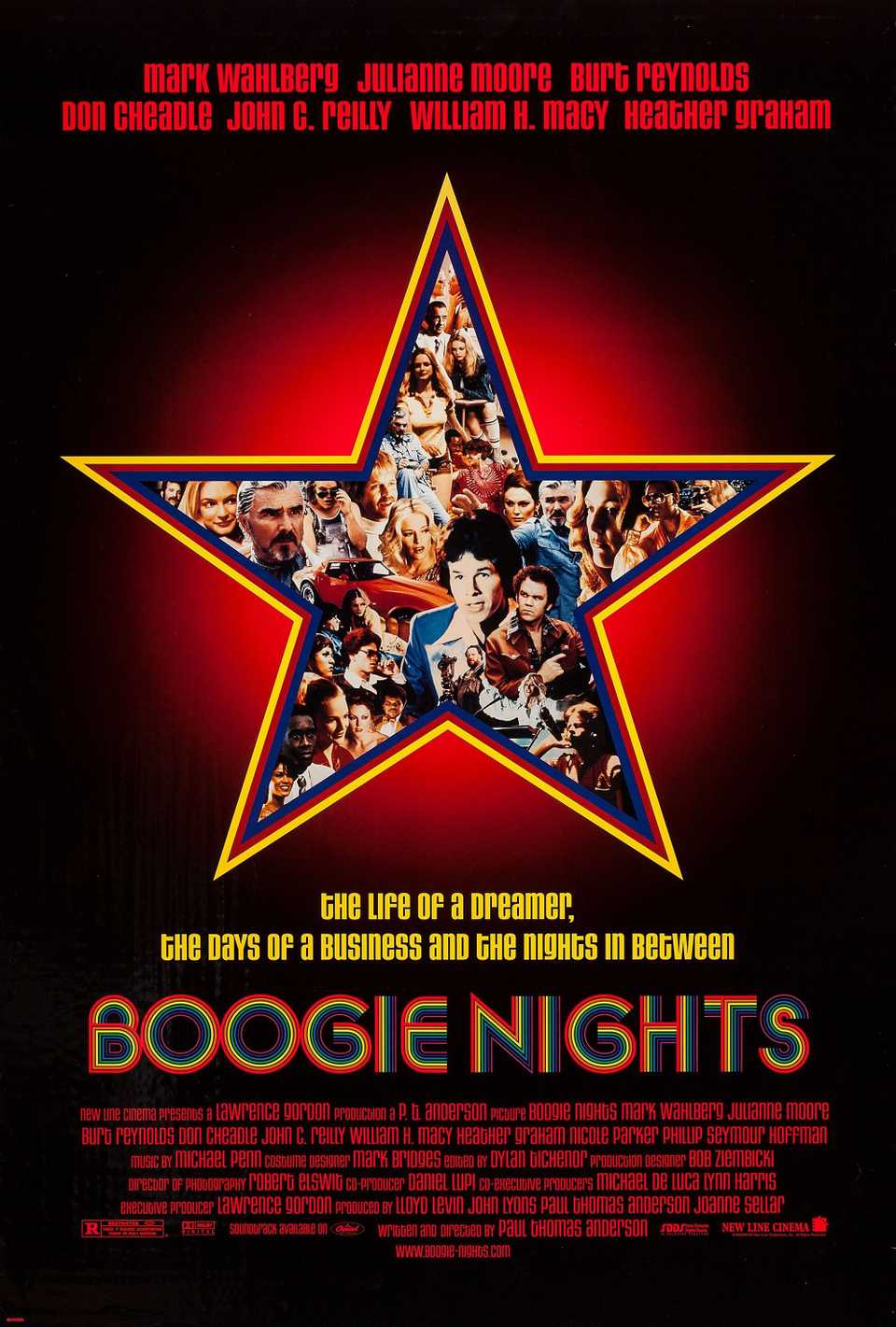
Amber Waves (Julianne Moore) is one of Moore’s greatest roles because the character understands the fantasy and the damage at the same time. In Boogie Nights, the porn world around Jack Horner (Burt Reynolds)’s crew sells pleasure, fame, family, and freedom, but everyone inside it is carrying some private rupture. Amber becomes a mother figure to Dirk Diggler (Mark Wahlberg) and others on set, yet her own custody battle keeps reminding us that the warmth she gives this chosen family cannot repair the family she has lost.
Moore makes Amber glamorous, wrecked, tender, high, professional, and deeply sad without separating those pieces. Her scenes with Dirk have real affection, but they also expose how badly both people need the illusion they are building together. The courtroom material is crushing because Amber’s past and addiction get turned into evidence against her, and her love for her son has no power inside that system. Boogie Nights is a masterpiece because it sees the party, the comedy, the bodies, the music, and the money, then follows the hurt underneath. Amber is where that hurt becomes impossible to laugh off.




You must be logged in to post a comment Login