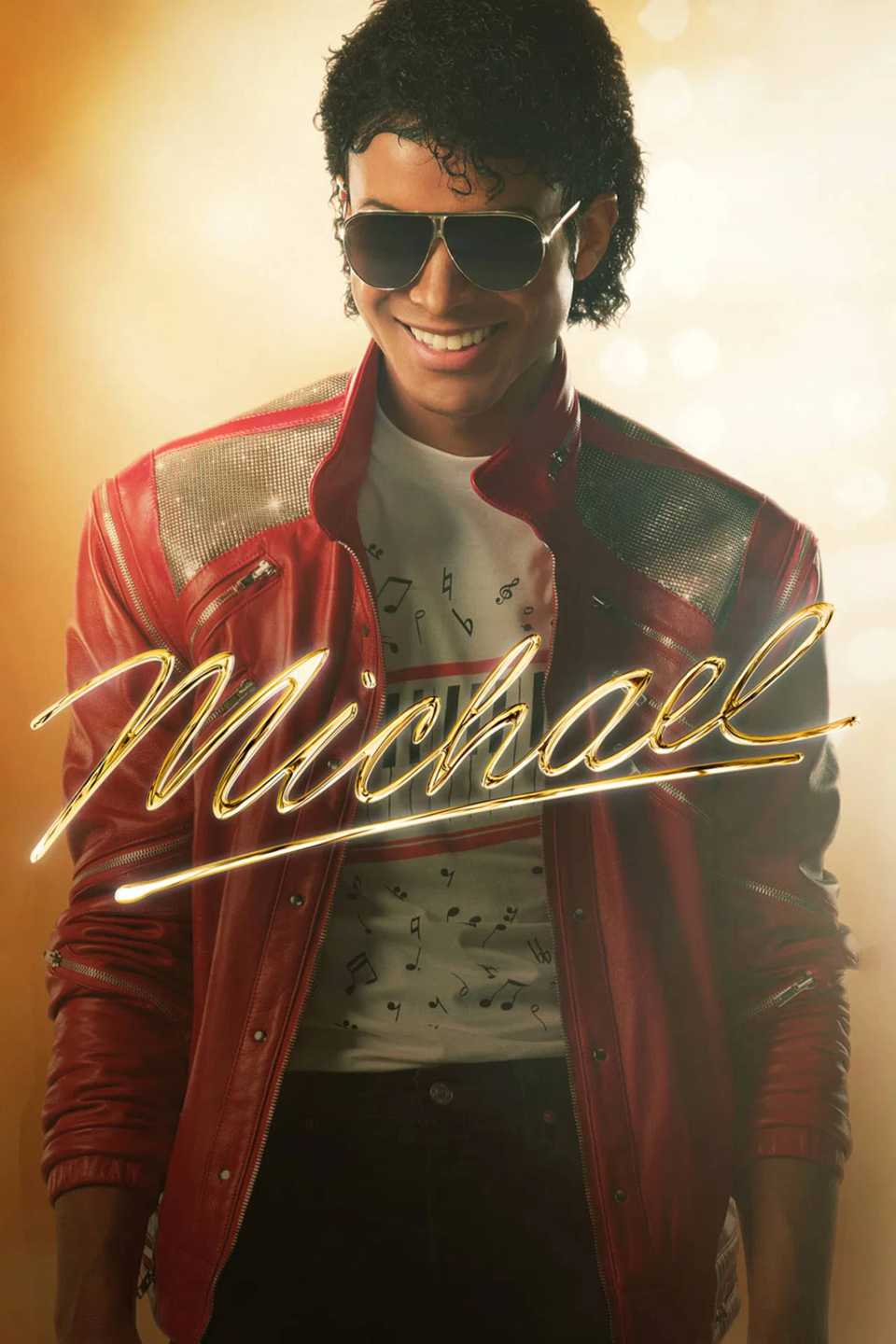
As expected, Lionsgate’s Michael Jackson biopic is shattering industry projections in its debut weekend at the box office. The film, directed by Antoine Fuqua, had an eventful production. Reports say the filmmakers rewrote the third act after filming finished. The movie opened to poor reviews this week, with most of the criticism being directed at its hagiographic depiction of the King of Pop’s early life. Michael is nevertheless breaking box-office records this weekend, as Lionsgate prepares to put a follow-up feature in motion. The movie features Jackson’s nephew, Jaafar Jackson, in the lead role alongside Colman Domingo, Miles Teller, and Nia Long. The film hails from producer Graham King, whose previous blockbuster, Bohemian Rhapsody, is its closest comp.
The Freddie Mercury biopic was also criticized upon release in 2018 for being similarly sanitized, but emerged as a sensational hit. It grossed more than $900 million, and was the highest-grossing biopic ever made before being overtaken by Christopher Nolan‘s Oppenheimer. Bohemian Rhapsody also earned star Rami Malek a Best Actor Academy Award despite mixed overall reviews. Michael is proving that it’s essentially critic-proof, evidenced by an A- grade on CinemaScore and a “Verified Hot” 94% audience score on Rotten Tomatoes. The movie’s official critics’ score on the aggregator website currently stands at 39%. In her review, Collider’s Taylor Gates noted the omission of longstanding child-abuse allegations but still called the film “a complex, compelling family drama.”
Advertisement
Collider Exclusive · Oscar Best Picture Quiz Which Oscar Best Picture Is Your Perfect Movie? Parasite · Everything Everywhere · Oppenheimer · Birdman · No Country
Advertisement
Five Oscar Best Picture winners. Five completely different visions of what cinema can be — and what it can do to you. One of them is the film that was made for the way your mind works. Ten questions will figure out which one.
🪜Parasite
🌀Everything Everywhere
☢️Oppenheimer
🐦Birdman
Advertisement
🪙No Country for Old Men
Advertisement
01
What kind of film experience do you actually want? The best movies don’t just entertain — they leave something behind.
Advertisement
02
Which idea grabs you most in a film? Great films are driven by a central obsession. What’s yours?
Advertisement
03
How do you like your story told? Form is content. The way a story is shaped changes what it means.
Advertisement
04
What makes a truly great antagonist? The opposition defines the protagonist. What kind of opposition fascinates you?
Advertisement
05
What do you want from a film’s ending? The final note is the one that lingers. What do you want it to sound like?
Advertisement
06
Which setting pulls you in most? Where a film takes place shapes everything — mood, stakes, what’s even possible.
Advertisement
07
What cinematic craft impresses you most? Every great film has a signature — a technical or artistic element that makes it unmistakable.
Advertisement
08
What kind of main character do you root for? The protagonist is the lens. Who you choose to follow says something about you.
Advertisement
09
How do you feel about a film that takes its time? Pace is a choice. Some films sprint; others let tension accumulate slowly, deliberately.
Advertisement
10
What do you want to feel walking out of the cinema? The best films leave a mark. What kind of mark do you want?
Advertisement
The Academy Has Decided Your Perfect Film Is…
Your answers have pointed to one Oscar Best Picture winner above all others. This is the film that was made for the way your mind works.
Advertisement
Parasite
You are drawn to films that operate on multiple levels simultaneously — that begin in one genre and quietly, brilliantly migrate into another. Bong Joon-ho’s Parasite is a film about class, desire, and the architecture of inequality that manages to be darkly funny, deeply suspenseful, and genuinely shocking across a single extraordinary running time. Your instinct is for cinema that hides its true intentions until the moment it’s ready to reveal them. Parasite is exactly that — a film that rewards close attention and punishes assumptions, right up to its devastating final image.
Advertisement
Everything Everywhere All at Once
You want it all — and this film gives you all of it. The Daniels’ Everything Everywhere All at Once is one of the most maximalist films ever made: action comedy, multiverse sci-fi, family drama, existential crisis, and a genuinely earned emotional core that sneaks up on you amid the chaos. You are someone who responds to ambition, who doesn’t want cinema to choose between being entertaining and being meaningful. This film refuses that choice entirely. It is overwhelming by design, and its overwhelming nature is precisely the point — because the feeling of being crushed by infinite possibility is exactly what it’s about.
Advertisement
Oppenheimer
You are drawn to cinema on a grand scale — films that understand history not as a backdrop but as a force, and that place their characters inside that force and watch what happens. Christopher Nolan’s Oppenheimer is a film about the terrifying gap between what we can do and what we should do, told with the full weight of one of the most consequential moments in human history behind it. You want your films to feel important without feeling self-important — to earn their ambition through sheer craft and the gravity of their subject. Oppenheimer does exactly that. It is enormous, complicated, and refuses easy comfort.
Advertisement
Birdman
You are drawn to films that foreground their own construction — that make the how of the filmmaking part of the what it’s about. Alejandro González Iñárritu’s Birdman, shot to appear as a single continuous take, is cinema examining itself through the cracked mirror of a fading actor’s ego. You respond to formal daring, to the feeling that a film is doing something that probably shouldn’t be possible. Michael Keaton’s performance and Emmanuel Lubezki’s restless camera create something genuinely unlike anything else — a film that is simultaneously about creativity, relevance, self-destruction, and the impossibility of ever truly knowing if your work means anything at all.
Advertisement
No Country for Old Men
You are drawn to cinema that trusts silence, that refuses to explain itself, and that treats dread as a form of meaning. The Coen Brothers’ No Country for Old Men is a film about the arrival of a new kind of evil — implacable, arbitrary, and utterly indifferent to the moral frameworks we use to make sense of the world. It is one of the most formally controlled films ever made, and its controlled restraint is what makes it so terrifying. You want your films to haunt you, not comfort you. You are not interested in resolution if resolution would be dishonest. No Country for Old Men is honest in a way that most cinema never dares to be.
Advertisement
Here’s How Much ‘Michael’ Is Expected to Gross at the Box Office
Despite the criticism, Michael generated $40 million domestically on opening day. The film is eying a record-breaking $90 million-plus opening weekend haul, which far exceeds the $51 million that Bohemian Rhapsody opened with in 2018, and the $60 million debut of Universal’s Straight Outta Compton. Michael carries a massive reported budget of $200 million, but there’s a path to $1 billion worldwide ahead of it if audiences decide to go back for seconds and thirds. Lionsgate could also follow the Bohemian Rhapsody, Frozen, and KPop Demon Hunters playbook by releasing a sing-along version in the future, given the party atmosphere being observed in theaters. Meanwhile, production on the second part is locked and loaded. It’s being reported that 30% of the first film’s footage is already edited and available for part two. Audiences clearly aren’t concerned with the controversial aspects of Jackson’s life and legacy, and are choosing instead to focus on the impact his music has had on their lives. Stay tuned to Collider for more updates.


You must be logged in to post a comment Login