Entertainment
Nearly 60 Years Later, ‘Star Trek’s Most Chilling Death Still Defines Sci-Fi Horror

Next year, Star Trek will have been on the air for sixty years. Fourteen movies and almost a thousand TV episodes later, the franchise can still look back to the very first episode that was ever aired, “The Man Trap,” for inspiration. Its blend of science fiction, horror, action, and thoughtful introspection set the show on the past that it would ultimately follow for six decades. It all started with the death of one character who was never really seen on-screen: Nancy Crater.
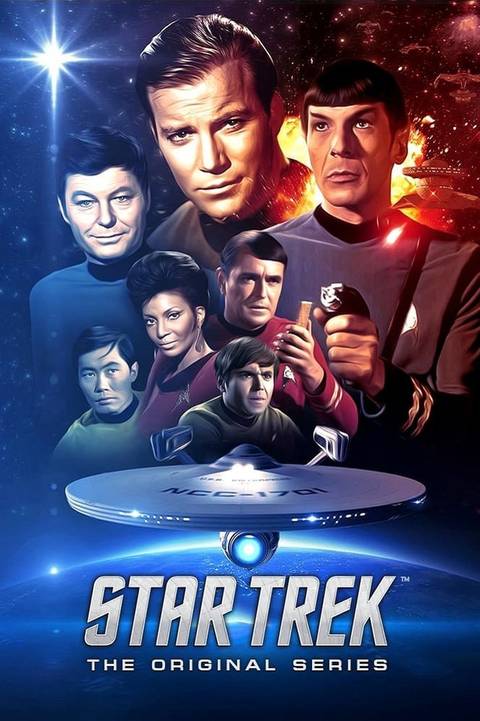
Star Trek: The Original Series premiered on NBC on September 8, 1966, with “The Man Trap,” a tale of lost love, extinction, and salt vampires. The brainchild of Gene Roddenberry, it introduced viewers to a cast of characters who are still gracing televisions to this day: William Shatner‘s stalwart Captain James T. Kirk, Leonard Nimoy‘s stoic, logical Mr. Spock, and DeForest Kelley‘s cantankerous, hot-headed Dr. Leonard “Bones” McCoy. Although it was ultimately cancelled after three seasons, it would accrue a legion of fans, living on in syndication and spin-offs to this day.
What Was the First Episode of ‘Star Trek: The Original Series’?
However, “The Man Trap” wasn’t even supposed to be the first episode of Star Trek. The first pilot for Star Trek was “The Cage”: it starred Jeffrey Hunter as Captain Christopher Pike, and was rejected by the network. However, Lucille Ball, whose studio, Desilu, was producing the series, still thought the project had legs and commissioned a second pilot. That episode, “Where No Man Has Gone Before,” replaced Pike with Shatner’s James Kirk, and won over the network; parts of “The Cage” would later be used in a two-part episode, “The Menagerie,” which established Pike as Kirk’s predecessor.
However, when it came time to decide what episode would be broadcast first, there was some debate. “Where No Man Has Gone Before” had too much exposition, and another episode, “Mudd’s Women,” was seen as too salacious. Thanks to its horror elements, “The Man Trap” was chosen as the series’ pilot.
What Was TV Horror Like in the 1960s?
On TV, horror was the domain of The Twilight Zone and its rival, The Outer Limits. The Twilight Zone was the brainchild of Rod Serling, who was Roddenberry’s longtime friend, and had ended its run in 1964 after five seasons; both Nimoy and Shatner starred on memorable episodes of the show. George Clayton Johnson, who penned the episode, was a veteran of the series as well; one of his episodes, “Nothing In the Dark,” featuring a young Robert Redford, is one of the series’ most acclaimed entries. However, by 1966, both series were off the air, and a new flavor of horror was in the air.
For decades, horror had been seen solely in black and white. The American horror canon was strictly monochromatic, from the silent horrors of Lon Chaney Sr., to the Universal Monsters of the 1930s and 40s, to Alfred Hitchcock‘s chilling Psycho. However, the genre was moving into color, challenging censors and moral guardians, with the horrors of Britain’s Hammer Film Productions spattering crimson all over movie screens on both sides of the Atlantic. Star Trek was filmed in vibrant color, one of several contemporary series meant to sell color TV sets, and it was about to bring full-color horror to America’s living rooms.
What Happens in ‘The Man Trap’?


The episode opens with the USS Enterprise paying a visit to the planet M-113 and its only inhabitants: Professor Robert Crater (Alfred Ryder) and his wife, Nancy (Jeanne Bal); years ago, Nancy and Dr. McCoy had been lovers, but they hadn’t seen each other in decades. It’s clear from the start that there’s something unusual about Nancy: Bones sees her in the flower of her youth, Kirk sees her as middle-aged, and Crewman Darnell, who accompanied them, sees her as a different woman entirely. She leads him off alone, and the next time we see him, he’s dead, with his cold flesh covered in lurid sucker-marks.
His death presages the many “redshirts” who would come to gruesome ends in future episodes, although he wears blue. Nancy is the culprit; she’s a shapeshifting vampiric creature, subsisting off salt leeched from living beings. Nancy, disguising herself as another dead crewman, makes her way aboard the Enterprise and begins stalking the ship’s crew. In two tension-filled scenes, it encounters, but does not attack, Uhura (Nichelle Nichols) and Janice Rand (Grace Lee Whitney); befitting the horror tropes of the time, they’re both women, although the Nancy-creature clearly doesn’t discriminate.
What Happened to Nancy Crater?

Eventually, Kirk and McCoy learn from the half-mad Crater that the real Nancy is long-dead, killed by the very creature that now impersonates her. Desperate for companionship, he allowed the creature to take on her form and kept it alive with salt tablets. We are left to imagine that the comfort the creature provided him was solely emotional; anything more would have been far too horrifying for 1960s network television. After it kills Crater, his usefulness now seemingly at an end, Kirk, Spock, and Bones finally confront the creature aboard the ship, where it reveals its true, monstrous appearance. Here, too, it is a more visceral monster than those featured in its predecessors; it resembles a cross between an ape, a lamprey, and a desiccated human corpse. Spock, whose Vulcan blood makes him unappetizing to the creature, cannot harm it, even with his prodigious strength.
It’s up to Kirk to finally end it once and for all with a phaser blast. However, the creature is not simply a monster to be killed and forgotten about. Professor Crater likened the creature to the American buffalo, which once roamed the plains in vast herds before being exterminated. The creatures exhausted the planet’s salt supplies and died out; the one that impersonated Nancy was apparently the last of its breed. As the episode ends, Kirk ponders having rendered their species extinct, and tells Spock that he was “thinking about the buffalo.”
“The Man Trap” wouldn’t be the last time Star Trek ventured into the horror genre. In The Original Series alone, Psycho‘s Robert Bloch adapted his own “Yours Truly, Jack the Ripper” into “Wolf in the Fold,” a tale of the undying spirit of murder, and penned “Catspaw,” a Halloween-themed episode featuring a haunted castle, an eerie pair of aliens, and a sinister black cat. Subsequent series have dabbled in horror, as well, with everything from the corpse-like Borg to a race of mind-controlling, body-invading bugs. Strange New Worlds‘ third season just featured an episode set on a planet inhabited by ravenous, mindless zombies. The blueprint for it all is in “The Man Trap,” the story of a woman who was killed and had her killer take her place by her husband’s side.
All episodes of Star Trek are available to stream on Paramount+ in the U.S.

- Release Date
-
1966 – 1969-00-00
- Showrunner
-
Gene Roddenberry
- Directors
-
Marc Daniels, Joseph Pevney, Ralph Senensky, Vincent McEveety, Herb Wallerstein, Jud Taylor, Marvin J. Chomsky, David Alexander, Gerd Oswald, Herschel Daugherty, James Goldstone, Robert Butler, Anton Leader, Gene Nelson, Harvey Hart, Herbert Kenwith, James Komack, John Erman, John Newland, Joseph Sargent, Lawrence Dobkin, Leo Penn, Michael O’Herlihy, Murray Golden
- Writers
-
D.C. Fontana, Jerome Bixby, Arthur Heinemann, David Gerrold, Jerry Sohl, Oliver Crawford, Robert Bloch, David P. Harmon, Don Ingalls, Paul Schneider, Shimon Wincelberg, Steven W. Carabatsos, Theodore Sturgeon, Jean Lisette Aroeste, Art Wallace, Adrian Spies, Barry Trivers, Don Mankiewicz, Edward J. Lakso, Fredric Brown, George Clayton Johnson, George F. Slavin, Gilbert Ralston, Harlan Ellison
You must be logged in to post a comment Login