Entertainment
Netflix Just Added The Iconic Robin Williams Fantasy That Launched A Franchise
By Zack Zagranis
| Published


Most people play games to escape, unless that game is Jumanji. Then they play to escape the game itself. That was the case for Robin Williams in the 1995 family classic Jumanji, which is newly available to stream on Netflix.
Jumanji is a family adventure film from smack dab in the middle of the ’90s, with all the janky CGI that entails. The movie was based on a 1981 children’s book of the same name about a jungle-themed board game that comes to life as you play it. The film version stars Robin Williams as Alan Parrish, a young boy who goes missing in 1969 after playing a board game called Jumanji with his friend Sarah Whittle, played by Bonnie Hunt.
Welcome To The Jungle

Alan gets trapped inside the game after a turn that instructs him to wait in the jungle until someone else rolls a five or an eight. Sarah understandably freaks out and runs from the house, leaving Alan stuck inside Jumanji.
Twenty-six years later, two new children, Judy (a young Kirsten Dunst) and her brother Peter, discover Jumanji and, upon rolling a five, release a grown-up Alan in the form of Robin Williams from the game. Unfortunately, he’s not alone.
Among the other jungle perils unleashed upon the small town of Brantford, New Hampshire, are killer vines, giant mosquitoes, a gaggle of mischievous monkeys, and a colonial-Africa-style big-game hunter complete with a pith helmet and a long gun. Now it’s up to the kids, the now-grown Robin Williams version of Alan and Sarah, to finish the game that was started in 1969 if they can survive long enough.
The Origins Of Jumanji

TriStar Pictures agreed to finance the film, but only if they could get Robin Williams to play the lead character, Alan Parrish, as an adult. Unfortunately, Williams initially passed on Jumanji based on the draft of the script he was given to read.
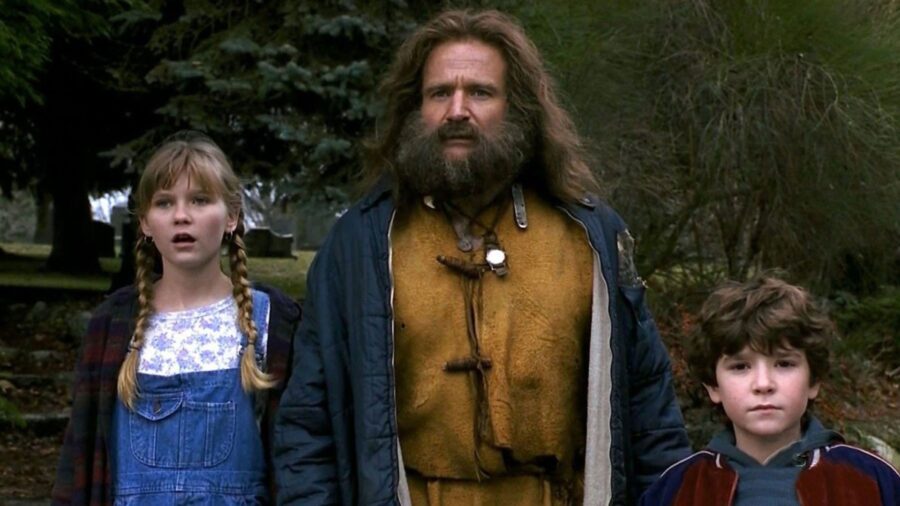
It wasn’t until Honey, I Shrunk the Kids director Joe Johnston reworked the story with screenwriters Greg Taylor, Jonathan Hensleigh, and Jim Strain that Robin Williams agreed to do the film. Ironically, despite being instrumental in Williams’s acceptance of the role, director Joe Johnston originally didn’t want Robin because of his reputation for heavy on-set improvising.
Luckily, Robin Williams understood the assignment and stuck to the script except for a handful of times when he was allowed to improvise a few lines with actress Bonnie Hunt. Even then, it was only after the director had already gotten a take where the actor performed his lines as scripted.
Jumanji Was Supposed To Star Tom Hanks And Madonna

Johnston’s first choice to play Alan Parrish was actor Tom Hanks. Hanks, however, was unavailable due to his commitment to Apollo 13.
Other actors considered for the role include Dan Aykroyd, Michael Keaton, Chevy Chase, Sean Penn, Kevin Costner, Richard Dreyfuss, Michael Douglas, Rupert Everett, Harrison Ford, Sean Connery, and even Arnold Schwarzenegger.
Robin Williams wasn’t the only actor who wasn’t Johnston’s first choice. Prior to Bonnie Hunt, the director considered several actresses for the role of Sarah, such as Jodie Foster, Demi Moore, Michelle Pfeiffer, and even Madonna. Meanwhile, Scarlett Johansson was in the running to play Judy at one point before the filmmaker decided on Kirsten Dunst.
Early CGI And Shot On Location

The movie was mainly shot in Keene, New Hampshire, which stood in for Jumanji‘s fictional town of Brantford. Other locations included North Berwick Main, where the Olde Woolen Mill was used for the shoe factory owned by Robin Williams’ father in the movie.
The movie was one of the first to rely heavily on CGI for many of its special-effects shots. George Lucas’s special effects company Industrial Light & Magic even wrote all-new software specifically for use in Jumanji.
Due to CGI still being in its infancy, many of the digital effects were bolstered by more traditional practical means such as puppetry and animatronics. The effects may look laughable by modern standards, but they were mind-blowing to audiences in 1995, and, if we’re being honest, still retain a certain charm today.
Audience And Critical Reception

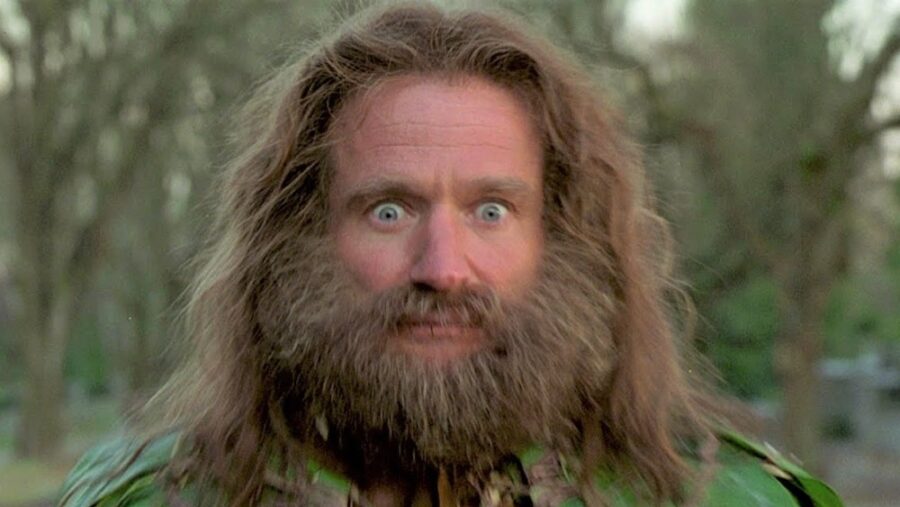
Jumanji was released on December 15, 1995, and immediately overtook Toy Story to become the #1 movie at the North American box office on its opening weekend. The movie went on to gross $262.8 million worldwide on a $65 million budget, making it a financial success.
The film received mixed reviews from critics, who praised Robin Williams’ performance but thought it overall relied too much on special effects and too little on the story. Audiences, on the other hand, almost unanimously loved the movie.
Jumanji spawned a real-life board game, an animated series, a quasi-sequel in 2005’s Zathura: A Space Adventure, and a couple of more direct sequels, Jumanji: Welcome to the Jungle in 2017 and Jumanji: The Next Level in 2019.
Jumanji is remembered today quite fondly, especially by ’90s kids. Whether you’re an Xennial or Millennial looking for a quick hit of nostalgia, or someone younger looking to check out a movie full of retro visuals and a legendary performance by Robin Williams, you owe it to yourself to check out Jumanji while it’s on Netflix.
You must be logged in to post a comment Login