Hollywood became an independent municipality in the early 1900s and as early as the 1920s, had already become the world’s film capital. Hollywood as we know it, has been in existence for well over a hundred years, meaning that the industry has seen its fair share of genius pass through it. Besides the stars who light up the screens with their performances, like the timeless talents of Marilyn Monroe and Humphrey Bogart, we hold in equally high esteem, and rightly so, the filmmakers who bring everything both on and offscreen together.
While Paramount, 20th Century Fox, Warner Bros., RKO Radio Pictures, and Metro-Goldwyn-Mayer (MGM) Studios, the production titans that were then known as the “Big Five” ran the industry for the better part of those hundred years. Filmmakers such as Alfred Hitchcock, Stanley Kubrick, Ingmar Bergman, and Akira Kurosawa, among others, are recognized as the pioneer figures of the industry as far as filmmaking is concerned. In the modern day, filmmakers such as Martin Scorsese, Steven Spielberg, and the titan of the box office, James Cameron, have all gone on to make their mark. Over the past two decades plus, one filmmaker has made his way onto that list and rightly so: Christopher Nolan.
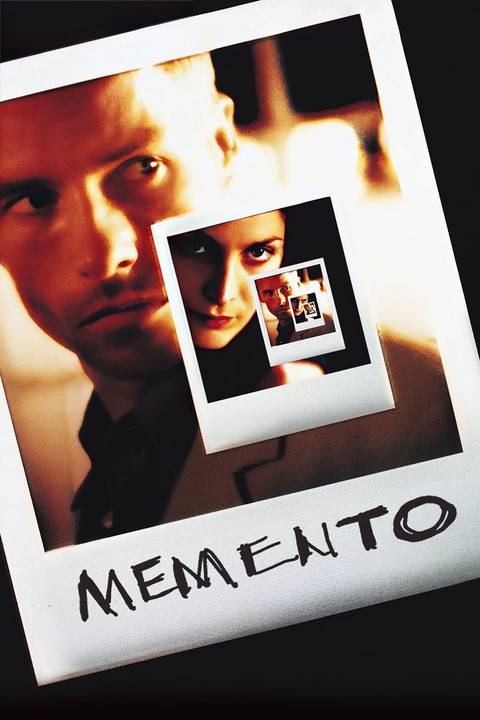
When one thinks of Nolan, they often think of grand, epic cinema. The legendary director returns to theaters with The Odyssey later this month, in what is one of the year’s most anticipated movies. However, long before he became the guy revered for massive IMAX epics about space, war, dreams, physics, and Greek soldiers, Nolan kicked off his movie career with one of the cleverest thrillers made in the industry. Now, ahead of the arrival of Nolan’s reimagining of Homer’s tale, his twisty psychological thriller, Memento, is now available to stream on Netflix. The thriller is commended as having launched Nolan’s career and offers a deeply satisfying, refreshingly intimate tale as compared to the filmmaker’s later productions, which were larger in scale.
Advertisement
Advertisement
Collider Exclusive · Oscar Best Picture Quiz Which Oscar Best Picture Is Your Perfect Movie? Parasite · Everything Everywhere · Oppenheimer · Birdman · No Country
Five Oscar Best Picture winners. Five completely different visions of what cinema can be — and what it can do to you. One of them is the film that was made for the way your mind works. Ten questions will figure out which one.
🪜Parasite
🌀Everything Everywhere
☢️Oppenheimer
Advertisement
🐦Birdman
🪙No Country for Old Men
Advertisement
01
What kind of film experience do you actually want? The best movies don’t just entertain — they leave something behind.
Advertisement
02
Which idea grabs you most in a film? Great films are driven by a central obsession. What’s yours?
Advertisement
03
How do you like your story told? Form is content. The way a story is shaped changes what it means.
Advertisement
04
What makes a truly great antagonist? The opposition defines the protagonist. What kind of opposition fascinates you?
Advertisement
05
What do you want from a film’s ending? The final note is the one that lingers. What do you want it to sound like?
Advertisement
06
Which setting pulls you in most? Where a film takes place shapes everything — mood, stakes, what’s even possible.
Advertisement
07
What cinematic craft impresses you most? Every great film has a signature — a technical or artistic element that makes it unmistakable.
Advertisement
08
What kind of main character do you root for? The protagonist is the lens. Who you choose to follow says something about you.
Advertisement
09
How do you feel about a film that takes its time? Pace is a choice. Some films sprint; others let tension accumulate slowly, deliberately.
Advertisement
10
What do you want to feel walking out of the cinema? The best films leave a mark. What kind of mark do you want?
Advertisement
The Academy Has Decided Your Perfect Film Is…
Your answers have pointed to one Oscar Best Picture winner above all others. This is the film that was made for the way your mind works.
Advertisement
Parasite
You are drawn to films that operate on multiple levels simultaneously — that begin in one genre and quietly, brilliantly migrate into another. Bong Joon-ho’s Parasite is a film about class, desire, and the architecture of inequality that manages to be darkly funny, deeply suspenseful, and genuinely shocking across a single extraordinary running time. Your instinct is for cinema that hides its true intentions until the moment it’s ready to reveal them. Parasite is exactly that — a film that rewards close attention and punishes assumptions, right up to its devastating final image.
Advertisement
Everything Everywhere All at Once
You want it all — and this film gives you all of it. The Daniels’ Everything Everywhere All at Once is one of the most maximalist films ever made: action comedy, multiverse sci-fi, family drama, existential crisis, and a genuinely earned emotional core that sneaks up on you amid the chaos. You are someone who responds to ambition, who doesn’t want cinema to choose between being entertaining and being meaningful. This film refuses that choice entirely. It is overwhelming by design, and its overwhelming nature is precisely the point — because the feeling of being crushed by infinite possibility is exactly what it’s about.
Advertisement
Oppenheimer
You are drawn to cinema on a grand scale — films that understand history not as a backdrop but as a force, and that place their characters inside that force and watch what happens. Christopher Nolan’s Oppenheimer is a film about the terrifying gap between what we can do and what we should do, told with the full weight of one of the most consequential moments in human history behind it. You want your films to feel important without feeling self-important — to earn their ambition through sheer craft and the gravity of their subject. Oppenheimer does exactly that. It is enormous, complicated, and refuses easy comfort.
Advertisement
Birdman
You are drawn to films that foreground their own construction — that make the how of the filmmaking part of the what it’s about. Alejandro González Iñárritu’s Birdman, shot to appear as a single continuous take, is cinema examining itself through the cracked mirror of a fading actor’s ego. You respond to formal daring, to the feeling that a film is doing something that probably shouldn’t be possible. Michael Keaton’s performance and Emmanuel Lubezki’s restless camera create something genuinely unlike anything else — a film that is simultaneously about creativity, relevance, self-destruction, and the impossibility of ever truly knowing if your work means anything at all.
Advertisement
No Country for Old Men
You are drawn to cinema that trusts silence, that refuses to explain itself, and that treats dread as a form of meaning. The Coen Brothers’ No Country for Old Men is a film about the arrival of a new kind of evil — implacable, arbitrary, and utterly indifferent to the moral frameworks we use to make sense of the world. It is one of the most formally controlled films ever made, and its controlled restraint is what makes it so terrifying. You want your films to haunt you, not comfort you. You are not interested in resolution if resolution would be dishonest. No Country for Old Men is honest in a way that most cinema never dares to be.
Advertisement
Advertisement
How Successful Was Christopher Nolan’s ‘Memento’?
Before we encountered Interstellar and Inception, Memento was the movie that put Nolan on the map. Right off the bat, the psychological thriller was a brilliant success. It was a small, twisty indie thriller with a $9 million budget. It would go on to become a financial success, grossing $25.5 million domestically and $39.7 million worldwide from its original release. Memento has also been a critical hit for Nolan, as the film holds an impressive 93% critics score on Rotten Tomatoes, and Metacritic lists it at 83, meaning it holds universal acclaim. With two Oscar nominations for Best Original Screenplay and Best Film Editing, the film also put Nolan on the awards map.
Memento, which premiered in 2010, follows Leonard Shelby (Guy Pearce), a former insurance investigator who is seeking out the man he believes killed his wife. Unfortunately, Leonard suffers from antegrade amnesia after a brain injury, meaning he can’t form new memories. Thus, relying on notes, photographs and a maze of tattooed reminders all over his body to track down the man he believes responsible for his condition and the death of his wife. Memento‘s cast also includes Carrie-Anne Moss (The Matrix) as Natalie, Joe Pantoliano (The Sopranos) as Teddy, Mark Boone Junior (Sons of Anarchy) as Burt, and Stephen Tobolowsky(Groundhog Day) as Sammy Jankis.


You must be logged in to post a comment Login