At a time when Netflix wasn’t taking risks, Altered Carbon had the makings of a sci-fi classic. Adapted from Richard Morgan’s book of the same name, the series showcases a cyberpunk future where the rich have become so powerful that not even death can stop them. This dark sci-fi series shows the worst-case scenario of how bodily autonomy can be disregarded — bodies are just flesh vessels to be used and discarded. Altered Carbon had a lot of potential, like so many Netflix series, but faded into purgatory. However, another show is just as relevant thematically while somehow being an even darker depiction of sci-fi.
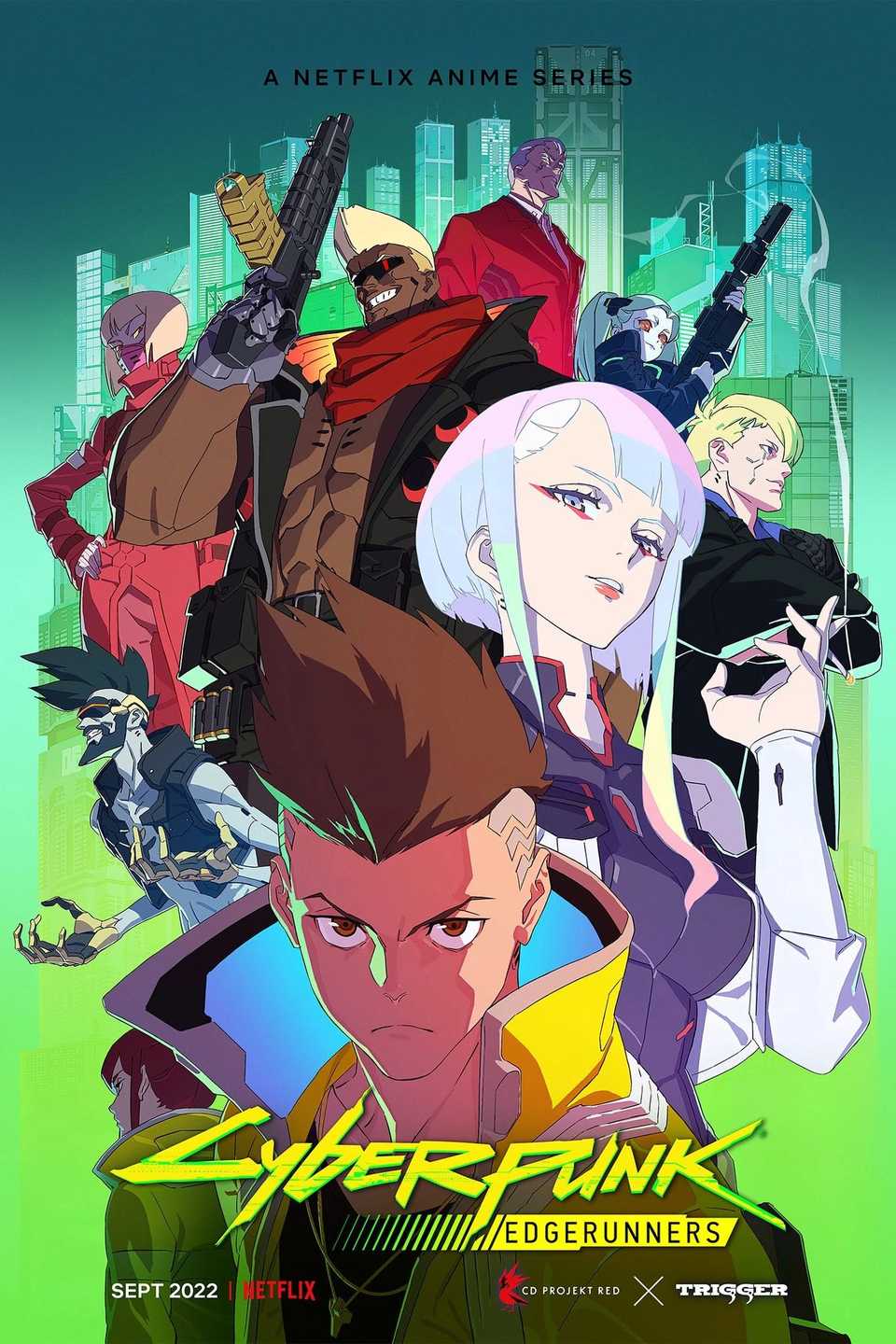
Pivoting off the success of CD Projekt Red’s video game, Cyberpunk 2077, Netflix released an anime set in the same world. Cyberpunk: Edgerunners ran for 10 episodes and maintains all the hallmarks of the most emotionally traumatizing anime. With the use of animation, the series plumbs the depths of darkness that Altered Carbon could only dream of.
Advertisement
‘Cyberpunk: Edgerunners’ is What Sci-Fi is All About
Just as Altered Carbon demonstrates the dangers of the uber-rich, Cyberpunk: Edgerunners wastes no time in showing the dystopian landscape of a world controlled by corporations. This is established early on in Cyberpunk 2077 when the protagonist V saves a woman wealthy enough to pay for the privatized Trauma Team, while others cannot. Even so, viewers don’t need to have played the game to understand Edgerunners, and in many ways, it hammers home the themes even better.
Advertisement
Collider Exclusive · Sci-Fi Survival Quiz Which Sci-Fi World Would You Survive? The Matrix · Mad Max · Blade Runner · Dune · Star Wars
Five universes. Five completely different ways the future went wrong — or sideways, or up in flames. Only one of them is the world your instincts were built for. Eight questions will figure out which dystopia, galaxy, or desert wasteland you’d actually make it out of alive.
💊The Matrix
🔥Mad Max
Advertisement
🌧️Blade Runner
🏜️Dune
🚀Star Wars
Advertisement
01
You sense something is deeply wrong with the world around you. What do you do? The first instinct is often the truest one.
Advertisement
02
In a world of scarcity, what resource do you guard most fiercely? What we protect reveals what we believe survival actually requires.
Advertisement
03
What kind of threat keeps you up at night? Fear is useful data — if you’re honest about what you’re actually afraid of.
Advertisement
04
How do you deal with authority you don’t trust? Every dystopia has a power structure. Your approach to it determines everything.
Advertisement
05
Which environment could you actually endure long-term? Survival isn’t just tactical — it’s physical, psychological, and very much about where you are.
Advertisement
06
Who do you want in your corner when things fall apart? The company you keep is the clearest signal of who you actually are.
Advertisement
07
Where do you draw the line — if you draw one at all? Every survivor eventually faces a moment that tests what they’re actually made of.
Advertisement
08
What would actually make survival worth it? Staying alive is one thing. Having a reason to is another.
Advertisement
Your Fate Has Been Calculated You’d Survive In…
Your answers point to the world your instincts were built for. This is the universe your temperament, your survival instincts, and your particular brand of stubbornness were made for.
Advertisement
The Resistance, Zion
The Matrix
Advertisement
You took the red pill a long time ago — probably before anyone offered it to you. You’re a systems thinker who can’t help but notice the seams in things.
You’re drawn to understanding how the system works before figuring out how to break it.
You’d find the Resistance, or it would find you — your instinct for spotting constructed realities is the machines’ worst nightmare.
You function best when you have access to information and the freedom to act on it.
The Matrix built an airtight prison. You’d be the one probing the walls for the door.
The Wasteland
Mad Max
Advertisement
The wasteland doesn’t reward the clever or the well-connected — it rewards those who are hard to kill and harder to break. That’s you.
You don’t need comfort, community, or a cause larger than the next horizon.
You need a vehicle, a clear threat, and enough fuel to outrun it — and you’re good at all three.
You are unsentimental enough to survive that world, and decent enough — just barely — to be something more than another raider.
In the wasteland, that distinction is everything.
Los Angeles, 2049
Blade Runner
Advertisement
You’d survive here because you know how to exist in moral grey areas without losing yourself completely.
You read people accurately, keep your circle small, and ask the questions others prefer not to answer.
In a city where humanity is a legal designation rather than a feeling, you hold onto something that keeps you functional.
You’re not a hero. But you’re not lost, either.
In Blade Runner’s world, that distinction is everything.
Arrakis
Dune
Advertisement
Arrakis is the most hostile environment in the known universe — and you are precisely the kind of person it rewards.
Patience, discipline, and political awareness are your core strengths — and on Arrakis, they’re survival tools.
You understand that the long game matters more than any single victory.
Others come to Dune and are consumed by it. You’d learn its logic and earn its respect.
In time, you wouldn’t just survive Arrakis — you’d begin to reshape it.
A Galaxy Far, Far Away
Star Wars
Advertisement
The galaxy far, far away is vast, loud, and in a constant state of violent political upheaval — and you wouldn’t have it any other way.
You find meaning in being part of something larger than yourself — a cause, a crew, a rebellion.
You’d gravitate toward the Rebellion, or the fringes, or whatever pocket of the galaxy still believes the Empire’s grip can be broken.
You fight — not because you have to, but because standing aside isn’t something you’re capable of.
In Star Wars, that willingness is what makes all the difference.
Advertisement
Edgerunners follows David Martinez, a poor teenager in Night City, a city run by corporations. His mother, Gloria, works as a paramedic, but that isn’t enough to help her son pull himself up by his bootstraps. David is looked down on at his private school because he can’t afford the upgrades to his school software. Things take a turn for the worse when Gloria is killed in a drive-by shooting, and their lack of funds directly impacts her quality of care.
In a thinly veiled criticism of capitalism, David’s only recourse is to become an Edgerunner. Arming himself with cybernetic upgrades, he becomes a mercenary for hire in a world that doesn’t accept anything but the ultrarich. As David tries to make his way in the world, he falls in with a found family, including Lucy, a netrunner.
David finds his place, but Night City is still unforgiving. Edgerunners makes no secret about its disdain for corporations and demonstrates how capitalism victimizes everyone. The series is a 10/10 when it comes to storytelling, but its animation is where the series really shines. Edgerunners benefits from the mesmerizing animation style as David goes through love, loss, and sacrifice. The visual beauty of the series accompanies the futile actions of the characters. As viewers fall in love with these nuanced people, they are all subjected to the inhumanity of living in Night City.
Edgerunners takes the fascinating lore of ripperdocs, cybernetic implants, and cyberpsychosis, elevating it beyond its original form. The first season is short and sweet, but viewers can catch it on Netflix before the release of Season 2.




You must be logged in to post a comment Login