Nobody hates television more than people who write about television for a living. Every year, the same conversation starts up again: audiences are rewarding “slop,” streamers are prioritizing quantity over quality, prestige TV is dead, and attention spans are fried. Then a show like His & Hers comes along and makes the whole debate feel moot because viewers know exactly what they’re getting here.
A six-episode crime drama with stars like Tessa Thompson (who appears tired and suspicious in really nice outfits) and Jon Bernthal (who stumbles around small-town Georgia with stoicism) has plenty of plot twists, enough to keep Netflixplaying until 2 a.m. Critics mostly passed, but audiences could not get enough. According to Nielsen, the show averaged 25.6 million viewers in the first 35 days, making it the biggest show of 2026 thus far.
Advertisement
Audiences Want Television With an Ending Again
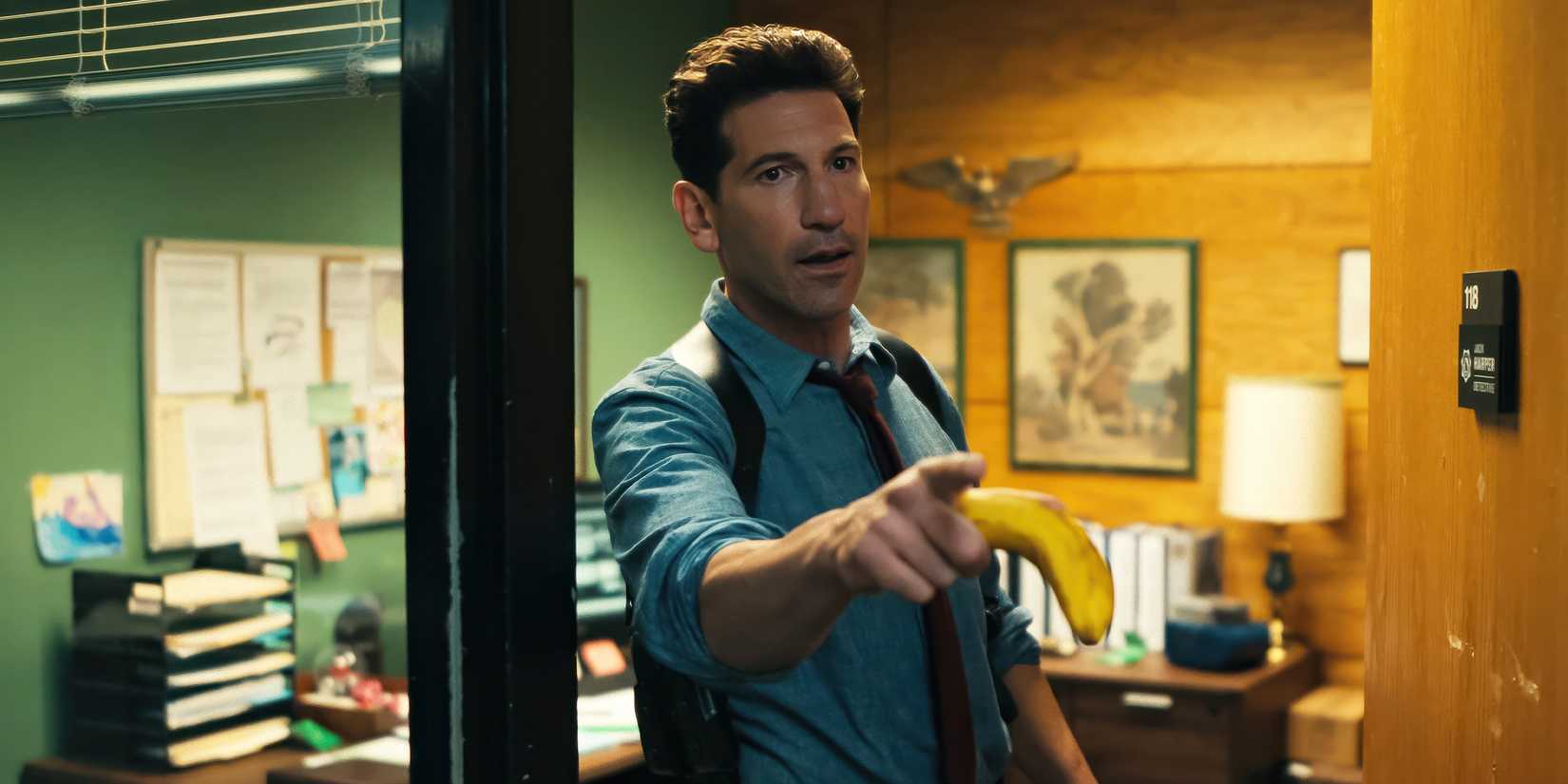
Jon Bernthal’s Jack Harper pointing with a banana in His & HersImage via Netflix
For over a decade, streamers trained audiences to think long-term. Every show needed to become a universe, and every hit required a spin-off, an expanded mythology, or a roadmap stretching five seasons into the future. At some point, that stopped feeling exciting. The Nielsen rankings say a lot about where viewers are now. His & Hers finished ahead of Bridgerton, Fallout, and Knight of the Seven Kingdoms, a prequel attached to one of the biggest television franchises ever made.
People are tired. They don’t want to spend three seasons waiting for a show to find itself or wrap up. There is also, presumably, no real desire from a vast majority of people—though some do love an analysis—to own spreadsheets on fictional bloodlines or rewatch old episodes before a new season drops two years later. Some folks just want to press play, get hooked fast, and reach an ending before the algorithm distracts them with something else. Limited series solve that problem neatly because there’s no commitment anxiety or fear that the show will get canceled on a cliffhanger or sense you’re signing a contract with the streaming service itself.
Advertisement
Collider Exclusive · Horror Survival Quiz Which Horror Villain Do You Have the Best Chance of Surviving? Jason Voorhees · Michael Myers · Freddy Krueger · Pennywise · Chucky
Advertisement
Five killers. Five completely different ways to die — if you’re not smart enough, fast enough, or self-aware enough to avoid it. Only one of them is the villain your particular set of instincts gives you a fighting chance against. Eight questions will figure out which one.
🏕️Jason
🔪Michael
💤Freddy
🎈Pennywise
Advertisement
🪆Chucky
Advertisement
01
Something feels wrong. You can’t explain it — you just know. What do you do? First instincts are the difference between the survivor and the first act casualty.
Advertisement
02
Where are you most likely to find yourself when things go wrong? Setting is everything in horror. Where you are determines which rules apply.
Advertisement
03
What is your most reliable survival asset? Every survivor has a quality the villain didn’t account for. What’s yours?
Advertisement
04
What kind of fear is hardest for you to fight through? Knowing your weakness is the first step to not dying because of it.
Advertisement
05
You’re with a group when things start going wrong. What’s your role? Horror movies are brutally clear about who survives group situations and who doesn’t.
Advertisement
06
What’s the horror movie mistake you’re most likely to make? Honest self-assessment is a survival skill. Denial is not.
Advertisement
07
What’s your best weapon against something that can’t be stopped by conventional means? Every horror villain has a weakness. The survivors are always the ones who find it.
Advertisement
08
It’s the final scene. You’re the last one standing. How did you make it? The final survivor always has a reason. What’s yours?
Advertisement
Your Survival Odds Have Been Calculated Your Best Chance Is Against…
Your instincts, your strengths, and your particular way of thinking under pressure point to one villain you actually have a fighting chance against. Everyone else — good luck.
Advertisement
Camp Crystal Lake · Friday the 13th
Jason Voorhees
Jason is relentless, but he is also predictable — and that is the gap you would exploit.
He moves in straight lines toward his target. He doesn’t strategise, doesn’t adapt, doesn’t outsmart. He simply pursues.
Your ability to keep moving, use the environment, and resist the panic that freezes most victims gives you a genuine edge.
The Crystal Lake survivors were always the ones who stopped running in circles and started thinking about terrain, water, and distance.
You think like that. Which means Jason, for all his indestructibility, would face someone who simply refused to be where he expected.
Advertisement
Haddonfield, Illinois · Halloween
Michael Myers
Michael watches before he moves. He is patient, methodical, and almost impossible to detect — until it’s too late for anyone who isn’t paying close enough attention.
But you are paying attention. You notice the shape in the window, the car parked slightly wrong, the silence where there should be sound.
Michael’s power lies in the invisibility of ordinary suburbia — the fact that nothing ever looks wrong until it already is.
Your spatial awareness and instinct to map every room, every exit, and every shadow before you need them is precisely the quality Laurie Strode had.
You are not a victim waiting to happen. You are someone who already suspects something is wrong — and acts on it.
Advertisement
Elm Street · A Nightmare on Elm Street
Freddy Krueger
Freddy wins by getting inside your head — using your own fears, your own memories, your own subconscious as weapons against you. That strategy requires a target who can be destabilised.
You are harder to destabilise than most. You’ve faced uncomfortable truths about yourself and you haven’t looked away.
The survivors on Elm Street were always the ones who understood what was happening and chose to face it rather than flee from it.
Freddy’s greatest weakness is that his power evaporates in the presence of someone who refuses to give him the fear he feeds on.
Your psychological resilience — the ability to stay grounded when reality itself becomes unreliable — is exactly the quality that keeps you alive here.
Advertisement
Derry, Maine · It
Pennywise
Pennywise is ancient, shapeshifting, and feeds on terror — but it has one critical vulnerability: it cannot function against someone who genuinely stops being afraid of it.
The Losers Club didn’t survive because they were braver than everyone else. They survived because they faced their fears together, and faced them honestly.
You ask the questions others avoid. You look directly at what frightens you rather than turning away.
That directness — the refusal to let fear fester in the dark — is Pennywise’s worst nightmare.
It chose the wrong target when it chose you. You are exactly the kind of person whose fear tastes like nothing at all.
Advertisement
Chicago · Child’s Play
Chucky
Chucky’s greatest advantage is that nobody takes him seriously until it’s already too late. He exploits the gap between how something looks and what it actually is.
You don’t have that gap. You take threats seriously regardless of how they present — and you never make the mistake of underestimating something because of its size or appearance.
Chucky relies on surprise, on the delay between recognition and response. You close that delay faster than almost anyone.
Your instinct to treat every unfamiliar thing with appropriate scepticism — rather than dismissing it because it seems absurd — is the exact quality that keeps you breathing.
Against Chucky, not laughing is already winning. You are very good at not laughing.
Advertisement
‘His & Hers’ Didn’t Need To Be Prestigious
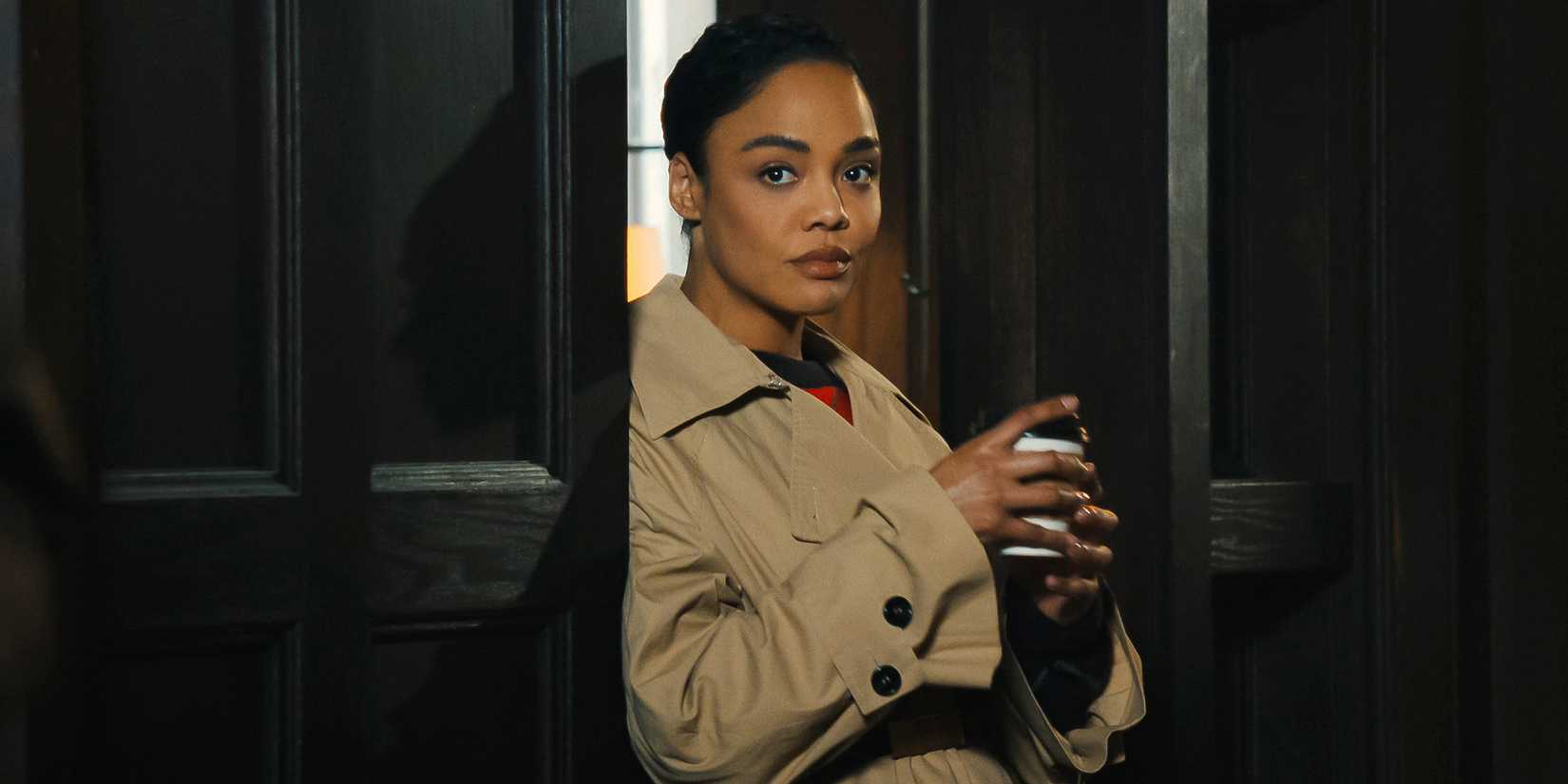
Tessa Thompson’s Anna standing in the doorway in His & HersImage via Netflix
Advertisement
Streaming thrillers have figured out something prestige television occasionally forgets: viewers will forgive almost anything except boredom. Plot holes? Fine. Over-the-top twists? Sure. Dialogue that sounds like it was written during a Red Bull binge at 3 a.m.? Audiences can survive that, too, if the pacing works, and it does in this show.
The show constantly throws suspicion around like confetti. Every character looks guilty, every episode ends by yanking the floor out from under the last reveal. It doesn’t really matter whether all the twists hold up under forensic scrutiny afterward. By then, Netflix had already won the weekend. Not every thriller has to arrive announcing itself as Important Television. Sometimes audiences just want a glossy disaster full of beautiful actors accusing each other of murder for six straight hours.
The Streaming Boom Is Fueling a Mini-Series Arms Race
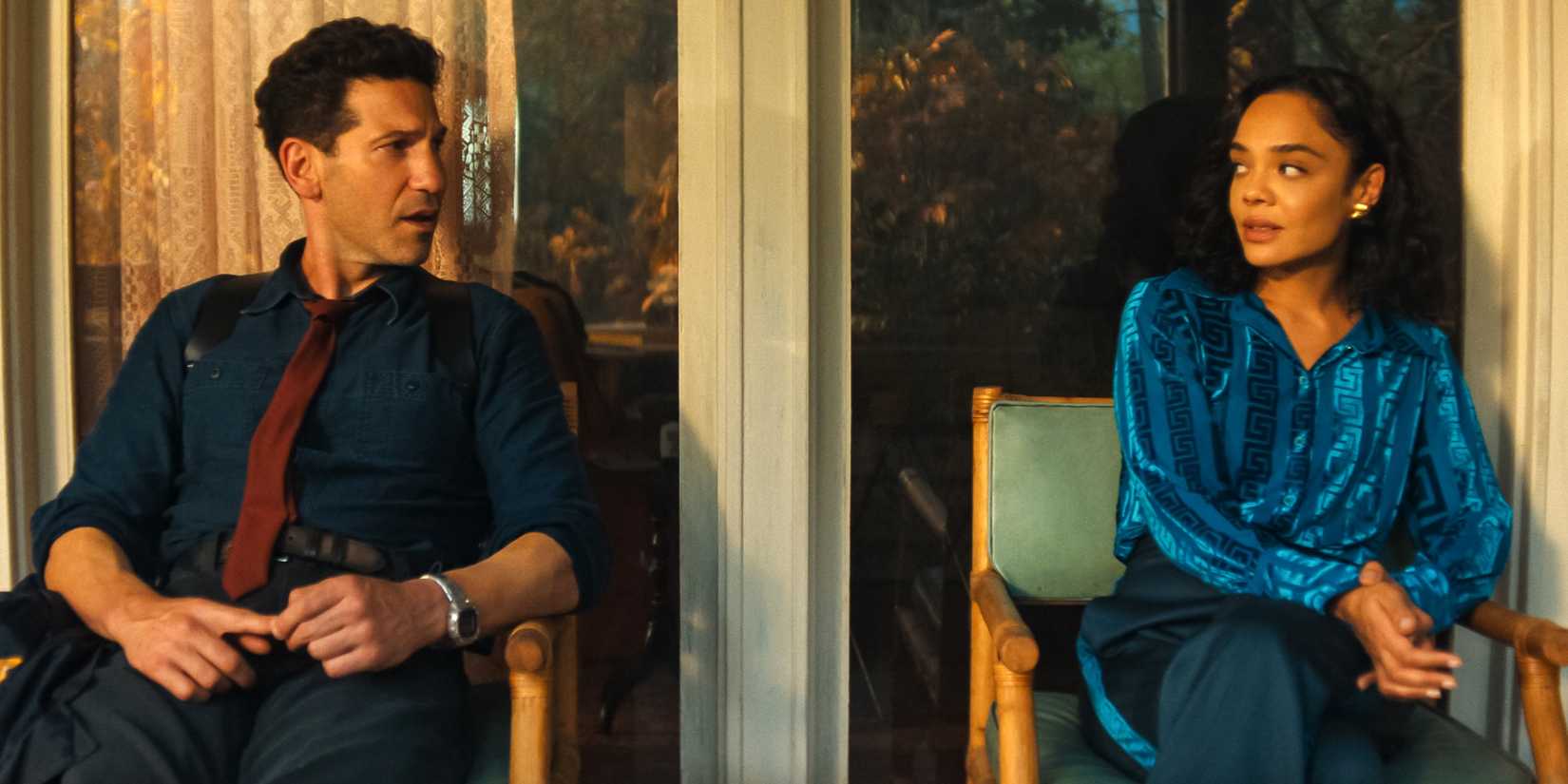
Jon Bernthal as Detective Jack Harper sitting next to Tessa Thompson as Anna Andrews in His & HersImage via Netflix
Advertisement
What’s happened with His & Hers also reflects a larger shift inside streaming itself. Executives clearly see the demand, and every platform is hunting for the next twist-heavy adaptation with a recognizable cast and an easy elevator pitch. That explains the flood of shows arriving lately: murder mysteries, suburban secrets, unreliable narrators, missing women, messy marriages, dead teenagers, and suppressed trauma. Most are adapted from bestselling paperbacks somebody finished in two flights and immediately optioned.
Limited thrillers fit streaming better than almost any other format. They provide instant interaction with viewers, encourage binge-watching, and allow quick, short conversations online without needing to plan years in advance. Plus, they are less expensive than an epic fantasy, easier to promote and market than a sitcom or comedy, and can still thrive because of audience curiosity, even if reviewers give mixed reviews. His & Hers may not end up remembered alongside the truly great limited series, and it probably won’t have the legacy of Mare of Easttown or the precision of early Big Little Lies, but it tapped into the exact viewing habit driving streaming television right now.




You must be logged in to post a comment Login