Entertainment

Netflix’s 6-Part Fantasy Thriller Series Is So Good, It Sparked a Full Fan Revolt

Published

on

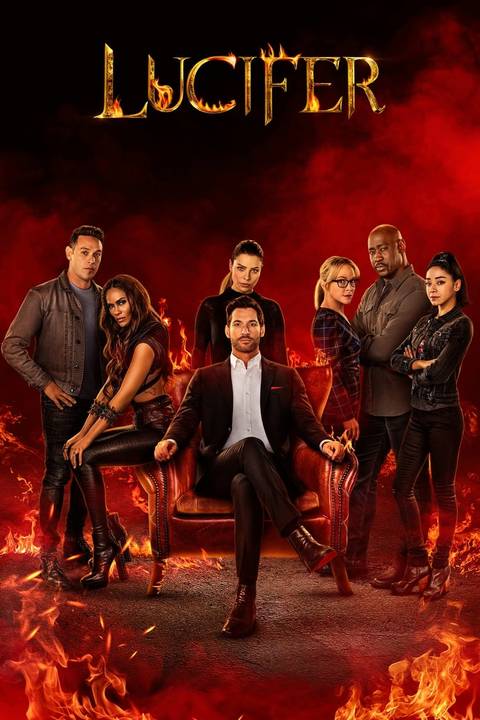
By day, he’s a crime consultant. By night, he’s the Devil. Loosely based on the DC Comics character of the same name, Lucifer took both network and streaming by storm with its anti-hero, Lucifer Morningstar (Tom Ellis). True to his biblical origins, Lucifer is tasked with punishing the morally corrupt for eternity. However, he grows tired of working for God — and of being barred from Heaven. Like the rebel he is, he packs his bags and heads to Earth in search of freedom. Of course, it’s not that simple, and his story spirals out into six dramatic seasons, but what happened behind the scenes is somehow even more dramatic. Lucifer nearly faced cancellation during the show’s major climaxes, only to be saved by divine intervention, a.k.a. the show’s devoted fans.

What Is ‘Lucifer’ About?

Serving as a more urban fantasy–leaning take on the original DC Comics character, Lucifer follows Lucifer Morningstar, who is furious after being cast out of Heaven by God and condemned to punish sinners forever. Determined to rebel against his father, the Devil packs his bags and builds a new life in the City of Angels: Los Angeles. When he’s not busy bringing women back to his flashy penthouse or drinking copious amounts of alcohol, he runs his exclusive nightclub, Lux. However, everything changes when someone is shot outside his club, leading him to cross paths with Detective Chloe Decker (Lauren German).

Advertisement


Advertisement
Collider Exclusive · Horror Survival Quiz
Which Horror Villain Do You Have the Best Chance of Surviving?
Jason Voorhees · Michael Myers · Freddy Krueger · Pennywise · Chucky

Five killers. Five completely different ways to die — if you’re not smart enough, fast enough, or self-aware enough to avoid it. Only one of them is the villain your particular set of instincts gives you a fighting chance against. Eight questions will figure out which one.

🏕️Jason

🔪Michael

💤Freddy

Advertisement

🎈Pennywise

🪆Chucky

Advertisement

01

Something feels wrong. You can’t explain it — you just know. What do you do?
First instincts are the difference between the survivor and the first act casualty.


Advertisement

02

Where are you most likely to find yourself when things go wrong?
Setting is everything in horror. Where you are determines which rules apply.


Advertisement

03

What is your most reliable survival asset?
Every survivor has a quality the villain didn’t account for. What’s yours?


Advertisement

04

What kind of fear is hardest for you to fight through?
Knowing your weakness is the first step to not dying because of it.


Advertisement

05

You’re with a group when things start going wrong. What’s your role?
Horror movies are brutally clear about who survives group situations and who doesn’t.


Advertisement

06

What’s the horror movie mistake you’re most likely to make?
Honest self-assessment is a survival skill. Denial is not.


Advertisement

07

What’s your best weapon against something that can’t be stopped by conventional means?
Every horror villain has a weakness. The survivors are always the ones who find it.


Advertisement

08

It’s the final scene. You’re the last one standing. How did you make it?
The final survivor always has a reason. What’s yours?


Advertisement

Your Survival Odds Have Been Calculated
Your Best Chance Is Against…

Your instincts, your strengths, and your particular way of thinking under pressure point to one villain you actually have a fighting chance against. Everyone else — good luck.

Advertisement


Camp Crystal Lake · Friday the 13th

Jason Voorhees

Jason is relentless, but he is also predictable — and that is the gap you would exploit.

Advertisement
  • He moves in straight lines toward his target. He doesn’t strategise, doesn’t adapt, doesn’t outsmart. He simply pursues.
  • Your ability to keep moving, use the environment, and resist the panic that freezes most victims gives you a genuine edge.
  • The Crystal Lake survivors were always the ones who stopped running in circles and started thinking about terrain, water, and distance.
  • You think like that. Which means Jason, for all his indestructibility, would face someone who simply refused to be where he expected.


Haddonfield, Illinois · Halloween

Michael Myers

Michael watches before he moves. He is patient, methodical, and almost impossible to detect — until it’s too late for anyone who isn’t paying close enough attention.

Advertisement
  • But you are paying attention. You notice the shape in the window, the car parked slightly wrong, the silence where there should be sound.
  • Michael’s power lies in the invisibility of ordinary suburbia — the fact that nothing ever looks wrong until it already is.
  • Your spatial awareness and instinct to map every room, every exit, and every shadow before you need them is precisely the quality Laurie Strode had.
  • You are not a victim waiting to happen. You are someone who already suspects something is wrong — and acts on it.


Elm Street · A Nightmare on Elm Street

Freddy Krueger

Freddy wins by getting inside your head — using your own fears, your own memories, your own subconscious as weapons against you. That strategy requires a target who can be destabilised.

Advertisement
  • You are harder to destabilise than most. You’ve faced uncomfortable truths about yourself and you haven’t looked away.
  • The survivors on Elm Street were always the ones who understood what was happening and chose to face it rather than flee from it.
  • Freddy’s greatest weakness is that his power evaporates in the presence of someone who refuses to give him the fear he feeds on.
  • Your psychological resilience — the ability to stay grounded when reality itself becomes unreliable — is exactly the quality that keeps you alive here.


Derry, Maine · It

Pennywise

Pennywise is ancient, shapeshifting, and feeds on terror — but it has one critical vulnerability: it cannot function against someone who genuinely stops being afraid of it.

Advertisement
  • The Losers Club didn’t survive because they were braver than everyone else. They survived because they faced their fears together, and faced them honestly.
  • You ask the questions others avoid. You look directly at what frightens you rather than turning away.
  • That directness — the refusal to let fear fester in the dark — is Pennywise’s worst nightmare.
  • It chose the wrong target when it chose you. You are exactly the kind of person whose fear tastes like nothing at all.


Chicago · Child’s Play

Chucky

Chucky’s greatest advantage is that nobody takes him seriously until it’s already too late. He exploits the gap between how something looks and what it actually is.

Advertisement
  • You don’t have that gap. You take threats seriously regardless of how they present — and you never make the mistake of underestimating something because of its size or appearance.
  • Chucky relies on surprise, on the delay between recognition and response. You close that delay faster than almost anyone.
  • Your instinct to treat every unfamiliar thing with appropriate scepticism — rather than dismissing it because it seems absurd — is the exact quality that keeps you breathing.
  • Against Chucky, not laughing is already winning. You are very good at not laughing.

After being the first to discover a dead body outside his club — and determined to clear his name — Lucifer accompanies Detective Decker on her investigation. What she doesn’t realize is that he possesses powers that can expedite her work. Although Lucifer is ultimately proven innocent, the experience gives him a new sense of purpose on Earth: becoming a crime consultant. Decker is understandably hesitant to have someone like him on the team, but Lucifer quickly proves he has a knack for getting to the bottom of cases. Meanwhile, back in Heaven, those watching from the clouds are far from pleased with his new career.

Advertisement

‘Lucifer’ Puts a Supernatural Spin on the Crime Thriller Genre

Lucifer keeps things both fresh and familiar. Each episode follows a new criminal investigation somewhere in Los Angeles, reminiscent of more recent procedurals like High Potential. Although they make an effective team, Lucifer and Decker are constantly at odds, largely due to Lucifer’s immaturity clashing with Decker’s sternness. However, for all of Lucifer’s unseriousness, the devil proves to be exceptionally skilled at his “crime consulting” job — mainly because his powers allow him to draw out people’s deepest desires, something Decker remains completely unaware of. At the same time, his life becomes increasingly complicated as he’s persistently hounded by celestial beings in human form, ranging from his angelic brother, Amenadiel (D. B. Woodside), to biblical figures like Cain (Tom Welling) and Eve (Invar Lavi).

However, somewhere around the midpoint of all six seasons of Lucifer, things get incredibly heavy. What initially starts as Lucifer’s “passion project” becomes complicated, as eternal forces threaten to take away the life he has built on Earth — and the people he has come to care about. The moment those same forces begin manifesting in murders, putting the civilians of Los Angeles at risk, Lucifer stops messing around. This shift is what makes the show worth watching. In angelic lore, celestial beings are emotionally detached and objective towards mortals. Yet in the series, the Devil himself proves to be, ironically, the most human.

Advertisement

Fans Saved ‘Lucifer’ from Impending Cancellation

Lucifer in his car smiling wickedly at someone in Lucifer.
Image via Fox/Netflix

Despite its strong popularity, Lucifer nearly met an abrupt end in 2018 when Fox cancelled the show following its Season 3 cliffhanger finale. The decision was largely attributed to declining viewership: while Season 1 averaged 7.17 million viewers, Season 3 dropped to around 4.16 million. Co-showrunner Joe Henderson said the cancellation came as a complete surprise, especially since the finale was intentionally written as a cliffhanger under the assumption the network wouldn’t pull the plug. Notably, Lucifer was cancelled in the same month as Brooklyn Nine-Nine, another Fox staple.

As the producers process the loss, fans refused to accept it, launching the #SaveLucifer campaign with viral hashtags, petitions, and lobbying efforts aimed at streaming platforms. Fortunately, Netflix stepped in and revived Lucifer for Season 4, eventually carrying it through its series finale in Season 6. The save was worth the risk. By the time Lucifer reached the second half of Season 5 on Netflix, it had garnered 1.8 billion viewing minutes. The campaign is a strong example of how accessible social media is for fans to advocate for their favorite shows — especially in today’s era, where many series are canceled too quickly to fully grow an audience. More importantly, it proves that Lucifer was simply too good to let go.

Advertisement

Advertisement


Release Date

2016 – 2021

Advertisement

Network

FOX, Netflix

Directors
Advertisement

Nathan Hope, Eagle Egilsson, Louis Shaw Milito, Sherwin Shilati, Claudia Yarmy, Greg Beeman, Tara Nicole Weyr, Lisa Demaine, Richard Speight Jr., Kevin Alejandro, Viet Nguyen, Alrick Riley, Eduardo Sánchez, Sam Hill, Mairzee Almas, Ben Hernandez Bray, Brad Tanenbaum, D.B. Woodside, David Frazee, David Paymer, Eriq La Salle, Hanelle M. Culpepper, Mark Tonderai, Matt Earl Beesley

Writers

Jen Graham Imada, David McMillan

Advertisement

Advertisement

Advertisement


Advertisement

Source link

You must be logged in to post a comment Login

Leave a Reply

Cancel reply

Trending

Exit mobile version