
Entertainment
Netflix’s Stellar 2-Part Fantasy Remake Is the Current King of Streaming

Netflix doesn’t get a global #1 by accident. And this pirate epic is clarifying exactly why that is true. This Pirates of the Caribbean better alternative is a ship-crew fantasy with constant momentum, bright humor, and fights that feel like immersive set-piece cinema. Add in the fact that Netflix’s own weekly data has credited it with 136.2 million hours viewed in a recent reporting window, and you’re looking at a franchise-scale performer.
As per FlixPatrol, the show is sitting at #1 in an overwhelming spread of countries including major markets like India, Pakistan, Brazil, France, Germany, Italy, Mexico, Spain, and Portugal, plus dozens more. In several other territories, it’s not even competing; it’s camped at the top: Austria is #1 every day from March 14 through today, the UK holds #2 today, and the U.S. remains #3 today while still outranking most of the platform’s newer churn. Even where it isn’t #1, it’s largely living in the top band (#2–#4), which is the signature of a show being watched globally, not merely sampled. One Piece‘s biggest competitor right now is, fitting enough, another anime, with JoJo’s Bizarre Adventure coming out of nowhere to steal the #1 global spot on Netflix.
The title behind the takeover is One Piece (Netflix’s live-action adaptation of Eiichiro Oda’s manga series). It has been 10 days since the show’s Season 2 was released on March 10, 2026, and it came after a wait of almost three years (One Piece Season 1 was released in August 2023). According to the viewing stats, the show’s ranking surge isn’t expected to slow anytime soon.

Casting (Re)Directors — The Collider TV Quiz!
When a new actor takes over an existing role, audiences can be wary. On this first day of spring, let’s look at some characters who got fresh starts.
‘One Piece’ Season 2 Starts Off With a Bang and Ends on a Calmer Note
One Piece Season 2 hits the gas the moment the crew punches into the Grand Line. The sea stops feeling like a route and becomes a living trap with its own rules, storms, and threats. Then Little Garden blows the world open: Luffy (Iñaki Godoy) and the gang stumble into a prehistoric island where giants and dinosaurs rule.
That, paired up with Roronoa Zoro’s (Mackenyu) 100-kill fight, is the hook. But after that adrenaline, the story intentionally softens when they meet Tony Tony Chopper (Mikaela Hoover). Compared to Season 1’s nonstop recruitment sprint, Season 2 feels more mature, and after the long wait, it earns that evolution, setting up an even stronger Season 3.
One Piece is currently trending globally on Netflix and for the right reasons. Stay tuned to Collider for more updates.

- Release Date
-
August 31, 2023
- Network
-
Netflix
- Showrunner
-
Matt Owens, Steven Maeda, Joe Tracz
- Directors
-
Tim Southam, Marc Jobst, Josef Kubota Wladyka
- Writers
-
Tiffany Greshler, Diego Gutierrez, Allison Weintraub, Lindsay Gelfand

Entertainment
Collector-loved plushies from Jellycat, Squishmallows, and Bumbumz are on sale at Amazon — including a huggable Pikachu
:max_bytes(150000):strip_icc():format(jpeg)/ew-jellycat-squishmallow-push-tout-3671a6de0aee4c70a275426fb78127c0.jpg)
Plus, Hello Kitty, a Glinda Care Bear, and the cutest hot dog ever.

Mira Sorvino is reflecting on the lasting impact of Harvey Weinstein on her career, years after first speaking out about the disgraced film producer. The Oscar-winning actress was one of the women who shared their experiences in Ronan Farrow’s New Yorker article in 2017, which exposed decades of Weinstein’s sexual misconduct.
The Actress Rejected The Producer Thrice

In Sophia Bush’s podcast, “Work in Progress,” Sorvino reflected on what her Hollywood career would have been like if it weren’t for Weinstein’s meddling. As the actress told Bush, she didn’t work on a studio movie for two decades after rejecting Weinstein’s sexual advances for the third time.
“I was blacklisted for 20 years,” Sorvino stated. In 1996, Sorvino won a Best Supporting Actress Academy Award for her role as Linda Ash in the Woody Allen movie “Mighty Aphrodite.” She also starred in the sci-fi/horror movie “Mimic” and the comedy “Romy and Michele’s High School Reunion,” both released in 1997. However, her movie project offers dried up soon afterward.
“That really broke my heart because it felt like there was this dark hand of malice that had come into my life and stolen something that was rightfully mine away from me, just for me not wanting to sleep with this disgusting man, this disgusting human being, this evil, evil, evil predator,” Sorvino said.
Mira Sorvino Detailed Her Interactions With Harvey Weinstein
In the New Yorker article by Ronan Farrow titled “From Aggressive Overtures to Sexual Assault: Harvey Weinstein’s Accusers Tell Their Stories,” published in October 2017, Sorvino shared her experiences with Weinstein, which began in 1995.
Weinstein produced Sorvino’s movie “Mighty Aphrodite,” and while in a hotel room, the actress said Weinstein massaged her shoulders and tried to “get more physical” with her. She felt uncomfortable and told him that it was against her religion to be with a married man before scrambling out of the room.
Weeks later, she got a call from the producer asking for a meeting to discuss marketing for the movie. Sorvino suggested meeting at a diner, but Weinstein insisted on going to her apartment. She immediately asked a friend to come over and pretend to be her boyfriend. When Weinstein got there, she told him that her boyfriend was on his way, and the producer left.
As Sorvino told Bush, she rejected the producer for a third time, but it slipped her mind while speaking to Farrow.
Peter Jackson Confirmed Mira Sorvino Was Blacklisted

Months after Farrow’s article was published, “Lord of the Rings” director Peter Jackson came out and said Weinstein and his brother Bob, whom he described as “second-rate Mafia bullies,” indeed blacklisted Mira Sorvino and fellow actress Ashley Judd, who also accused Weinstein of sexual harassment.
During the pitching stages of LOTR, Jackson told Weinstein that he was interested in casting the two actresses, but was told that they were “a nightmare to work with” and should be avoided “at all costs.” “I now suspect we were fed false information about both of these talented women – and as a direct result their names were removed from our casting list,” Jackson revealed to Stuff.
Miramax, co-founded by the Weinstein brothers, initially developed LOTR. However, Jackson didn’t like the way the brothers handled the project and no longer wanted to work with them. New Line Cinema took over as producers of the film. “Movie making is much more fun when you work with nice people,” the director said.
Mira Sorvino’s Father Was Outraged
Sorvino’s father, actor Paul Sorvino, was livid when he found out about the producer’s behavior toward his daughter. In 2018, months after the accusations became public, Sorvino told TMZ that he was furious. “If I had known it, he would not be walking. He’d be in a wheelchair,” the actor said.
He went on to say that he hopes Weinstein goes to jail because if he comes across him, the producer would be “lying on the floor, somehow, magically,” he stated. “He’s going to jail. Oh yeah. That son of a b-tch. Good for him if he goes, because if not, he has to meet me. And I will kill the motherf-cker. Real simple,” Paul explained.
Harvey Weinstein Called Peter Jackson A Liar

In an interview with Weinstein from Rikers Island published by The Hollywood Reporter on March 10, the disgraced producer called Jackson a liar, referring to the director’s statement about him blacklisting Judd and Sorvino. He called Jackson “the worst,” adding, “It’s a complete f-cking lie. If he says it again, I’ll sue him too.”
In regard to the sexual assault accusations against him, Weinstein said he was guilty of cheating on his wife, but he didn’t consider the things he did as sexual assault, adding, “There were some women who knew exactly what was expected… not all of them were as naive as they liked to pretend.”
Weinstein, who is 73, is serving a 16-year sentence for a rape and sexual assault conviction in 2022.

By Robert Scucci
| Published

Thanks to my incessant Tubi scrolling, I now know that Owen Wilson can competently and convincingly portray a serial killer. Whenever I think of Wilson, I think Zoolander, Cars, and Shanghai Noon. He’s so great at being silly that I didn’t think he had it in him to go this dark. It’s not that I thought he couldn’t, I just never saw him do it. Admittedly, I’m not the type of guy to say, “Man, Owen Wilson is so great that I have to go through his entire filmography.” This is why we need to consider our blind spots, because 1999’s The Minus Man is a great psychological thriller that I completely overlooked until this week.
Owen Wilson At His Most Sinister

The Minus Man tells the story of a nomadic serial killer named Vann Siegert (Owen Wilson). When we’re introduced to him, we’re made privy to his primary M.O., which involves meeting people in unassuming places and poisoning them with the contents of his flask. It’s a simple enough operation. He meets a girl named Casper (Sheryl Crow) at a bar, learns she has a heroin habit, leaves with her, shares his flask, waits for her to expire, and stages her body to look like she died of an overdose before moving on to his next victim.
Deciding to lay low for a while, Vann skips town and rents a room from Doug (Brian Cox) and Jane (Mercedes Ruehl). Jane has her reservations about treating a tenant like a guest, but Doug, clearly searching for a friend in Vann, encourages him to stick around and tells him the Post Office is hiring seasonal workers ahead of the holidays. Vann gets the job, where he meets a mailroom clerk named Ferrin (Janeane Garofalo). They hit it off in an awkward way, and all signs point to them becoming an item. The problem is that Vann is itching to kill again.

As Vann proves himself a competent employee at the USPS, he begins to lay down roots in town, which directly conflicts with the two rules he lives by, “don’t murder people you know, and don’t do it in the town you live in.” He poisons a local high school football star named Gene (Eric Mabius) and buries the body at the beach, but only before similarly killing a diner patron using the same method. Keeping up appearances with his otherwise friendly demeanor, Vann continues seeing Ferrin, but things at home take a sinister turn. Doug starts unraveling for reasons never fully explained, and his behavior draws too much attention to the household, which worries Vann.
As Vann’s killing spree ramps up, he has a psychological break of his own, involving multiple confrontations with Detectives Blair (Dwight Yoakam) and Graves (Dennis Haysbert). They mock his M.O. and question him until he breaks in these sequences. It’s up to you, however, to decide whether these exchanges are real, imagined, a sign of what’s to come, or simply a manifestation of Vann’s guilt.
No Easy Answers

What’s most enthralling about The Minus Man is how it plays with reality versus imagination. It’s clear that Vann isn’t all there. It’s also clear that he’s a maniac who knows how to put on a pleasant face, allowing him to blend in seamlessly with society. We only catch glimpses of his life before settling down, and the film ends with him leaving town forever, so we never get a full picture, which only adds to the mystery.
Owen Wilson brings something here that I haven’t seen in any of his other films, and his portrayal of Vann is commendable to say the least. His quiet restraint and ability to present himself like a regular guy make for a genuinely unnerving character study, and it’s a testament to his range outside of comedic roles.


If you’re interested in seeing Wilson in one of the most against-type roles of his career, I strongly recommend checking out The Minus Man, currently streaming for free on Tubi.


Jhené Aiko has fans asking for glow-up tips after she dropped some flawless photos on social for her 38th birthday. The singer celebrated her special day on March 16, and fans can’t get enough of how gorgeous she looked during the festivities.
RELATED: Cuteness Overload! Jhené Aiko Gives Rare Peek Into Mom Life With Her Son Noah (PHOTO + VIDEO)
Jhené Aiko’s Birthday Glow Has The Internet In Awe
Fans are sweating Jhené Aiko heaavy after she dropped her birthday photo dump on Instagram. Heart-eyes came flooding in as the pics show the ‘Stay Ready’ songstress posing in her birthday dress with soft makeup while enjoying her day with loved ones. Jhené popped out looking like a whole Queen, and fans ate it up! She didn’t even do too much in the caption — she just wrote, “38,” and now social media wants all the details on how she’s maintaining her youthful glow. Jhené’s beauty wasn’t the only thing that had fans in a chokehold — they stayed locked in on her son Noah, who she shares with Big Sean. Noah made a quick appearance in her photos, rocking headphones and wrapping her up in the sweetest hug. Peep the pics below.
The TL Wants The Routine Amid Jhené’s Birthday Slay
Once The Shade Room dropped Jhené’s photos, the comment section was flooded with reactions. Folks quickly said, “38, where?” while others gave her peaceful energy credit for her youthful look.
Instagram user @_chvnel5 wrote, “The prettiest 38 😍”
Instagram user @axntiii wrote, “38 lookin 28😩😩😍”
While Instagram user @ms.mendez_ wrote, “Still look 18! HBD 🥳”
Then Instagram user @evaheartless wrote, “See how all that positivity & good energy keeps her from aging!”
Another Instagram user @evaheartless wrote, “She doesn’t age 💗 gorgeous.”
Instagram user @briana_.chanel wrote, “yess😍😍she is so beautiful.”
While another Instagram user @quintertainment_ wrote, “She looks young and fresh. 🥰”
Then another Instagram user @armenterellis wrote, “please let me age so precious like her 😍😍😍😍”
Finally, Instagram user @ginacabina23 wrote, “38 whereeeeeeee 😮😮😮”
Jhené Has Fans Livin’ For Her Soft Life & Mommy Energy
Fans have been saying Jhené is aging backwards for a minute and they stay flooding her comments with that energy. But when she dropped rare footage and photos with her son Noah, folks online couldn’t get enough of her vibe and mommy energy. See the footage below.
RELATED: Jhené Aiko Gets Social Media Chattin’ With Response To Internet User Who Appeared To Refer To As Her “Husband”
What Do You Think Roomies?

We’re all looking for “the one”. But looking for your “credit one” (love + somebody with good credit habits)? Now that’s where things get complicated. Just ask JaNa how her search is going for her perfect “credit one”.
That’s the playful premise behind You’re the Credit One for Me, a new reality-inspired digital series from Credit One Bank that blends dating show drama with real conversations about credit habits. The social-first series, which debuts with new episodes every Thursday, invites viewers to think about relationships in a slightly different way: through the lens of credit.
Craig exclusively stopped by Us Weekly to talk about the project, why credit responsibility is high on her list of dating priorities — and the credit habits that make someone instantly more attractive.
“When I first heard the concept, it was an immediate yes,” Craig tells Us. “It literally relates to my life. I do like a guy that has good credit, so it felt like they were making a story about me.”
While reality dating shows often focus on romance and drama, You’re the Credit One for Me puts credit compatibility front and center. For Craig, that conversation has always been important.
“It’s always been a priority to me,” she explains. “I just love that that’s the main focus of the series.”
The show also aims to highlight how understanding credit can play a bigger role in life than people might realize. Craig says she hopes viewers come away with a better appreciation for how credit habits can impact everything from big purchases to long-term plans.
“A really good credit score is beneficial for so many things — renting, buying a home, getting a car, even starting a business,” she says. “It’s more important than people realize.”
Her biggest piece of advice? Don’t miss a payment!
“I wish people knew how important it is to never miss a payment, because it can stay on your credit report for up to 7 years” Craig says. “Thankfully I didn’t, but I’ve seen how easy it is for people to fall behind.”
Of course, money conversations can be tricky in relationships — especially early on. While Craig admits she may bring the topic up sooner than most, she suggests others take a slightly more measured approach.
“I’m not normal,” she jokes. “I’d probably ask right away. But for most people, you should build a relationship first and just pay attention to how someone carries themselves financially.”
Still, she isn’t shy about what she considers a green flag.
“It makes a man attractive the way he looks, the way he dresses and carries himself,” Craig says. “But it makes him twice as attractive the way he handles his credit line.”
So what exactly qualifies as Craig’s ideal financial match?
Someone who uses credit responsibly, keeps their balance below 30% of their limit, automates their payments — and maintains a healthy savings.
“Diversify your wallet, don’t put all your eggs in one basket,” she says. “And make sure you have a nice savings for yourself… and maybe a little savings for me too.”
Ultimately, Craig hopes the series shows that credit education doesn’t have to feel intimidating.
“Prioritizing your credit doesn’t have to be so serious,” she says. “It can be light and fun — but it should definitely stay at the top of your priority list.”
You’re the Credit One for Me from Credit One Bank is rolling out across social platforms, with new episodes dropping every Thursday.
Entertainment
’Project Hail Mary’s Author Is Absolutely Missing the Point of Netflix’s Greatest 7-Part Sci-Fi Thriller
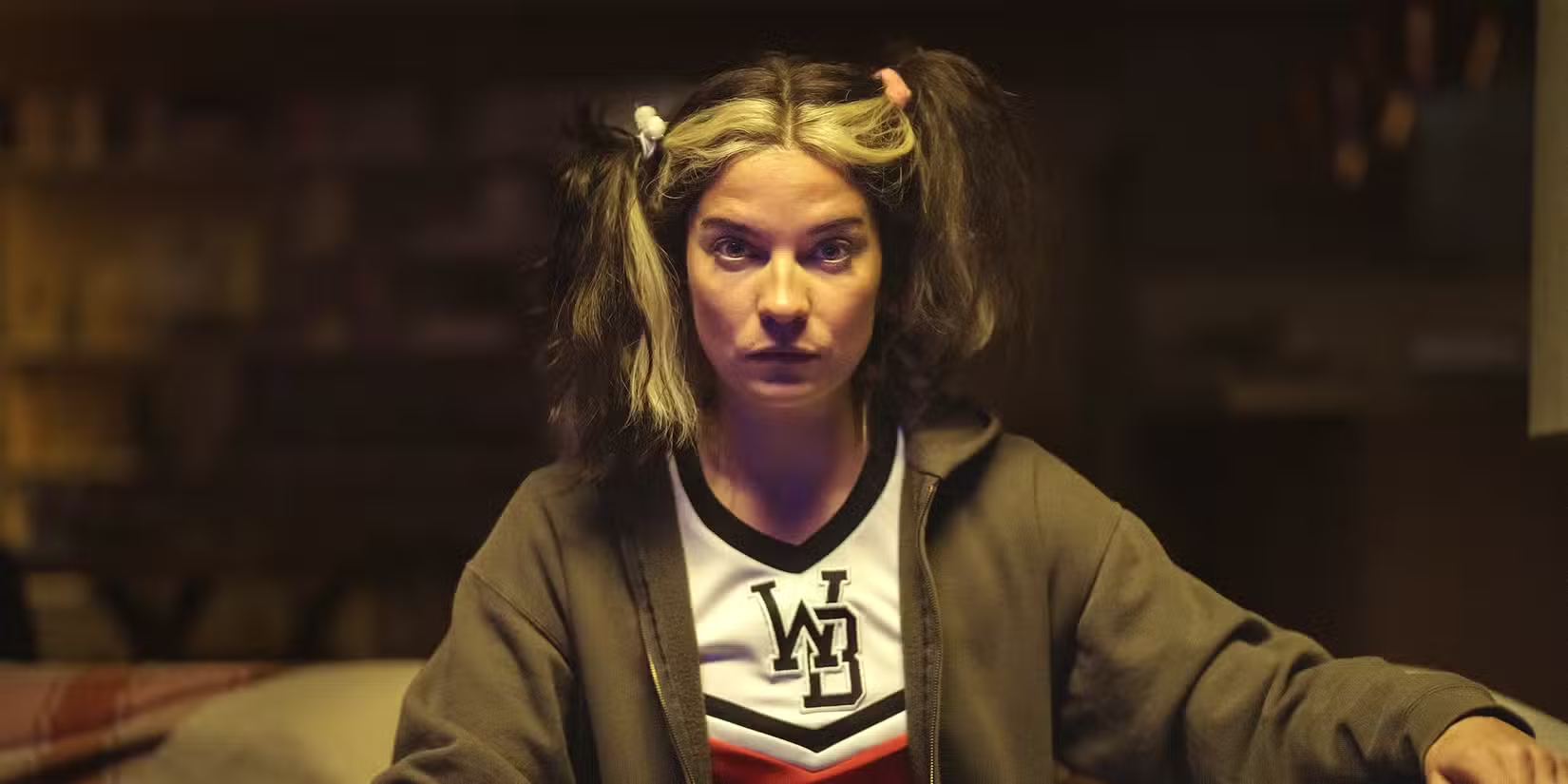
It is somewhat ironic that a science fiction writer is critical of Netflix‘s hit Black Mirror. This is probably even more so now, since many of the ideas presented in the series were once considered speculative, but they no longer seem so. The series has shown several times in the past that the world we could live in in only a few years will have a lot of the same conveniences, connections, and controls, but they will be a little different, which is definitely unsettling but also somewhat familiar; you could hardly believe it to be true.
This is part of what makes the comments from Andy Weir, the acclaimed sci-fi author, that much more relevant. While promoting the movie adapted from his book, Project Hail Mary, Weir dismissed the show as broadly anti-technology — a take that, on the surface, makes sense given how often Black Mirror leans dark. But it’s also a reading that flattens the show into something simpler than it is, missing the idea it keeps returning to: the problem is what people do with the technology that is in their hands.
‘Black Mirror’ Has Never Been About Technology Alone

In the “Andy Weir on the Economics of Sci-Fi and Space” episode of Conversations with Tyler, Weir spoke about his opinions on the hit Netflix series, saying, “There is sort of a technophobia out there, and I don’t buy into it,” he said. “I feel like technology generally makes things better. It’s also why I really don’t like the show Black Mirror, because it’s pretty much all about how technology is awful and will ruin the universe.”
One of the stranger things about the conversation surrounding Black Mirror is how often it ignores what Charlie Brooker has been saying for years. Brooker has gone out of his way, repeatedly, to clarify that the show isn’t interested in painting technology as some inherently corrupting force. If anything, he’s pushed back against that interpretation with a kind of low-level exasperation.
What the series actually returns to, over and over again, is the way human behavior mutates when new tools enter the picture. The technology in these episodes rarely breaks into the traditional sci-fi sense; it works — often perfectly — which makes the outcomes all the more unsettling. The systems perform exactly as they were designed to; however, the way people use them complicates everything.
We see a small, almost unremarkable choice that has a snowball effect. To make a decision based on hardship, to justify making a compromise as harmless, to be curious about something, and end up being obsessed with it. All these impulses have been around for a long time, and the show does not purport to be the first time they have happened. The show simply removes the impediments to keep them at bay.
Why the ‘Anti-Tech’ Reading Keeps Sticking

Weir is not the first person to think this way about technology, as there has been a long history of science fiction portraying technological developments with suspicion or, at times, even hostility. Black Mirror uses this language — using images of sleek technology, systems that invade privacy, and worlds that feel just slightly off. At first glance, this is enough to categorize Black Mirror under the same definition. However, classifying the show in this way does a disservice to what Black Mirror attempts to present; it also assumes an either/or relationship between technology being good and technology being bad, and, from the show’s perspective, both are insufficient.
Instead, Black Mirror sits in the gray area of convenience changing values. Further, the series often uses examples from the viewer’s daily life that cause discomfort through the trade-offs we make: exchanging privacy for convenience; exchanging authenticity for validation; and exchanging being present for always needing to be connected, but connected only through technological mediation. It doesn’t say these choices are right or wrong. Instead, it illustrates the logical, and at times brutal, consequences of these choices.
Strip away the speculative elements — the implants, the algorithms, the near-future gloss — and what’s left is something much more grounded. Black Mirror is, at its core, a series about people navigating situations that force them to choose between competing values, with no clean way out.
The majority of people do not make good choices, and this is where this show has built its reputation for being bleak, though this may not be entirely true to label it as such. The series itself does not believe people are doomed, but rather that they cannot find an easy path to redemption. Rather than being destroyed by machines, characters are destroyed by human impulses such as jealousy, insecurity, the need for visibility, and the fear of abandonment.
In this scenario, tech will work more as an amplifier, rather than as a devourer. Therefore, when you give flawed individuals more power, greater access to resources, and far more information, their flaws will not disappear; they will expand, sharpen, and ultimately become harder to ignore.
‘Black Mirror’ is Misunderstood, and Probably Always Will Be

The title has always been the quiet clue. The “black mirror” isn’t some abstract concept — it’s the screen itself, the one sitting in your pocket or glowing on your desk, reflecting your face back at you when it goes dark, and that idea runs through the entire series. Technology doesn’t create new versions of us; it reflects what’s already there, sometimes in ways that are difficult to look at for too long. The discomfort comes from recognition, which is why the show resists framing its worlds as fully dystopian; many of its settings are functional, even prosperous. Life goes on, systems hold, and the larger world doesn’t collapse just because an individual story ends badly. That, in its own way, is more unsettling than any apocalyptic scenario.
Part of the issue is cultural shorthand. “That’s so Black Mirror,” or any similar derivative, has become a catch-all for anything vaguely unsettling involving technology, a phrase that flattens the show into a mood rather than an idea. Over time, that shorthand has hardened into an assumption, and naturally, Weir’s critique lands in that same space. It’s not entirely off-base — the series can be dark, even cynical — but it stops short of engaging with what the show is actually probing. It treats technology as the subject when it’s really just the lens, and maybe that’s inevitable. It’s easier to argue with a story about evil machines than one that keeps circling back to human behavior, asking uncomfortable questions without offering much in the way of reassurance.
In the end, Black Mirror isn’t especially interested in whether technology makes things better or worse; that debate feels almost beside the point. What it keeps returning to is something more difficult to pin down: what we choose to do when the tools at our disposal make those choices easier, faster, and harder to walk back.
Entertainment
Alyson Hannigan posts emotional tribute to“ Buffy ”costar Nicholas Brendon after his death: 'My Sweet Nicky'
:max_bytes(150000):strip_icc():format(jpeg)/Alyson-Hannigan-Nicholas-Brendon-1st-Annual-Celebrity-Dodgeball-Game-2002-032026-5226e6e34c6d4731a7568f002df70034.jpg)
Brendon died from natural causes at 54 on Friday.
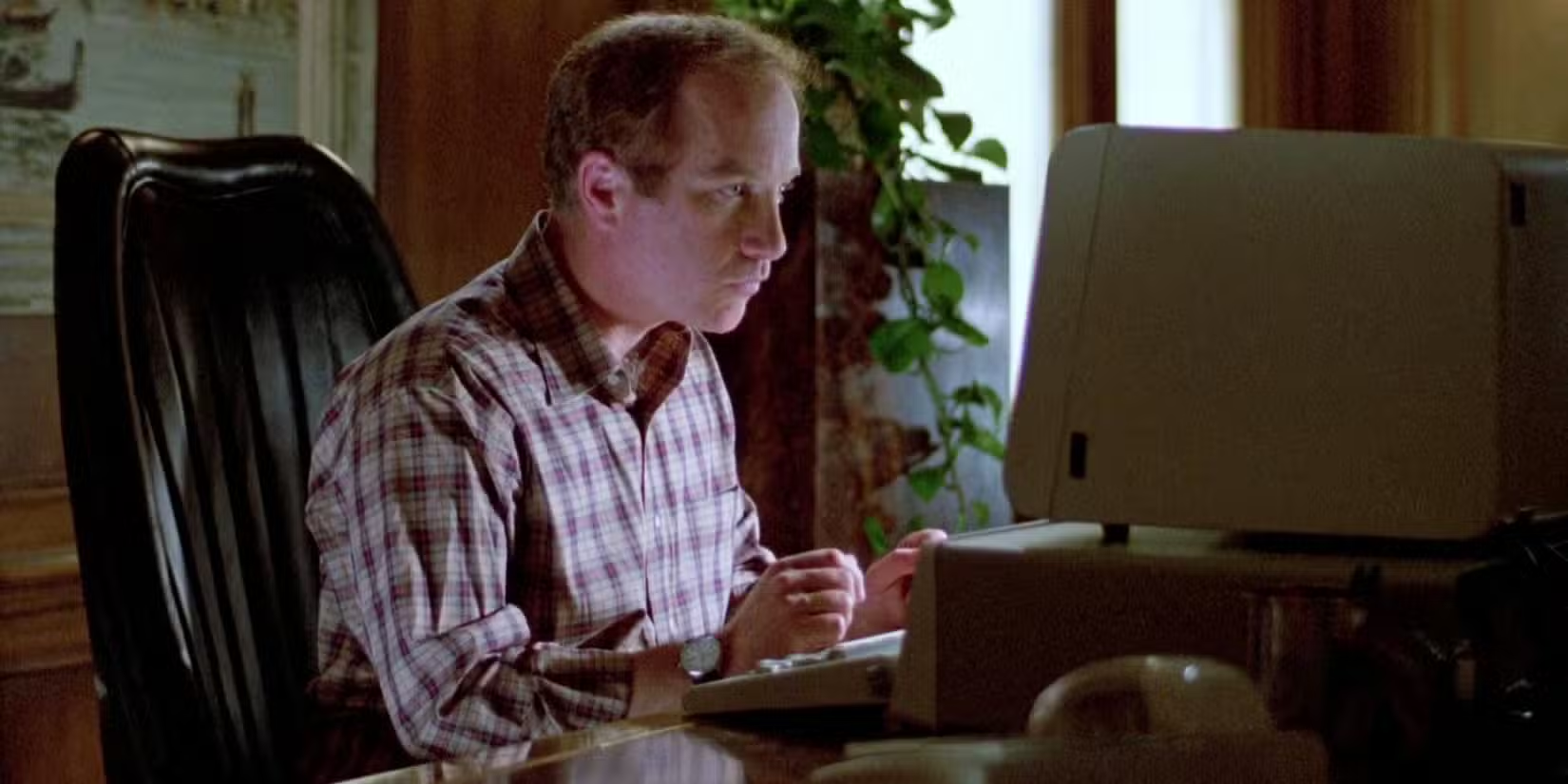
The 1980s ended a long time ago, but the movies released during that decade remain. And you can watch them end again and again, unlike the decade itself, because you had to be there to see/experience that ending. Movie endings are much easier to talk about, in any event, and are also probably easier to talk about than the ending of a period of time spanning 10 years.
These 1980s movies have some of the best endings of that decade, with some being uplifting, others being memorably soul-crushing, and then the rest falling somewhere in between (most importantly, falling in between effectively). There will be unavoidable spoilers here, but when you’re talking about movies that are between about 37 and 46 years old, the act of spoiling doesn’t feel like quite so much a writing-related crime.
10
‘Stand by Me’ (1986)

If a crowd-pleaser is something that would genuinely prove engaging to anyone who watches it, then Stand by Me would have to qualify, even if it’s not really exciting or action-packed the way more typical blockbuster-scale crowd-pleasers are. See, Stand by Me is very sad, and on the more serious side of things as far as coming-of-age movies go, but it does conclude in a way that feels bittersweet.
Maybe it’s more bitter than sweet, but to add a maybe to that maybe, maybe that’s why it works as well as it does. The central character, a writer in his adulthood (like so many Stephen King characters who grow beyond childhood), reflects that he has never had – and will never have – friends like the ones he did when he was 12. He’s clearly thankful for the time he had with them, but sad they all drifted apart, and devastated that one of them died while still quite young. But he has his memories and a son of his own, so there’s a little by way of sweet to wash down all the bitter.
9
‘Brazil’ (1985)

Not much bittersweetness to be found here, because Brazil is nothing but heavy-going, with the ending being especially downbeat. Okay, it is a sometimes entertaining movie, because it’s a dark comedy on top of being a dystopian film, but the humor is exceptionally dark, the whole feel of the movie is nightmarish, and lots of it attempts to be disorientating and ultimately very trippy.
Eventually, Brazil’s protagonist collapses psychologically and is no longer able to tell reality from fantasy.
It succeeds at all those things, so calling Brazil a chaotic watch would be a pretty big understatement. The protagonist here, a man named Sam Lowry, has more and more of his life fall apart as the movie goes along, and then eventually, he collapses psychologically, and is no longer able to tell reality from fantasy. Maybe his brain breaking at the very end is almost merciful, considering the hellish time he’d had in the film up until that point, but it’s still very much a miserable and nihilistic ending.
8
‘Ran’ (1985)
On the topic of heavy-going movies that came out in 1985, here’s Ran, which rivals Seven Samurai for the crown of “all-time best Akira Kurosawa film,” if you’re feeling ambitious enough to pick just one movie. With Ran, the story here is about an aging warlord who has three sons who all want to be his successor, and once he reveals his plans regarding his succession, things fall apart rather spectacularly.
Basically, a family conflict explodes into all-out war, and by the end of it, just about everyone’s either dead or in a very perilous situation where death is almost imminent (like a blind character alone and lost on top of a cliff; literally the last place the audience sees him). No one wins in Ran, and the futility of the way it all wraps up contributes quite significantly to the film being an overall masterpiece.
7
‘Scarface’ (1983)

Full disclosure: this article was done, and The Thing was originally on here, but then the very silly writer was looking over the article before scheduling it, and realized he’d forgotten to put Scarface in the ranking. And that seemed like too big an oversight to just let slide, and so even though a decent amount of time was spent thinking and writing about The Thing’s ending, and why it worked so well as something that kept the paranoia going long after the movie was over, it had to go. The ending was just not as cool as Scarface’s.
You could argue it’s overblown and too simplistic, but seeing the fall hit this hard in a rise-and-fall gangster story is just glorious. Tony Montana doesn’t go down without a fight, and he does indeed die like he lived: ridiculously, violently, profanely, and explosively. It’s a great payoff to a great movie, and really, it elevates the whole movie from (already) great to genuine all-timer status.
6
‘The Last Temptation of Christ’ (1988)

It says quite a lot that The Last Temptation of Christ is one of Martin Scorsese’s most ambitious movies, since the filmmaker has made his fair share of epics. You might find the casting a little surprising, and the film also has a reputation for being controversial, but those things shouldn’t put you off watching The Last Temptation of Christ, and nor should the fact that it’s a religious movie (should you be a non-religious person).
The Last Temptation of Christ is best described as an alternate depiction of some events in the Gospels, reframed in a way that makes it function as a psychological drama about Jesus Christ. The most controversial scenes were part of the temptation the title alludes to, but he does resist, and it’s cathartic when he does, at the film’s end. His ultimate sacrifice feels arguably more meaningful, from a certain point of view, with this approach, even if humanizing Jesus in this way did count as blasphemy in the eyes of some.
5
‘Once Upon a Time in America’ (1984)

Describing what kind of movie Once Upon a Time in America is before laying out how it ends might make the whole thing sound super anticlimactic and disappointing, but it really does all work in execution. It’s an epic gangster movie that unfolds in non-chronological order, and has an aging criminal reflecting on both his childhood and adult life, all the while struggling with a lack of closure regarding some aspects of his past in old age.
It’s something of a tragedy, but not one where you feel sorry for the characters, because they do some reprehensible things (okay, lots of classical tragedies are like that, but still). Once Upon a Time in America has a downfall of sorts for its central character, too, but not in the way old-school gangster movies had them. Things get weird and dreamy, not to mention ambiguous (and more so than the ending for the aforementioned The Thing), and yet what seems like a lack of sense kind of makes sense, once you sit with it for a while and give the whole thing some more thought.
4
‘The Cook, the Thief, His Wife & Her Lover’ (1989)

At its core, The Cook, the Thief, His Wife & Her Lover is a straightforward movie about a cycle of violence and revenge that involves the four titular characters (with the cook having the most passive role in the film). The style here, and the approach toward telling that story, on the other hand? All that makes it feel very much distinct from your average revenge movie, it has to be pointed out.
Still, when it wraps up, there is a certain amount of catharsis that comes with seeing the thief’s comeuppance, especially because he’s been a particularly heinous monster to everyone – but most of all, his wife – throughout the entire film. The Cook, the Thief, His Wife & Her Lover delivers catharsis while also being absolutely confronting and kind of nauseating, all in ways best experienced/discovered on one’s own, should your stomach be up to the task.
3
‘The Empire Strikes Back’ (1980)

It would be weird to talk about great endings found in movies from the 1980s without a mention of the second Star Wars film, The Empire Strikes Back. Okay, yeah, it’s Episode V if you want to watch them in chronological order, but it was the second one made overall. And maybe it’s better to watch them in order of release, because the biggest and most famous surprise regarding the ending of The Empire Strikes Back gets ruined otherwise.
But then again, it’s also common knowledge at this point about who Darth Vader really is. And also, it’s really just one part of the overall ending here, which feels satisfying even while leaving so much up in the air. There’s an emotional resolution or at least an emotional release here, even if all the different narrative threads still have to be wrapped up, and it’s a wonder it all works so well without feeling too depressing or ambiguous in a detrimental/disappointing way.

E.T. the Extra-Terrestrial ends in the way it has to: E.T., the titular alien, does indeed achieve his goal of “phoning home” and then getting picked up by his fellow aliens (the ones who accidentally left him on Earth at the start). He does it with a little help from his friend, Elliott, but then the two inevitably have to bid each other farewell once the overall goal has been achieved.
So you know it’s coming, but it’s still surprisingly hard-hitting when it happens. If it’s a bittersweet ending, then it’s one that’s probably a little more sweet than bitter, because it is ultimately a moment of triumph. It’s just a testament to the quality of the overall movie, then, that watching such a goodbye, no matter how much it “had” to happen, ends up feeling the way it does.
1
‘Cinema Paradiso’ (1988)

Like Stand by Me, Cinema Paradiso is a coming-of-age movie that both begins and ends with the central character as an adult reflecting on his childhood, and maybe it is an easy way to make such a movie emotional, but both films pull it off well regardless. With Cinema Paradiso, there is more time spent with the protagonist as an adult, and part of his journey throughout the film does also involve his life as a teenager (so it’s a little more sprawling overall).
Cinema Paradiso ends with a meaningful gift being left to the protagonist, Salvatore, by the film projectionist who served as his father figure, and it drives home the idea that the whole movie is a love letter to cinema in more ways than one. It involves a montage that makes Salvatore break down crying, but crying happy tears, and that’s probably what most viewers of Cinema Paradiso will find themselves doing at the exact same time, too.

Cinema Paradiso
- Release Date
-
February 23, 1990
- Runtime
-
174 Minutes
- Director
-
Giuseppe Tornatore
- Writers
-
Giuseppe Tornatore, Vanna Paoli
-

-
Enzo Cannavale
Spaccafico
-
Antonella Attili
Maria Di Vita – Younger
-
Entertainment
Star Trek: Deep Space Nine’s Best Character Was Nearly Tortured By Khan’s Favorite Weapon
By Chris Snellgrove
| Published

Who do you think the most beloved character in Star Trek is? Some would go with famous figures like Kirk or Spock, while others might say Picard or Janeway. Younger fans might even go with Mariner, the firebrand lead character on Lower Decks. For many of us older fans, though, the most beloved character is Quark, the affable Ferengi bartender on Deep Space Nine.
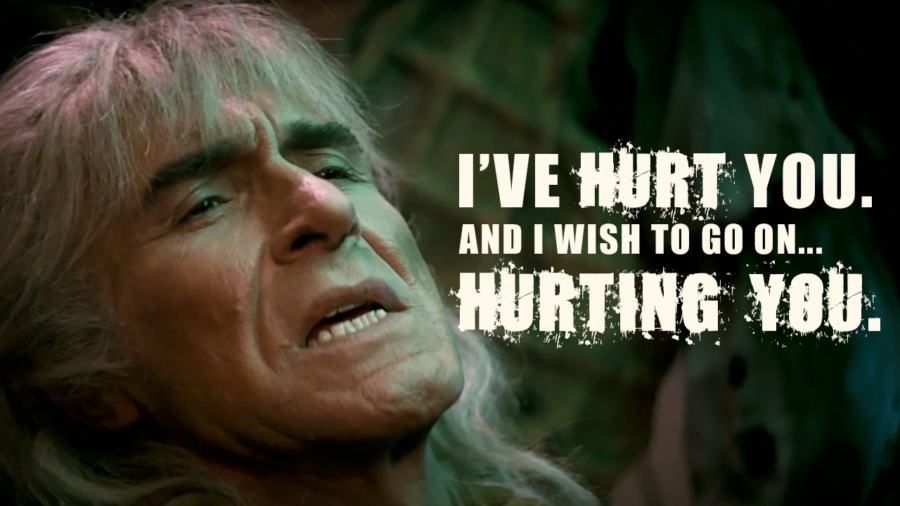
Quark is an ultracapitalist surrounded by socialist Federation types, and his banter with characters completely different from himself is a big part of what makes DS9 so popular. This bartender rarely goes into battle, but he still finds himself in all kinds of painful trouble. Of course, things could always have been worse. One unfilmed scene from the episode “Melora” would have had Quark tortured by the same alien eels used to torture people by Khan Noonien Singh, the greatest villain in all of Star Trek!
All Quarked Up

How the heck did Quark nearly end up on the receiving end of an alien eel attack? It all goes back to “Melora,” a Season 2 DS9 episode involving Dr. Bashir falling in love with a woman who can’t easily navigate the Earth-like gravity of the station. Meanwhile, the episode’s B plot involves a menacing alien shaking Quark down over past debts.
The first draft of “Melora” was written by Evan Carlos Somers, a former intern who pitched the episode. Since Somers uses a wheelchair, he hoped to bring some authenticity to the titular Melora, someone who must navigate DS9 using a wheelchair. While the writer turned in a solid draft, the script ultimately needed retuning. Several writers (including then-showrunner Michael Piller) tweaked the script, resulting in the episode you see onscreen. Among other things, they removed a plot point from Somers where Quark’s nemesis (a man named Fallit Kot) would have tortured the Ferengi using eels from Ceti Alpha V.
Hear No Evil

According to The Official Star Trek: Deep Space Nine Magazine, Somers wanted to portray the villain “psychologically toying with Quark, terrifying him” and eventually killing Quark “by using the Ceti eels introduced in Star Trek II: The Wrath of Khan, but this variety didn’t cause mental vulnerability for mind control.” After making all these elaborate plans for the Ferengi’s torture, he was disappointed that “Fallit Kot just strangles Quark” in the aired episode, a threat which was “not quite titanic enough.”
In retrospect, I’d have to agree. Certainly, an elaborate torture sequence is going to be more tense and exciting than a plain, old strangulation. If nothing else, this scene would have cemented what a creepy threat those Ceti Alpha V eels really were. Sadly, the last time they were mentioned in canon was in Star Trek: Discovery, where an Orion outpost was selling them as a tasty treat on the Klingon homeworld!

As a huge fan of Deep Space Nine, I would have loved to see a major homage to The Wrath of Khan so early in the show’s run. Instead, we’d have to wait several more years until “Doctor Bashir, I Presume” revealed that the titular physician had received Khan-like genetic augmentation. As for Quark, he completed the show’s run without getting threatened by any more creepy eels. That might be for the best, though. Knowing the opportunistic Ferengi, he’d probably just end up serving them to his customers with a healthy heaping of yamok sauce!

By Robert Scucci
| Published

2016’s Dirty Grandpa might actually be the worst attempt at comedy I’ve ever seen, but not for the reasons you’d think. A decent amount of jokes here land in the typical raunchy comedy fashion. Most of the humor hinges on Robert De Niro acting completely out of pocket in a way that would make your boomer parents gasp and say, “I can’t believe the things that are coming out of his mouth!”
De Niro fully commits to Dirty Grandpa’s ridiculous premise. He goes above and beyond. So does Zac Efron. So does Zoey Deutch. So does Aubrey Plaza. So does Jason Mantzoukas. Are you seeing a pattern here? Because it’s the pattern that prevents Dirty Grandpa from being a successful comedy. Everybody is funny, or at the very least trying to be funny at all times. When everything is funny, nothing is.
There’s Not A Single Straight Player In Dirty Grandpa

While I can’t say I was ever truly offended by what happens in Dirty Grandpa, bearing witness to Robert De Niro’s bare dong brushing against Zac Efron’s face wasn’t exactly welcome. I’m sure it was a prosthetic, a stunt wiener if you will, but I digress. I could have done without it, but they’re clearly going for shock value, so I can’t really fault a film for doing what it sets out to do.
The problem with Dirty Grandpa is that there’s not a single person playing it straight. In order for comedy like this to land, you need that balance or it just doesn’t work.

Here’s the plot. Lieutenant Colonel Richard “Dick” Kelly (Robert De Niro) loses his wife, leaving him widowed. He promised her he’d live life to the fullest if she passed before him, and he sets out to do just that in the most extreme way possible. No sooner than her body is buried, Dick goes on an angry poon hunt, dragging his soon-to-be-married grandson Jason (Zac Efron) along as his wingman on a trip to Boca Raton, Florida.
Jason has his reservations because he has wedding obligations of his own. His fiancée, Meredith (Julianne Hough), pretty much has him whipped, and this last-minute trip with his grandfather doesn’t sit well with her. Not knowing the full extent of Dick’s depraved desires, she lets it happen but keeps constant tabs on Jason to make sure he doesn’t step out of line.

Spoiler alert: Jason, and Dick, step out of line.
They meet a group of college kids: Jason’s former classmate and crush Shadia (Zoey Deutch), along with her spring break friends, the oversexed Lenore (Aubrey Plaza) and token gay tagalong Bradley (Jeffrey Bowyer-Chapman). They plan to reconnect later when Dick learns about Lenore’s fantasy of sleeping with an older man. This works out perfectly for Dick, who, by his estimation, hasn’t gotten laid in nearly 20 years.
Sex, Drugs, And The Forbidden Karaoke

No matter where they go in Dirty Grandpa, they’re always within arm’s reach of Pam (Jason Mantzoukas), a local drug dealer who shows up to get everybody wasted. Jason accidentally vapes crack. Lenore aggressively hits on Dick. Meredith FaceTimes Jason at the worst possible moments: naked, covered in drawn-on wieners, hungover, you name it. It’s all so insane that the police officer played by Henry Zebrowski, best known as the most over-the-top host of Last Podcast on the Left, ends up being the most subdued person in the entire movie. The one guy I’ve never seen play it straight is somehow the de facto straight man in Dirty Grandpa.
Robert De Niro asks his new Black friends “if he can say it” before dropping N-bombs during karaoke. Zac Efron gets arrested for exposing himself to a minor. Aubrey Plaza speaks almost entirely in sexually charged euphemisms. It just keeps going.

I’m not here to say that Dirty Grandpa is terrible because it’s in poor taste. That’s the whole point. That’s not the issue. The problem is there’s too much shtick and not enough character development. There’s no real emotional throughline to carry the story. Everybody is dialed up to 11, and there’s no room to breathe. It feels like they were aiming for Bad Santa but landed closer to Bio-Dome. There’s no depth if you’re only exploring one dimension.
There are some great stand-alone moments in Dirty Grandpa, and it thrives on offending your sensibilities. But without any substance, the humor wears thin fast, which is a shame because everybody clearly understood the assignment.
Dirty Grandpa is currently streaming on Hulu.

Strategically Positioned Along High-Risk Trade Routes

Olympic boxer Lin Yu-ting cleared to compete after sex eligibility review

Uber commits up to $1.25 billion in Rivian to deploy 10,000 robotaxis


-

 Tech5 days ago
Your Legally Registered ‘Motorcycle’ Might Not Count Under Proposed US Law
-
 Tech3 days ago
Are Split Spacebars the Next Big Gaming Keyboard Trend?
-

 Politics10 hours ago
Jenni Murray, Long-Serving Woman’s Hour Presenter, Dies Aged 75
-
Sports7 days ago
Why Duke and Michigan Are Dead Even Entering Selection Sunday
-

 Business5 days ago
Search for Savannah Guthrie’s Mother Enters Seventh Week with No Arrests
-

 Business7 days ago
US Airports Launch Donation Drives for Unpaid TSA Workers as Partial Government Shutdown Enters Fifth Week
-

 Fashion11 hours ago
Weekend Open Thread: Adidas – Corporette.com
-
 Crypto World6 days ago
Coinbase and Bybit in Investment Talks: Could Bybit Finally Enter the US Crypto Market?
-
 Crypto World6 hours ago
NIO (NIO) Stock Plunges 6.5% as Shelf Registration Sparks Dilution Worries
-

 Business5 days ago
Australian shares drop as Iran war enters third week
-

 Business7 days ago
Country star Brantley Gilbert enters growing non-alcoholic beer market
-

 Politics3 days ago
The House | The new register to protect children from their abusers shows Parliament at its best
-

 Crypto World5 days ago
Crypto Lender BlockFills Enters Chapter 11 with Up to $500M in Liabilities
-

 News Videos2 days ago
RBA board divided on rate cut, unusually buoyant share market | Finance Report | ABC NEWS
-

 Fashion5 days ago
25 Celebrities with Curly Hair That Are Naturally Beautiful
-

 Tech24 hours ago
inKONBINI Lets You Spend Summer Days Behind the Register
-

 Crypto World3 days ago
Canada’s FINTRAC revokes registrations of 23 crypto MSBs in AML crackdown
-
 Politics4 days ago
Real-time pollution monitoring calls after boy nearly dies
-

 Crypto World6 days ago
Crypto Losses Drop 87% in February, But Hackers Are Now Targeting People, Not Code
-
 NewsBeat2 days ago
Residents in North Lanarkshire reminded to register to vote in Scottish Parliament Election


You must be logged in to post a comment Login