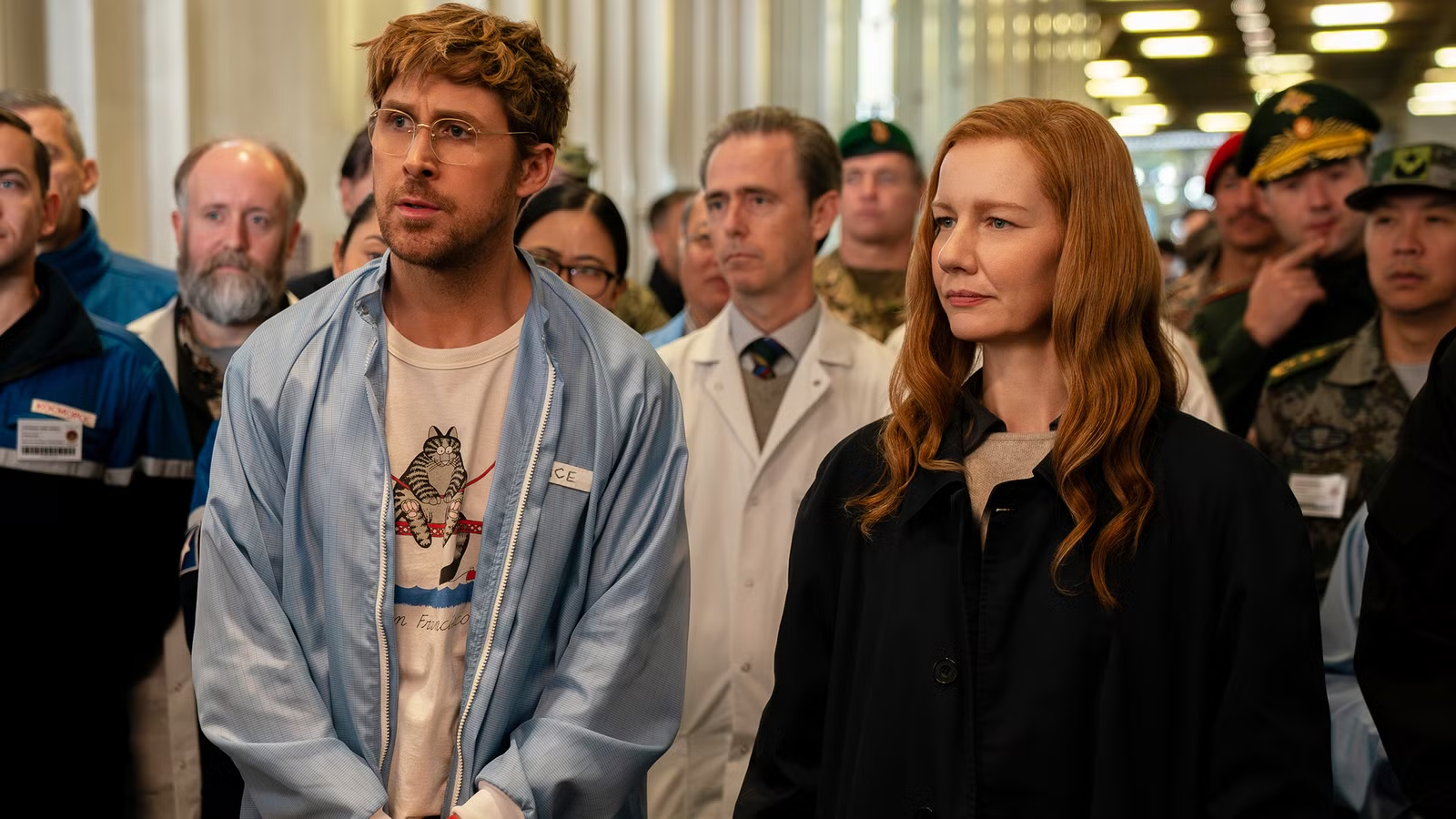
Ryland Grace is being briefed while standing next to Eva Stratt.Image via Amazon MGM Studios
Now in its fourth weekend of release, the sci-fi blockbuster Project Hail Mary is refusing to lose momentum. The film has already overtaken a handful of past sci-fi blockbusters over the last few weeks, and will continue to do so in the weeks to come. A few days ago, it overtook the $228 million domestic gross of its spiritual precursor The Martian, also based on a bestseller by Andy Weir. Directed by Ridley Scottand starring Matt Damon, The Martian was critically acclaimed and massively successful at the box office in 2015. It grossed $630 million worldwide — a benchmark that Project Hail Mary has yet to cross — and received seven Oscar nominations.
This weekend, Project Hail Mary is poised to pass the coveted $500 million milestone worldwide. Directed by Phil Lord and Christopher Miller, the movie stars Ryan Gosling as a schoolteacher sent on an intergalactic mission to save the world. Project Hail Mary exceeded expectations in its theatrical debut, boosted by near-unanimous praise from critics and audiences. It currently holds a “Certified Fresh” 94% critics’ score and a “Verified Hot” 96% audience score on the aggregator website Rotten Tomatoes. The movie is turning out to be Amazon MGM Studios what F1 was to Apple Studios last year, in that it’s technically a streaming movie that has done exceedingly well in theaters, especially in the IMAX format.
Advertisement
Advertisement
Collider Exclusive · Sci-Fi Survival Quiz Which Sci-Fi World Would You Survive? The Matrix · Mad Max · Blade Runner · Dune · Star Wars
Five universes. Five completely different ways the future went wrong — or sideways, or up in flames. Only one of them is the world your instincts were built for. Eight questions will figure out which dystopia, galaxy, or desert wasteland you’d actually make it out of alive.
💊The Matrix
🔥Mad Max
🌧️Blade Runner
Advertisement
🏜️Dune
🚀Star Wars
Advertisement
01
You sense something is deeply wrong with the world around you. What do you do? The first instinct is often the truest one.
Advertisement
02
In a world of scarcity, what resource do you guard most fiercely? What we protect reveals what we believe survival actually requires.
Advertisement
03
What kind of threat keeps you up at night? Fear is useful data — if you’re honest about what you’re actually afraid of.
Advertisement
04
How do you deal with authority you don’t trust? Every dystopia has a power structure. Your approach to it determines everything.
Advertisement
05
Which environment could you actually endure long-term? Survival isn’t just tactical — it’s physical, psychological, and very much about where you are.
Advertisement
06
Who do you want in your corner when things fall apart? The company you keep is the clearest signal of who you actually are.
Advertisement
07
Where do you draw the line — if you draw one at all? Every survivor eventually faces a moment that tests what they’re actually made of.
Advertisement
08
What would actually make survival worth it? Staying alive is one thing. Having a reason to is another.
Advertisement
Your Fate Has Been Calculated You’d Survive In…
Your answers point to the world your instincts were built for. This is the universe your temperament, your survival instincts, and your particular brand of stubbornness were made for.
Advertisement
The Resistance, Zion
The Matrix
You took the red pill a long time ago — probably before anyone offered it to you. You’re a systems thinker who can’t help but notice the seams in things.
Advertisement
You’re drawn to understanding how the system works before figuring out how to break it.
You’d find the Resistance, or it would find you — your instinct for spotting constructed realities is the machines’ worst nightmare.
You function best when you have access to information and the freedom to act on it.
The Matrix built an airtight prison. You’d be the one probing the walls for the door.
The Wasteland
Mad Max
The wasteland doesn’t reward the clever or the well-connected — it rewards those who are hard to kill and harder to break. That’s you.
Advertisement
You don’t need comfort, community, or a cause larger than the next horizon.
You need a vehicle, a clear threat, and enough fuel to outrun it — and you’re good at all three.
You are unsentimental enough to survive that world, and decent enough — just barely — to be something more than another raider.
In the wasteland, that distinction is everything.
Los Angeles, 2049
Blade Runner
You’d survive here because you know how to exist in moral grey areas without losing yourself completely.
Advertisement
You read people accurately, keep your circle small, and ask the questions others prefer not to answer.
In a city where humanity is a legal designation rather than a feeling, you hold onto something that keeps you functional.
You’re not a hero. But you’re not lost, either.
In Blade Runner’s world, that distinction is everything.
Arrakis
Dune
Arrakis is the most hostile environment in the known universe — and you are precisely the kind of person it rewards.
Advertisement
Patience, discipline, and political awareness are your core strengths — and on Arrakis, they’re survival tools.
You understand that the long game matters more than any single victory.
Others come to Dune and are consumed by it. You’d learn its logic and earn its respect.
In time, you wouldn’t just survive Arrakis — you’d begin to reshape it.
A Galaxy Far, Far Away
Star Wars
The galaxy far, far away is vast, loud, and in a constant state of violent political upheaval — and you wouldn’t have it any other way.
Advertisement
You find meaning in being part of something larger than yourself — a cause, a crew, a rebellion.
You’d gravitate toward the Rebellion, or the fringes, or whatever pocket of the galaxy still believes the Empire’s grip can be broken.
You fight — not because you have to, but because standing aside isn’t something you’re capable of.
In Star Wars, that willingness is what makes all the difference.
Advertisement
‘Project Hail Mary’ Has Gone Stratospheric
With nearly $240 million at the domestic box office so far, Project Hail Mary has overtaken the likes of Christopher Nolan‘s Interstellar and M. Night Shyamalan‘s Signs. It has also doubled the lifetime domestic gross ofBumblebee, the highest-rated installment of the live-action Transformers series. Directed by Travis Knight, whose Masters of the Universe movie is around the corner, Bumblebee grossed $127 million domestically and $467 million worldwide against a reported budget of $135 million. It now holds a “Certified Fresh” 91% score on Rotten Tomatoes, where the critics’ consensus reads, “Bumblebee proves it’s possible to bring fun and a sense of wonder back to a bloated blockbuster franchise — and sets up its own slate of sequels in the bargain.” Starring Hailee Steinfeld and John Cena, it was followed by a soft reboot titled Transformers: Rise of the Beasts, whose underperformance has left the franchise in limbo. Stay tuned to Collider for more updates.
Advertisement
Release Date
Advertisement
March 15, 2026
Runtime
157 minutes
Advertisement
Director
Christopher Miller, Phil Lord
Writers
Advertisement
Drew Goddard, Andy Weir
Producers
Aditya Sood, Amy Pascal, Andy Weir, Christopher Miller, Phil Lord, Rachel O’Connor, Ryan Gosling
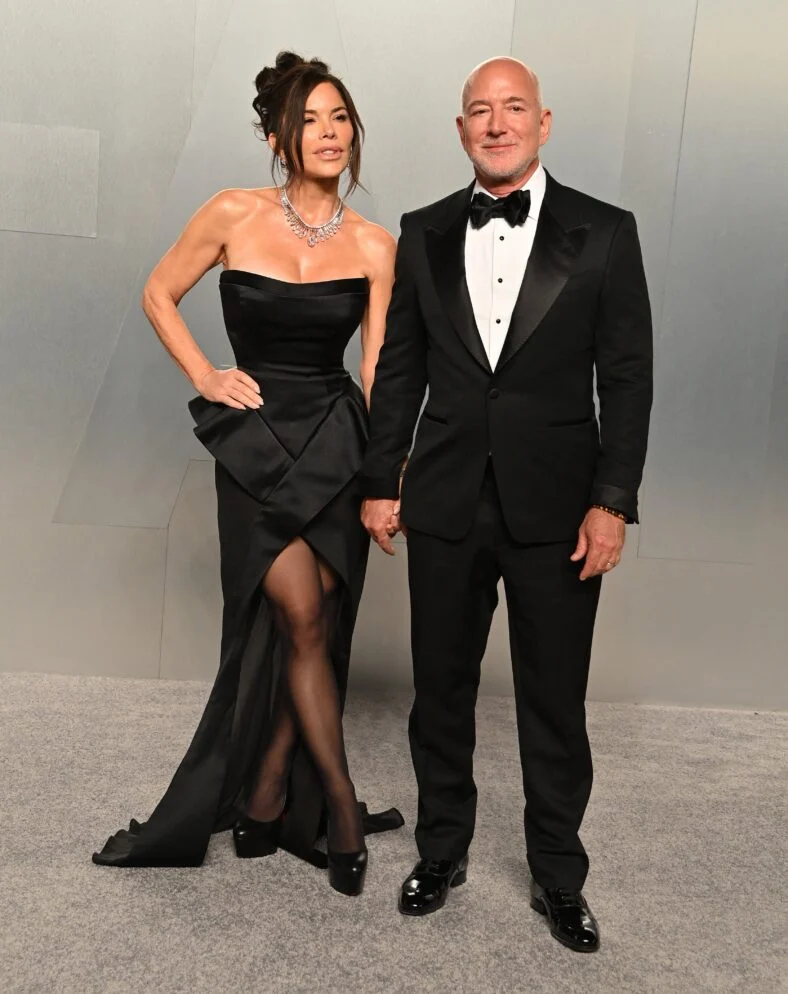
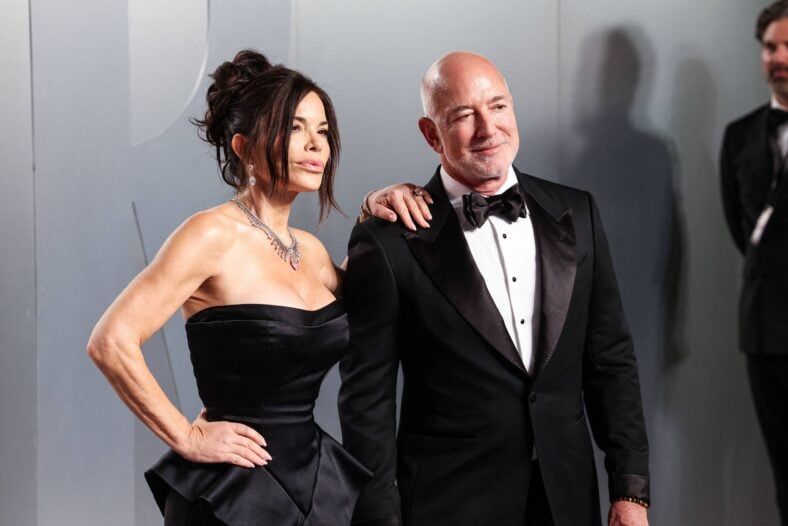
Jeff Bezos and Lauren Sánchez are turning up the heat ahead of the Met Gala 2026, and it’s starting before the red carpet even rolls out. The power couple is reportedly taking their Met Gala involvement to the next level by hosting a private, invite-only pre-party in the days leading up to fashion’s biggest night.
LISA OConnor/AFF-USA.com / MEGA
According to reports, invitations have already been sent out for the ultra-exclusive event, though key details, including the guest list and location, are being kept tightly under wraps. That secrecy is only adding to the intrigue, with insiders already buzzing about what could become one of the most talked-about gatherings of the weekend.
Bezos and Sánchez aren’t just throwing parties, but they’re playing a major role in the 2026 event itself. The duo is serving as lead sponsors and honorary co-chairs, placing them at the center of both the glamour and the growing controversy surrounding this year’s Met Gala. Much of the criticism centers around the couple’s roles, with some questioning how much influence they may have over one of fashion’s most influential fundraisers.
Bezos’ Met Gala Ties Spark Backlash As Protest Posters Call Out Amazon’s Alleged Practices
Xavier Collin/Image Press Agency / MEGA
Adding to the tension are Amazon’s broader political and business ties, including reported connections to Donald Trump’s administration, a point that has sparked debate within both the fashion world and beyond.
In the weeks leading up to the event, protest posters have appeared across New York City calling for a boycott of the gala. The messaging references allegations about working conditions in Amazon fulfillment centers and claims about the company’s relationship with U.S. Immigration and Customs Enforcement (ICE), allegations Amazon has denied.
Advertisement
“The Bezos Met Gala: Brought to you by worker exploitation,” one poster read, while another claimed the 2026 event was “brought to you by the firm that powers ICE.”
NYC Mayor Skips Met Gala 2026 Amid Jeff Bezos Backlash, Cites Focus On Affordability
LISA OConnor/AFF-USA.com / MEGA
The controversy surrounding Bezos and Sánchez’ involvement in the Met Gala 2026 is even spilling into local politics. Zohran Mamdani revealed he plans to skip this year’s event altogether, citing a desire to focus on more pressing issues affecting New Yorkers. “That’s what I’m looking to spend a lot of my time focused on,” he said, referring to affordability concerns in the city.
According to reports, Mamdani emphasized that his priority remains tackling the rising cost of living, rather than attending one of the most exclusive nights in fashion.
Zendaya To Skip Met Gala 2026
Eric Kowalsky / MEGA
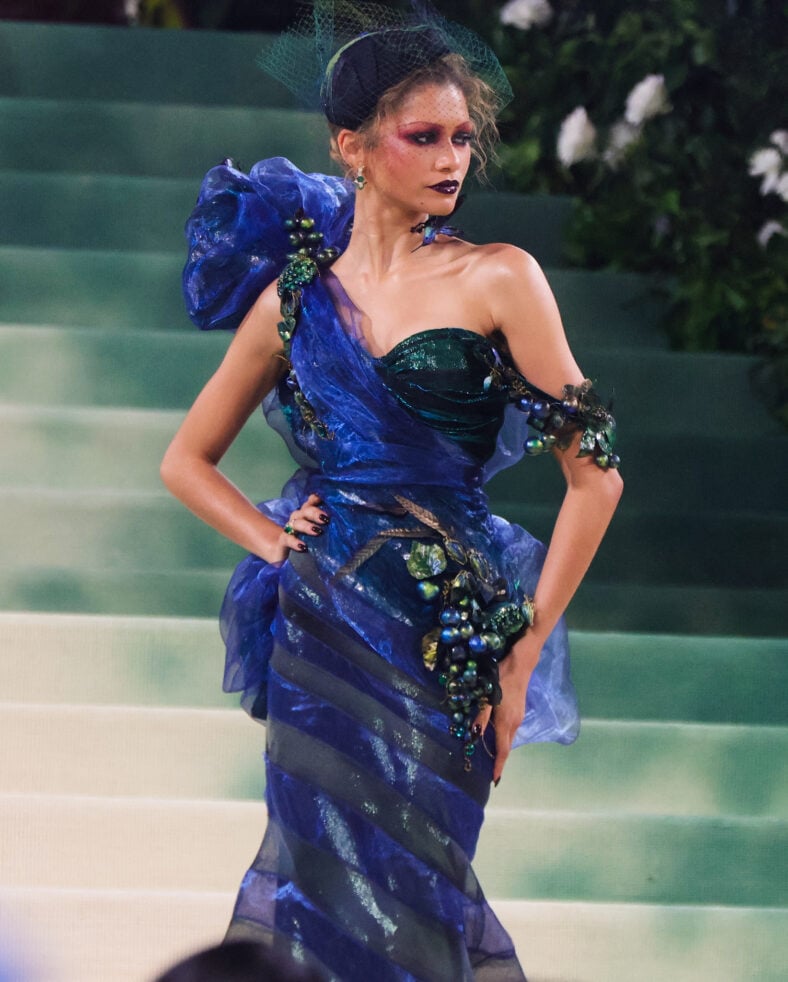
Zendaya will reportedly sit out the Met Gala 2026, marking a noticeable absence from one of fashion’s most high-profile nights. According to reports, the decision is tied to her packed schedule and a desire to step back from constant public appearances during an especially busy stretch in her career.
The Met Gala, hosted annually by The Metropolitan Museum of Art’s Costume Institute, has long been a major moment on the global fashion calendar, making her absence all the more notable. Still, her decision hasn’t stopped speculation. Some online chatter has suggested her absence could be linked to the ongoing controversy surrounding Jeff Bezos’ involvement in this year’s event, though there has been no confirmation of that connection.
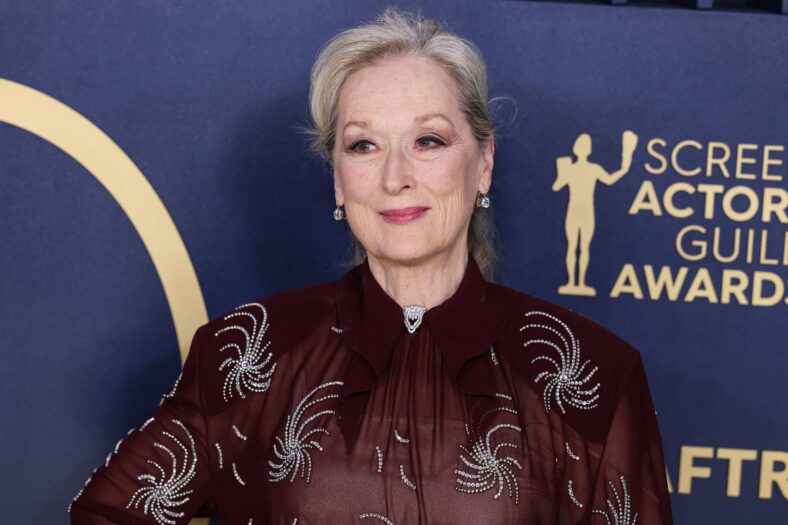
Meryl Streep Also Reportedly Skipping Met Gala 2026
Xavier Collin/Image Press Agency / MEGA
Meryl Streep is another major name rumored to be sitting out the Met Gala 2026, though her absence may not come as a surprise. A representative for the “Mamma Mia!” star said, “Meryl has been invited to the Met Gala for many years but has never attended. While she appreciates Vogue, Anna, and her incredible imagination and stamina, it has never quite been her scene.”
The statement comes amid speculation that Streep was invited to take on a larger role this year, with reports suggesting she was asked to co-chair the event but declined. Some have linked that decision to the ongoing controversy surrounding Jeff Bezos’ involvement, though that has not been confirmed.
Advertisement
The 2026 Met Gala takes place on Monday, May 4, 2026, at the Metropolitan Museum of Art in New York City.
Some of the most popular actors of all time are action stars, such as Tom Cruise and Arnold Schawrzaneggar, and these icons feature in some of the most universally beloved films ever, such as Mission: Impossible and The Terminator. However, among the modern-day action legends, Jason Statham stands out as a definitive actor with some of the most entertaining action movies under his belt. Delivering hard-hitting, gritty action with a pinch of witty remarks, fans can never get enough Statham.
Statham has an extensive filmography with many beloved classics, mostly action movies that get the adrenaline pumping. Despite being an incredible actor, not everyone is a fan of every single movie of his, which is why this list will rank his seven most universally beloved films. Based on entertainment value, pacing, broad appeal, comedy, originality, acting, directing, fan opinion, critical acclaim, and overall quality, these films are masterpieces that almost everyone can agree are fantastic movies.
Advertisement
7
‘Fast & Furious Presents: Hobbs and Shaw’ (2019)
The Fast & Furious franchise is one of the highest-grossing cinematic universes ever, and while Statham isn’t a main character, he has appeared in a handful, including Furious 7, which was left out of this list, and Fast & Furious Presents: Hobbs and Shaw. Shaw (Statham) is a rogue operative, but he must work with lawman Hobbs (Dwayne Johnson) when a new threat arises, a cybernetically advanced anarchist who has access to one of the most powerful weapons in the world.
Fast & Furious Presents: Hobbs and Shaw may not be the most Statham-esque film, but its broad appeal makes it much more widely appreciated than his other films. By reaching into a new demographic, this movie introduced a whole new side of Statham while maintaining his grizzled action star style and dry humor. The buddy cop dynamic between Statham and Johnson is electrifying, which sets up this popcorn blockbuster perfectly. With over-the-top set pieces and adrenaline-fueled action, watching these two heavyweights on screen with each other is an absolute delight.
6
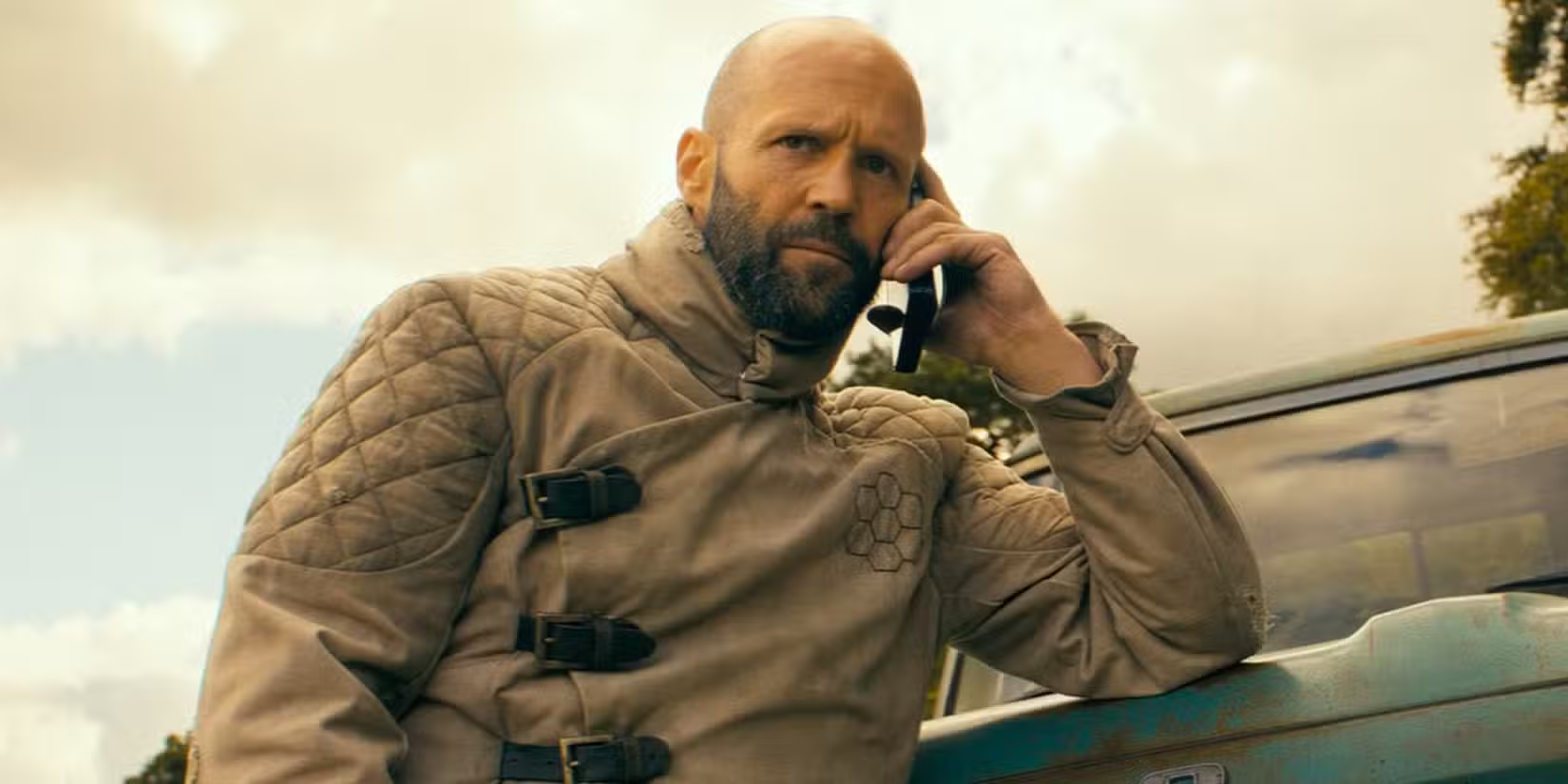
‘The Beekeeper’ (2024)
Jason Statham as Adam Clay in ‘The Beekeeper.’Image via MGM
Advertisement
Most of Statham’s defining works are from the 2000s, but he has a handful of modern hits that are sure to get the blood pumping, including the newest entry on this list, The Beekeeper. Statham plays Adam Clay, a simple man working as a beekeeper. But when he learns that his neighbor killed themselves because of a scummy fraudster, he suits up to get revenge. Revealing his identity as a former special operative, he becomes a one-man army hellbent on taking down this phishing scam and paying them back tenfold.
It hasn’t had as much time as his other iconic films to make a name for itself, but this modern action sensation was the sleeper hit of the decade, providing a surprisingly entertaining and engaging action film. Action movies are full of CGI nowadays, which makes The Beekeeper a fresh change of pace that keeps Statham’s grim determination and unrelenting presence. This cathartic action movie is an explosion of drama and thrilling fight scenes, which helped it be one of Statham’s biggest box office successes, so much so that The Beekeeper 2 is planned for 2027.
5
‘The Bank Job’ (2008)
Jason Statham in The Bank JobImage via Lionsgate
Advertisement
After the success of The Italian Job, which isn’t featured on this list, Statham returns in The Bank Job, which isn’t a sequel, but delivers the same feeling, but bigger and better. Based on the real-life robbery of 1971 Baker Street, a struggling car dealer gets his chance to strike it rich with a heist. However, he realizes he hasn’t just stolen millions of dollars, but scandalous secrets of powerful figures that underground organizations and the Royal British Family would kill to retrieve.
Most fans love Statham because of his intense action movies featuring roundhouse kicks and exhilarating car chases, but The Bank Job remains a beloved movie despite lacking those aspects. With good ratings across the board, fans and critics can agree that this story gave Statham time to flex his dramatic acting chops, proving he is a versatile actor who can do action, drama, and comedy. Statham plays a vulnerable protagonist in this heist thriller, making The Bank Job a fun departure from his typical films.
4
‘Crank’ (2006)
Jason Statham in Crank: High VoltageImage via Lionsgate
Advertisement
Out of all the movies on this list, The Bank Job and Crankare two of his lesser-known masterpieces, but they are still defining works that are important to his career. Chev (Statham) is a hitman who wakes up to learn that he has been injected with a poison that will immediately kill him if his heart rate drops below a certain level. Needing to keep moving and the adrenaline pumping, Chev sets out on a fast-paced quest for revenge, taking his rampage all throughout Los Angeles.
Crank has been forgotten by many, but diehard fans universally agree that this is one of Statham’s best movies, featuring high-adrenaline action. It doesn’t get more exhilarating than this, providing non-stop high-octane action with a relentless pace of drama, absurdity, and chaos. As opposed to his gritty and grounded films, Crank is unapologetically crazy, using its B-movie premise to the fullest with an execution that can only be achieved by Statham.
Advertisement
Collider Exclusive · Taylor Sheridan Universe Quiz Which Taylor Sheridan Show Do You Belong In? Yellowstone · Landman · Tulsa King · Mayor of Kingstown
Four worlds. All of them brutal, complicated, and built on power, loyalty, and the price of survival. Taylor Sheridan doesn’t write heroes — he writes people who do what they have to do and live with the cost. Ten questions will reveal which one of his worlds you were made for.
🤠Yellowstone
Advertisement
🛢️Landman
👑Tulsa King
⚖️Mayor of Kingstown
Advertisement
01
Where does your power come from? In Sheridan’s world, everyone has leverage. The question is what kind.
Advertisement
02
Who do you put first, no matter what? Loyalty in Sheridan’s universe is always absolute — and always costly.
Advertisement
03
Someone crosses a line. How do you respond? Every Sheridan protagonist has a line. What matters is what happens after it’s crossed.
Advertisement
04
Where do you feel most in your element? Sheridan’s worlds are as much about place as they are about people.
Advertisement
05
How do you feel about operating in the grey? Nobody in a Sheridan show has clean hands. The question is how they carry the dirt.
Advertisement
06
What are you actually fighting to hold onto? Every Sheridan character is fighting a war. The real question is what they’re defending.
Advertisement
07
How do you lead? Authority in Sheridan’s world is never given — it’s established, maintained, and constantly tested.
Advertisement
08
Someone new arrives and tries to change how things work. Your reaction? Every Sheridan show has an outsider disrupting an established order. Sometimes that outsider is you.
Advertisement
09
What has your position cost you? Nobody gets to where these characters are without paying for it. The bill is always personal.
Advertisement
10
When it’s over, what do you want people to say? Sheridan’s characters all know the ending is coming. The question is what they leave behind.
Advertisement
Sheridan Has Spoken You Belong In…
The show that claimed the most of your answers is the world you were built for. If two tied, both are shown — you’re complicated enough to straddle two Sheridan universes.
Advertisement
🤠 Yellowstone
🛢️ Landman
Advertisement
👑 Tulsa King
⚖️ Mayor of Kingstown
You are a Dutton — or you might as well be. You understand that some things are worth protecting at any cost, and that the modern world’s indifference to history, to land, to legacy, is not something you’re willing to accept quietly. You lead from the front, you carry your family’s weight without complaint, and when someone threatens what’s yours, you don’t escalate — you finish it. You’re not cruel. But you are absolute. In Yellowstone’s world, that combination of ferocity and loyalty doesn’t make you a villain. It makes you the only thing standing between everything that matters and everyone who wants to take it.
Advertisement
You thrive in the chaos of high-stakes negotiation, where the money is enormous, the margins are thin, and the wrong word in the wrong room can cost everyone everything. You’re a fixer — the person called when a situation is already on fire and needs someone with the nerve to walk into it. West Texas oil country rewards exactly what you are: sharp, adaptable, unsentimental, and absolutely clear-eyed about what people want and what they’ll do to get it. You’re not naive enough to think this world is fair. You’re smart enough to be the one deciding who it’s fair to.
You are a Dwight Manfredi — someone who has served their time, paid their dues, and arrived somewhere unexpected with nothing but their reputation and their wits. You adapt without losing yourself. You build loyalty through respect rather than fear, though you’re not above reminding people that the two aren’t mutually exclusive. Tulsa King is for people who are still standing when everyone assumed they’d be finished — who find, in an unfamiliar place, that they’re more capable than the world gave them credit for. You don’t need a throne. You build one, wherever you happen to land.
Advertisement
You carry the weight of a system that is broken by design, and you do it anyway — because someone has to, and because you’re the only one positioned to do it without the whole thing collapsing. Mike McLusky’s world is for people who are comfortable operating where there are no good options, only less catastrophic ones. You speak every language: law enforcement, criminal, political, human. That fluency makes you invaluable and it makes you a target. You’ve made your peace with both. Mayor of Kingstown belongs to people who understand that keeping the peace is not the same as being at peace — and who do the job regardless.
Advertisement
3
‘Spy’ (2015)
Melissa McCarthy and Jason Statham walking into a room in Spy (2015)Image via 20th Century Studios
Advertisement
A lot of these movies feel like a Statham film, but one of his most unique departures is Spy, where he gives up the leading role to Melissa McCarthy to play the charming side character. After a top CIA agent is compromised, an unassuming desk worker volunteers to go deep undercover. However, getting in her way is Rick Ford (Statham), an overly arrogant and incompetent rogue agent who wants to do everything his way.
This departure from his typical style is another welcome experience, creating his funniest movie with excellent chemistry with McCarthy. Spy is also his highest-rated movie, so critics seem to think that it is his most universally beloved film. A mainstream audience can finally experience Statham’s charm and wit in full force, parodying his own tough-guy persona, which creates a hilarious spy comedy that is perfect from start to finish.
2
‘Lock, Stock, and Two Smoking Barrels’ (1998)
Jason Flemyng, Jason Statham, Dexter Fletcher, Nick Moran chat in a bar, Lock Stock and Two Smoking BarrelsImages via Gramercy Pictures
Advertisement
Guy Ritchie and Statham are an undefeated duo, with the top two movies on this list being from the pair, starting with Lock, Stock, and Two Smoking Barrels. After a group of friends loses a bunch of money to a high-ranking crime boss in a high-stakes game of poker, they only have one week to collect 500,000 GBP. Their plan is to rob a ruthless gang of thieves, which will only get them into more trouble.
Lock, Stock, and Two Smoking Barrels is what kick-started Statham’s career, and watching his first defining work is truly a spectacle to see how far he has evolved. Still, this film is a staple of his filmography and a beloved picture by all of his fans. He wasn’t always an invincible, gritty action hero, and this movie shows that his rapid-fire wit and charming style are just as entertaining. Lock, Stock, and Two Smoking Barrels is a gritty and raw gangster thriller that is a cult classic among Statham fans.
1
‘Snatch’ (2000)
Jason Statham as Turkish in Snatch giving a fist bump while looking at the camera.Image via Columbia Pictures
Advertisement
Ritchie and Statham have collaborated five times, but their best was with Snatch. On one side of the story, there is the search for a stolen 86-carat diamond, and on the other is a boxing promoter, Turkish (Statham), who must find a new boxer after his prized fighter was knocked out before his match. Chaos ensues when these two stories collide, pitting a star-studded cast against each other that features Brad Pitt, Benicio del Toro, Steven Graham,and Vinnie Jones.
Lock, Stock, and Two Smoking Barrels and Snatch could be interchangeable, as both are early, yet unforgettable performances from Statham. But the latter wins out because more fans seem to appreciate the dynamics of some of the greatest actors alive. Universally beloved for its kinetic directing style and Statham’s dry narration, this chaotic crime film is a great thriller and comedy. Snatch is Statham’s most important film, and that legacy has made it a revered classic that defines his filmography.
The Met Gala is known for its jaw-dropping fashion and A-list guest list, but what many don’t realize is that the rules go far beyond the red carpet. Even the menu is carefully controlled. And yes, there’s actually a blacklist of foods that won’t make it anywhere near the event.
Anna Wintour Bans Garlic, Onions And Chives From Met Gala Menu To Keep Things ‘Low-Risk’
MEGA
According to past reports, Anna Wintour has banned three specific ingredients from being served at the Met Gala: chives, onions, and garlic.
The reasoning is surprisingly simple, and very on-brand for fashion’s most exclusive night. All three are known for causing bad breath, something that’s less than ideal when you’re sitting inches away from celebrities, designers, and industry power players all evening. But there’s also a personal touch behind the decision. “Well, those are three things I’m not particularly fond of,” Wintour previously said.
The Met Gala isn’t just a dinner. It’s a highly curated experience where every detail is considered, including what guests eat. With couture gowns, tailored suits, and millions of dollars’ worth of fashion in one room, the last thing anyone wants is a messy dish, a lingering smell, or a wardrobe disaster. That’s why menus are designed to be clean, elegant, and low-risk, ensuring guests can mingle comfortably without worrying about spills or strong odors.
Advertisement
Wintour’s Strict Met Gala Rule Aims To Keep The Night Offline
Canva Stock Images
The food rules go hand-in-hand with another strict policy: no phones inside the gala. Wintour has long enforced the rule to encourage real interaction over social media moments. “It’s often wonderful to hear, after dinner, people say, ‘Oh we had the most wonderful conversations,’” she explained. “So that’s the idea, that life can exist without a picture on your cell phone.” Of course, that hasn’t stopped the occasional rule-breaker, with bathroom selfies becoming a rebellious Met Gala tradition, but the intention remains the same.
Because of the no-phone policy, fans only get a glimpse of the night through official photos and red carpet coverage. That means everything from the menu to the conversations remains largely behind closed doors, adding to the mystery and exclusivity of the event.
Canva Stock Images
For the 2025 Met Gala, the food was just as carefully curated as the couture on the carpet. Kwame Onwuachi, a James Beard Award–winning chef, was tapped to design the menu, bringing a deeply personal and cultural approach to the night’s dining experience.
“I was inspired by Black dandyism and the Black experience in fashion. It’s pulled from so many different avenues and routes of the diaspora,” he told Vogue at the time. “I wanted to encapsulate all of that, from the hors d’oeuvres to plated dinner at the gala.”
Still, he kept one key goal in mind: “We can be poetic as we want, but it has to be good at the end of the day.”
Canva Stock Images
During cocktail hour, guests were treated to elevated takes on comfort food, with servers passing around bites like hoecakes with crispy chicken, mini chopped cheeses, cornbread topped with caviar, and curry chicken patties, a nod to Onwuachi’s signature dishes.
The 2025 Met Gala menu continued to impress with a lineup that celebrated flavors from across the diaspora. The first course featured a papaya piri-piri salad, highlighting the bold South African spice, paired with cucumbers coated in a vibrant Caribbean green-seasoning marinade.
Advertisement
For the main course, guests were served Creole roasted chicken with lemon emulsion, alongside rice and peas and a fresh hot sauce that brought an extra kick. Sides included BBQ collard greens with bacon and cornbread topped with honey-curry butter, blending comfort food with elevated presentation.
Dessert was just as memorable, with a Bodega Special Cosmic Brownie paired with powdered-sugar-donut mousse, as well as a golden cake served with honey sweet cream and blistered gooseberry. “All throughout the meal, there are different aspects of Blackness throughout the world represented at the highest level,” he said.
Canva Stock Images
As for the Met Gala 2026, the official menu remains under wraps, but if history is any indication, it won’t disappoint. With each year bringing a carefully curated dining experience that reflects the theme, fans can expect a menu that’s just as thoughtful and artistic as the looks on the carpet.
And of course, with Anna Wintour still calling the shots, one thing is guaranteed: it’ll be elegant, intentional, and yes, completely free of garlic, onions, and chives.
While Ridley Scott has mastered the historical epic with films like Gladiator, Kingdom of Heaven, and Napoleon, his 2021 medieval film The Last Duel didn’t click with audiences. Even with an all-star cast reuniting Matt Damon and Ben Affleck (who co-wrote the screenplay with Nicole Holofcener), the movie was a box office bomb, making just over $30 million globally according to Box Office Mojo. Not only was this a poor reception to an excellent film (one of Scott’s best in recent years), it was a harsh rejection of the movie’s grim subject matter as well as the movie to which it bears the strongest resemblance: Akira Kurosawa’s Rashomon.
Rashomon is perhaps the most retold story in all of cinema. It’s most famous for its unusual structure in which an event is presented multiple times with multiple differences — some subtle and some obvious — and everybody remembers things differently. Most characters present self-serving versions of the story, in which they come off as heroic, or at least not foolish. Like Rashomon, Scott’s film covers a legal case in a centuries-old society, examining timeless questions of honor, ethics, justice, and cruelty. Even more significantly, it deals with a sexual assault, and the ramifications of taking allegations seriously versus diminishing the victim. But there is a key difference from how Rashomon treats the nature of its story.
Advertisement
‘Rashomon’ and ‘The Last Duel’ Are Essentially Courtroom Drama Period Pieces
Both Rashomon and The Last Duel are adapted from previous works. In the former case, Akira Kurosawa drew from a decades-old short story, “In A Grove” by Ryūnosuke Akutagawa, while Ridley Scott’s film came out of Eric Jager’s nonfiction book of the same name. Rashomon’s adaptability to a variety of scenarios comes out of its almost pure, mythic narrative sensibility. There are just a handful of sets and as few characters, and they are defined by their roles and class. Where Kurosawa often found incredible kinetic movement in feudal epics like Seven Samurai, Rashomon is remarkably restrained. The movie’s central crime is abstracted through multiple narrative layers: unrelated characters are discussing the court case, and the court scenes flash back to the central characters’ recollections. There are a samurai (Masayuki Mori), his wife (Machiko Kyō), and the bandit (Kurosawa’s muse Toshiro Mifune), who assaulted her and possibly killed her husband.
For those looking for other cinematic tales of justice.
Advertisement
The Last Duel, true to its nonfiction roots, requires more specificity. Dealing with the real story of a famous medieval French trial by combat in 1386, it follows Jean de Carrouges (Damon), his wife Marguerite (Jodie Comer), and the striving squire Jacques le Gris (Adam Driver) who is accused of raping her. As opposed to Scott’s previous and future historical epics like 1492: Conquest of Paradise or his 2010 misbegotten take on Robin Hood, the movie practically blitzes past its big battle sequences in favor of digging into the characters’ psychological ache, leaning more into the grim ambiguity of what Kurosawa’s movie offered than giving viewers clear heroes and villains. As well, it lets its characters reflect on their versions of events, breaking down Jean’s insecurity and how Jacques’ entry into the aristocracy calcified his morality. But it differs in a key point from Rashomon: it offers something like objective truth.
Advertisement
‘Rashomon’ Emphasized Ambiguity, but ‘The Last Duel’ Sought Truth
Films that have followed in the Rashomon tradition tend to keep the multiple retellings but usually nix the movie’s moving coda, where even the objective voice of reason turns out to be concealing aspects of the truth for personal gain. The movie’s emphasis on patriarchal violence, playing out in the mundane light of day, only adds to its ambivalent storytelling. Even The Last Duel, one of the few Rashomon descendants to follow in its darkness, gives viewers one of Ridley Scott’s best gritty action scenes with its titular trial by combat. (Kurosawa offers no such catharsis.) By the end of Rashomon, all of the lies have been revealed and even the samurai’s wife, a victim, has failed to disclose her role in her husband’s death; after her rape, she effectively encouraged a trial by combat of her own.
The most fascinating thing about The Last Duel is its portrayal of characters’ different recollections. Each of its three chapters is called “The Truth According to (x character),” setting up who is recalling what. For Jacques le Gris, the assault on Marguerite is essentially an awkward seduction, complete with chasing around the bedroom and giggles, while she remembers it traumatically. In the court system of medieval France, the accusation against him is really an accusation against Jean for allowing this to happen. Even in a situation where the woman is the victim, the movie suggests, her status as the property of a nobleman means her own truth goes untold. But we see it, and in one of the movie’s great touches, the chapter dealing with her own story is simply called “The Truth.” While Kurosawa kept it just out of reach, The Last Duel’s relationship with the truth gives the movie its stark power and social commentary.
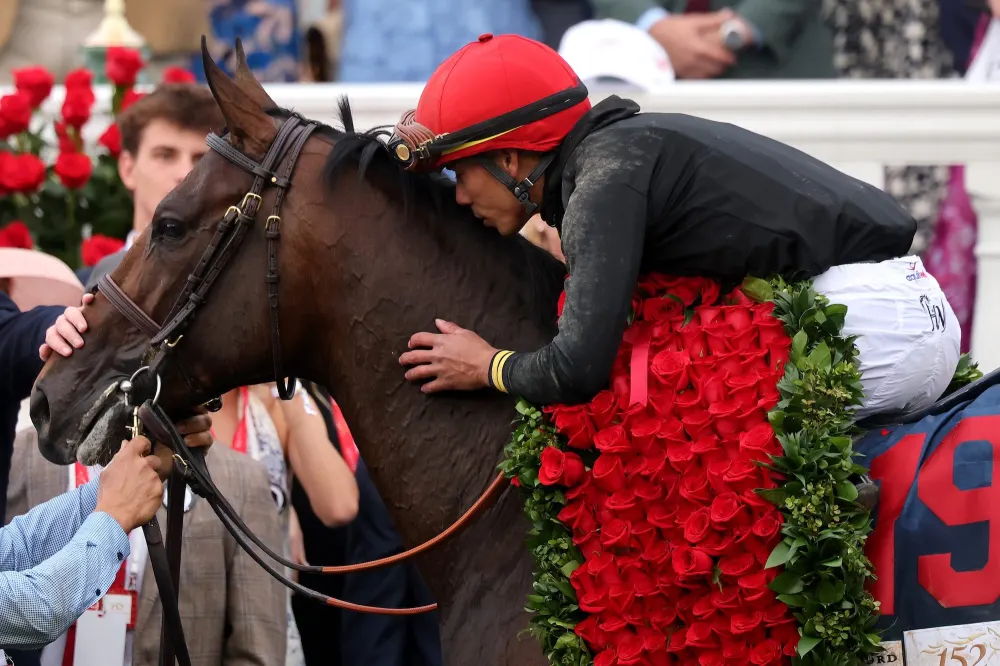
Cherie DeVaux has made history as the first woman trainer to win at the Kentucky Derby, after horse Golden Tempo triumphed at Churchill Downs.
“I don’t even have any words right now. I just can’t,” DeVaux, 44, told reporters after Golden Tempo’s victory on Saturday, May 2. “I’m just so so so happy for Golden Tempo. José [Ortiz, the jockey] did a wonderful job, a masterful job getting him there and he has had so much faith in this horse.”
When asked what it meant to her to become the first female trainer to emerge victorious at the historic race, she added, “I honestly don’t know, I’m glad that I can be a representative of all women everywhere that we can do anything that we set our minds to.”
DeVaux was joined during her post-race interview by her and husband David Ingordo’s 15-year-old daughter Reagan, who proudly described her mom’s historic Kentucky Derby win as “truly an honor.”
Advertisement
“I’m proud of you, I really am,” Reagan told her mom.
Jockey José and Golden Temple outran heavy favorites Renegade, So Happy and Further Ado at the annual Louisville, Kentucky, race. This was José’s first Derby victory — a career milestone he achieved while competing head-to-head against his brother Irad Ortiz Jr., who was riding Renegade.
“It’s very special,” José told reporters while crying. “I just wish my grandpa was here … I’m just very happy that I get my goal, my life-dream goal, achieved. It’s an amazing experience and I can’t wait to see my family and celebrate.”
José started jockeying in his native Puerto Rico before moving to the U.S. to compete in the mid-2010s. (José and his wife, former jockey Taylor Ortiz, share three children: daughter Leilani and sons Derek and Nikolai.)
Advertisement
Jockey José Ortiz and Golden Tempo celebrate winning the Kentucky Derby.Michael Reaves/Getty Images
José also offered encouragement to any Puerto Ricans who might be interested in getting into horse racing.
“[You should] have a good attitude, try to learn English, try to learn every day, more,” he suggested. “It takes time, I’ve been here 11 years, this is my 11th year. It takes time, you got to work — be responsible, respect people. They got to know that I was sitting there 50 years ago in the same chair they’re sitting … Dreams do come true, you just got to dream big.”
DeVaux became a lead horse trainer in 2019 after spending eight years as an assistant to Chuck Simon and Chad Brown. Prior to Saturday’s race, DeVaux told Lexington 18 that she wanted to set an example for young women with her horse’s performance at the Kentucky Derby.
Thank You!
You have successfully subscribed.
Advertisement
“I don’t really look at it as male versus female,” she told the local news outlet on Friday, May 1. “I just try to do the best I can, but in the back of my mind, just to be a strong role model.”
DeVaux added, “The only thing I want to do in my career is be the first female to win a Kentucky Derby. This is our first Derby starter, and we’re one step closer.”
Many famous faces were on hand to witness DeVaux’s groundbreaking Kentucky Derby win, including University of North Carolina Tar Heels football coach Bill Belichick and his girlfriend Jordon Hudson. The late Anna Nicole Smith’s 19-year-old daughter, Dannielynn Birkhead, also made her annual appearance at the Derby alongside her dad, Larry Birkhead.
Hollywood doesn’t dabble in blockbuster religious epics these days, which means that we’re unlikely to ever get another film like King of Kings in the near future. Directed by Nicholas Ray, the 1961 film is considered by many to be one of the greatest biblical epics ever made, pulling from all four New Testament gospel accounts to compile a large-scale three-hour narrative detailing the life of Jesus Christ, played here by The Searchers star Jeffrey Hunter. But if you’re looking for something along those same lines, then we have some suggestions for you.
In the last 100 years, the biblical epic has come in many forms, beginning in the silent era and moving all the way to the present digital age. From animated pictures to live-action, black-and-white to color, the story of Christ has transcended the pages of the Bible itself and become an important display of subversive heroism, sacrifice, and the miraculous on the big screen. If you’re looking for a powerful religious epic to indulge in this weekend, look no further than these films that echo the greatness of King of Kings.
Advertisement
10
‘The Passion of the Christ’ (2004)
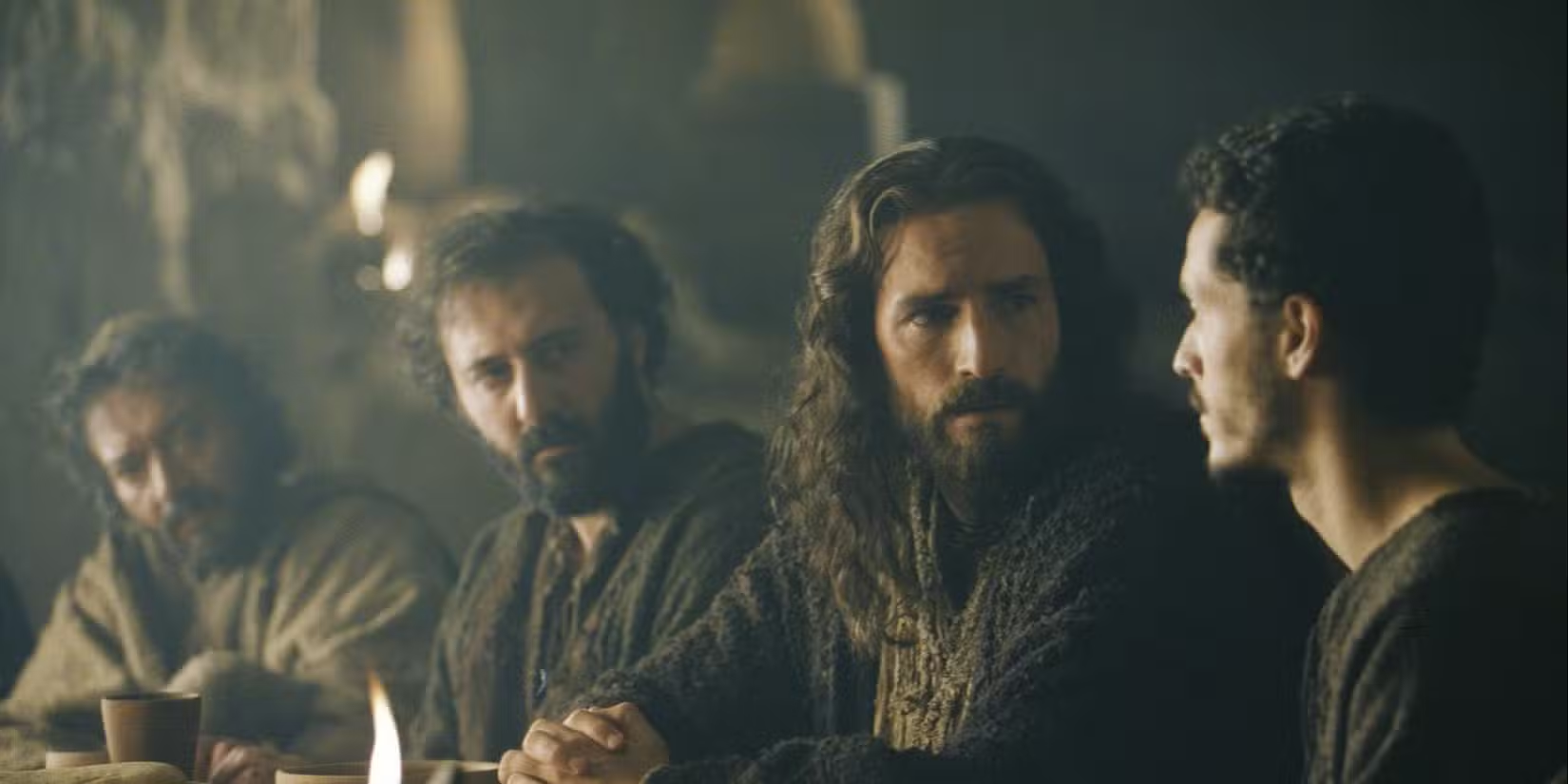
Jim Caviezel as Jesus talks to other people as they sit at a table together in The Passion of the ChristImage via Newmarket Film Group
When it comes to modern takes on the story of Christ, Mel Gibson‘s The Passion of the Christ is the feature film that draws the most attention. Known for its egregiously violent (and yet, historically accurate) trail and crucifixion sequences, Jim Caviezelshines magnificently as Jesus here, emphasizing both his humanity and divinity in a film chronicling Christ’s final days. Well, until the resurrection, that is. In addition to pulling from the biblical gospel accounts, The Passion also relies heavily on Catholic tradition.
With an R rating, The Passion of the Christ is not for the faint of heart. While it’s the type of biblical epic that can live up to King of Kings in scope, it’s a far more intimate picture that highlights what Christ suffered for the sins of the world. To tell the complete story, Gibson is currently working on a two-part sequel, The Resurrection of the Christ, which is set to premiere next Easter.
Advertisement
9
‘The Greatest Story Ever Told’ (1965)
Max von Sydow as Jesus Christ on the cross in ‘The Greatest Story Ever Told’ (1965)Image via United Artists
Off the heels of King of Kings, The Greatest Story Ever Toldtook bold leaps only four years later to retell the full story of Jesus Christ (here played by Max von Sydow) from birth to the “Great Commission.” Directed by Hollywood heavy George Stevens, the picture is a direct adaptation of the novel of the same name by Fulton Oursler and Henry Denker, though it took clear inspiration from the scriptures as well. With an over three-hour runtime, this is truly a time investment.
The Greatest Story Ever Told brought many Hollywood icons together, and featured appearances of plenty of notable stars including JohnWayne, CharltonHeston, Sidney Poitier, Pat Boone, Martin Landau, José Ferrer, and, in their final on-screen roles, Claude Rains and Joseph Schildkraut. Talk about a stacked cast. Although not the most famous film about Christ, The Greatest Story Ever Told does its best to live up to its name.
Advertisement
8
‘The King of Kings’ (1927)
Jesus Christ (H.B. Warner) encounters the adulterous woman (Viola Louie) surrounded by a crowd in Cecil B. DeMille’s ‘The King of Kings’ (1927)Image via Pathé Exchange
Did you know that King of Kings is a remake? Well, sort of. It shares a title, at least, with Cecil B. DeMille‘s original silent biblical epic, The King of Kings. The second installment in DeMille’s unofficial silent-to-sound religious epic trilogy that began with his original 1923 The Ten Commandments and concluded in 1932 with The Sign of the Cross, this tale of Christ (who is played by H. B. Warner) runs for over two and a half hours. That’s a lot for a silent picture, but with DeMille’s epic style, who could blame him?
The King of Kings uses direct scripture quotes from the New Testament gospels as intertitles, with DeMille going so far as to include both chapter and verse. It may not be as colorful and visually stunning as the 1961 version, but for all you film history buffs who appreciate the scale of what DeMille was trying to do, it’s a must-watch. As it’s been in the public domain for quite some time, this one is easy enough to find online.
Advertisement
7
‘Barabbas’ (1961)
Barabbas (Anthony Quinn) in action as a gladiator in ‘Barabbas (1961)Image via Columbia Pictures
Up to this point, most of these films have centered pretty directly on Christ himself, but Barabbas tells the story of Jesus through the fresh eyes of the murderer whose place he took on the cross:Anthony Quinn‘s Barabbas. After Pontius Pilate (Arthur Kennedy) spares his life, Barabbas witnesses the crucifixion of Christ (played here by an uncredited Roy Mangano) and his whole life begins to change. He wrestles with the man he once was, only to find himself traveling to Rome, where he meets the apostles.
Based on the novel by Pär Lagerkvist, Barabbas is a truly unique take on this story that reframes Christ’s death and resurrection, as well as early Christian persecution, through the eyes of the man whose death may have prevented it all — if not for divine intervention, that is. Quinn’s performance as the title figure has been praised, and the film — directed by Richard Fleischer— remains a favorite of many.
Advertisement
6
‘Jesus’ (1979)
Jesus Christ (Brian Deacon) looks upward with the Holy Spirit resembling a dove perched on his shoulder in ‘Jesus’ (1979)Image via Warner Bros.
Allegedly the most-watched movie ever made, Jesus (also known as The Jesus Film) is a two-hour biblical drama directed by Peter Sykes and John Krish with funding from the parachurch organization Campus Crusade for Christ. Meant to be an evangelistic tool, the final product is actually quite an accurate depiction of the Gospel of Luke that aims to be as true to the text as possible. Brian Deacon played the title Messiah here in a film that also holds the Guinness World Record for “most translated film.”
While most of the films on this list were shot elsewhere, Jesus was one of the few adaptations of Christ shot on-location in Israel. Between its adherence to the text and fine stained-glass performances, those looking for something a bit more 1:1 with the New Testament will be pleased here. As the movie poster puts it, this is a Jesus “stripped of myth and mystery.”
Advertisement
5
‘The Gospel According to St. Matthew’ (1964)
Enrique Irazoqui as Jesus Christ carrying his cross in ‘The Gospel According to St. Matthew.’Image via Arco Film
Of course, there are three other gospel accounts besides that of Luke, and if you’re looking for something a bit out-of-the-box that follows another, give The Gospel According to St. Matthew a try. Evoking the Italian neo-realist style, director Pier Paolo Pasolini (himself an athiest) took a different approach to Christ (Enrique Irazoqui), shooting the picture almost as if it’s a documentary. In that way, it becomes more intimate than the usual biblical epic, and, interestingly, doesn’t stray much from the text.
Even famed film critic Roger Ebert praised this picture for being “one of the most effective films on a religious theme.”The best Jesus movie according to Rotten Tomatoes, The Gospel According to St. Matthew is a fascinating watch for its unique take on the material that utilizes Byzantine-inspired costuming and support from many Catholic viewers, including the Vatican itself. It was even filmed in some of the same locations that Mel Gibson would use for The Passion of the Christ decades later!
Billed upon release as an “unofficial sequel” to The Passion of the Christ, Risen is a biblical thriller that follows Roman soldier Clavius Aquila Valerius Niger (Joseph Fiennes) after he and his aid Lucius (Tom Felton) are ordered by Pontius Pilate (Peter Firth) to find the supposedly stolen body of Yeshua (Cliff Curtis) — Yeshua being the Hebrew name of Jesus Christ. As Clavius investigates the incident, he is lead to the risen Christ and his apostles, and his life will never be the same. It’s certainly a perspective on the events that we don’t typically get.
Directed by Kevin Reynolds, the mind behind The Count of Monte Christo, Robin Hood: Prince of Thieves, and Hatfields & McCoys, Risen is an engaging twist on the historical thriller. As Reynolds’ last picture to date, the filmmaker knows how to draw out the tension and spin a new take on the genre that deserves closer examination, especially considering Curtis’ performance as the risen hero in question. Risen was slept on upon its initial release, but continues to be a hit on streaming.
Advertisement
3
‘Jesus of Nazareth’ (1977)
Image via ITV
Okay, this one is a bit of a cheat because Jesus of Nazarethis not exactly a movie… Although often billed as a film or a made-for-TV feature, the truth is that this Franco Zeffirelli-directed epic is actually a four-part miniseries. With 90-minute installments that detail everything from all four New Testament accounts — The Gospels of Matthew, Mark, Luke, and John — this is arguably the most detailed depiction of Jesus’ (Robert Powell) ministry put to the screen without egregious artistic liberty (looking at you, The Chosen).
With a stacked cast that includes the likes of Christopher Plummer, Laurence Olivier, Ernest Borgnine, Anne Bancroft, and James Earl Jones in one of his best television roles, Jesus of Nazareth was a seriously ambitious effort that deserves high marks for first bringing the story of Christ to television with both artistry and authenticity. With an emphasis on Jesus’ divinity, it’s a great complementary piece to King of Kings, even if it runs a few hours longer…
Advertisement
2
‘The King of Kings’ (2025)
A still from The King of Kings.
Another picture bearing the King of Kings title, The King of Kings, like the DeMille film before it, is not at all connected to the Nicholas Ray feature. Instead, this truly inspired take on the New Testament story is an animated film directed by Seong-ho Jang and loosely based on The Life of Our Lord by Charles Dickens. Yes, that Charles Dickens; and true to his written account, the film follows Dickens (Kenneth Branagh) as he recounts the story of Jesus Christ (Oscar Isaac) to his young imaginative son, Walter (Roman Griffin Davis).
Blending the morals of A Christmas Carol (which Dickens is performing when his son interrupts him) with the tale of Christ is quite a creative way to engage with the text. The film also features the vocal talents of Uma Thurman, Mark Hamill, Pierce Brosnan, Ben Kingsley, Forest Whitaker, and James Arnold Taylor. Perfect for all ages, The King of Kings may share a name with the 1927 silent film and the 1961 historical epic, but it couldn’t be farther from them in style.
Advertisement
1
‘Ben-Hur’ (1959)
Ben-Hur (Charlton Heston) comes face-to-face with Jesus (Claude Heater) in 1959’s ‘Ben-Hur’Image via Loew’s, Inc.
We all knew it was coming. Ben-Hur is the definition of a biblical epic, often considered the greatest religious or historical epic of all time. The William Wyler-directed adaptation of Lew Wallace‘s famous novel, Ben-Hur: A Tale of the Christ, stars Charlton Heston as Judah Ben-Hur, a Jewish prince who is adopted by a Roman and struggling with his identity. As he returns to Judea at the same time as Jesus’ (Claude Heater) ministry, he finds himself at odds with his childhood friend Messala (Stephen Boyd), now a Roman tribune.
Although Christ himself doesn’t appear much, part of the brilliance of Ben-Hur is how intertwined the stories of Judah and Jesus truly are. Over the course of this four-hour epic, Ben-Hur immerses you in a tale of revenge and honor that ultimately turns into a vehicle to explore themes of sacrifice, faith, and love. While Ben-Hur had been adapted twice in the silent era and again in 2016, it’s the 1959 version that remains a classic — and no other biblical epic, including King of Kings, holds a candle.
Advertisement
Collider Exclusive · Oscar Best Picture Quiz Which Oscar Best Picture Is Your Perfect Movie? Parasite · Everything Everywhere · Oppenheimer · Birdman · No Country
Advertisement
Five Oscar Best Picture winners. Five completely different visions of what cinema can be — and what it can do to you. One of them is the film that was made for the way your mind works. Ten questions will figure out which one.
🪜Parasite
🌀Everything Everywhere
☢️Oppenheimer
🐦Birdman
Advertisement
🪙No Country for Old Men
Advertisement
01
What kind of film experience do you actually want? The best movies don’t just entertain — they leave something behind.
Advertisement
02
Which idea grabs you most in a film? Great films are driven by a central obsession. What’s yours?
Advertisement
03
How do you like your story told? Form is content. The way a story is shaped changes what it means.
Advertisement
04
What makes a truly great antagonist? The opposition defines the protagonist. What kind of opposition fascinates you?
Advertisement
05
What do you want from a film’s ending? The final note is the one that lingers. What do you want it to sound like?
Advertisement
06
Which setting pulls you in most? Where a film takes place shapes everything — mood, stakes, what’s even possible.
Advertisement
07
What cinematic craft impresses you most? Every great film has a signature — a technical or artistic element that makes it unmistakable.
Advertisement
08
What kind of main character do you root for? The protagonist is the lens. Who you choose to follow says something about you.
Advertisement
09
How do you feel about a film that takes its time? Pace is a choice. Some films sprint; others let tension accumulate slowly, deliberately.
Advertisement
10
What do you want to feel walking out of the cinema? The best films leave a mark. What kind of mark do you want?
Advertisement
The Academy Has Decided Your Perfect Film Is…
Your answers have pointed to one Oscar Best Picture winner above all others. This is the film that was made for the way your mind works.
Advertisement
Parasite
You are drawn to films that operate on multiple levels simultaneously — that begin in one genre and quietly, brilliantly migrate into another. Bong Joon-ho’s Parasite is a film about class, desire, and the architecture of inequality that manages to be darkly funny, deeply suspenseful, and genuinely shocking across a single extraordinary running time. Your instinct is for cinema that hides its true intentions until the moment it’s ready to reveal them. Parasite is exactly that — a film that rewards close attention and punishes assumptions, right up to its devastating final image.
Advertisement
Everything Everywhere All at Once
You want it all — and this film gives you all of it. The Daniels’ Everything Everywhere All at Once is one of the most maximalist films ever made: action comedy, multiverse sci-fi, family drama, existential crisis, and a genuinely earned emotional core that sneaks up on you amid the chaos. You are someone who responds to ambition, who doesn’t want cinema to choose between being entertaining and being meaningful. This film refuses that choice entirely. It is overwhelming by design, and its overwhelming nature is precisely the point — because the feeling of being crushed by infinite possibility is exactly what it’s about.
Advertisement
Oppenheimer
You are drawn to cinema on a grand scale — films that understand history not as a backdrop but as a force, and that place their characters inside that force and watch what happens. Christopher Nolan’s Oppenheimer is a film about the terrifying gap between what we can do and what we should do, told with the full weight of one of the most consequential moments in human history behind it. You want your films to feel important without feeling self-important — to earn their ambition through sheer craft and the gravity of their subject. Oppenheimer does exactly that. It is enormous, complicated, and refuses easy comfort.
Advertisement
Birdman
You are drawn to films that foreground their own construction — that make the how of the filmmaking part of the what it’s about. Alejandro González Iñárritu’s Birdman, shot to appear as a single continuous take, is cinema examining itself through the cracked mirror of a fading actor’s ego. You respond to formal daring, to the feeling that a film is doing something that probably shouldn’t be possible. Michael Keaton’s performance and Emmanuel Lubezki’s restless camera create something genuinely unlike anything else — a film that is simultaneously about creativity, relevance, self-destruction, and the impossibility of ever truly knowing if your work means anything at all.
Advertisement
No Country for Old Men
You are drawn to cinema that trusts silence, that refuses to explain itself, and that treats dread as a form of meaning. The Coen Brothers’ No Country for Old Men is a film about the arrival of a new kind of evil — implacable, arbitrary, and utterly indifferent to the moral frameworks we use to make sense of the world. It is one of the most formally controlled films ever made, and its controlled restraint is what makes it so terrifying. You want your films to haunt you, not comfort you. You are not interested in resolution if resolution would be dishonest. No Country for Old Men is honest in a way that most cinema never dares to be.
Remakes can be terribly hit or miss, and that’s just as true in the noir genre as with anything else. Slow-burn mysteries with fast-paced dialogue are typically a great combination, especially when the film stays true to the novel it’s adapting in the first place. But in the case of one Robert Mitchum noir picture, the 1978 adaptation of The Big Sleep, it’s painfully clear that following the source material doesn’t always lead to a direct hit. More than that, it proves without a shadow of a doubt that some movies just shouldn’t be remade unless they’re guaranteed to be done right.
‘The Big Sleep’ Remake Loses What Made the Original Great
If you’ve never seen the Humphrey Bogart version of The Big Sleep, then go and do so immediately. The 1946 picture is truly the undisputed gold standard for noir detective features, and while there are several others that could claim that very title, The Big Sleep is simply enchanting. Bogart played Philip Marlowe — a character created by author Raymond Chandler in his novel of the same name — with the perfect cadence and charm befitting of an old-school private eye. His chemistry with Lauren Bacall (whom he married off-screen) is simply legendary, and the filmmakers famously rewrote the ending in order to keep her more involved in the overall plot. While Bogart’s The Big Sleep is quite faithful to the book for the first two-thirds or so, it begins to deviate considerably toward the end. Although it lands, some hard-core fans of the novel certainly might have wished for a more proper adaptation. So, when British filmmaker Michael Winner took a stab at Chandler’s stellar detective novel, he aimed to better honor the muddied themes and complicated plot of the book on the screen. In the end, it didn’t quite pan out that way.
Of course, if you’ve seen the 1978 film, then you already know that it makes two distinct changes to the material. For one, it controversially moves the plot from 1940s Los Angeles into 1970s London, which was the adaptation’s first (though not only) big mistake. By taking the film out of its LA setting, the deeply American roots of the tale are cast aside, which is a turn-off for anyone intimately familiar with the story. Secondly, the remake cast Robert Mitchum in the role as Marlowe (reprising the part from his previous work in Farewell, My Lovely, which was set in LA). Not only is Mitchum a bit too old to convincingly play Marlowe (who is meant to be in his mid-30s), but he’s a few steps down from Bogart, who was far more convincing. Nevertheless, Winner tackled The Big Sleep with the goal of bringing the rest of the story to life with more attention to detail and a greater emphasis on the criminal underbelly displayed in the novel.
In many respects, the British remake follows Chandler’s novel to a “T.” Much of the dialogue comes straight from the book, and the way that the picture emphasizes the sexual deviancy that Marlowe uncovers as he investigates Geiger’s murder is certainly truer to the book than what the original Howard Hawks film was able to show back in the ’40s. And that’s not to forget about the ending, which is ripped straight from the source material and doesn’t romanticize the climax the way that the Bogart and Bacall picture did. In fact, aside from some minor shifts and the alternate setting, there’s not much difference between the novel and the 1978 film at all. With a cast that also included James Stewart, Richard Boone, Sarah Miles, and Oliver Reed, Winner should have knocked this remake out of the park… So, what happened? Well, for one thing, the end result is quite dull, further echoing the misfire performance of its leading man.
Advertisement
Robert Mitchum Doesn’t Quite Nail the Role of Philip Marlowe
Robert Mitchum as Philip Marlowe in ‘The Big Sleep’ (1978)Image via United Artists
Although Mitchum played Marlowe twice in his career, The Big Sleep doesn’t do him any favors. For one thing, he refrains from utilizing any of Marlowe’s understated but still effective charisma, playing the part almost as if he’s too bored to take it seriously. In contrast to Bogart’s Marlowe, Mitchum’s interpretation is also far less complex, which makes him a bit more irritable to both the characters around him and even the audience. Although he recites many of the famous lines as if reading directly from Chandler, there appears to be very little subtext behind them — part of which may be a biproduct of moving the tale from Los Angeles to London. The British aesthetic simply doesn’t work for the film, and everything from the lighting to the cinematography comes off just as flat as Mitchum does.
While Bogart was already in his mid-40s when playing the character, Mitchum was 60 when The Big Sleep hit theaters. He certainly wasn’t the jaded, younger man who Chandler describes in his novel, nor does he quite fit the part on the screen either. In fact, when he meets with Stewart’s General Sternwood about the job he’s been hired for, there doesn’t appear to be much difference between them, as the stars were only a decade apart in age. The whole thing comes across as a bit insincere, and perhaps much of that is due to the strange attempt to make the whole thing British (half-handedly attempting to explain why so many Americans have migrated to London). Likewise, the chemistry between Mitchum and Charlotte Regan (Sarah Miles) is nothing compared to what we see between Bogart and Bacall in their attempt (or even what the pair were able to achieve with Ryan’s Daughter), making us wonder why anyone thought this was a good idea in the first place.
Advertisement
Despite Sticking to the Source Material, ‘The Big Sleep’ Is Not a Worthwhile Endeavor
Although the film was not afraid to dive into the same controversial topics as the original, it’s significantly less effective as a motion picture. The 1978 version features stars who don’t seem terribly enthusiastic about being there, with dry performances, uninspired lighting unbecoming of a noir, and an overreliance on sex to sell. It’s no wonder that Winner’s take on The Big Sleep was ultimately panned by the likes of Roger Ebert, Gene Siskel, and other notable critics of the day, with audience scores that fall even lower when you consider IMDb and Rotten Tomatoes. Frankly, their response is entirely understandable. Everything that made the original 1946 picture an instant classic is absent from this shoddy attempt, proving that simply following the source material does not always make a good movie.
Compared to all the other Philip Marlowe adaptations, there’s so little about The Big Sleep worth revisiting that you’re much better off just watching both versions of the Bogart version (the 1945 original cut and the 1946 theatrical), which will not only be more satisfying, but far more enjoyable. Yes, Winner and Mitchum’s The Big Sleep is arguably the more faithful adaptation, despite the clear departures, but that simply isn’t enough to consider it the best take on the double-crossing detective tale. An adaptation ought to also capture the spirit of the work it’s based on, bringing to the surface the same feelings of suspense, dread, doubt, and excitement as you watch Philip Marlowe turn over every loose end and bring the case to a close. If that’s the type of flick you’re hoping for, you’ll only find it in Bogart’s unashamedly American take on The Big Sleep. Mitchum should’ve stuck to making noir Westerns instead…
“For all those in attendance it was an undeniably terrifying event,” Weekend Update cohost Ania Magliano began on Saturday, May 2 (via Deadline). “President Trump s*** himself. Minutes later the shots rang out.”
Us Weekly has reached out to the White House for comment.
The latest SNL UK episode — hosted by The White Lotus’ Aimee Lou Wood and featuring music from MEEK — opened with another Trump joke as part of a sketch where King Charles III (Larry Dean) and Queen Camilla (Emma Sidi) congratulated themselves on a successful state visit to the U.S.
A White House official is standing by Donald Trump’s side amid the president’s feud with Jimmy Kimmel. “Jimmy Kimmel is a s*** human being for: #1. Making a disgusting joke about assassinating the President,” assistant to the president and White House director of communications Steven Cheung wrote via X on Tuesday, April 28. “#2. Doubling […]
“There’s no way Donald Trump will do anything weird or bad ever again,” the Queen quipped.
Advertisement
SNL UK’s Weekend Update joke about Trump’s age follows on the heels of Jimmy Kimmelfacing controversy for a joke he told on Jimmy Kimmel Live! on April 23. As part of a faux-White House Correspondents’ Dinner roast, Kimmel said that first lady Melania Trump had a “glow like an expectant widow.”
Two days later, Cole Tomas Allen allegedly opened fire at the Washington Hilton’s security checkpoint while the Trumps, Vice President JD Vance and other officials were attending the White House Correspondents’ Dinner inside the main ballroom. A Secret Service officer was struck in his protective vest and transported to a local hospital for treatment.
Allen, 31, was apprehended during the incident and subsequently charged with one count of attempting to assassinate the President of the United States, transportation of a firearm and ammunition in interstate commerce with intent to commit a felony, and discharge of a firearm during a crime of violence, per the Justice Department. He has not yet entered a plea.
President Donald Trump speaks during a press conference on April 25, 2026, in Washington, DC.Andrew Leyden/Getty Images
On Monday, April 27, both Melania, 56, and Donald, 79, released separate statements calling for Kimmel to be fired by ABC for the “expectant widow” joke he told two days before the shooting.
“Kimmel’s hateful and violent rhetoric is intended to divide our country,” Melania tweeted. “His monologue about my family isn’t comedy — his words are corrosive and deepens the political sickness within America. People like Kimmel shouldn’t have the opportunity to enter our homes each evening to spread hate.”
Advertisement
Kimmel addressed the calls for his firing on Jimmy Kimmel Live! that same night, insisting that he’d been joking about Donald’s age, not making “a call to assassination.”
“This [joke] was Thursday. There was no big reaction to it, until this morning, when I greeted the day facing yet another Twitter vomit storm and a call to fire me from our first lady, Melania Trump, saying I should be fired because of a joke I made, again, five nights ago. It was a pretend roast,” he told viewers on Monday.
Thank You!
You have successfully subscribed.
Advertisement
The comedian went on, “It obviously was a joke about their age difference and the look of joy we see on her face every time they’re together. It was a very light roast joke about the fact that he’s almost 80 and she’s younger than I am. It was not, by any stretch of the definition, a call to assassination, and they know that. I’ve been very vocal for many years, speaking out against gun violence, but I understand that the first lady had a stressful experience over the weekend, and probably every weekend is pretty stressful in that house.”
The president has kept up his calls for ABC to cancel Jimmy Kimmel Live! while the late-night host has received unlikely support from Republican Senator Ted Cruz and conservative commentator Candace Owens. Kimmel has since pointed out that Trump made a joke about his old age during the royal state visit this week.
Saturday Night Live UK continues on Sky 1 in the U.K. Saturday, May 9, with host Hannah Waddingham and music from Myles Smith. New episodes can be streamed on Peacock in the U.S.














:max_bytes(150000):strip_icc():format(jpeg)/power-rangers-042226-1-89c03b0cd3b54e4d871fb4b0a203e0c2.jpg)


:max_bytes(150000):strip_icc():format(jpeg)/THE-DEVIL-WEARS-PRADA-2-043026-07-c363567431934f2b951684b182d68031.jpg)













































You must be logged in to post a comment Login