Entertainment
‘Obsession’ Is A Horror Movie About The Dangers of “Nice Guys”

Modern dating horror has become increasingly fascinated with blurred boundaries, emotional entitlement, and the terrifying realization that intimacy can transform into control quite viciously. Curry Barker’s box office success Obsession weaponizes those fears better than most recent thrillers by understanding something deeply uncomfortable from the beginning: forced love is horrifying before bloodshed ever begins.
The premise sounds simple. Bear (Michael Johnston) uses the supernatural One Willow Wish — he should have just bought the necklace that looked like sunshine — to make his longtime crush Nikki (Inde Navarrette) fall in love with him. What initially feels like an awkward wish-fulfillment fantasy quickly mutates into something uglier, sadder, and genuinely disturbing as Nikki’s affection spirals into emotional instability and dangerous obsession. Barker executes his vision with restraint, grounding the story in emotional realism and building a tightly constructed psychological thriller around infatuation, consent, and the horrifying selfishness required to force someone into loving you.
‘Obsession’ Uses Horror to Explore Emotional Entitlement
Obsession’s smartest decision is refusing to frame Bear as a harmless romantic who simply made a mistake. The movie understands that forcibly manufacturing someone’s love is inherently horrifying regardless of intention. Bear may justify the wish through loneliness and desperation, but the movie never allows the audience to forget the violation at the center of his decision. That emotional foundation gives the horror real weight because the movie never separates its supernatural premise from recognizable human behavior. What makes Obsession especially effective is that Nikki’s obsession does not emerge in a vacuum. Bear is obsessed with Nikki long before the wish happens, and the movie repeatedly emphasizes that his entitlement creates the nightmare consuming both of them. Even as Nikki’s behavior becomes increasingly horrifying, Bear remains obsessed with preserving the fantasy he has created. The horror becomes increasingly uncomfortable because Bear never truly stops believing he deserves the fantasy he forced into existence.
Nikki’s transformation becomes deeply unsettling because she never feels reduced to a simple horror archetype. Even during her most volatile moments, there is a horrifying sense that something human remains trapped underneath the obsession consuming her. The movie repeatedly emphasizes the disconnect between Nikki’s real self and the emotionally fractured version created by Bear’s wish, turning the central relationship into something profoundly uncomfortable to watch. Several scenes become almost unbearable because the audience understands that the feelings Nikki is acting out on are not her own. That loss of autonomy hangs over every interaction and gives even the quieter moments an underlying sense of dread.
Barker’s visual direction amplifies that discomfort through excellent blocking and visual storytelling. Obsession repeatedly pushes Nikki into the shadows during her worst emotional spirals, visually swallowing as the obsession swallows her from within, creating the sense that she is slowly disappearing beneath the surface of the longing that’s controlling her. The pacing deserves enormous credit here as well. Many modern thrillers confuse slowness with tension, stretching ideas beyond their natural lifespan in the name of atmosphere. Obsession never falls into that trap. The movie consistently moves with confidence while still allowing dread to build naturally underneath every interaction, and not a single scene in Obsession is overstays its welcome, proving that Barker perfectly understands exactly how long to let tension simmer before letting it boil over into something uglier.


The 10 Greatest Psychological Thrillers of the Last 20 Years, Ranked
Mind games never looked so good!
Inde Navarrette Delivers One of the Year’s Best Horror Performances


As strong as Barker’s direction is, Obsession ultimately lives or dies on Nikki, and Navarrette delivers a genuinely phenomenal performance. The role requires an incredibly difficult balance. Nikki needs to feel vulnerable, manipulative, frightening, emotionally believable, unstable, tragic, and deeply human all at once. A lesser performance could have easily collapsed into exaggerated “crazy” acting once the supernatural elements intensified, but Navarrette grounds every emotional shift in something painfully and recognizably human, even when the supernatural has creeped in.
What makes her work especially impressive is the specificity of it. Navarrette clearly understands the emotional reality of the character she is playing. Every breakdown feels distinct: there is a noticeable difference between Nikki’s panic, devastation, desperation, performative vulnerability, and complete emotional collapse. Even the crying changes from scene to scene depending on Nikki’s emotional state, and that differentiation makes her feel unnervingly real even at her most volatile. The manic mood swings are equally effective because they never feel artificial. Nikki can shift from warmth to emotional instability in a flash, yet Navarrette makes every transition feel organic. That unpredictability becomes terrifying precisely because the performance feels emotionally authentic instead of theatrical. Without Navarrette’s performance, Obsession still functions as a sharp psychological thriller. With her performance, the movie becomes emotionally devastating.
Sound Design And Tension Turn ‘Obsession’ Into An Uncomfortable Experience

The movie’s technical craftsmanship is just as impressive as the performances and writing. Barker demonstrates an excellent understanding of tension throughout the movie, particularly through pacing and sound design. The sound design is vital to Obsession, and integrated technically flawlessly. The atmosphere of the movie feels unstable from beginning to end, as though emotional violence could erupt at any moment. The horror never comes from cheap jumpscares because the movie does not need them. Barker understands that anticipation is often far more uncomfortable than sudden shock.
That emotional volatility eventually erupts during Sarah’s (Megan Lawless) death scene, which easily stands as the movie’s most brutal sequence. I rarely have genuine physical reactions to horror movies, but I couldn’t help but gasp when Nikki shattered the car window and began slamming Sarah’s head against a brick held to the steering wheel. The scene is vicious, chaotic, and shockingly ugly, capturing violence with a level of brutality that is deeply upsetting. What makes the sequence even more effective is where Barker placed it within the story — the scene is initially one of the first moments of genuine intimacy and emotional safety in the entire movie, briefly lulling both the audience and the characters into lowering their guard before Nikki violently crashes through it. Because the movie spends so much time building discomfort and instability beforehand, that temporary feeling of relief becomes disorienting, which makes the brutality land even harder. It also works in the sequence’s favor that Obsession shows immense restraint leading up to it and is not dripping with blood and gore from beginning to end. When Barker unleashes that level of violence, it lands with force because he’s waited until the audience both feels comfortable and thinks they understand what the movie has to offer. Like the window, that understanding is shattered.
And because horror and comedy rely on so many similar elements in pacing and delivery, the movie also deserves credit for its humor. There are several moments that earned uncomfortable laughs from my theater because Barker clearly understands how absurd emotional desperation can become when pushed to horrifying extremes. The comedy never undercuts the tension or turns Obsession into a parody, however. Instead, the humor makes the discomfort sharper. Many of the funniest moments are met with the kind of nervous laughter where audiences immediately realize they probably should not be laughing at all.
That emotional discomfort never really disappears, even once the movie ends, because Barker weaponizes the end credits themselves. Instead of allowing the audience emotional distance once the story concludes, the credits roll with the real Nikki (now cured of the wish) scream-crying and sobbing underneath them, forcing the audience to sit with the emotional devastation Obsession has created. It is an incredibly uncomfortable choice that perfectly fits a movie built around obsession refusing to let go.
‘Obsession’ Hints At Something Much Darker Beneath the Surface
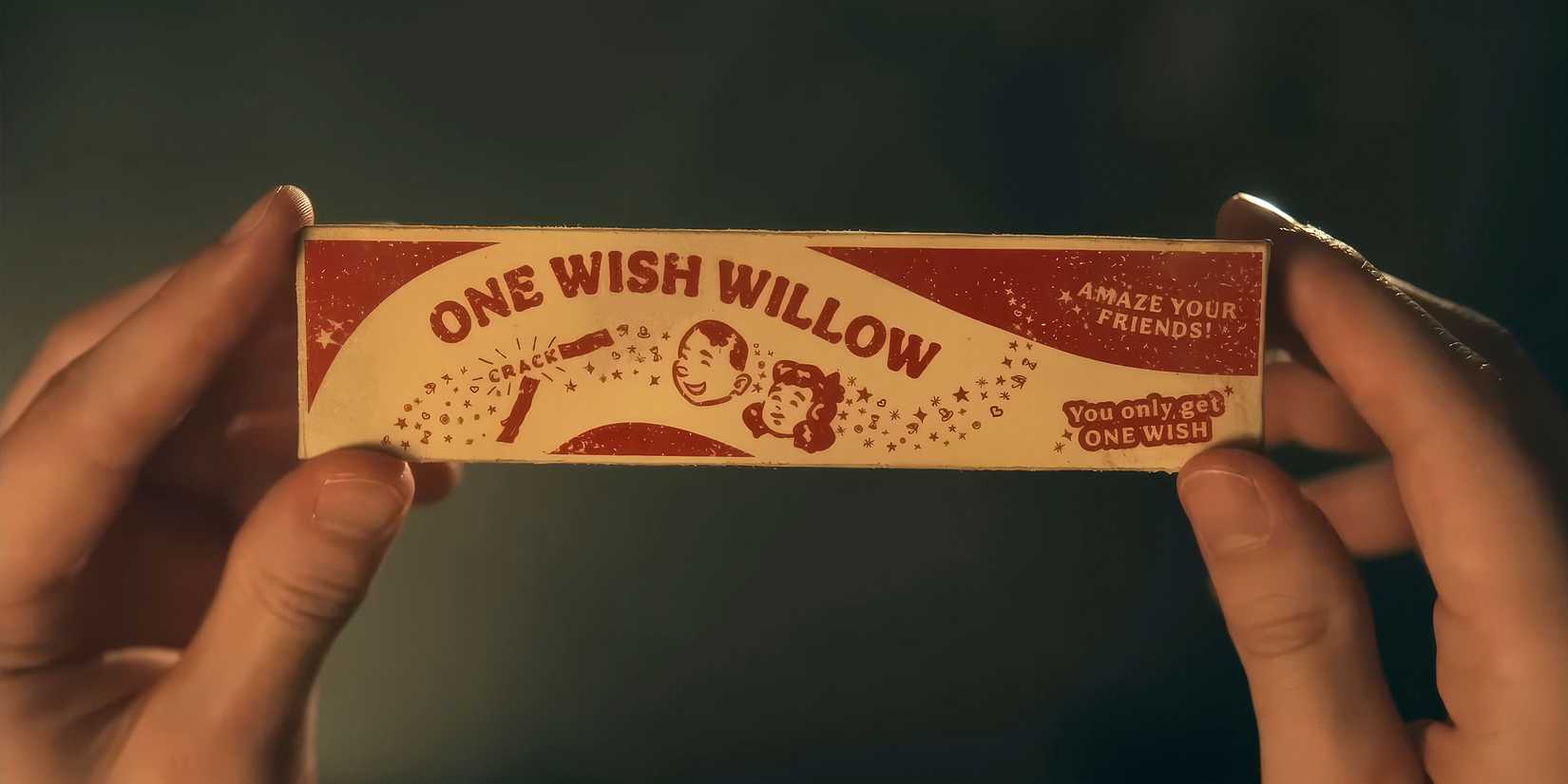
The movie’s world-building is also surprisingly effective given how little time Barker spends explicitly explaining it. The One Wish Willow itself carries an immediately unsettling set of rules, particularly the revelation that each person only gets one wish permanently, even if they acquire another One Wish Willow later. There is no cheap undo button present in Obsession. Once the damage is done, the consequences become inescapable, except for in death. Barker smartly avoids over explaining the mythology, which makes details like the mysterious customer service representative (voiced by Barker himself) on the hotline even creepier. The moment where he asks Bear, “Do you want to talk to her?” before forcing him to listen to the real Nikki screaming on the other end of the line is one of the movie’s most genuinely chilling scenes. Obsession never explains who or what that voice actually belongs to, but the ambiguity makes the interaction even more disturbing. Whatever he is meant to be, the movie leaves behind the uncomfortable feeling that something much bigger and uglier exists in the shadows of the story we’re watching.
That lingering sense of something larger and more inescapable lurking underneath the story gives Obsession its final layer of dread. The movie never presents the One Wish Willow as a simple cursed object with clean rules and convenient solutions. Every choice carries permanent consequences, and Barker builds the entirety of Obsession around the horrifying reality that emotional damage cannot be undone once it has been inflicted. Barker transforms that idea into a tightly constructed psychological thriller supported by phenomenal performances, disciplined storytelling, excellent sound design, and an atmosphere of constant emotional suffocation. Obsession never lets audiences forget that Nikki’s obsession may be supernatural, but Bear’s entitlement is painfully human.

- Release Date
-
May 15, 2026
- Runtime
-
108 minutes
- Director
-
Curry Barker
- Writers
-
Curry Barker
- Producers
-
Christian Mercuri, James Harris, Roman Viaris, Haley Nicole Johnson



- Excellent pacing and moody sound design create a sense of dread.
- Careful restraint leads to an explosive culmination.
- The film hinges on Inde Navarette’s performance, and she doesn’t disappoint.
- The supporting characters are underdeveloped.
You must be logged in to post a comment Login