

Entertainment
One Piece Season 2 Is Perfect, Proves Netflix Already Has A Replacement For Stranger Things

By Jonathan Klotz
| Published

Stranger Things may be over, but Netflix doesn’t have to worry about finding a replacement. One Piece Season 2 is proof that the streaming giant has the next big thing already ready to go. The first two episodes of the new season, subtitled Into the Grand Line, prove it’s not only the best live-action anime adaptation of all time, but one of the best shows of this decade. The new season is bigger, better, and by compressing the anime and manga arcs into one or two episodes, the pacing finally matches Monkey D. Luffy’s boundless enthusiasm.
One Piece: Into The Grand Line Picks Up Right Where Season 1 Left Off

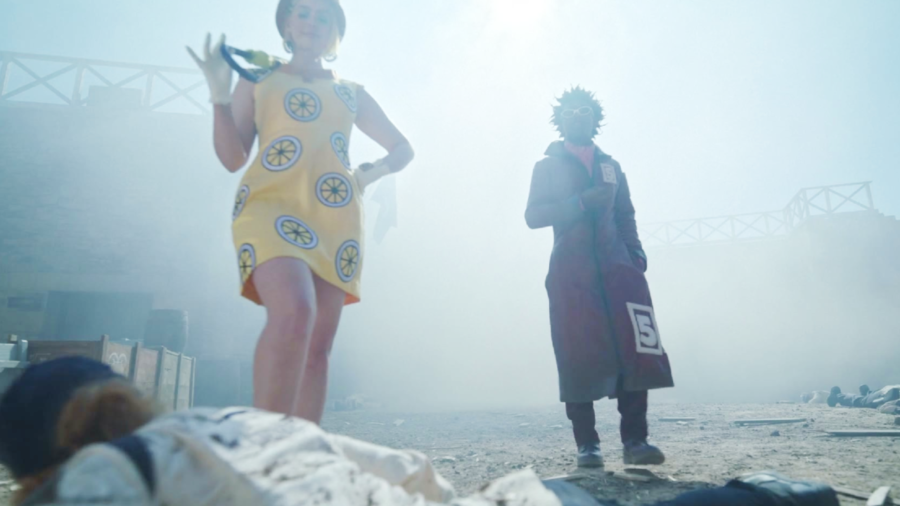
“The Beginning and The End” starts off the season by bringing the Straw Hat Pirates, their captain Luffy (Inaki Godoy), the navigator Nami (Emily Rudd), the greatest swordsman alive, Zorro (Mackenyu), the sharpshooter Usop (Jacob Romero Gibson), and master chef Sanji (Taz Skylar) to Loguetown, the last vestige of civilization before entering the Grand Line. Immediately, Netflix’s budget is on full display within the wildly colorful city where everyone, from a fishmonger to a swordsmith, looks like they stepped off the set of a completely different series. Even in live-action, One Piece looks like an anime, and the over-the-top shonen plot has been mostly left intact.
Returning villains from Season 1, Buggy (Jeff Ward) and a slimmed-down Alvida (Ilia Isorel Paulino) ambush Luffy while he’s visiting Gold Roger’s execution site. Luffy finds himself bound and on top of the execution site with his life on the line, and in the face of death, he laughs. He can’t help but proudly announce that he will become the King of the Pirates. Nothing, not even a blade to his throat, can dull Luffy’s enthusiasm for and love of life. It inspires some, and, in the case of the newly introduced Marine Captain Smoker (Callum Kerr), it terrifies him. Smoker recognizes that Luffy is the heir to Gold Roger.

In the anime, he’s an exaggerated character in an exaggerated world, which is why, when fans knew Season 2 would adapt the “Reverse Mountain” arc, there was some concern about how they’d show a river flowing up a mountain and the giant whale lurking at the bottom. Episode 2, “Good Whale Hunting,” is all the evidence anyone needs that One Piece succeeds where most adaptations falter. It steers into the ridiculousness with all the joy and reckless abandon of the Going Merry’s crew heading straight down Reverse Mountain.
The New Gold Standard For Adaptations

The beauty of One Piece is that it’s the type of series that defies Netflix’s unofficial “second screen” viewing policy. It’s why Stranger Things Season 5 rehashed the plot over and over again, and characters delivered blatant exposition to one another. There are brief asides, such as Zoro’s comment about how Laboon must be a girl whale after Nami points out the uvula, or Usop’s excited retelling of his adventures to Kaya through a messenger snail, that, well, seems to be a bit exaggerated. Eichiiro Oda, creator of One Piece, worked on the series to the extent that every single change, character outfit, casting choice, and even lines of dialogue, had to receive his approval, and it shows.
One Piece looks like the anime, it sounds like the anime, and it possesses the spirit of the anime. Fans of The Witcher will look at this series and think about what could have been if that series had received a fraction of the love and care devoted to One Piece. As with the first season, you don’t even have to have seen the anime or read a single page of the manga to appreciate the show on its own merits. It’s an entry point to the world of anime without the burden of going through over a thousand episodes.

Netflix released every episode of One Piece: Into the Grand Line on March 10, so if you want, you could binge the entire adventure in one go. You could also take your time and savor another trip to the world of pirates in search of legendary treasure. However you choose to watch it, make sure you do, because One Piece may be the most popular anime in the world, but with the success of Season 2, it’s going to become the next big thing.


Continue Reading

Animated fish films have been done. Finding Nemo. Shark Tale. Ponyo. So to hear about another doesn’t feel like anything new. However, The Pout-Pout Fish, starring Nick Offerman as a grumpy ocean pout named Mr. Fish, is a little different. It’s an adaptation of Deborah Diesen‘s series of children’s books, which have grown so popular over the past two decades that it has even turned into a musical. Co-directed by Ricard Cussó and Rio Harrington, from a script by Elise Allen and Elie Choufany, The Pout-Pout Fish is a cute, wholesome little movie aimed at kids. It’s straightforward to a fault, and could really use songs from the musical to liven it up. Adults might find themselves getting bored, but your kids will see it through more imaginative eyes. For little ones, it’s a sweet story with fun lessons to learn.
What Is ‘The Pout-Pout’ Fish About?
The Pout-Pout Fish is a joint production between the United States’ Viva Pictures and Australia’s Maslow Entertainment, which means a voice cast made of both Americans and Aussies. Nick Offerman is perfectly cast as the grumpy ocean pout simply known as Mr. Fish. He can’t help it that he looks this way. Ocean pouts have a naturally downturned mouth, which makes them look miserable. It’s not a fun life for Mr. Fish, a lonely guy who is constantly being told by the other fish in the reef to smile and cheer up.

This ‘Parks and Rec’ Episode Showed Us a Completely Different Side of Ron Swanson for the First Time
A red shirt Ron is a happy Ron.
Everything changes for Mr. Fish when he meets a new neighbor in the form of Pip (Nina Oyama), a happy, high-energy leafy seadragon child. She’s the exact opposite of the moody Mr. Fish, but after he accidentally destroys her home, the two go on a road trip, so to speak, to locate the mysterious Shimmer (Jordin Sparks), a mythical fish that can supposedly grant wishes. If they can find her, Shimmer can put Pip’s home back together again before her parents get back with her 400 new siblings. It won’t be easy, though, as along the way, they encounter numerous obstacles in the form of other sea life. There’s also another fish who wants to reach Shimmer before them. Benji (Remy Hii), an orange cuttlefish, must save his own family’s home. Who will make it to Shimmer and get their wish granted first?
Nick Offerman and Nina Oyama Carry ‘The Pout-Pout Fish’
The Pout-Pout Fish succeeds and fails in its all too familiar trope of the grumpy lead character forced together with the happy, gregarious one. The audience knows this will lead to a change for the former, and by the end of the movie, Mr. Fish is not going to be so pouty. What matters is how the film gets there. Kids’ movies can go in one of two directions. There’s the best of Pixar, Disney, and DreamWorks, with lots of comedy and smart writing aimed at adults as well. Think of Inside Out, for example. That film and its sequel are thick with themes and learning about life aimed at children. It does that, while also providing well-crafted characters and plenty of laughs. Then there’s the more simplistic route. This is The Pout-Pout Fish. There is a little bit of backstory to Mr. Fish, pretty much nothing about Pip, and even less for most of the other sea life they meet along the way. The jokes are simple and flat (one fish has to stop because a school of fish is swimming over a crosswalk), and while your kids might chuckle at times, The Pout-Pout Fish is pretty laugh-free for anyone who can legally drive.
It’s a bare-bones film, yet it’s not a dud because of its voice cast. Offerman is made for voice work. He’s done that many times over the year for The Lego Movie 2: The Second Part, Trollhunters: Rise of the Titans, Sing 2, and Smurfs. Casting him as the lead pouty fish here is a great move. This is what makes it so frustrating that his talents aren’t used to their full potential. Mr. Fish is a little grumpy. That’s it. He’s never loud, over-the-top, or silly, and Offerman’s dry wit isn’t given any great lines. Anyone could have voiced him. Still, because it’s Offerman’s unique manner of speaking, we’re pulled in, and Mr. Fish immediately becomes more real.
Australian actress Nina Oyama is tasked with carrying much of the emotional weight of The Pout-Pout Fish. She’s in her 30s, but is convincing as a hyper kid. It’s disappointing that her excitement is the entirety of her character, but Oyama gives it her all. Paired with Offerman, the relationship between Mr. Fish and Pip is the selling point. The pair have great chemistry in a plot that’s overly cute and aims only for the basics.
The Themes of ‘The Pout-Pout Fish’ Are Too Spot On

The Pout-Pout Fish could have benefitted from a different style of animation. After watching animated films like The Wild Robot, the uninspired artwork here adds very little. What could have propped up a thin story is instead one more aspect that makes The Pout-Pout Fish come across as mediocre. Shots of the reef, the abundance of kelp that threatens them, and the shipwrecks a few live in are flat. The Pout-Pout Fish isn’t a book come to life. It’s nothing more than moving pages in a generic format.
There are plenty of other supporting characters to keep the action going. Benji is desperate to prove himself to his mother, Marin (Miranda Otto), the intimidating cuttlefish leader who needs to find a new home for her species so badly that she’s willing to wreck the reef the other fish live in. On Mr. Fish and Pip’s journey, they come across various other characters, such as Amy Sedaris as a group of, like, valley girl, like, pink dolphins. While some of these characters are only meant to be part of one scene, The Pout-Pout Fish spends too much time with Benji and his journey, when Mr. Fish and Pip are where the best part of the story is.
The Pout-Pout Fish is about Mr. Fish’s adventures, most of all, as he learns not to be so grumpy and let other fish in. The film gets there by having Mr. Fish spout those life lessons as he learns them, as if he’s reading inspiring quotes from the source material rather than coming across like an authentically growing character. It’s the books, now on the screen, delivering its cute message, but in a way that lays it on way too thick. The Pout-Pout Fish is not bad by any means, but don’t go in expecting a new animated classic. Little kids will probably enjoy it for the innocent, lesson-filled, mild fun it is, especially if they’ve been introduced to what inspired it first. There’s nothing wrong with that. It’s what The Pout-Pout Fish aims for, and it achieves the goal.
The Pout-Pout Fish comes to theaters on March 13.

- Release Date
-
March 20, 2026
- Runtime
-
92 minutes
- Director
-
Ricard Cussó
- Writers
-
Elie Choufany, Deborah Diesen
- Producers
-
Nadine Bates
Pros & Cons
- Nick Offerman is perfectly cast as Mr. Fish.
- Nina Oyama’s voice acting brings energy to the plot.
- The chemistry between Mr. Fish and Pip carries the story.
- Kids can learn from the wholesome message about friendship and confidence.
- The animation is flat and uninspired.
- The story is too thin to carry a feature film.
- It does too much telling with lines that explain too much.

Robert Carradine
Final Film Will Be Dedicated to Late Actor
Published
Robert Carradine tragically died before he could shoot a single scene for his last movie … but he will still be honored by the project, TMZ has learned.
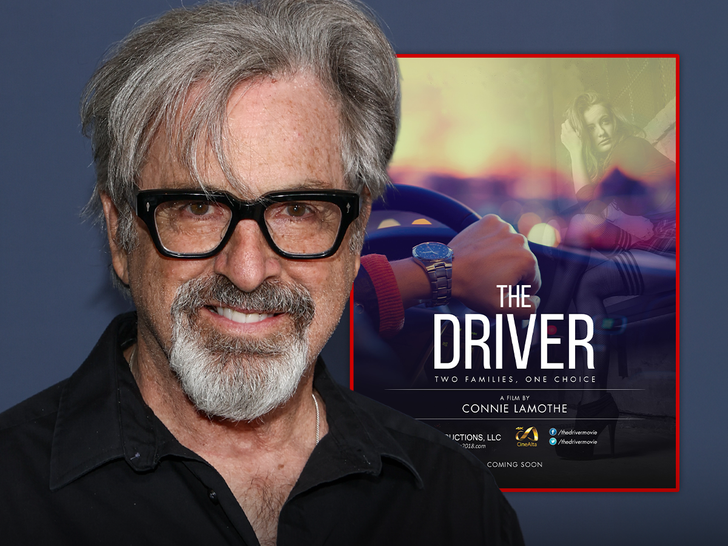
Connie Lamothe, director of “The Driver” — AKA “Driving into Darkness” — tells TMZ … the table read will be on Saturday. Robert’s part — a lead role — has not yet been recast, so there’ll be a fill-in. After the reading, there will be a champagne toast to the late actor.
We’re also told … the flick will be dedicated to Robert, along with some sort of tribute at the beginning of the movie.
As TMZ previously reported, Connie says she knew there was something wrong when the “Revenge of the Nerds” icon went MIA from her film before the initially scheduled table read last month.

Robert had been super excited for the project — a crime drama in which he was playing a mob boss — Connie says, noting that the actor wanted to show he could do more than comedy and westerns.
Recalling their time together during pre-production before his death, Connie says Robert was delightful and always cheerful when they spoke — including when she joked with him about cutting his hair and shaving off his beard for the role.
If you or someone you know is struggling or in crisis, help is available. Call or text 988 or chat 988lifeline.org.

Kylie Jenner
Ditches Shirt For Poker Tutorial
Wanna Texas Hold ‘Em???
Published

Don’t know how to play Texas Hold ‘Em?? Kylie Jenner‘s here to help … but fair warning — ya might learn much from her tutorial for a couple of reasons.
The 28-year-old billionaire scrapped a top for just a bra to give a breakdown of the card game with Vanity Fair … explaining she’s become quite the fan of it after a trip with friends two years ago — and she’s now obsessed.
So why just a bra?? She claims it’s her “normal poker outfit” … which would make sense if she’s trying to distract opponents.
Anywho, she goes through the 10 ways to win … and for what it’s worth, her fav is a flush — five cards of the same suit in any order.
She also described her go-to poker night vibe — a bunch of tequila, good tunes, sporting events on the tube and, of course, snacks. We take it her man, Timothée Chalamet, would be involved … as she said they love to play at her Hidden Hills estate.
After getting that outta the way, Kylie then goes through how to actually play … and all the strategy involved blah, blah, blah this isn’t really why we’re writing this article.
In all honesty, Kylie knows her stuff … but she admitted she’s prone to peeking at a cheat sheet from time to time.
Bottom line, Kylie calls it “hot girl poker” … and no one’s arguing that.
Entertainment
Taylor Sheridan’s Failed Franchise-Starter With a ‘Sinners’ Favorite Is a Free Streaming Smash
At first glance, it might seem like Taylor Sheridan has an unblemished track record, but look closer, and you’ll find a failed franchise-starter that was headlined by someone who might win an Oscar in a few days. The movie in question marked Sheridan’s second collaboration with director Stefano Sollima, after the very divisive Sicario: Day of the Soldado. Sheridan has expressed reservations about that movie, admitting that he perhaps isn’t cut out for franchise filmmaking. This isn’t strictly true, considering how expansive his Yellowstone universe on Paramount+ has become. He was also on board to kick-start a new franchise with Sollima for Prime Video, with Michael B. Jordan attached as star and producer.
The movie debuted in 2021 to mixed reviews, having been offloaded by Paramount due to pandemic-related strains. The studio also sold the distribution rights to the sci-fi action film The Tomorrow War, starring Chris Pratt, and the comedy sequel Coming 2 America, starring Eddie Murphy. Both movies did well on Prime Video, but Sheridan and Sollima’s film hasn’t exactly stood the test of time. It rarely shows up on viewership charts. Prime Video probably hoped that the Sheridan movie would pair well with its other dad-oriented programming, such as Jack Ryan, Bosch, and the then-unreleased Reacher. However, audiences finally seem to be checking it out, albeit on a different platform altogether.

From Broadway to Hollywood — The Collider Movie Quiz!
Plenty of movies were based on plays. So whip out your program and find your seat because the quiz curtain is about to rise.
Here’s the Failed Franchise-Starter Co-Written by Taylor Sheridan
The movie in question, of course, is Without Remorse. Also based on books by Jack Ryan creator Tom Clancy, the movie now holds a 45% critics’ score and a 41% audience score on the aggregator website Rotten Tomatoes. The website’s consensus reads, “Despite a commanding performance from Michael B. Jordan, Without Remorse fails to escape its outdated patriotic tropes and forced franchise place settings.” Without Remorse featured Jordan as John Kelly, a character who appears in the Jack Ryan novels, and has previously been played by Willem Dafoe and Liev Schreiber in the movies Clear and Present Danger and The Sum of All Fears. Jordan is now up for an Oscar for his dual performances in Ryan Coogler‘s Sinners, while Sheridan is working on 1944, a new spin-off of Yellowstone. Today Without Remorse is currently among the most-watched movies on the domestic Tubi charts. You can watch the action-thriller on Prime Video. Stay tuned to Collider for more updates.

- Release Date
-
April 30, 2021
- Runtime
-
110 minutes
- Director
-
Lui Koon-Nam
- Producers
-
Akiva Goldsman, André Nemec, Josh Appelbaum, Michael B. Jordan
-

Michael B. Jordan
John Kelly
-

Entertainment
Gina Gershon reveals how she reacted to most disturbing scene in “Showgirls”: 'Are you insane?'
:max_bytes(150000):strip_icc():format(jpeg)/gina-gershon-031126-f86ed56f4c824695a4f65bf29bd8345e.jpg)
The actress opened up about her disagreements with director Paul Verhoeven.
By Joshua Tyler
| Updated

Even the most optimistic pundits are now willing to admit that the quality of entertainment produced by Hollywood has declined. Many reasons have been put forward for this flagging level of competence, but there’s only one solution: exclusionary gatekeeping.
For more than a decade, the entertainment industry has run entirely on inclusivity. Hiring both in front of and behind the camera has been done with a representation-first mindset, which means everyone must be allowed in to whatever you’re doing, whether they’re a qualified fit for your audience or not.
The Death Of Differences
The same transformation happened in entertainment journalism. When the online movie news world emerged in the late 1990s and early 2000s, it was run almost entirely by obsessive fans. I know because I helped build it as the founder of CinemaBlend in 2000.
Sites like CinemaBlend, Ain’t It Cool News, Dark Horizons, Film Threat, The Movie Blog, and others were operated by individual owners who were deeply knowledgeable about the topics they covered. These weren’t corporate brands managed by committees. They were passion projects run by people like Vic Holtreman, Chris Gore, John Campea, Garth Franklin, Christopher Null, and Harry Knowles.
They weren’t trying to represent everyone. They were writing for their audience: hardcore male genre fans.
Over time, those independents were either iced out by algorithms that were sued into promoting mainstream media (this actually happened), or bought out by corporate conglomerates (including Cinema Blend, which I exited in 2015) who ditched the genuine, knowledgeable, gatekeeping fan owners in favor of creating something inclusive. Where those original owners had only hired other fans who shared the interests of their audience, the new owners hired opinion makers who represented everyone and everything, which in reality means they hired people who stood for nothing and no one.
This same process was happening in Hollywood itself. It’s why John Lasseter was fired for giving a hug, and Pixar hasn’t made a truly great movie since. The result in both the entertainment creation and the entertainment reporting space has been a disaster. Box office numbers are plummeting. Viewers now use positive Rotten Tomatoes scores as an indicator for which movies to avoid.
Gatekeeping Is The Answer
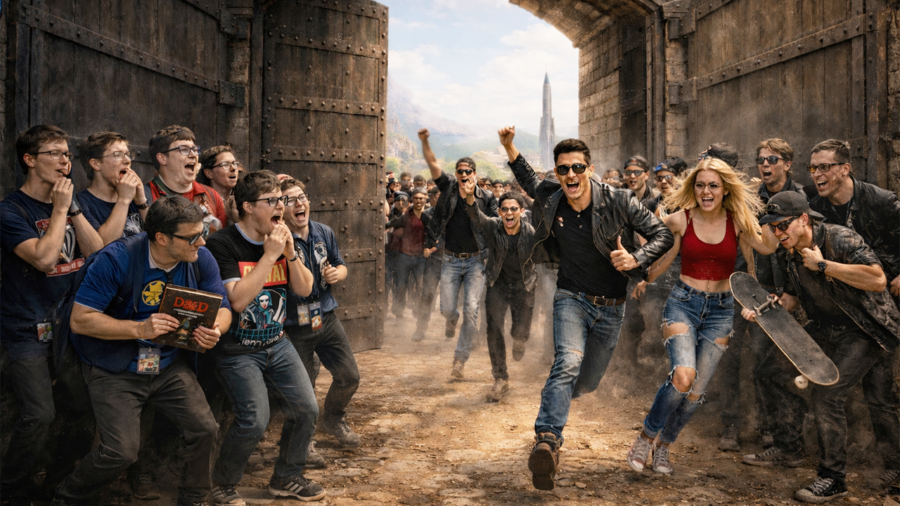
There’s only one solution, and that solution is gatekeeping. Gatekeeping is the act of controlling access to an idea, community, opportunity, or resource by deciding who is allowed in and who is excluded.
As part of the push towards radical inclusivity by big corporations and activists, the term gatekeeping has become a pejorative. It’s used as an emotionally charged attack against meanies. Being called a gatekeeper is the kind of thing that gets people cancelled.
But nothing of any worth happens without some form of gatekeeping. Gatekeeping is just another way of saying quality control. Quality control isn’t mean, it’s sensible.
Without gatekeeping, we’d end up with unqualified pilots crashing planes maintained by unqualified mechanics. Without gatekeeping inspectors, the quality of the food you eat degrades, the drugs you need aren’t reliable, and nuclear reactors go into meltdown.
Creative endeavors are no different. Without gatekeeping a new Star Trek show hires writers who know nothing about Star Trek, and then its scripts end up filled with obvious mistakes and terrible plot holes which any fan could have spotted if they’d done some gatekeeping to hire one.
Inclusivity Is Lazy And Destructive
If you have standards and want to keep them, you must exclude people or things that do not meet them. Enforcing standards is difficult, time-consuming, and expensive.
I require my son to get As in math. To make that happen, I check his grades and help him with his homework when he struggles. If he doesn’t study and fails a test, I have to enforce consequences.
If I remove my requirement for an A, I no longer have to do anything. My son also won’t learn math, but I’ll save a lot of time.
Radical inclusivity is a way of removing standards, a way of deferring responsibility for maintaining quality. It’s lazy and destructive.
Exclusion Maintains Differences And Diversity
Exclusion maintains the integrity of your work, your idea, and your brand. Samurai swords are only Samurai swords as long as Claymores are excluded from being classified as Katanas. Pepsi is only Pepsi as long as you exclude lemonade from Pepsi cans. It’d be easier to fill Pepsi cans with whatever liquid is cheapest and most available, but then it wouldn’t be Pepsi anymore, and eventually people would stop buying it.
Maintaining unique differences is hard, so homogenization disguised as inclusivity allows corporations to take an established universe like Star Trek or Star Wars and wear it like a skin suit, puppeted by inclusive hires (hiring done without relevant standards) who have no idea what they’re a part of, and because they don’t care are totally willing to treat fans like fat, juicy, pay pigs to be farmed for maximum profit. They fill Star Wars up with whatever happens to be lying around, and then play the Star Wars theme music in front of it.
Giant Freakin Robot Is An Exclusionary Publication

Late last year, I relaunched Giant Freakin Robot with a renewed determination to avoid these pitfalls by making this the most exclusionary geek site on the internet. What does that mean? It means we will not work with writers who have bad ideas or ideas that are in direct conflict with the values and interests of our readers. That doesn’t serve them or us.
Specifically, Giant Freakin Robot’s readers are geeky men, and always have been, so that means finding commentators who have the same fundamental world view that most geeky men have. Engaging Alex Kurtzman fans to write for Giant Freakin Robot would make about as much sense as investing in Giant Freakin Robot makeup tutorials.
To serve our audience in this way requires gatekeeping. So we’re contracting with talented freelancers based on exclusion, rather than inclusion, and we’re doing it using this simple ad:

There’s only one required question in the application process, which pops up after you read the ad. That question is: Do you hate Starfleet Academy? Yes/No
We’ve received thousands of applications from writers, most of them recently laid off by struggling, inclusive corporate publications. 95% of those applicants checked No and failed this rather simple IQ test. Their applications were automatically sent to a trash bin.
Before we bring on anyone new, in addition to correctly answering that single question, they’ll have to meet the standards of quality and creativity established by our crack team of genius geek culture commentators. We’ll continue to exclude anyone who doesn’t measure up.
If you want a world free of gatekeeping, go to X for random opinions and watch endless AI slop on YouTube. But if you’re looking for a place that throws out the bad and only keeps the good, then read Giant Freakin Robot. Gatekeeping is our business; it’s what we do.
Entertainment
“Big Brother” winner Taylor Hale slams fans who 'got off' on spreading naked images of her from show's live feed
:max_bytes(150000):strip_icc():format(jpeg)/Big-Brother-24-092222-4722d9185cfd419592c87dda9e19e7c8.jpg)
“My body is not public property,” she wrote in a newly published personal essay.
Us Weekly has affiliate partnerships. We receive compensation when you click on a link and make a purchase. Learn more!
Depending on who you ask, polka dots have a reputation of looking a bit juvenile — but this season’s take on the print is here to change that.
Spatterings of dots across blouses, silky skirts and even rain coats can feel sophisticated and timeless. All it takes is choosing the right silhouette. We found plenty of elegant polka dot pieces that you can wear to the office, a dinner party and beyond. Choose from big names like Quince, Cupshe, Anthropologie and more, starting at $19. Keep reading to learn how to wear the must-have pattern of spring in a way that is classic and totally compliment-worthy.
17 Polka Dot-Style Pieces for an Elevated Look
1. Pop Culture-Coded: Anyone else watching Love Story? Carolyn Bessette wears a blouse that’s the spitting image of this relaxed button-up shirt. Yes, it totally whispers ‘Upper East Side elegance.’
2. Sheer Elegance: Rather than wearing a top that’s completely swathed in dots, opt for this Peter Pan-collared blouse that has elegant sheer dotted sleeves.
3. Vintage Vibes: This vintage-inspired blouse looks like it was snatched right out of the 1930s due to the faded brown details and dainty neck tie.
4. Peek-a-Boo: Mesh flats are still going to be everywhere this spring, but this updated take is embroidered with polka dots for a subtle personality pop.
5. Casually Elegant: The boat neckline on this fitted quarter-sleeve blouse helps it toe the line between casual and elevated for a versatile piece that can be worn anytime, anywhere.

There’s certainly an air of mystery to ‘smart casual’ dressing. Think of clothing items you’d wear daily, but look so much more polished. Despite the elevated appearance, smart casual dressing is really all about wearable pieces that make you look and feel your best while leading board meetings, going on dates and everything in between. […]
6. Fit and Flare: Peplums are making a comeback, and we’re 100% sure the silhouette paired with a polka dot pattern is a match made in heaven.
7. Springtime Stunner: The perfect springtime dress this year is covered in polka dots. We’re partial to this charming navy and white pick, with its high neck and full skirt.
8. Dotted Ballerina: Dance shrugs are leaving the studio and hitting the catwalks! The feminine silhouette becomes even more dainty with the tan and black polka dot print.
9. Incredibly Versatile: This dotted silk maxi skirt is destined to become a cornerstone in your wardrobe. We bet you’ll wear this more than jeans this spring.
10. Get Groovy: Get ready to dance the night away in this polka dot body suit. The style offers plenty of movement, courtesy of the flowing sleeves and long tie neck.
11. Parisian Chic: Every time I visit Paris, I notice the most stylish French girls don a simple polka dot jacket. I’m finally adding this one to my wardrobe to feel worldly.
12. The ‘90s Called: It seems like every fashion house is romanticizing the ‘90s. Blend the vintage style with a bit of 21st-century flair when you wear this pretty dotted camisole.
13. A Little Lace: The lace lining on this silky midi skirt adds a romantic element that makes this perfect for date night. Don’t forget to accessorize with some red heels!
14. I Choose You: Layering is made simple with this easy-to-style cami and cardigan set that can be worn together or separate. There truly are endless options.
15. Transitional Staple: This speckled merino-wool sweater is a capsule must-have that can be worn with jeans, slacks and many, many more bottoms.
16. Make It Fun: Don’t shy away from patterned pants. Polka dots are an easy way to ease into prints. This wide-leg style can be worn with neutrals or pops of color.
17. Oversized Dots: Large polka dots create a more playful article of clothing, and that’s certainly the case with this babydoll bubble dress that feels whimsical and carefree.

Prosecutors have officially charged Ivanna Lisette Ortiz after she fired a gun at the Los Angeles property of Rihanna on Sunday. Prosecutors say the singer, A$AP Rocky, their kids and Rihanna’s mother were home during the attack. No one was injured. Ortiz remains in custody, with a seven-figure bail set, per the Associated Press.
RELATED: Ivanna Lisette Ortiz’s Social Media Posts About Rihanna Resurface After $10M Bail Set In Shooting At Singer’s Home (PHOTOS)
Ivanna Lisette Ortiz Charged With Attempted Murder
Los Angeles County District Attorney Nathan Hochman provided updates on the case outside a court hearing on Tuesday. Ivanna was charged with attempting to kill Rihanna, along with 10 counts of assault on a person with a semiautomatic firearm. Authorities also hit the 35-year-old Orlando native with three counts of shooting at an inhabited vehicle or dwelling.
Ortiz could get life in prison if convicted on all charges. All 14 counts against her are felonies. The three counts of firing at a dwelling were for Rihanna’s house, her trailer, and a neighbor’s house, prosecutors said. Additionally, the 10 assault counts were for Rihanna and family, two staffers and two people in the neighboring house.
Rihanna, Rocky & Family Were On The Property During Shooting, Judge Issues Protective Order
As mentioned, DA Hochman confirmed Rihanna, Rocky, Rza, Riot, Rocki, and Monica Braithwaite were at home when Ivanna Lisette Ortiz allegedly fired a gun on Sunday afternoon. The couple was together in a trailer on the property. Meanwhile, their other family members and staffers were inside the Beverly Hills-area home.
Hochman would not say where any of the bullets landed, would not say how long Ortiz had been in California, or discuss her motivation or any connection to Rihanna, saying all were under investigation. Public records show Ivanna Lisette Ortiz’s most recent address was in Orlando, per AP. The 35-year-old has been a licensed speech pathologist for more than a decade. Meanwhile, early crime scene photos show bullet holes along the property fence. More updated photos show white tape covering the holes.

Judge Theresa McGonigle issued a protective order for Ortiz to stay away from Robin Fenty and Rakim Mayers — the legal names of Rihanna and A$AP Rocky — and their home. McGonigle also said Ortiz is not allowed to possess any firearms or ammunition, along with several other conditions.
Shooter Pleads Not Guilty, Then Withdraws It
Ivanna Lisette Ortiz’s attorney inside the court was Deputy Public Defender Jamarcus Bradford. Ortiz wore blue jail clothes with her blond hair in braids. She spoke to the lawyer through a glass divider. At first, Bradford entered a not guilty plea on Ivanna’s behalf. However, he withdrew it in favor of postponing the arraignment until March 25. The judge remanded Ivanna Lisette Ortiz to jail on a $1.875 million bail.
Bradford didn’t talk to reporters outside court. Also, the LA County Public Defender’s Office said it could not comment on the pending case against Ortiz.
“As in every case, we will work to ensure that our client receives the full protections guaranteed under the Constitution,” the statement said.
As public fascination with the case grew, past disturbing social media posts from Ivanna Lisette Ortiz have surfaced. Videos and status updates seemingly show Ivanna directing hateful and threatening messages toward the singer. To see more of such posts, click HERE.
Police Claim Los Angeles-Based Celebs Are Safe
Despite the incident, DA Hochman is assuring celebrities in the area that they shouldn’t be scared. He praised officers for arresting Ortiz soon after the shooting, several miles (kilometers) to the north in the suburb of Sherman Oaks.
“LA-based celebrities should not be additionally worried because of this,” Hochman said, “in large part because of the response of the police.”
Ivanna Lisette Ortiz’s hearing was held in a courtroom a few floors from where A$AP Rocky went through a trial, where he was acquitted just over a year ago. Rihanna was often in attendance, sometimes with their sons. Also, the lead prosecutor in the new case is Alexander Bott, the deputy district attorney who successfully prosecuted Tory Lanez in a trial where he was convicted of shooting Megan Thee Stallion in the feet.
RELATED: Prayers Up! 12-Year-Old Girl Passes Away Following An After-School Fight With Another Student In Georgia (VIDEO)
Associated Press entertainment writer Andrew Dalton and writer Christopher Weber contributed to this report via AP Newsroom.
What Do You Think Roomies?

By Joshua Tyler
| Published

In the early twenty-teens, Hollywood was flying high off a decade of cinematic successes. The future had never been brighter, and the plan was to just keep delivering more of the same.
The decade of huge wins had started with the massive masterpiece success of The Lord of the Rings, when the trilogy released its first movie in 2001. It made sense that the best way to kick off the next decade was to do a lot more of that.
So the greedy ghouls behind the scenes in Tinseltown began plotting a way to bring Lord of the Rings back. They went to the man who’d made it all happen, director Peter Jackson, and poured on the pressure. Eventually, Jackson relented and gave them what they wanted, but only by refusing to compromise the world he created. He gave them more, but he did it his way, under tremendous ever-mounting pressure.
When it was all done, everyone dismissed his work as a failure and sent him off to the Gray Havens. We were all so, so terribly wrong.
This is why The Hobbit Trilogy failed.
Peter Jackson Resists Hollywood’s Greed
When Hollywood began demanding more Lord of the Rings, he resisted. Jackson knew he’d created absolute perfection with the LOTR trilogy, and matching that would be nearly impossible. Probably, he was also just tired, having spent so much of his life already living in Tolkien’s Middle-earth.

Eventually, he relented and signed on to produce The Hobbit, but he still pushed back against doing all the day-to-day work, so he started lining up other directors to take over, hiring Guillermo del Toro to helm a two-movie version of The Hobbit. Unfortunately, repeated delays caused del Toro to exit.
Facing tight deadlines, the studio turned to Jackson, who finally relented and stepped in as director with little to no prep time at all before he had to start shooting one of the most important movies in the world. To make matters worse, the studio then pressured Jackson into making The Hobbit three movies, when most fans already thought two movies was far, far too excessive.
It was excessive because, in book form, as written by JRR Tolkien, The Hobbit is a more straightforward, shorter adventure story than The Lord of the Rings. It’s focused on a single group of characters as they go on a quest to slay a dragon. It’s easy to see how you could divide it into two movies, but there isn’t enough material there for three. There just isn’t.

For Jackson, being forced into three Hobbit films must have felt like the height of irony. With The Lord of the Rings he had to fight desperately to get Hollywood to let him plan it as three movies instead of one or two. Now, spoiled by his success with making three, they pressured him into making more movies than he wanted.
Unlike The Lord of the Rings, which was created out of Peter Jackson’s total passion for Tolkien’s stories, The Hobbit was a project driven by Hollywood greed. It almost felt as if the only reason Jackson stepped up to direct at all was to save Tolkien’s world from the disaster Hollywood was trying to make out of it.
The Hobbit Trilogy Should Have Been A Disaster
Given the realities under which The Hobbit went into production, it had no business NOT being a total disaster. That’s what it should have been; that’s what always happens when Hollywood forces a prequel that has no business existing.
And yet…

With the fate of Middle Earth hanging in the balance, a weary Peter Jackson moved forward, determined to save the world he’d created from Hollywood’s greed. He pulled in ancillary material from other Tolkien sources, expanded scenes only hinted at in The Hobbit, and came up with enough script for three movies.
As it begins, the first movie in The Hobbit trilogy sticks closely to the book’s format, with a Hobbit living in a cozy Hobbit hole that’s invaded by a grumpy wizard and a bunch of hungry dwarves demanding dinner. It’s glorious, it feels perfect.

Every inch of the Hobbit hole, Bag End, is lovingly crafted. The dwarves are both hilarious and sad. Gandalf is looming and omnipresent. Martin Freeman is perfect as a young Bilbo, put upon, confused, and unwilling to admit that he’s intrigued by the possibility of an adventure.
As they often did in JRR Tolkien’s books, the dwarves begin singing a brave and mournful song about the place they’re going, their former home, Erebor, the Lonely Mountain. The haunting melody of their song becomes the musical theme of the entire series, and it’s maybe even better than the amazing score of The Lord of the Rings movies, as it carries thirteen dwarves, a hobbit, and a mysterious gray wizard out of Bag End, across middle Earth on an adventure to free the Dwarven leader Thorin’s kingdom from a murderous dragon.
The Artistry And Beauty Of The Lord Of The Rings Is Present In The Hobbit

All the artistry and beauty of the original Lord of the Rings movies is here and only added to. No role was recast, Ian McKellan returns as Gandalf, and we arguably get more of him than even in The Lord of the Rings. Orlando Bloom and others return, too, but not gratuitously, only when it makes sense for the plot and adds to the story.
The first movie ends with Bilbo reading riddles in the dark, and the scene is a masterclass in conveying darkness while still letting the audience see what’s going on. It’s a skill that modern Hollywood seems to have totally forgotten. Bilbo’s riddles in the dark with Gollum is a good endpoint for the film, with our heroes narrowly escaping the clutches of goblins and going on the run.

The escape from goblin kingdom is one of the weakest points in The Hobbit movies. It relies too much on CGI, it’s too chaotic and difficult to follow, and it’s not the finale for the first chapter that many might have wanted.
Given the constraints Jackson was working with, especially the pressure he was under to get this first movie out, you have to wonder if that sequence was really what he wanted to do himself. Because that chaotic goblin scene never becomes a pattern. There’s never another confusing, distractingly CGI moment in the rest of the series, or at least not anywhere that matters.

Sure, The Hobbit movies use more green screen and CGI than Lord of the Rings, but not nearly as much as pretty much every other Hollywood movie does. Jackson still built sets, and you feel the weight of real things being interacted with in every frame of the film.
The second Hobbit movie, The Desolation of Smaug, might be the best. The dragon is reached, battled, and sent screaming from the depths of Erebor. Martin Freeman shines as Bilbo, engaged in another battle of wits with a malevolent force, this time one that breathes fire. Thorin’s complexity only grows.

Don’t come at me about the barrel riding scene. It’s not errible. It’s fun, really fun, and it’s something the series sets up by showing us the dexterity and skill of the dwarves in the first film’s opening moments.
The third movie, The Battle of the Five Armies, is the biggest departure. The book itself is almost two books. The first half of it is the quest of some Dwarves and a Hobbit to get to the mountain and slay the dragon. The second half is a gigantic battle between kings and orcs for supremacy in this part of Middle-earth.

The third movie covers that second half, which means largely sidelining most of the characters we’ve gotten to know over the first movie. Still, it brings it back to them in the end, and feels like a completed story. A real adventure. One that sticks with you, long after the credits roll.
The Hobbit Is Filmmaking At A Level Hollywood Is No Longer Capable Of

The level of quality and care established by the first film continues over all three, and matched against modern filmmaking, The Hobbit trilogy is like rediscovering Atlantis, a forgotten world of high-level storytelling that it doesn’t seem like anyone knows how to do anymore.
At the time it was released, we were spoiled. We didn’t understand what we were experiencing. Sure, there are minor missteps and the nature of the story is different than The Lord of the Rings. Our heroes are less clearly heroic; Thorin Oakenshield, in particular, is a complex leader who makes many big mistakes, and Dwarves in general are hard to like, by design.

Those minor quibbles aside, The Hobbit trilogy is nearly as big, grand, and beautiful as its cinematic predecessor.
Instead of celebrating the film’s incredible achievement against all odds, people nitpicked over a few dodgy green screen moments and compared it to The Lord of the Rings, which may be the greatest movie trilogy ever made, and up against which literally any movie would be found inadequate and wanting.
Looked at now through the wreckage of the unending mediocrity of modern movies, it must be said that: Holy hell, The Hobbit movies are actually really, really good.
The Hobbit Trilogy Was A Box Office Mega-Hit

The Hobbit trilogy made a lot of money. An Unexpected Journey (2012) opened strong and rode holiday legs to about $1.02 billion worldwide. The Desolation of Smaug (2013) dipped slightly to roughly $959 million, still massive, still a global event. The Battle of the Five Armies (2014) closed things out at around $956 million, proving fatigue hadn’t killed demand. Combined, the trilogy pulled in just under $3 billion worldwide. Less than The Lord of the Rings, but way more than anything in theaters in the last few years.
Critics liked the first one, but reviews began to sour as the trilogy went on. And audiences began to lose patience, too, as The Hobbit trilogy began being labeled a desperate cash-in, a movie series squandering the goodwill created by the absolute goddamn triumph of The Lord of the Rings movies.
Why The Hobbit Failed

Despite its success, The Hobbit movies are now talked about as if they’re hated. Like critics, audiences grew increasingly lukewarm toward the movies as they watched them. Now it’s viewed as a failure, despite its financial success.
We were wrong. We were all wrong. We were all lost in the midst of a never-ending cinematic summer and had no idea that the creative winter we’re in now would soon come.
Peter Jackson basically stopped making movies after The Hobbit trilogy. His long-time collaborator, a cinematographer, Andrew Lesnie, died shortly after they finished releasing The Hobbit movies, and Peter has admitted that his heart just wasn’t in it anymore after that.
Jackson says, “I realize that I’ve avoided doing drama films because I’d have to work with someone else who isn’t Andrew, and I think his death changed my creative path.”
We Owe Peter Jackson A Debt
When you read other things Jackson has said about the making of The Hobbit, I think it’s more than that sadness over the death of his friend. I think he simply gave all he had to give, and he had nothing left.
Peter Jackson gave it all to salvage The Hobbit from the wreckage Hollywood was creating out of it, in an era where the movie industry was already beginning to embrace anti-merit inclusivity practices and shifting its focus toward identity over quality storytelling.

If you look at photos of Peter Jackson making The Lord of the Rings, he looks like a hobbit himself. A husky, smiling man with tousled hair and tousled clothes, he looked like he’d be right at home dancing with Rosie in the Shire.
By the time The Hobbit trilogy was over, Peter Jackson had become a drained, lifeless husk of his former self. As if he’d had all the energy sucked out of his body by the forces of Mordor. As if he’d been carrying The One Ring up Mount Doom, all by himself.

Everything Jackson had left after already nearly destroying himself to make The Lord of the Rings went into The Hobbit. He did it at a time when he should have been resting, enjoying the fruit of his rewards. Taking it easy. Living it up in New Zealand, making weird independent projects for fun.
He did none of that; instead, he gave it all to us. He gave it all to The Hobbit. He gave it because he knew that by doing so, he was also preserving the legacy of his masterwork, THE masterwork, The Lord of the Rings.

Despite the prevailing view that The Hobbit trilogy was a failure, it isn’t. Peter Jackson succeeded. Sure, The Hobbit isn’t as good as The Lord of the Rings, but it’s still really, really good. More importantly, it continues the legacy of Jackson’s first three movies, carrying the torch of Tolkien’s Middle Earth without ever tarnishing it. How many other franchises can say that about their prequels?
So the next time you’re watching Amazon’s terrible Rings of Power spinoff or Star Wars’s latest awful prequel, take a moment to say thank you to Peter Jackson. Thank you, Peter, thank you for preserving a beautiful legacy. Thank you for giving it all you had, against impossible odds, year after year after year, when you could have just quit.
Enjoy your retirement, Mr. Jackson. You’ve earned it.


Sports31 seconds ago
Iran signals 2026 World Cup boycott after US strikes

Tech2 minutes ago
AI-Powered Cybercrime Is Surging. The US Lost $16.6 Billion in 2024.

NewsBeat4 minutes ago
Luxury Little Play Company in Newton Aycliffe announces closure


-
Business5 days ago
Form 8K Entergy Mississippi LLC For: 6 March
-

 Tech7 days ago
Bitwarden adds support for passkey login on Windows 11
-

 News Videos2 days ago
10th Algebra | Financial Planning | Question Bank Solution | Board Exam 2026
-

 Fashion5 days ago
Weekend Open Thread: Ann Taylor
-

 Crypto World2 days ago
Paradigm, a16z, Winklevoss Capital, Balaji Srinivasan among investors in ZODL
-
 Tech13 hours ago
A 1,300-Pound NASA Spacecraft To Re-Enter Earth’s Atmosphere
-
 Sports6 days ago
499 runs and 34 sixes later, India beat England to enter T20 World Cup final | Cricket News
-

 Politics5 days ago
Top Mamdani aide takes progressive project to the UK
-

 Business1 day ago
ExxonMobil seeks to move corporate registration from New Jersey to Texas
-

 Sports4 days ago
Three share 2-shot lead entering final round in Hong Kong
-

 Sports4 days ago
Braveheart Lakshya downs Lai in epic battle to enter All England Open final | Other Sports News
-

 NewsBeat1 hour ago
Residents reaction as Shildon murder probe enters second day
-

 Entertainment5 days ago
Hailey Bieber Poses For Sexy Selfies In New Luscious Lip Thirst Traps
-

 NewsBeat6 days ago
Piccadilly Circus just unveiled ‘London’s newest tourist attraction’ and it only costs 80p to enter
-

 Business3 days ago
Search for Nancy Guthrie Enters 37th Day as FBI Probes Wi-Fi Jammer Theory
-

 Business12 hours ago
Search Enters Sixth Week With New Leads in Tucson Abduction Case
-
 NewsBeat2 days ago
Pagazzi Lighting enters administration as 70 jobs lost and 11 stores close across Scotland
-

 Tech2 days ago
Despite challenges, Ireland sixth in EU for board gender diversity
-
Entertainment7 days ago
Harry Styles Has ‘Struggled’ to Discuss Liam Payne’s Death
-

 Crypto World7 days ago
New Crypto Mutuum Finance (MUTM) Reports V1 Protocol Progress as Roadmap Enters Phase 3