Entertainment
Only 10 Movies From the ’80s Are Truly Perfect From Start to Finish

The 1980s were admittedly far from a cinematic golden age. Studio filmmaking was often a little too cautious and formulaic during this period, and the auteur-driven efforts of the ’70s became all too rare. Nevertheless, the decade produced more than a few classics, bangers that succeed on literally every level.
These movies are the focus of this list. Whether redefining sci-fi, revolutionizing action cinema, or delivering timeless adventures and dramas, these ’80s movies remain as powerful and entertaining today as they were upon release. Decades later, they’re still the cinematic equivalent of perfection.


“E.T. phone home.” Steven Spielberg perfected his recipe for cinematic wonder with E.T. the Extra-Terrestrial, so much so that he arguably never attempted to top it again. Here, he turns the simple premise of a lonely child befriending a stranded alien into a timeless gem, almost a kind of modern fairy tale. Our hero, Elliott (Henry Thomas), slowly forms a bond with E.T. while trying to keep him hidden from adults and government authorities.
E.T. is one of the most well-rounded blockbusters ever, balancing spectacle and emotion. The movie succeeds on multiple levels at once: as a thrilling adventure, a snapshot of childhood, a special effects showcase, a time capsule of American suburbia in the 1980s, and as a feel-good fable. The soaring finale, culminating in that iconic bicycle flight sequence and farewell, all set to music by John Williams, is one of the most powerful endings in movie history.
‘Die Hard’ (1988)
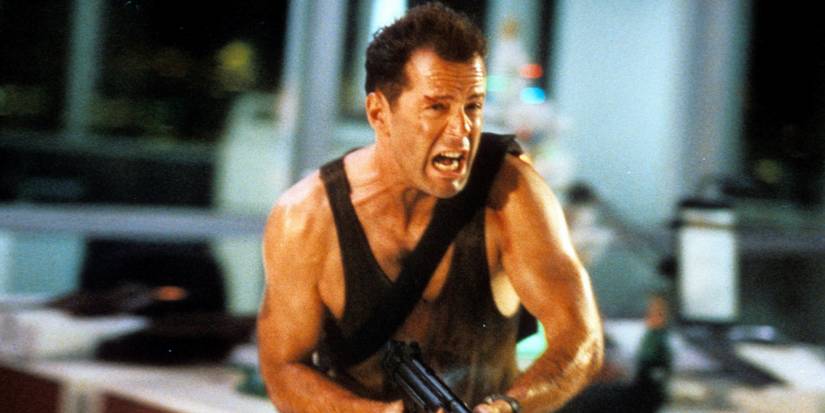
“Yippee-ki-yay, motherf—r.” One of the most influential action blockbusters of all time, Die Hard sees Bruce Willis turning in one of his defining performances as John McClane, an off-duty New York cop visiting Los Angeles for Christmas, who finds himself trapped inside a skyscraper after terrorists seize the building during a corporate party. What unfolds is one of the most perfectly paced action thrillers ever made. Every victory creates a new problem, and every setback raises the stakes.
At the eye of the storm is McClane himself, one of the most likable ’80s movie heroes. Rather than being some suave and invincible superhero, he’s just a relatively ordinary person with some skills and grit. He’s exhausted, barefoot, bleeding, and increasingly irritated, yet he doesn’t give up. Opposite him is the equally compelling villain Hans Gruber, played with icy charm by the great Alan Rickman.
‘Stand by Me’ (1986)

“I never had any friends later on like the ones I had when I was twelve. Jesus, does anyone?” Rob Reiner was truly on fire from the late ’80s into the early ’90s, and Stand By Me is very much case in point. Here, he masterfully adapts a Stephen King novella, telling the story of four boys (Wil Wheaton, River Phoenix, Corey Feldman, and Jerry O’Connell) in 1950s Oregon who set out on a journey to find the body of a missing child.
On paper, it sounds almost morbidly simple. In execution, it becomes an essential coming-of-age movie. Reiner understands that the real story isn’t the body, but the fragile friendships formed during that strange moment between childhood and adolescence. The boys joke, argue, confess fears, and slowly reveal emotional wounds they barely understand themselves. In the process, despite being rooted in a very specific time and place, Stand By Me touches on universal experiences.
‘Back to the Future’ (1985)
“If my calculations are correct, when this baby hits 88 miles per hour… you’re gonna see some serious s—t.” There may not be a more tightly constructed screenplay in blockbuster history than Back to the Future. It carries us effortlessly through the improbable story beats, making everything feel natural and fun. From the get-go, we’re on board with Marty McFly (Michael J. Fox) accidentally traveling from 1985 back to 1955 in a time machine built by eccentric scientist Doc Brown (Christopher Lloyd), forced now to prevent his own erasure from existence.
The script is clever without ever feeling mechanical or overwrought. The plotting is intricate, constantly adding setups or visual gags that only pay off much later. The finished product is lightning in a bottle, magic that could never be recaptured or engineered in a lab, not even by the solid but not-quite-as-great sequels. Its casting is ideal, the pacing is impeccable, the direction is lively, and every emotional beat lands perfectly.
‘The Thing’ (1982)


“Nobody trusts anybody now… and we’re all very tired.” Set in an isolated Antarctic research station, The Thing begins when a dog wanders into camp while being pursued by armed Norwegians. Soon, the Americans discover they are dealing with a parasitic alien organism capable of perfectly imitating any living creature it infects. The genius of the premise lies in how quickly trust evaporates.
Any character could already be infected, meaning every interaction becomes charged with suspicion. Their rapidly increasing paranoia poses almost as much of a danger as the monster itself. In this regard, the movie functions simultaneously as sci-fi horror, psychological thriller, and social collapse drama. Audiences disliked this bleak mood on release, but The Thing was quickly canonized as a cult classic, and its influence on sci-fi has been profound, not least thanks to the groundbreaking practical effects from Rob Bottin.
‘Raiders of the Lost Ark’ (1981)
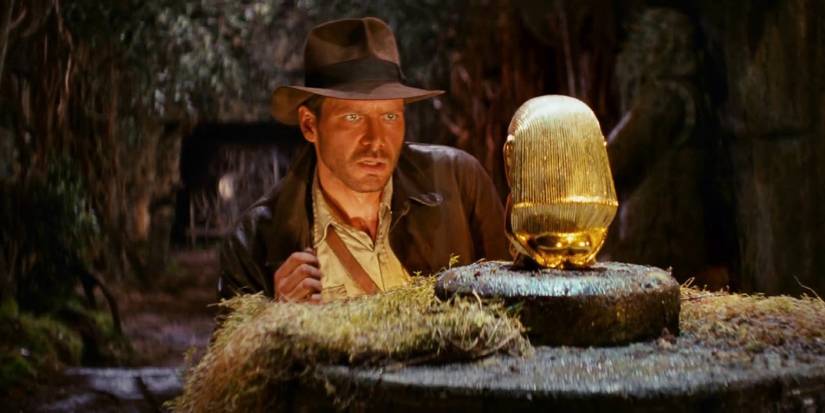
“It’s not the years, honey. It’s the mileage.” Spielberg strikes again. Raiders of the Lost Ark is the Platonic ideal of the adventure movie, harking back to the pulp serial of the 1930s and ’40s, but giving their tropes a grand, blockbuster treatment. Harrison Ford is endlessly likable here as the whip-wielding archaeologist, racing against the Nazis to locate the biblical Ark of the Covenant before its supernatural power falls into the wrong hands.
From the legendary opening temple sequence onward, the movie moves with almost impossible confidence. Every set piece feels distinct and memorable, emerging naturally from the plot and the characters’ decisions. It’s not simply empty spectacle for spectacle’s sake. The truck chase, the marketplace pursuit, the flying wing battle, and the famous boulder sequence are exciting not simply because of what happens but because the audience understands the goals, obstacles, and risks involved.
‘The Empire Strikes Back’ (1980)

“Do. Or do not. There is no try.” The Empire Strikes Back took Star Wars from an impressive space opera adventure to a full-blown mythology. It upped A New Hope‘s stakes and scope in every way, while also getting deeper, darker, and more emotionally resonant. In it, Luke (Mark Hamill) trains under Yoda while Han Solo (Harrison Ford), Leia (Carrie Fisher), and the rest of the Rebel Alliance flee from the growing power of the Empire. It all culminates in Darth Vader’s iconic reveal, adding an element of Shakespearean family drama.
The movie also contains some of the finest worldbuilding in cinema history. The frozen wastelands of Hoth, the murky swamps of Dagobah, and the floating city of Cloud City are all striking and immersive. Each location expands the galaxy while serving the needs of the story. The universe suddenly feels much larger and more lived-in than before.
‘Aliens’ (1986)
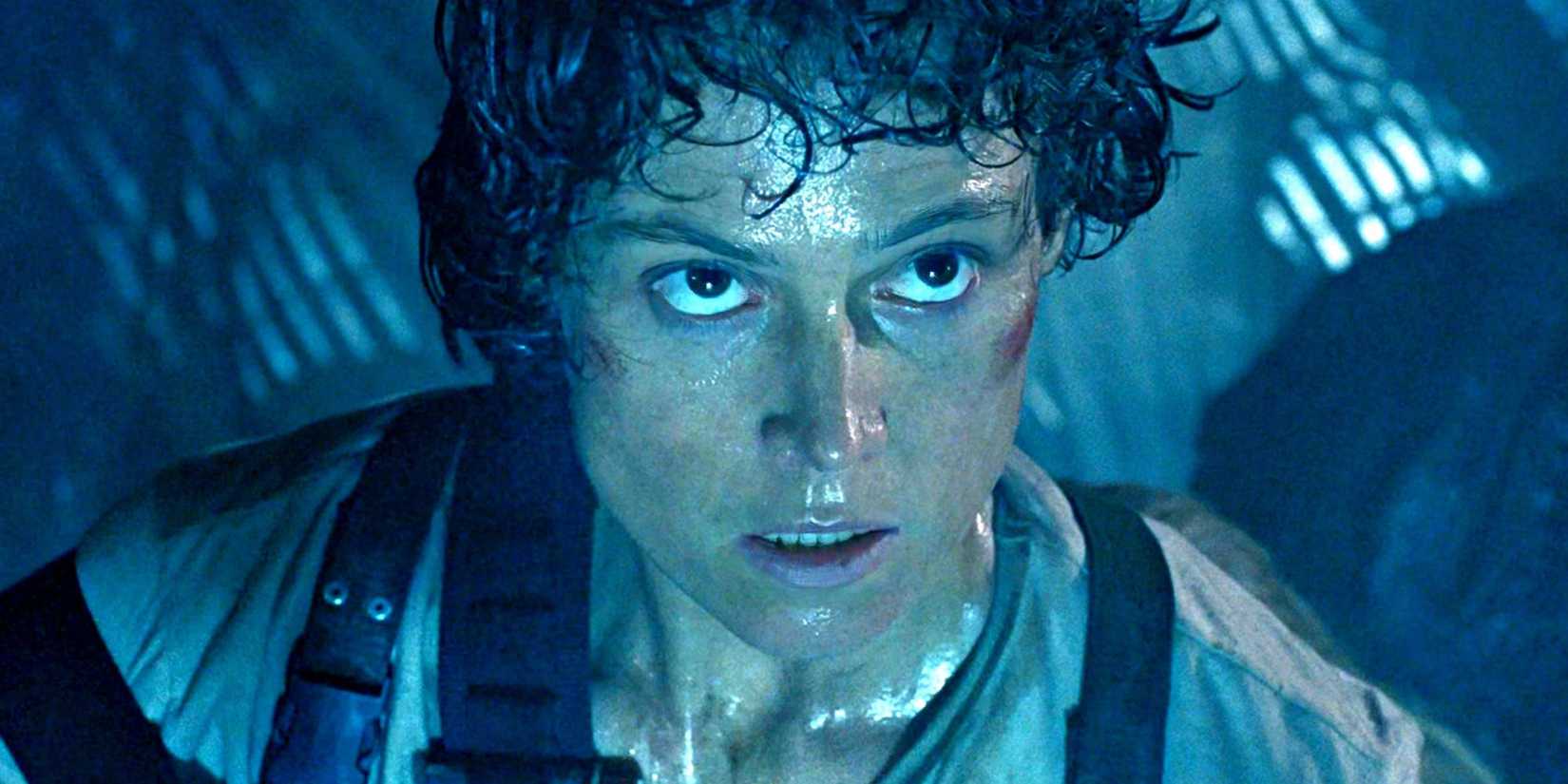
“Get away from her, you bitch!” Where Alien was claustrophobic horror, Aliens transforms the same premise into a war movie without losing the terror that made the original great. James Cameron ramps up the action, giving the protagonists guns this time but pitting them against not one alien but swarms of them. Amidst the mayhem, Ellen Ripley (Sigourney Weaver) forms a bond with the young Newt (Carrie Henn) and fights hard for both their lives.
The tone is varied, nimbly shifting from frightening to funny to suspenseful to moving. The action sequences are masterful throughout. The initial hive assault, the automated sentry gun sequences, the colony escape, and the climactic battle are exciting even now. Then there’s the addition of the alien queen, another fantastic horror creation that somehow improved on the already phenomenal creature design from the first film.
‘Amadeus’ (1984)

“There are simply too many notes.” Amadeus is a brilliant statement on artistic genius and the pain of envy. Told from the perspective of aging composer Antonio Salieri (F. Murray Abraham), the movie recounts his obsession with Wolfgang Amadeus Mozart (Tom Hulce), whose vulgar behavior and childish personality stand in stark contrast to the divine brilliance of his music. It could easily have made for a dry history lesson, but director Miloš Forman turns the world of classical composition into all-out psychological warfare.
Salieri cannot understand why God would grant transcendent talent to someone he considers immature and irresponsible while leaving him comparatively ordinary. That emotional contradiction powers every scene, summoning the spirit of Cain within him. The performances are incredible across the board, Peter Shaffer‘s screenplay is intelligent and frequently hilarious, and, on top of all that, the movie treats us to some of the greatest music in human history.
‘Blade Runner’ (1982)
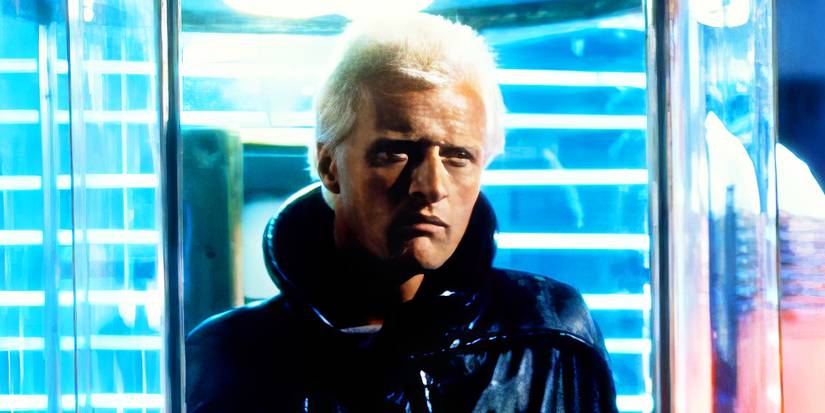
“All those moments will be lost in time, like tears in rain.” Blade Runner combines the very best of sci-fi and noir. Set in a rain-soaked Los Angeles of the future, it follows Rick Deckard (Harrison Ford), a weary “blade runner” tasked with hunting down rogue replicants. Although that setup sounds pulpy, the film initially confused some audiences expecting a faster-paced blockbuster thriller. Over time, however, its brilliance became impossible to ignore. Blade Runner is philosophical and aesthetically innovative, delving into genuinely ambitious themes.
Making the “antagonist” Roy Batty (Rutger Hauer) so sympathetic was a narrative masterstroke, elevating the movie above pretty much every other sci-fi of its time. Most importantly of all, Blade Runner embraces ambiguity. Are memories enough to define a person? Is humanity a biological fact or a moral quality? What gives life meaning when death is inevitable? The film trusts viewers to wrestle with these ideas themselves.
You must be logged in to post a comment Login