Entertainment
Only 3 HBO Shows Are Better Than ‘The Sopranos’

For the longest time, HBO has been the home for groundbreaking, hard-hitting, extraordinary dramas. With more freedom to explore darker stories and fewer limitations than network TV, HBO has served daring content, making it a destination for hits. When it comes to exceptional dramas, The Sopranos was synonymous with prestige TV, becoming the face of HBO and the poster child for the Golden Age of television. But what if there were other shows that were a bit better than The Sopranos?
For six seasons, The Sopranos enthralled audiences, but during its run and more than a decade after its debut, there were three shows that deserve as much, if not more, praise than the David Chase crime drama. One was a Western historical drama that aired concurrently, another was a mind-blowing supernatural tale, and the third was a twisted family drama. Though there certainly may be those who vehemently disagree, there is a reason why these three HBO shows top The Sopranos.
‘Deadwood’ (2004-2006)

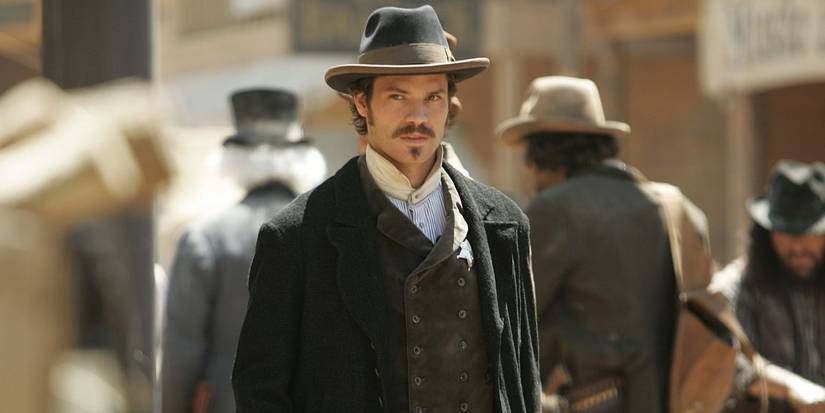
Perhaps the most mindblowing entry on this list comes from the three-season masterpiece, Deadwood. Created by David Milch, Deadwood brought audiences back to 1870s Dakota Territory for a trip through history in the wild frontier, charting the town before and after its annexation by the Dakota Territory. The series uses historical truths and figures as well as fictional elements to document life in a swiftly shifting America. The initial narrative explores the camp’s struggle with lawlessness through the power struggle between ruthless saloon owner Al Swearengen (Ian McShane) and former lawman-turned-lawman once again, Seth Bullock (Timothy Olyphant). As new threats arrive, old rivals turn to new allies with the central goal of protecting Deadwood and its inhabitants. Deadwood is an exploration of greed, corruption, and the transition from anarchy to civilization, offering an authentic look at the stories we thought we knew through exceptional writing, standout performances, and a passion for celebrating history without sanitization. Yes, there was violence and vulgar language, but it was necessary for the world. By keeping the action stationary while individuals came and went, Deadwood established a strong atmosphere that became increasingly immersive over time, a realistic setting that may be the most honest depiction of the West.
Every actor in the cast helped to elevate the authenticity. McShane crafted a brilliant and refreshing Western character through Swearengen; there simply has never been a character quite like him. While The Sopranos focused more on the psychology of antiheroes, Deadwood focused on a deeper thematic exploration of civilization that carried across consistent arcs of quality. Deadwood made you empathize with some of the most morally grey individuals because it was an act of survival. On The Sopranos, murder was like a sport, so death had a significantly different impact on storytelling. Deadwood jumpstarted the Western boom of the 21st century. Sadly, due to high production costs, its continued journey was cut short. Had it fulfilled a completely realized run, the argument that it was better than The Sopranos would have been even stronger. Though a numerical count shouldn’t be an official determination of greatness, winning 8 Emmy Awards for its 36-episode run sure helps the case. While we did get a movie to tie a pretty bow on a historic season, Deadwood remains at the top of the heap as a show we lost too soon.
‘Succession’ (2018-2023)
By taking themes from King Lear and mixing them with the drama surrounding the Murdoch family, you get the revolutionary satirical black comedy-drama Succession. The Jesse Armstrong-created series centers on the Roy family, the owners of the global media and entertainment conglomerate Waystar RoyCo, and their fight for control of the company amid uncertainty about the health of their patriarch, Logan Roy (Brian Cox). The power struggle centers on the Roy siblings—Kendall (Jeremy Strong), Roman (Kieran Culkin), Shiv (Sarah Snook), and Connor (Alan Ruck), to an extent—as they seek to assume control, unafraid to topple anyone in their way. A deliciously juicy story of power, wealth, and deep dysfunction, Succession’s success was due to the top-notch cast, who brought fully realized, morally ambiguous characters to life, alliances shifting from conversation to conversation. With razor-sharp, often profane writing performed by a high-caliber ensemble, Succession is all-killer, no filler; moral ambiguity is the name of the game. There is not a single individual who isn’t flawed, and yet they’re so self-involved that they can’t see it.
Often, we view character growth as an individual learning something to become better. The evolution of some of these individuals went in the opposite direction until it was too late, and they lost it all. Even those on the periphery, like Tom Wambsgas (Matthew Macfadyen), Gerri Kellman (J. Smith-Camreon), Frank Vernon (Peter Friedman), and Hugo Baker (Fisher Stevens) weren’t marked safe from drinking the Roy dastardly Kool-aid from time to time. The Sopranos may, or may not, have saved its most important whack for last via a controversial blackout. Succession shocked viewers and characters alike by placing it smack dab at the front of the final season. That’s how you properly blindside an audience. At its core, Succession never strayed from its mission; it set out to be a scathing social critique of wealth inequality, corporate greed, and the ability to wield power; rarely would a storyline fall flat. There was exquisite agony through high-stakes drama paired with brief moments of levity that allowed you a smirk and a chuckle at the situation. Perhaps some credit should be given to The Sopranos, because Succession took the groundwork its predecessor laid and became the North Star every drama that follows will look toward. At the end of the day, a fantastic series needs exceptional writing and remarkable performances; in that sense, Succession ran laps around The Sopranos.
‘The Leftovers’ (2014-2017)

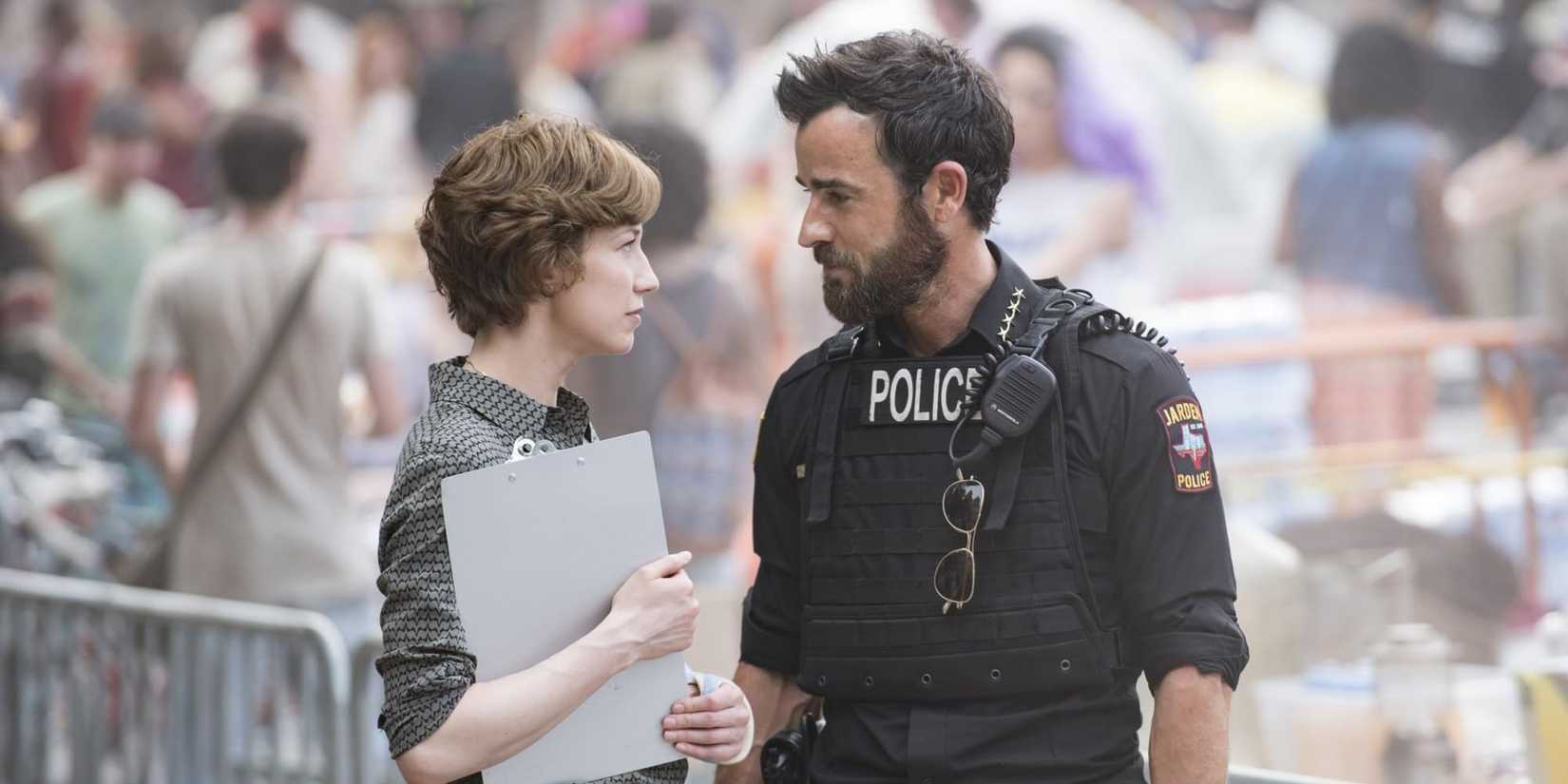
The heaviest exploration of loss, grief, and trauma came in the sensational supernatural drama The Leftovers. Based on Tom Perrotta‘s 2011 novel, it was one of the most emotionally heavy dramas of the 21st century, set three years after the “Sudden Departure,” a global catastrophe that left 2% of the population missing. Focusing on an array of affected people, including police chief Kevin Garvey (Justin Theroux) and his family, as well as grieving widow Nora Durst (Carrie Coon), The Leftovers tests the lines of spirituality, science, and the loss of faith as each person grapples with their new world differently. Through the lens of the psychological and emotional aftermath, The Leftovers paints a bleak picture of what such an event could bring if it were to happen to us. Intensely emotional and profoundly resonating, The Leftovers pushed a character-driven masterpiece to the forefront without ever being bogged down by the science-fiction elements surrounding it.
The Leftovers became an examination of humanity rather than a direct focus on the mystery itself. It started its journey in the small New York town, yet it was unafraid to shift locales to further the story and expand the lore and mythology. For some series, a change of location signifies desperation; for The Leftovers, it only made the story even stronger. This drama broke traditional television conventions smartly, allowing the narrative to evolve over time and crafting an engaging philosophical post-apocalyptic atmosphere. The Leftovers never made it easy for anyone — not for its characters or its viewers. With most high-concept series, should they introduce an element like the Sudden Departure, you wait with bated breath for answers; not here. The Leftovers was a character-driven masterpiece that let you see deep into the deeply flawed, broken people who remained. In some sense, it might be unfair to compare it to The Sopranos, as these shows are not cut from the same cloth. But viewing it as a complete television package, The Leftovers has the edge. The risk was well worth the reward.
You must be logged in to post a comment Login