Entertainment
Only 3 Thrillers Are Better Than ‘The Silence of the Lambs’

Jonathan Demme‘s The Silence of the Lambs is widely considered to be the pinnacle of the thriller genre, and with good reason. The 1991 adaptation of Thomas Harris‘ seminal novel was an instant critical and commercial success, becoming the fourth highest-grossing film of the year and winning the Big Five Oscars, including Best Picture. Today, the story of how FBI trainee Clarice Starling (Jodie Foster) stops the serial killer Buffalo Bill (Ted Levine) with the help of cannibalistic psychiatrist and criminal Dr. Hannibal Lecter (Anthony Hopkins) has become the blueprint for every horror thriller to follow.
Indeed, The Silence of the Lambs reigns supreme atop the thriller mountain… or does it? It’s easy to declare Demme’s triumph as the ultimate cinematic chiller, but I’d argue thar three major movies work better as thrillers than Silence. That’s not to say the 1991 movie isn’t a masterpiece, because it is. However, the three films on this list offer riveting narratives, outstanding performances, and a taut, near-unbearable tension that makes them excel as genuine masterworks of the thriller formula. Any of these is more than capable of standing alongside Silence in the Mount Rushmore of thrillers, and many surely place higher in many a cinephile’s personal rankings.
‘M’ (1931)

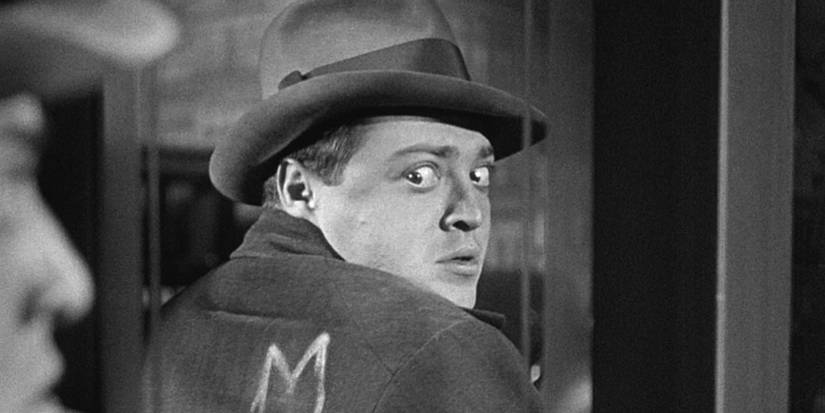
The thriller came to be in cinema with Fritz Lang‘s seminal 1931 masterpiece M. The original thriller and even a proto-noir in many ways, the film remains a foundational piece of filmmaking that has influenced every single subsequent entry into the genre, and I’m really not exaggerating. In a now-indelible performance, Peter Lorre stars as Hans Beckert, a child serial killer operating in Berlin. As his crimes increase, Beckert becomes the target of not only a large-scale manhunt by the police but also a more violent effort by an underworld society whose criminal doings are endangered by the killer’s actions.
Often regarded as Lang’s magnum opus, including by the director himself, M is the very definition of a cinematic trailblazer. Lang creates a truly oppressive and immersive atmosphere through sound and, just as importantly, silent, painting the full picture og human hysteria. This classic thriller pioneered many major techniques that would become mainstays in the genre, most notably long tracking shots following Beckert and his hunters, and a musical leitmotif, using the piece “In the Hall of the Mountain King” to signal Beckert’s presence. M excels not only as an in-depth exploration into human depravity and mob mentality but also as an exercise in contagious paranoia and a study of humanity’s need for violence in response to things they can’t control. The film’s mark can be found in every single thriller that followed, proving itself the pillar upon which the entire thriller genre rises. Simply put, there would be no Silence of the Lambs without M.
‘Jaws’ (1975)
Steven Spielberg outright revolutionized cinema with Jaws, not only inventing the modern blockbuster thriller as we know it but also reinventing the thriller forever. Based on the 1974 novel by Peter Benchley, the film sees a quiet beach town resort terrorized by a great white shark. Opening in a now legendary sequence where the shark kills a young woman on a late-night swim, the film continues by chronicling the efforts of three men — the town’s chief, Martin Brody (Roy Scheider), marine biologist Matt Hopper (Richard Dreyfuss), and legendary shark hunter Quint (Robert Shaw) — as they attempt to hunt and kill the shark before it claims more victims.
By now, it’s well known that Spielberg is a titan of cinema. The director has mastered more genres than most others, from adventure (Raiders of the Lost Ark) to war (Saving Private Ryan), epic (Schindler’s List), drama (The Fabelmans), and sci-fi (far too many to name). Yet, Jaws remains his only pure thriller, because how can one compete with absolute perfection? The film is expertly crafted and paced, yet the true genius lies in Spielberg’s sheer innovation. The director made up for a defective shark animatronic by placing the audience in the creature’s POV and enhancing the tension with a now-legendary score from his usual collaborator, John Williams. The result is a masterpiece of creativity that pushed the thriller to new heights by proving that less is more, and when it comes to monsters, the human imagination is still more effective. In Jaws, Spielberg crafted fear and paranoia out of water and suggestion. While movies like The Silence of the Lambs crafted elaborate, twisty narratives, Jaws enthralled with simplicity, skill, confidence, and assurance, becoming timeless in the process.
‘Parasite’ (2019)

If there’s any director that deserves the title of New King of the Thriller, it’s probably Bong Joon Ho (Park Chan-wook is a close competitor, apologies to David Fincher). Memories of Murder, Mother, and Snowpiercer would be enough to secure him the title, but Parasite is truly the masterpiece that cements it. In fact, it might not be an overstatement to call Parasite the best thriller in cinematic history. For those of you rolling your eyes at this statement and accusing me of recency bias, I hear you. However, I dare you to find a thriller that’s more timely, intelligent, or indeed masterful in balancing multiple tones and themes. Parasite is one of a kind, a genuinely shocking and shifting tale of class struggles that resonated with millions worldwide, breaking boundaries and taking international cinema to new heights.
The film follows the struggling and scheming Kim family, who plot to infiltrate the wealthy Park household by posing as four unrelated and highly experienced individuals. As the everyday dynamics lead to increasing tension, the Kims soon realize there’s more to the Park’s house than they could’ve expected. Thrillers usually follow a set series of rules, often in an effort to enhance the tension and keep the mystery going. Parasite subverts that formula by playing with genres and blurring lines, going from a comedy to a class satire to an outright murderous thriller in the end, all while keeping a latent sense of anxiety building in the background. The film was an international box office success and won the Oscar for Best Picture, giving it the credentials to qualify as a timeless masterpiece. Yet, Parasite‘s true legacy lies in its willingness to reshape the thriller, never settling for the expected and instead proving that the genre is far more flexible than anyone could’ve guessed.
You must be logged in to post a comment Login