Ever since their inception in 2000 and their first film releases throughout the 2000s, Blumhouse Productions has grown to be one of the most prominent faces in the worls of 21st century horror. Their mentality of giving countless horror creatives the minimal budgets required to create their own distinct visions has paid off dividens, with few other production companies coming close to their level of success and notoriety within the horror genre. However, with such a wide casting net of horror offerings, it takes something truly special to be an all-time great from the studio.
More than simply playing to trends of the era or relying on clichés like some other Blumhouse horror films are guilty of, the very best of the studio’s horror offerings are some of the best horror masterpieces of the 21st century. Several of these films have grown massively iconic in their mixture of scares and dynamic storytelling, as not just some of the scariest films of recent memory, but some of the most insightful horror experiences as well. The studio has technically released a few masterpieces that aren’t a part of the horror genre (like Whiplash and BlacKkKlansman), but this list will focus solely on their 5 horror masterpieces.
Advertisement
5
‘Split’ (2017)
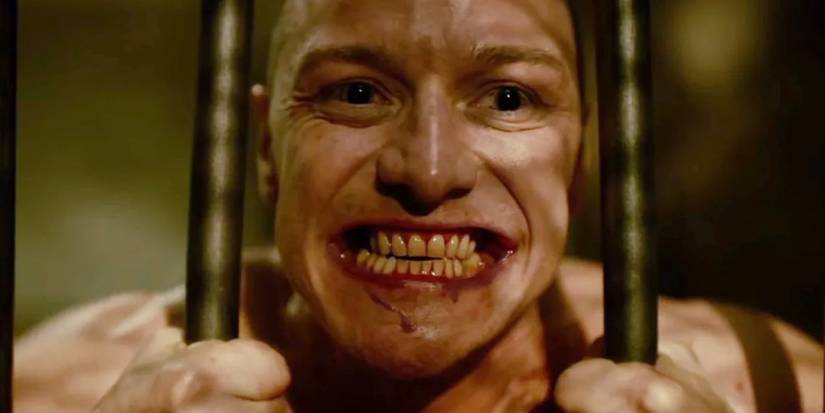
James McAvoy as the Horde aka Kevin Wendell Crumb at the end of ‘Split.’Image via Universal Pictures
M. Night Shyamalan is a filmmaker who has had a wildly shaky and divisive career, originally starting with massively acclaimed classics like The Sixth Sense and Unbreakable before creating notorious failures like The Happening and The Last Airbender. His 2010s failures especially left Shyamalan limited on options for his next film, with the lower horror thriller budget of Blumhouse proving to be the perfect avenue for Shyamalan to return to his roots. Split has the exact energy and flair of a Shyamalan classic of old, playing into his greatest strengths as a filmmaker while not featuring any of the attributes that hindered previous films.
With an exceptional lead performance by James McAvoy at its center, one of Shyamalan’s greatest twists, and a powerful mixture of tension and outright horror, Split was a glorious return to form for one of the most distinct and individual directors of the contemporary era. It does a great job of combining and utilizeing both Shyamalan’s signature style as well as the inherent strengths and impact of Blumhouse’s style, creating a match made in heaven that helped catapult Shyamalan back into the limelight, with Split arguably being even more popular than his amazing films of old.
Advertisement
4
‘Sinister’ (2012)
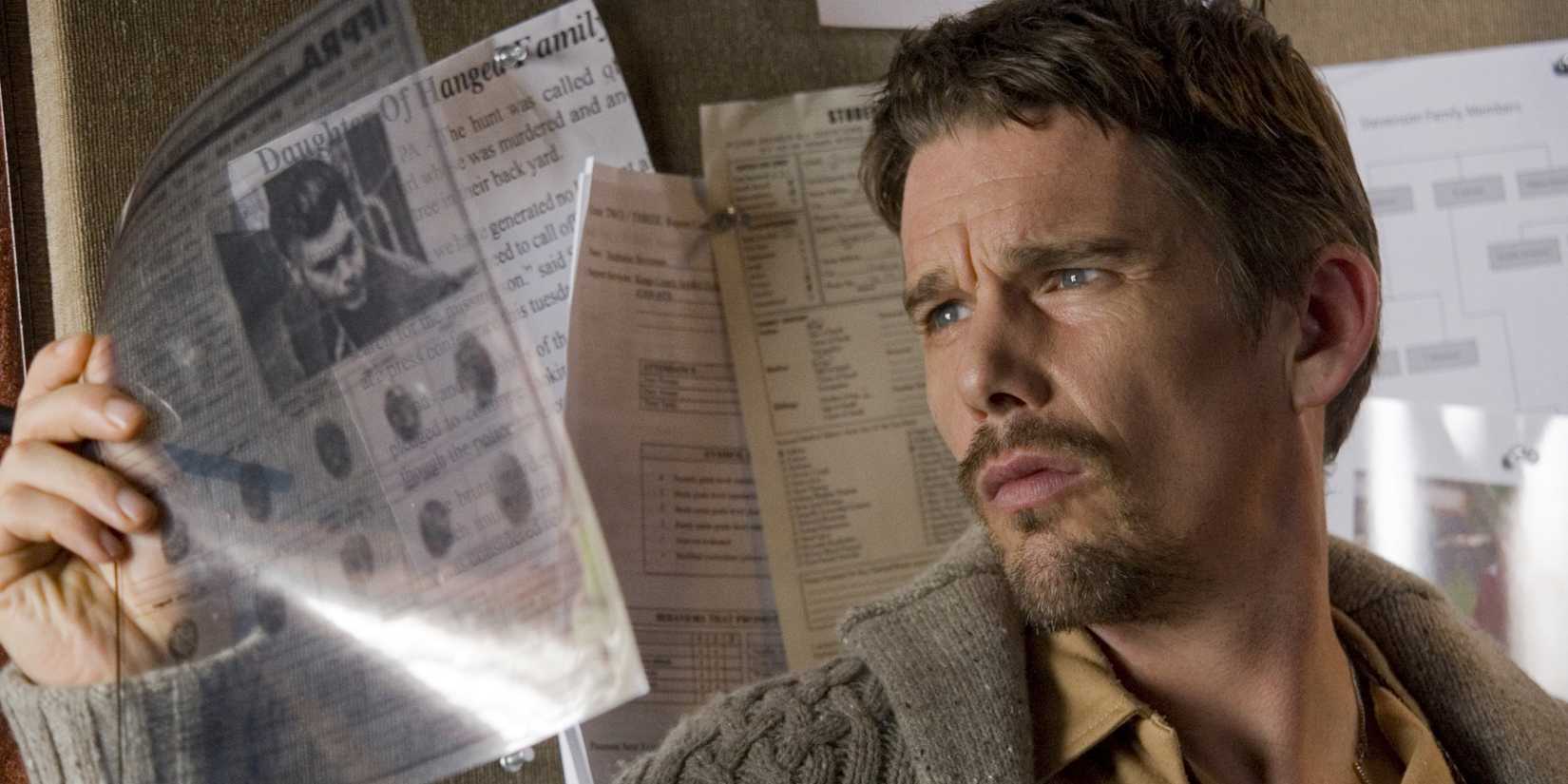
Ellison looks at old evidence in Sinister.Image via Lionsgate Films
There has been a great deal of research put into finding what could scientifically be considered the scariest movie of all time. While a lot of this seems like it should be considered subjective and varies on the audience, various studies often consider Sinister to be the scariest movie ever made. Scott Derrickson‘s dynamic horror tour de force proves to be the absolute height of the found footage trend that dominated the early 2010s, having much more depth and expertise beyond simply putting up a camera and leaning into realism.
The combination of exceptional talent throughout the cast with the shocking, guttural pain of its various uncovered snuff films and some of the best jump scares of all time made the film an instant icon of the horror genre. Its scares have proven to be so impactful and striking that it has given the film a resounding reputation as one of the outright scariest experiences horror has to offer. It stands as one of the first truly masterful horror films that Blumhouse would help create, setting a standard for greatness that continues to be a part of their legacy nearly 15 years after the film’s release.
Advertisement
3
‘The Invisible Man’ (2020)
Elisabeth Moss’ Cecilia Kass must deal with a invisible stalker during ‘The Invisible Man’.Image via Universal Pictures
While classic universal monsters like Dracula and Frankenstein continuously find themselves being adapted and rebooted to the modern age time and time again, The Invisible Man is a character who rarely if ever finds a similar opportunity to shine in the world of horror. However, Leigh Whannell‘s masterful contemporary horror thriller take on the character is not just the best Invisible Man movie in ages, but might just be one of the best Universal monster movies ever made. It seamlessly evolves the strengths of the character to the modern age, as well as telling its own dynamic story of gaslighting and manipulation that utilizes filmmaking and camerawork as the cornerstone of its thematic strengths.
The visual execution is the major strength that sets Whannell’s take on the character apart from other iterations of the character, able to conjure tension and fear out of massive empty spaces and subtle differences that have the audience second guessing themselves as to the Invisible Man’s location and plans. The film also features one of the best, most underrated horror performances in recent memory with Elizabeth Moss‘s psychological spiral while being tormented by the Invisible Man. This intricate story of gaslighting massively surprised audiences in its execution, setting the decade off to a tremendous start and still being massively celebrated to this day.
Advertisement
Collider Exclusive · Horror Survival Quiz Which Horror Villain Do You Have the Best Chance of Surviving? Jason Voorhees · Michael Myers · Freddy Krueger · Pennywise · Chucky
Advertisement
Five killers. Five completely different ways to die — if you’re not smart enough, fast enough, or self-aware enough to avoid it. Only one of them is the villain your particular set of instincts gives you a fighting chance against. Eight questions will figure out which one.
🏕️Jason
🔪Michael
💤Freddy
🎈Pennywise
Advertisement
🪆Chucky
Advertisement
01
Something feels wrong. You can’t explain it — you just know. What do you do? First instincts are the difference between the survivor and the first act casualty.
Advertisement
02
Where are you most likely to find yourself when things go wrong? Setting is everything in horror. Where you are determines which rules apply.
Advertisement
03
What is your most reliable survival asset? Every survivor has a quality the villain didn’t account for. What’s yours?
Advertisement
04
What kind of fear is hardest for you to fight through? Knowing your weakness is the first step to not dying because of it.
Advertisement
05
You’re with a group when things start going wrong. What’s your role? Horror movies are brutally clear about who survives group situations and who doesn’t.
Advertisement
06
What’s the horror movie mistake you’re most likely to make? Honest self-assessment is a survival skill. Denial is not.
Advertisement
07
What’s your best weapon against something that can’t be stopped by conventional means? Every horror villain has a weakness. The survivors are always the ones who find it.
Advertisement
08
It’s the final scene. You’re the last one standing. How did you make it? The final survivor always has a reason. What’s yours?
Advertisement
Your Survival Odds Have Been Calculated Your Best Chance Is Against…
Your instincts, your strengths, and your particular way of thinking under pressure point to one villain you actually have a fighting chance against. Everyone else — good luck.
Advertisement
Camp Crystal Lake · Friday the 13th
Jason Voorhees
Jason is relentless, but he is also predictable — and that is the gap you would exploit.
He moves in straight lines toward his target. He doesn’t strategise, doesn’t adapt, doesn’t outsmart. He simply pursues.
Your ability to keep moving, use the environment, and resist the panic that freezes most victims gives you a genuine edge.
The Crystal Lake survivors were always the ones who stopped running in circles and started thinking about terrain, water, and distance.
You think like that. Which means Jason, for all his indestructibility, would face someone who simply refused to be where he expected.
Advertisement
Haddonfield, Illinois · Halloween
Michael Myers
Michael watches before he moves. He is patient, methodical, and almost impossible to detect — until it’s too late for anyone who isn’t paying close enough attention.
But you are paying attention. You notice the shape in the window, the car parked slightly wrong, the silence where there should be sound.
Michael’s power lies in the invisibility of ordinary suburbia — the fact that nothing ever looks wrong until it already is.
Your spatial awareness and instinct to map every room, every exit, and every shadow before you need them is precisely the quality Laurie Strode had.
You are not a victim waiting to happen. You are someone who already suspects something is wrong — and acts on it.
Advertisement
Elm Street · A Nightmare on Elm Street
Freddy Krueger
Freddy wins by getting inside your head — using your own fears, your own memories, your own subconscious as weapons against you. That strategy requires a target who can be destabilised.
You are harder to destabilise than most. You’ve faced uncomfortable truths about yourself and you haven’t looked away.
The survivors on Elm Street were always the ones who understood what was happening and chose to face it rather than flee from it.
Freddy’s greatest weakness is that his power evaporates in the presence of someone who refuses to give him the fear he feeds on.
Your psychological resilience — the ability to stay grounded when reality itself becomes unreliable — is exactly the quality that keeps you alive here.
Advertisement
Derry, Maine · It
Pennywise
Pennywise is ancient, shapeshifting, and feeds on terror — but it has one critical vulnerability: it cannot function against someone who genuinely stops being afraid of it.
The Losers Club didn’t survive because they were braver than everyone else. They survived because they faced their fears together, and faced them honestly.
You ask the questions others avoid. You look directly at what frightens you rather than turning away.
That directness — the refusal to let fear fester in the dark — is Pennywise’s worst nightmare.
It chose the wrong target when it chose you. You are exactly the kind of person whose fear tastes like nothing at all.
Advertisement
Chicago · Child’s Play
Chucky
Chucky’s greatest advantage is that nobody takes him seriously until it’s already too late. He exploits the gap between how something looks and what it actually is.
You don’t have that gap. You take threats seriously regardless of how they present — and you never make the mistake of underestimating something because of its size or appearance.
Chucky relies on surprise, on the delay between recognition and response. You close that delay faster than almost anyone.
Your instinct to treat every unfamiliar thing with appropriate scepticism — rather than dismissing it because it seems absurd — is the exact quality that keeps you breathing.
Against Chucky, not laughing is already winning. You are very good at not laughing.
Advertisement
2
‘Obsession’ (2026)
Image via Focus Features
Advertisement
It may seem like recency bias to already be touting one of Blumhouse’s latest horror releases as one of their absolute best, but Obsession truly does live up to the hype. Curry Barker‘s dynamic story of magical bodily autonomy and control has soared into all-time status thanks to its poignant themes mixed with an exceptional central performance by Inde Navarrette as Nikki. Off of a miniscule budget of under a million dollars, the film grossed a groundbreaking $442 million and counting worldwide, becoming one of the most financially profitable films of all time.
The film is brimming with personality and charm from beginning to end, having an inherent sense of youthful ingenuity to its execution without taking away from the harrowing dread of its premise and some absolute great scares and tension. The appreciation for the film will only continue to grow as time goes on, especially if the overwhelming hype leads to it becoming an unexpected awards player and a Best Picture nominee. It’s easily going to be considered one of the best horror movies of the 2020s when the decade is complete, as its about as amazing of a debut feature film as one could ask for, painting a great picture for Barker’s future career in horror filmmaking.
1
‘Get Out’ (2017)
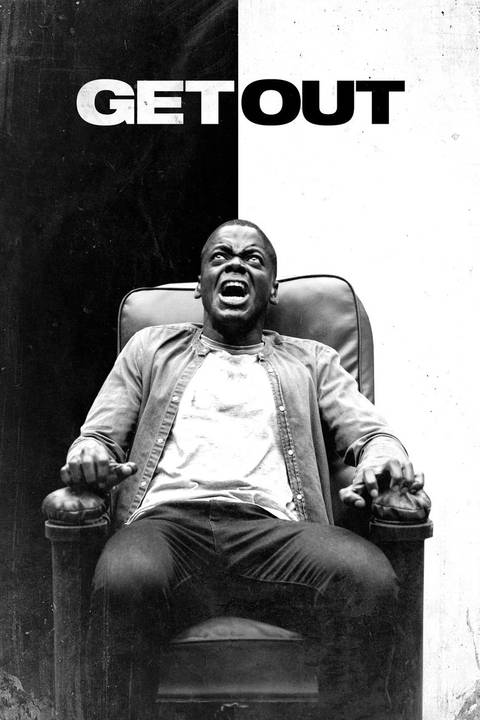
Chris, played by actor Daniel Kaluuya, desperately reaches out into the void as he falls deeper into the ominous “sunken place” in 2017’s Get Out.Image via Universal Pictures
Advertisement
Between all the exceptional horror films that Blumhouse has released over the years, no singular film has been more influential and massively acclaimed in its execution than Jordan Peele‘s legendary debut feature, Get Out. The infectious mixture of horror, scares, and social messaging completely took the world by storm to usher in a new era of “elevated horror” in its success. Even in the years since its release, the film’s overwhelming qualities continue to delight and impact audiences, with it easily being one of the greatest horror achievements not just of its era, but of the entire 21st century.
In a beautiful way, Get Out stands for everything that has made Blumhouse such a strong and exciting horror studio to watch, as they gave a genuine talent a small budget and the resources to tell their own story, launching their career and winning awards in the process of its success. It’s the type of film that is symbolic of the greatest strengths of the medium and the studio system, spitting in the face of the abundance and overreliance on IP and franchises to tell a masterful original story dripping with personality and individuality.





You must be logged in to post a comment Login