Entertainment
Raunchy, R-Rated Horror Classic Succeeded By Completely Ignoring The Book
By Chris Snellgrove
| Published


Whenever we get a new movie based on a book, existing fans all have the same question: how accurate will the film be? After all, these literary lovers have spent countless hours envisioning these stories, and it’s hard enough for fans to accept actors who look different than the characters they envisioned. If a director deviates from the source material too much, those fans may even boycott the film. That’s why the Lord of the Rings movies remain the gold standard for literary adaptations: not only is the cast perfect, but every single frame was dripping with Peter Jackson’s love for J.R.R. Tolkien.
However, there are exceptions to every rule. One year before Elijah Wood suited up as Frodo Baggins, we got a raunchy, R-rated horror movie that became the stuff of pop culture legend. To this day, it inspires memes shared by everyone from Gen X to Gen Alpha. The movie is, of course, American Psycho. Did it succeed by being a loving, 1:1 adaptation of the book? Nope: in fact, writer/director Mary Harron changed major aspects of the work, including adding plenty of jet-black humor. The result is the greatest horror comedy since Scream, and a movie that (with my apologies to author Bret Easton Ellis) is much better than the book.
Killing Has Never Been So Cool

The premise of American Psycho is both simple and bloody. We follow the misadventures of Patrick Bateman (played by Christian Bale), who is an investment banker by day and a murderer by night. After he kills a colleague (played by Jared Leto), he ends up on the radar of a nosy detective (played by Willem Dafoe). Over the course of the movie, his mind slowly unravels, to the point that he’s weirding out everyone from his secretary (played by Chloë Sevigny) to his fiancée (played by Reese Witherspoon). Soon, it’s clear that New York City will never be the same, either for Bateman or the victims whose bodies litter his apartment.
If you have a dark enough sense of humor, Bret Easton Ellis can be a funny writer; go check out Rules of Attraction if you don’t believe me. With that being said, his American Psycho novel isn’t very funny, nor is it meant to be. The book actually opens with an epigraph from Fyodor Dostoevsky’s Notes From the Underground. “Both the author of these Notes and the Notes themselves are, of course, fictional. Nevertheless, such persons as the composer of these Notes not only exist in our society, but indeed must exist.” The message is clear: there must be Patrick Batemans in real life, making American Psycho a cautionary tale.
A Killer Critic
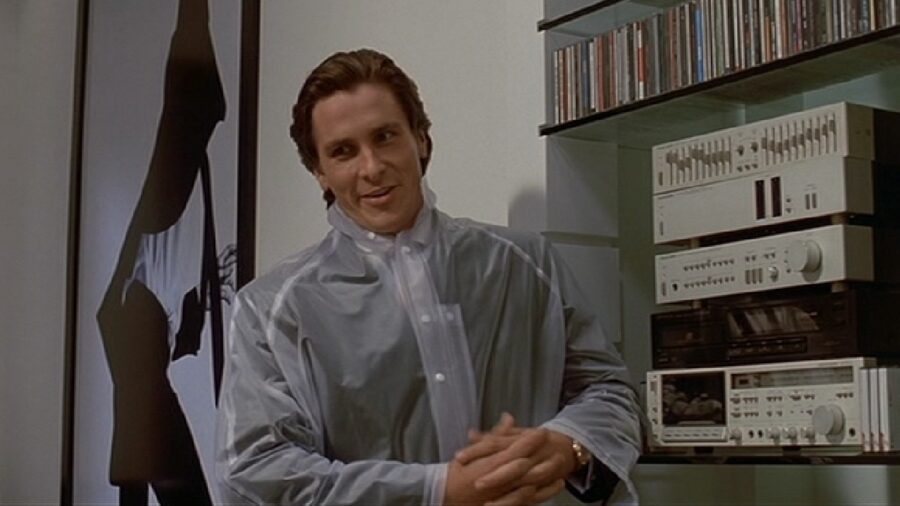
Ellis was giving us a warning, one that seems downright quaint in a post-Epstein world. Namely, that rich people are committing countless obscene crimes that we don’t know about, using their wealth and fame to shield themselves from any suspicion. While that was a valid and very relevant warning cry when the book was published, the truth is that the text as written would have made for a film that alternates between boring and horrifying. Fortunately, American Psycho the movie embraces demented comedy at every turn, something that adds levity to even the most horrific moments.
Here’s an example: the Patrick Bateman of the books is downright obsessed with certain celebrities, leading to bizarre moments like him popping wood while staring at Bono during a concert (no, really!). The American Psycho movie condenses this into a simpler hyperfocus on modern music, setting the stage for his execution of Paul Allen. With newspapers to protect the floor and plastic sheeting to protect his suit, Bateman looks like he is channeling his inner Dexter. It all looks very grim, but it’s tough to take anything seriously because our onscreen killer is giving a smarmy, Pitchfork-style review of freaking Huey Lewis right before he starts swinging his axe.
The Mask Comes Off


While the American Psycho movie arguably softens Patrick Bateman in certain ways, it does so in order to fit the deliciously black comedy tone. For example, the killer in the book is extremely homophobic, something that is seemingly absent in the movie. I say “seemingly” because in its place, we have Bateman giving a lofty speech about ending apartheid, feeding the homeless, promoting civil rights, championing women’s rights, and returning to “traditional moral values.” It’s obvious in this scene that he’s completely full of sh*t and just saying what people want to hear. This is part of his mask, allowing him to hide the monster lurking right beneath the surface.
Perhaps the most important change from page to screen was removing Patrick Bateman’s justifications for murder. In the book, we get ostensible explanations for why he is killing people, but these explanations make little sense and are often contradictory. While that is reasonable in an “anyone can justify anything” kind of way, the American Psycho movie wisely dispenses with this to the point that neither the audience nor Bateman himself understands his nihilistic need to kill. Leaving this up to interpretation has entertained fans for decades, all while underscoring the book’s bleak themes. Bateman is a symptom of our world and not the sickness itself, and that’s the scariest thing of all.
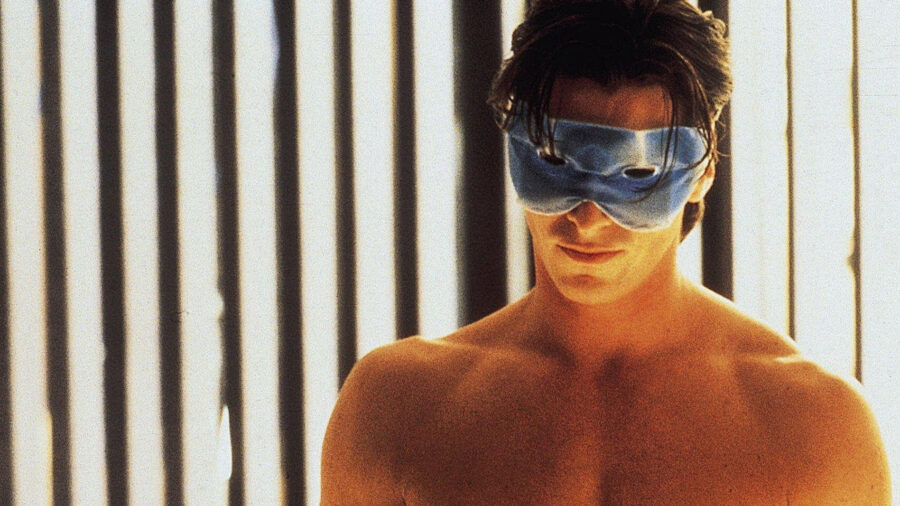
American Psycho is very nearly a perfect horror movie, one that perfectly showcased Christian Bale’s acting chops before he became the Dark Knight. The movie blends heady themes about nihilism, violence, misogyny, and bro culture, delivering unforgettable kills with one bloody hand and unforgettable laughs with the other. If you’d care to revisit this awesome film, you don’t have to spend any money, so there’s no need to feed a cat to your nearest ATM. All you have to do is stream American Psycho for free on Tubi!
You must be logged in to post a comment Login