Entertainment
Ridley Scott’s Brutal Action Thriller the Critics Hated Needs To Be Rediscovered in 2026

Based on critical and audience reactions, Ridley Scott‘s The Counselor landed in 2013 cinemas like a flaming bag of dog feces; a cruel and rancid joke on anyone seeking typical genre thrills. The cartel-world thriller came loaded with an incredible behind-the-scenes pedigree: an original script by legendary novelist Cormac McCarthy, hot off the Oscar-winning adaptation of No Country for Old Men, Scott’s sturdy visual sense behind the lens, and a cast including Michael Fassbender, Brad Pitt, Javier Bardem, and Cameron Diaz. The film Scott turned in, however, was the antithesis to the thrill-ride many audiences expected, taking the nihilism of No Country, running with it, then diving into an even blacker, yawning abyss.
Critics largely roasted The Counselor, earning it a 34% Rotten Tomatoes score and an even lower, 24% audience reception. BBC critic Mark Kermode called it one of the year’s worst films, lamenting: “Watching it, you can feel a little bit of yourself dying … what happened?” Audience reviews coalesced around the idea of it as a “nasty,” “sick,” and “empty” film that played out more like a McCarthy audiobook than the meticulously crafted, genuinely thrilling and moving No Country. Some got it, though, and lauded The Counselor for the dark diamond that it is. Explicitly dedicated to Scott’s late younger brother, Tony, and made with McCarthy on set for virtually the entire production, nothing about The Counselor is a mistake; in fact, it’s a black-hearted modern masterpiece that’s ripe for rediscovery after 13 years.
‘The Counselor’ Sends Michael Fassbender’s Titular Character Into the Hell of Cartel Land


The fatalism of The Counselor begins before the plot even unfolds. Opening with Fassbender’s protagonist and his girlfriend, played by Penélope Cruz, playing around under white sheets, the two of them look like corpses before we even get a look at their bodies or faces. They’re clearly in love, and they’re dirty-talking, but it’s all a bit too mannered and verbose. Something’s off, and it immediately seems that nothing good will come for them. Scott laces his opening credits with a montage of cocaine being packaged into steel drums and loaded onto tankers, then warehouses and lots being hosed down, erasing the evidence. Fassbender never gets a name, and as he wants more and more, he’s drawn into a trafficking plot that sends him and the movie spiraling into the transnational drug trade and inevitable death, where human bodies are nothing more than marks in arcane ledgers or victims in cautionary snuff films. It’s dark stuff.


One of Scott’s latest films was a creative, engaging reconstruction of one of the most significant events in medieval history.
Also joining the counselor on his descent is the flamboyant drug dealer Reiner, played by Bardem, and Westray, the money man in a cowboy hat, played by Pitt. And lounging around the edges is Reiner’s girlfriend, the unsubtly named Malkina, played by Diaz as a personification of greed. Both Bardem and Diaz play to the rafters, with Bardem’s outrageous fashions pillaged from the archives of multiple top design houses, and Diaz is given an unforgettably bizarre sex scene, in which she makes it clear how unimportant a partner is for her satisfaction. The film also introduces a horrifying assassination device called a “bolito” — about which, the less said the better. Stylistically, The Counselor looks very much like a late Ridley Scott film; it’s digitally crisp, colorful, and handsome. What likely put off many audiences at the time was the series of McCarthy monologues that make up the majority of the dialogue and reveal the heart of the film more clearly even than the legible — and sometimes horrifying — visuals do.
If You Can Handle the Bleakness, ‘The Counselor’ Is an Unforgettable Nightmare
Fassbender’s character is given multiple warnings about the wages of greed and the inevitable outcome of playing around with the cartel, all in the form of extremely chewy monologues by Pitt, Bardem, and the legendary Swiss actor Bruno Ganz, playing a philosophizing jeweler who offers to sell the counselor a “cautionary diamond.” But like the victims of the Byzantine assassination device Reiner gleefully describes to him, the counselor’s fate is sealed as soon as he begins dealing in the currency of the cartel. It’s not a fun ride, but it is an endlessly fascinating one, layered with some of the most literate dialogue ever heard in a blockbuster and wild performances from Diaz and Bardem.
‘The Counselor’ Is a Significant Dip in Quality From ‘No Country for Old Men’
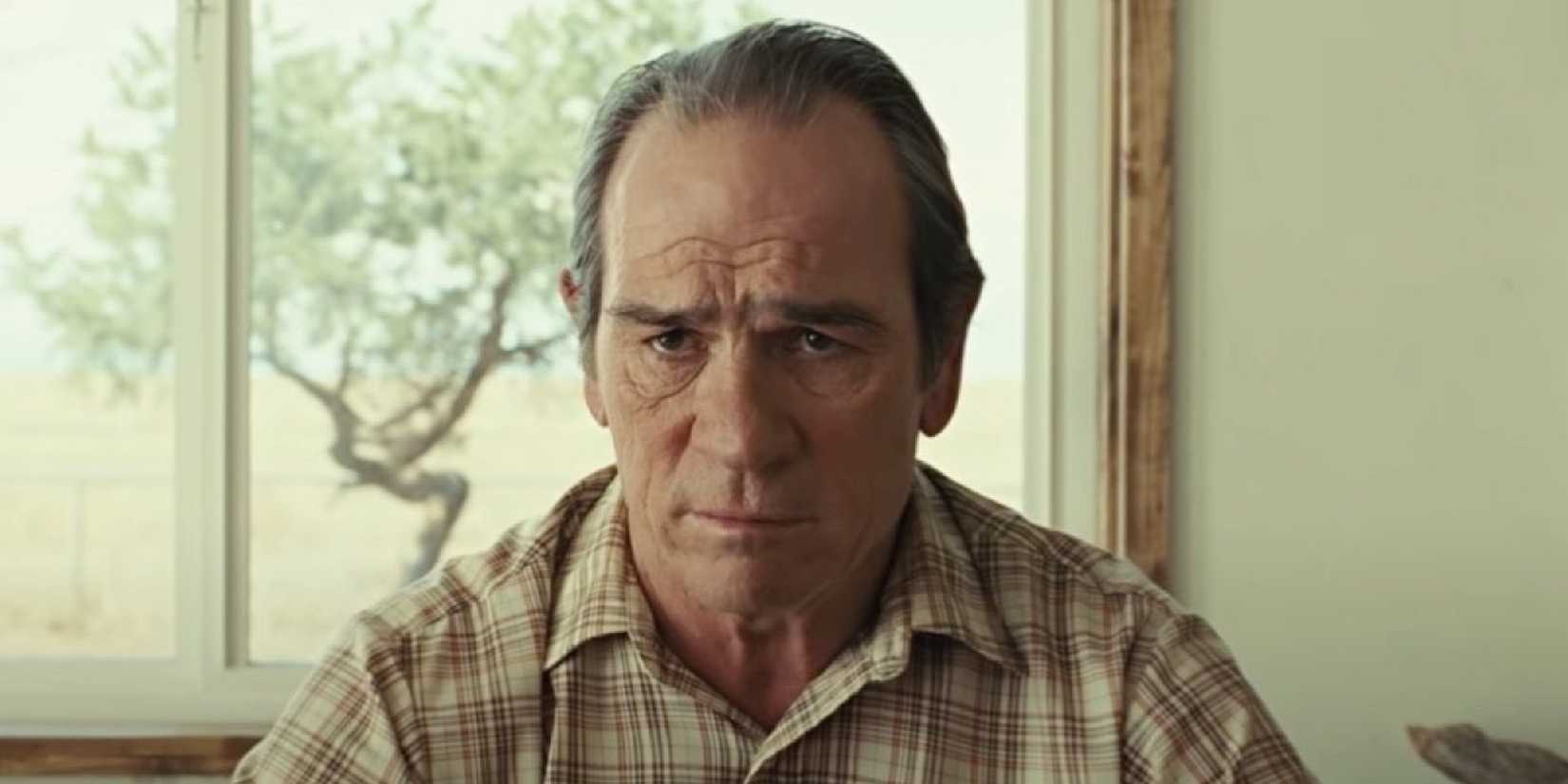
To be sure, Scott does layer the film with striking images, including Reiner and Malkina sipping Manhattans in the desert aside their bejeweled pet cheetah, a speeding biker’s sudden end, and an unforgettable death scene. However, The Counselor conspicuously lacks the suspense set pieces of No Country for Old Men, or a warmly moral center to temper the darkness, like Tommy Lee Jones‘ prophetic Sheriff Ed Tom Bell. Bardem may not be playing another McCarthyian apocalyptic force of nature like Anton Chigurh, but his character is trapped in an even wider-reaching spiral of capitalistic horror, and it makes the film almost the evil twin to the masterpiece that was No Country.
The film contains a number of skeleton keys to understanding it, from Westray warning the counselor that “the smallest crumb can devour us … learn not to let anything pass,” to the mechanism driving the execution device — and how it’s literally impossible to escape once activated. McCarthy and Scott’s The Counselor lays bare the truth about the world we’ve made, and for that, it deserves to be seen.


- Release Date
-
November 14, 2013
- Runtime
-
117minutes
You must be logged in to post a comment Login