Andrew Garfield in Hacksaw RidgeImage via Lionsgate
The last few years have been quiet for Oscar-winning director Mel Gibson, but this is mostly due to the two projects he’s working on that are occupying every ounce of space on his calendar. Gibson is returning to the world of The Passion of the Christ for a pair of sequels, The Resurrection of the Christ Part 1 and 2, which are coming to theaters in 2027 and 2028. Lionsgate just dropped the first look at the films a few weeks ago, also confirming that The Passion of the Christ will return to theaters to celebrate the arrival of the sequels. Gibson is also celebrated for his work on other epics like Braveheart and The Patriot, though his last directorial feature came back in 2025 with Flight Risk, the aviation thriller starring Mark Wahlberg.
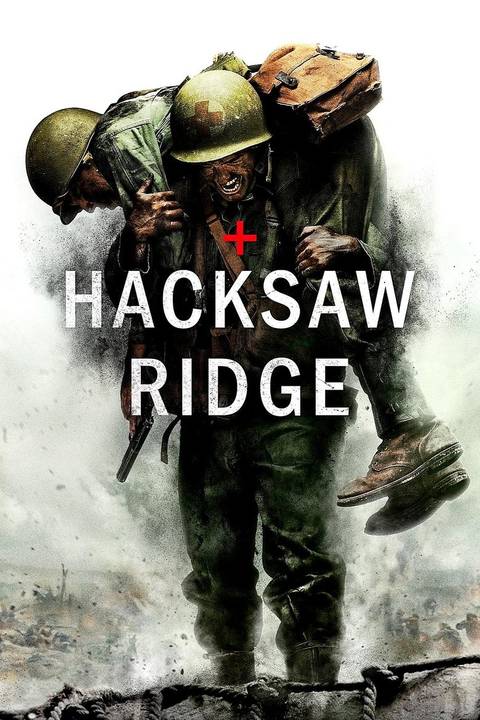
Gibson has directed so many iconic movies that it’s tough to nail down exactly which is the best of the bunch, but if you were to poll a random crowd, one film that would certainly get some name-drops is Hacksaw Ridge. Gibson guided Andrew Garfield to one of his finest performances in the 2016 World War II epic, which won two Oscars for Film Editing and Sound Mixing. Hacksaw Ridge also picked up four more nominations, including one for Best Motion Picture, one for Gibson’s directing, and another for Garfield’s performance as Best Lead Actor. All these years after grossing over $180 million at the box office against a $40 million budget, Hacksaw Ridge is streaming on both Paramount Plus and Netflix in America. While Paramount has not announced any plans for the movie to leave the service, Netflix has confirmed that the last day to watch the film will be on July 31.
Advertisement
Advertisement
Collider Exclusive · Oscar Best Picture Quiz Which Oscar Best Picture Is Your Perfect Movie? Parasite · Everything Everywhere · Oppenheimer · Birdman · No Country
Five Oscar Best Picture winners. Five completely different visions of what cinema can be — and what it can do to you. One of them is the film that was made for the way your mind works. Ten questions will figure out which one.
🪜Parasite
🌀Everything Everywhere
☢️Oppenheimer
Advertisement
🐦Birdman
🪙No Country for Old Men
Advertisement
01
What kind of film experience do you actually want? The best movies don’t just entertain — they leave something behind.
Advertisement
02
Which idea grabs you most in a film? Great films are driven by a central obsession. What’s yours?
Advertisement
03
How do you like your story told? Form is content. The way a story is shaped changes what it means.
Advertisement
04
What makes a truly great antagonist? The opposition defines the protagonist. What kind of opposition fascinates you?
Advertisement
05
What do you want from a film’s ending? The final note is the one that lingers. What do you want it to sound like?
Advertisement
06
Which setting pulls you in most? Where a film takes place shapes everything — mood, stakes, what’s even possible.
Advertisement
07
What cinematic craft impresses you most? Every great film has a signature — a technical or artistic element that makes it unmistakable.
Advertisement
08
What kind of main character do you root for? The protagonist is the lens. Who you choose to follow says something about you.
Advertisement
09
How do you feel about a film that takes its time? Pace is a choice. Some films sprint; others let tension accumulate slowly, deliberately.
Advertisement
10
What do you want to feel walking out of the cinema? The best films leave a mark. What kind of mark do you want?
Advertisement
The Academy Has Decided Your Perfect Film Is…
Your answers have pointed to one Oscar Best Picture winner above all others. This is the film that was made for the way your mind works.
Advertisement
Parasite
You are drawn to films that operate on multiple levels simultaneously — that begin in one genre and quietly, brilliantly migrate into another. Bong Joon-ho’s Parasite is a film about class, desire, and the architecture of inequality that manages to be darkly funny, deeply suspenseful, and genuinely shocking across a single extraordinary running time. Your instinct is for cinema that hides its true intentions until the moment it’s ready to reveal them. Parasite is exactly that — a film that rewards close attention and punishes assumptions, right up to its devastating final image.
Advertisement
Everything Everywhere All at Once
You want it all — and this film gives you all of it. The Daniels’ Everything Everywhere All at Once is one of the most maximalist films ever made: action comedy, multiverse sci-fi, family drama, existential crisis, and a genuinely earned emotional core that sneaks up on you amid the chaos. You are someone who responds to ambition, who doesn’t want cinema to choose between being entertaining and being meaningful. This film refuses that choice entirely. It is overwhelming by design, and its overwhelming nature is precisely the point — because the feeling of being crushed by infinite possibility is exactly what it’s about.
Advertisement
Oppenheimer
You are drawn to cinema on a grand scale — films that understand history not as a backdrop but as a force, and that place their characters inside that force and watch what happens. Christopher Nolan’s Oppenheimer is a film about the terrifying gap between what we can do and what we should do, told with the full weight of one of the most consequential moments in human history behind it. You want your films to feel important without feeling self-important — to earn their ambition through sheer craft and the gravity of their subject. Oppenheimer does exactly that. It is enormous, complicated, and refuses easy comfort.
Advertisement
Birdman
You are drawn to films that foreground their own construction — that make the how of the filmmaking part of the what it’s about. Alejandro González Iñárritu’s Birdman, shot to appear as a single continuous take, is cinema examining itself through the cracked mirror of a fading actor’s ego. You respond to formal daring, to the feeling that a film is doing something that probably shouldn’t be possible. Michael Keaton’s performance and Emmanuel Lubezki’s restless camera create something genuinely unlike anything else — a film that is simultaneously about creativity, relevance, self-destruction, and the impossibility of ever truly knowing if your work means anything at all.
Advertisement
No Country for Old Men
You are drawn to cinema that trusts silence, that refuses to explain itself, and that treats dread as a form of meaning. The Coen Brothers’ No Country for Old Men is a film about the arrival of a new kind of evil — implacable, arbitrary, and utterly indifferent to the moral frameworks we use to make sense of the world. It is one of the most formally controlled films ever made, and its controlled restraint is what makes it so terrifying. You want your films to haunt you, not comfort you. You are not interested in resolution if resolution would be dishonest. No Country for Old Men is honest in a way that most cinema never dares to be.
Advertisement
Advertisement
What Is ‘Hacksaw Ridge’ About?
The official synopsis for Hacksaw Ridge, which also stars Sam Worthington and Hugo Weaving, reads as follows: “Desmond Doss (Andrew Garfield) enlists to serve as a combat medic in World War II, refusing to carry a weapon due to his faith. Ridiculed and nearly court-martialled, he proves his courage on the blood-soaked cliffs of Okinawa’s Hacksaw Ridge, single-handedly rescuing 75 wounded soldiers under relentless enemy fire.” Hacksaw Ridge earned scores of 84% from critics and 92% from audiences on Rotten Tomatoes. The film is based on one of the most inspiring true stories in the history of World War II, and fans still argue to this day that Garfield deserved an Oscar for his portrayal of Desmond Doss.
Check out Hacksaw Ridge before it leaves Netflix at the end of this month, and stay tuned to Collider for more updates and coverage of the film.
Advertisement
Advertisement
Release Date
November 4, 2016
Runtime
139 minutes
Advertisement
Writers
Andrew Knight, Robert Schenkkan
Advertisement
Producers
Bill Mechanic, Brian Oliver, Bruce Davey, David Permut, Paul Currie, Terry Benedict, William D. Johnson


You must be logged in to post a comment Login