Entertainment
‘Silo’s Tim Robbins Discusses the Show’s Major Change to Bernard’s Book Ending in Season 3

[Editor’s Note: The following contains spoilers for Silo Season 3.]
Summary
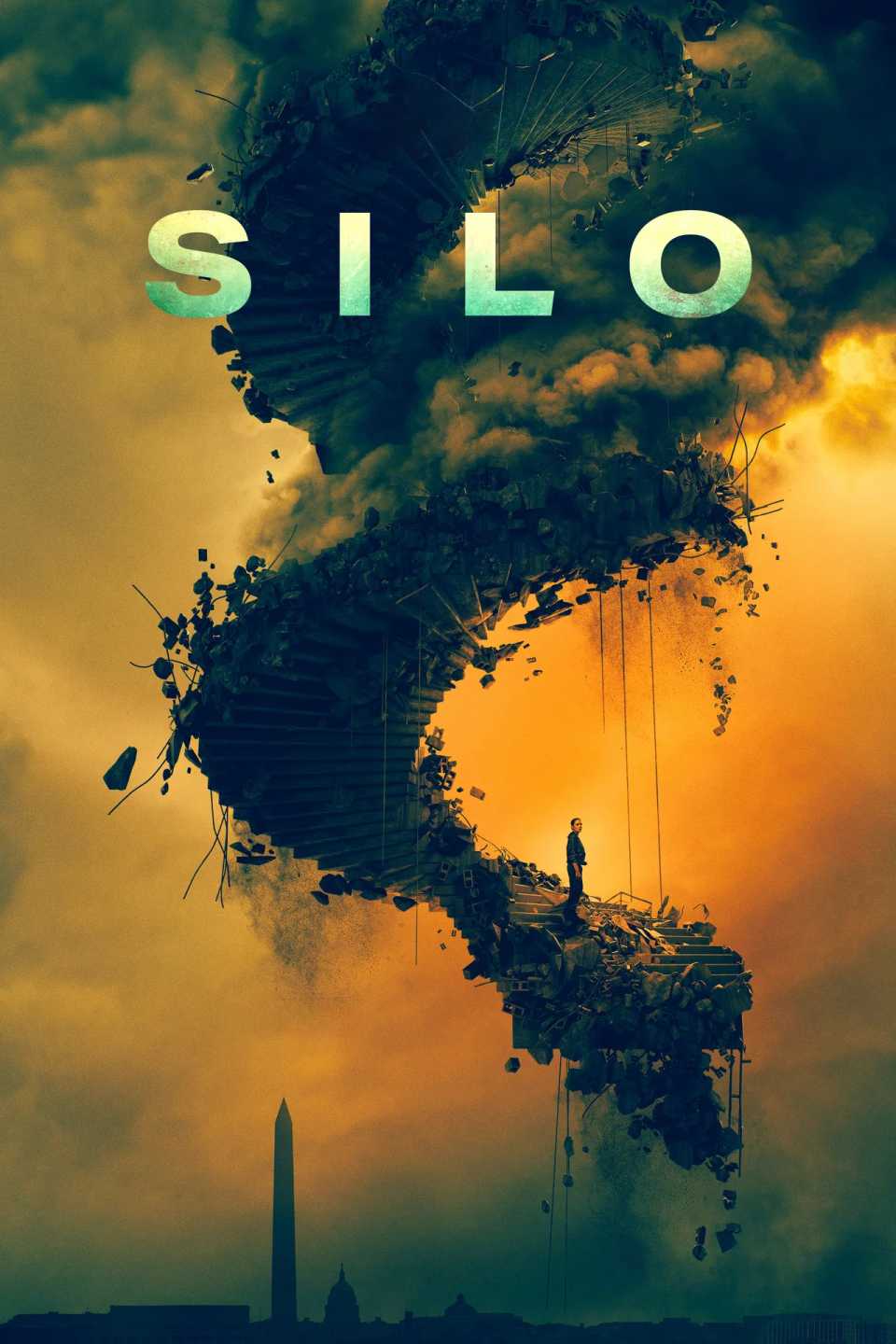
Apple TV’s masterful adaptation of Hugh Howey’s book series, Silo, has earned acclaim from critics and viewers alike, with Collider’s Tania Hussain calling the show’s penultimate season “a new standard for what prestige sci-fi can be.” As with every adaptation, however, there will always be creative departures from the source, and for creator and showrunner Graham Yost, one of the biggest came in the fate of the formidable Bernard Holland, portrayed on screen by Academy Award winner Tim Robbins.
Instead of perishing in the fire, as in the books, Silo gives Holland a second chance, providing the antagonist with the possibility of redemption. In this interview with Collider’s Steven Weintraub, Robbins discusses this divergence from the original story, when he was first made aware of his character’s surprising fate, and why he was most interested in exploring this fresh take on Holland. Robbins also talks about the physical challenges of portraying Holland, why the role resonated with him, and why a show like Silo speaks to audiences on a different level today.
Tim Robbins Calls Bernard’s Change from the Books a Gift
He also discusses the dangers of being a “truth teller.”


COLLIDER: What’s interesting is that Graham [Yost] has changed what happens to Bernard from the book to the show in that in the book, he dies in the fire, and in this, he survives. When did you find out that there would be a big change coming?
TIM ROBBINS: Toward the middle of Season 2, I was tipped off about what happens in Season 3.
What was your reaction reading all the scripts of Season 3 and seeing the arc?
ROBBINS: What a gift to be able to play a completely different version of Bernard, who has been altered not only physically because of the injuries from the end of Season 2, but also just a complete makeover internally. Realizing that up until that point, his entire life was a lie, that’s a great arc to play as an actor. That’s a gift. That’s one of those rare moments where you get to play someone whose whole worldview has been shattered, and he realizes that he’s been used by a system that did not have his best intentions in mind, or, for that matter, the best intentions of the silo.
If Bernard could talk honestly to the people of the silo for one minute, what do you think he would actually say?
ROBBINS: That’s the danger of the truth teller. That’s why they are silenced. That’s why they’re marginalized. That’s why they’re excluded from society. Someone who’s been inside, who has seen the internal machinations of power and can expose power for what it is, that’s the most dangerous person. So, I believe if he could talk to the entire silo, he’d just lay down the truth, and in essence, he knows there’s no way to accomplish that, but he can associate with people that can carry the truth on when he’s gone.
Tim Robbins Was Ready for Bernard’s Redemption Arc
He also discusses the challenges of filming through recovery.

Talk a little bit about filming your death scene in Episode 9. Did they purposely save that for your last day of filming or near to one of the last things?
ROBBINS: No, I still had to do other things after the death scene. It was just the way things are scheduled. But you get used to that as an actor. You could be playing the end before the middle, you know? So, you just have to be clear on what your beats are and where you are, as far as the character’s development goes.
The other challenge I had was that I was in various stages of recovery throughout the course of the season, so the voice had to be modulated from severely injured to getting better.
I wanted to ask you specifically about your voice because your performance is just so good on the show, but especially this season. Can you talk about finding that voice and what it was like on your vocal cords when you were doing it?
ROBBINS: It wasn’t great, but I always made sure that we could nail the takes pretty early and not do thousands of them, and it was fine. The mindset was that every time I did a scene, I had to be in severe pain. Even later, as he healed, that pain is still there, and that’s pretty intense. You just gotta commit to it. The good news is that I’ve done it long enough that I know how to conserve my energy for the moment when the camera rolls and not torture myself too much so that I’m actually hurting myself. In the past, I might have hurt myself in order to achieve what I’ve done. [Laughs]
Do you think Bernard enjoyed his role in the silo, or if he could go back in time and not take the job in IT, do you think he would not take the job?
ROBBINS: If he knew what he knew at the end? Probably not. The thing about power and influence is it kind of sucks you in gradually. You become more and more trusted to become in the inner circle of knowledge, and by the time you’re there, you don’t even know you’ve been corrupted. It’s the slow drip. It’s the frog in the pot of water that’s slowly boiling. By the time you realize what’s being done, you’re already cooked.
What fascinated me about this role was getting inside the mind of someone in a position of influence and power who has rationalized the way they live. Everyone tells themselves they’re virtuous. Every bad guy has acted from virtue and special knowledge. That special knowledge makes them someone who has to perform tasks that are difficult, but they convince themselves they’re sacrificing in order to retain their power, rather than compromising in order to maintain their power. It’s a curious thing, and it happens all the time. It’s why we have people leading us down terrible roads that are justifying their behavior by saying, “It’s a big lie for the greater good. We must tell this lie because if everyone knew what was really going on, they wouldn’t be able to handle it.” And that’s such a condescending, patronizing way that always leads down a road that leads to terrible destruction and war and death.
So, I was really interested to get inside that head, but also to be able to play the third season, where I was able to move towards redemption. The idea that once certain truths have been presented to you, you start to see the world in a different way, and from that point forward, you have a choice. You can either ignore them and retain your power, or you can try to salvage what soul you have left by becoming a truth-teller.
Tim Robbins on How ‘Silo’ Reflects Our World Today
“Trauma only is healed by shedding light on it and dealing with it.”
When did you realize that people really love the show? Because everyone I know who watches it is very passionate about the series.
ROBBINS: Well, that’s great to hear. I kind of suspected that it was going to happen when I first read the script, because what it was doing was telling the story metaphorically, or in a fiction set in the future. It was telling the story of what we were going through right now. We started shooting this at the tail end of the two-year lockdown, and here I was reading a script that was talking about a society that’s locked down, that has rules about information that if people go against the narrative, they are either excluded from society on a sub-level of the silo or they’re kicked out of the society completely by going outside.
That rang very true to me as someone who had questions about why we were in this lockdown for so long. It’s unprecedented in world history what happened a few years ago. Never before in history was the entire world shut down. So, for me, and I’ve experienced it through the work that I do in education with The Actors’ Gang, seeing the trauma that the kids went through and the recovery that they’re going through, the arts are very effective in bringing sentient beings back to life. Having experienced that, I realize that trauma doesn’t go away by ignoring it or saying it didn’t happen or just saying, “Let’s move on. Let’s just forget that that happened.” Trauma only is healed by shedding light on it and dealing with it.
What great drama can do, from its inception back in Greece thousands of years ago, when they would do plays that would talk about what had just happened in their society — great death and destruction from war or famine, or great pain and suffering from a plague that had just ravaged Athens — they would perform these plays and the citizenry would come out, and there would be a community that dealt with the trauma and put it out into the light and asked big questions about it. They experienced a mutual catharsis that allowed them to move on as a society. You can’t move forward without acknowledging what just happened.
What I feel is great about Silo is that it tells this story once removed, and that is why I believe the audience has responded so strongly to it. We need this. This is part of what drama is: to tell stories, to bring light into the traumatic events that we’ve just experienced.
Silo Season 3 is available to stream on Apple TV.

- Release Date
-
May 5, 2023
- Network
-
Apple TV
- Showrunner
-
Graham Yost
- Directors
-
Morten Tyldum, David Semel, Michael Dinner, Aric Avelino
- Writers
-
Graham Yost, Hugh Howey, Jeffery Wang, Lekethia Dalcoe
You must be logged in to post a comment Login