Entertainment
Space Missions Launching To Pave The Way Back To The Moon
By Brian Myers
| Published


After being absent from the surface for more than five decades, NASA has scheduled a series of manned trips to the moon. Before brave astronauts are launched into orbit above its surface, private aerospace companies have announced their own unmanned endeavors onto lunar soil as well.
Four separate missions will be carried out in the coming months. Each one carries its own objective, with the overall scope hoping to aid the return of humankind’s 2028 trip to the moon.
The Artemis Program’s Influence

The last time the Earth’s lone satellite hosted people was more than 50 years ago. On December 11, 1972, Apollo 17’s Lunar Lander touched down on the surface of the moon, carrying with it the mission’s Commander Gene Cernan and module pilot Harrison Schmitt. The NASA astronauts stayed nearly three days, collecting lunar samples, setting up testing equipment, and completing three moon walks. On December 14, Cernan and Schmitt departed and returned to Earth in the Command Module that was operated by Ronald Evans (NASA).
Over the next several decades, interest in returning to the moon’s surface was impeded by a variety of factors. Technological advancements led to some arguing that robotics was the safest and most economical option for further exploration, while NASA‘s Space Shuttle Program was more popular politically than returning to the big rock that orbits our planet. Science News Today sums up these sentiments, claiming that “sustained lunar exploration would require infrastructure and investment comparable to Apollo, without the same political motivation to justify it.”

The creation of the Artemis Program in 2017 has helped to ignite a new generation’s passion in human lunar exploration. The next set of human footprints are slated to lay down treads in 2028, with multiple unmanned lunar landing crafts scheduled over the next two years. After two successful missions last year by Firefly Aerospace and Intuitive Machines (USA Today), excitement among the aerospace community and the public at large has begun to swell.
Upcoming Missions Are Imminent
The series of 2026 missions will begin with Pittsburgh-based Astrobotic and its Griffin-1 program. After the failed attempt of the company’s Peregrine lander in 2024, Astrobotic is aiming to place two moon rovers at the South Pole. This is Astrobotic’s first attempt at a lunar landing since Peregrine burned up in the Earth’s atmosphere after its launch, the result of a massive propellant leak.

A 322-foot rocket designed by Amazon frontman Jeff Bezos’ Blue Origin is also aiming for a lunar South Pole landing this year. The unmanned craft is expected to carry cargo and rovers for upcoming Artemis manned missions to the moon.
Following up on its success with last year’s Blue Ghost mission, Firefly Aerospace will be aiming for the far side of the moon this year. Touting the upcoming Blue Ghost 2 as “bigger and bolder,” the company will carry equipment and supplies for both the upcoming Artemis missions and future commercial customers. Additionally, Firefly will leave its Elytra Dark Vehicle in the moon’s orbit for surface imaging purposes over the next five years.
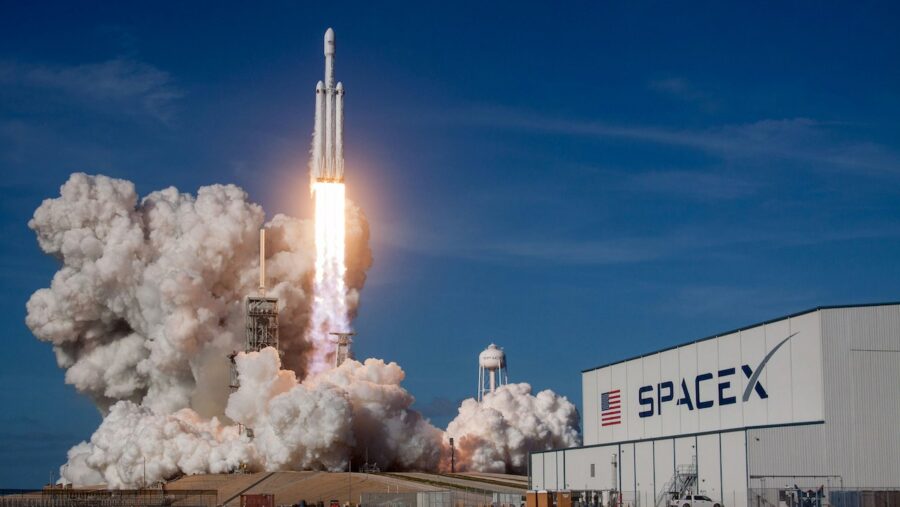

In 2024, Houston’s Intuitive Machines became the first private company to successfully place a lunar lander on the moon. Coming in hot on the heels of its Athena Lander, the company hopes that its latest endeavor, named IM-3, will make a soft landing on the moon’s South Pole. The IM-3 is scheduled to launch at the end of the year and will hitch a ride to the moon’s orbit attached to a SpaceX Falcon 9 rocket ship.
You must be logged in to post a comment Login