Entertainment
‘Star Trek’s Best Series Has Quietly Outdone ‘The Next Generation’

Star Trek, as we know it, owes its legacy to a fanbase that has never stopped showing up, especially for its best moments, most notably in The Next Generation. Star Trek: The Next Generation was a true turning point for the franchise, seeing as it modernized Gene Roddenberry’s universe and set a new standard for modern sci-fi television.
Originally airing from September 28, 1987, to May 23, 1994, the space epic is the franchise’s second live-action series and took heavy inspiration from the first-ever Star Trek entry, The Original Series. Unlike its predecessor, however, The Next Generation moved away from relying strictly on a central trio, Kirk, Spock, and McCoy. Instead, it built a true ensemble cast featuring professional Enterprise crew that acted more like representatives of a utopian future than cowboys in space.
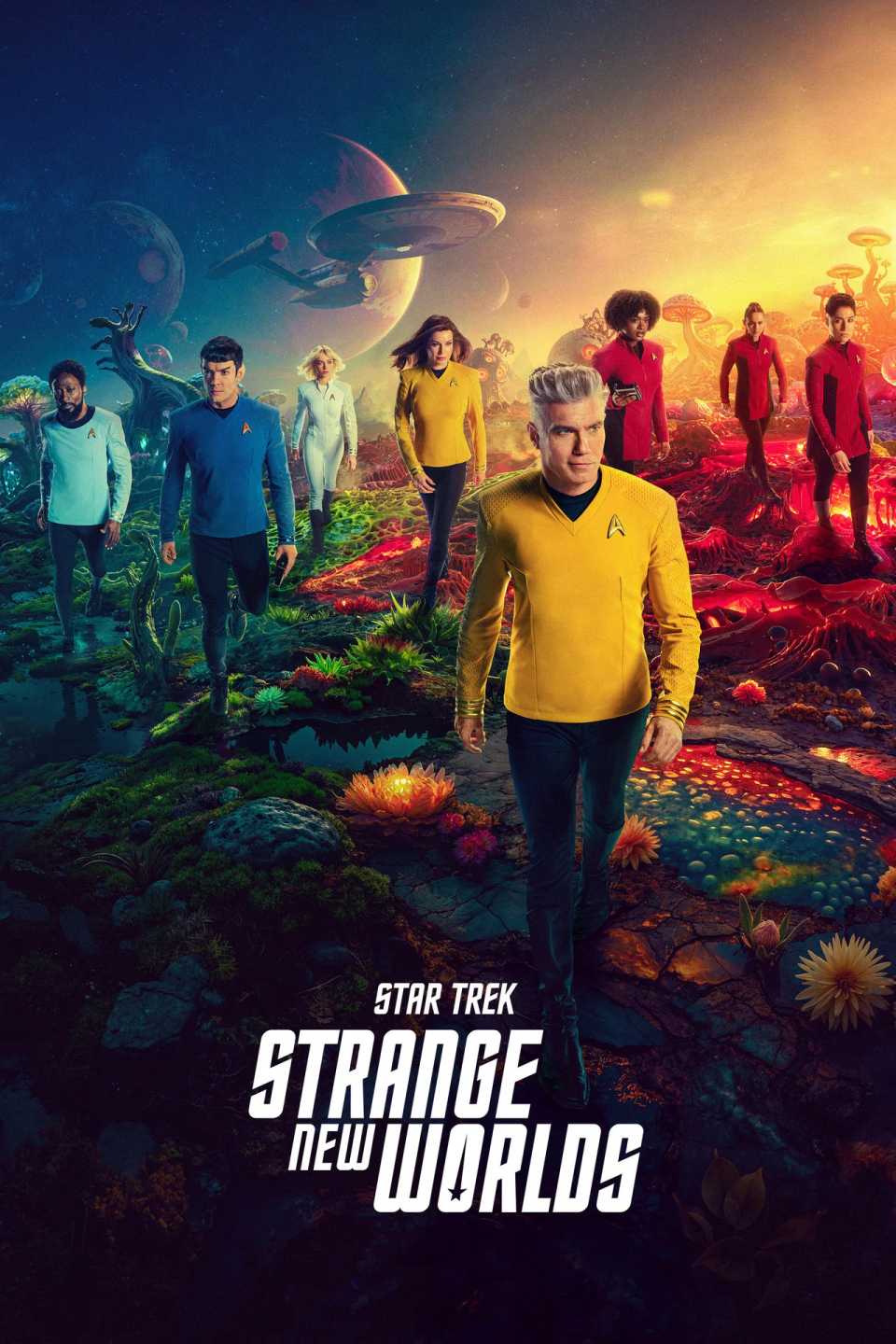
Nearly three decades after The Next Generation went off the air, another similarly phenomenal entry arose: Star Trek: Strange New Worlds. Often regarded as the spiritual successor to TNG, Strange New Worlds has consistently won over critics and lifelong fans alike with every passing season, proving that the franchise’s episodic, character-driven storytelling still works today. Now in its fourth season, the show has refined The Next Generation’s classic formula for a modern audience in ways few thought possible.
‘Strange New Worlds’ Won Over Critics From the Start


Right from its premiere in 2022, Strange New Worlds was met with critical acclaim, earning a Certified Fresh rating of 98% on Rotten Tomatoes for Season 1, which immediately placed the series among the highest-rated in the franchise. To date, it hasn’t gone below 80% across every season on the review aggregator website; even the latest Season 4 debuted to a perfect 100% score.
By comparison, The Next Generation, which holds a 92% Tomatometer score, is remembered far more for its evolution than its debut. While later seasons produced some of the greatest episodes in Star Trek history, the show’s uneven first two years remain a frequent talking point among Trekkies. That difference matters because first impressions shape a series’ reputation. Strange New Worlds, which sits at 90%, never had to overcome an inconsistent beginning and understood exactly what made the franchise special.
‘Strange New Worlds’ Perfected the Star Trek Formula
Much of Strange New Worlds‘ success comes from how effectively it balances old and new. Like The Next Generation, it embraces classic Star Trek episodic storytelling and adventure-of-the-week structure while still developing its characters across the seasons. But unlike many modern streaming dramas that rely heavily on serialized plots, the four-season series refines the franchise’s formula without feeling dated.
In one episode, Strange New Worlds unexpectedly delivers a musical, the very first in Star Trek history, “Subspace Rhapsody.” And in the next, it’s exploring courtroom drama in “Ad Astra per Aspera,” before seamlessly crossing over with Star Trek: Lower Decks in “Those Old Scientists,” effortlessly balancing the distinct tones of both series.
No matter how ambitious its genre experiments become, every episode of Strange New Worlds remains unmistakably Star Trek at its core. Under Captain Christopher Pike, the series never loses sight of the optimism, curiosity, and humanity that have defined the franchise, values that The Next Generation helped popularize. Still, the difference is clearer when compared with the older series: although it excelled at exploring ethical dilemmas, it rarely ventured this boldly across genres, and when it did experiment, the results were far more uneven and divisive.
‘Strange New Worlds’ Features Fewer Weak Episodes

- (L-R): Paul Wesley as James T. Kirk and Ethan Peck as Spock in season 4, episode 2, of Star Trek: Strange New Worlds streaming on Paramount+, 2026. Photo Credit: Jan Thijs/Paramount+
Looking at the critical reception of Strange New Worlds and The Next Generation, it stems directly from how both series were constructed. The classic drama operated under the draining 22-26-episode syndication model of the late 1980s and ’90s, forcing writers to prioritize quantity over consistent quality. So with 178 episodes across seven seasons, the inconsistency was almost unavoidable.
While The Next Generation gave fans all-time classics like “The Best of Both Worlds” and “The Inner Light,” it also produced its fair share of misfires. Early episodes such as “Code of Honor” remain among the most criticized in the franchise, while “Sub Rosa” has become infamous as one of Star Trek’s most divisive and frequently hate-watched episodes. Even many longtime fans admit there are entries they simply skip on rewatches.
Those uneven early years are reflected in the show’s critical reception. The first season struggled with frequent writer turnover and an uncertain creative direction. At the same time, the strike-shortened second season holds a lukewarm 57% critics’ score on Rotten Tomatoes, ending with the widely panned clip-show finale “Shades of Gray.” Moreover, it wasn’t until Season 3, particularly the highly memorable “The Best of Both Worlds,” that The Next Generation truly found its footing.
Meanwhile, Strange New Worlds benefits from a tighter 10-episode season, giving each story more room to be carefully crafted without the need for filler. As a result, the series has produced very few episodes that critics or audiences consider weak. One of its finest is the Season 1 finale, “A Quality of Mercy,” which cleverly reimagines The Original Series episode “Balance of Terror.” By exploring how Pike and Kirk would handle the same crisis differently, the episode offers a compelling meditation on leadership, sacrifice, as well as destiny, and it is widely regarded as one of the strongest episodes of modern Star Trek.
The Next Generation will always be one of the most important series in Star Trek history. But when it comes to consistent critical acclaim and overall storytelling, Strange New Worlds may have quietly outdone the classic. Even so, it doesn’t replace TNG‘s legacy; instead, it builds on it, proving that Star Trek can still evolve while staying true to everything that made the franchise great.
Both Star Trek shows stream on Paramount+.

- Release Date
-
2022 – 2027-00-00
- Network
-
Paramount+
- Showrunner
-
Henry Alonso Myers, Akiva Goldsman
- Directors
-
Dan Liu, Amanda Row, Maja Vrvilo, Akiva Goldsman, Dermott Downs, Eduardo Sánchez, Jeffrey W. Byrd, Jonathan Frakes, Jordan Canning, Leslie Hope, Valerie Weiss, Sydney Freeland, Christopher J. Byrne, Rachel Leiterman
- Writers
-
Onitra Johnson
You must be logged in to post a comment Login