Entertainment
Star Trek’s Coolest Bad Guys Accidentally Created The Franchise’s Worst Episode
By Chris Snellgrove
| Published


Pop quiz, hotshot: what do you think the worst episode of Star Trek is? There are some major contenders, including vintage stinkers from The Original Series like “Spock’s Brain” and later slop like “Code of Honor.” However, most fans agree that the worst offender is “Shades of Gray,” the Season 2 finale of Star Trek: The Next Generation. The reason this episode has such an awful reputation is that it’s Trek’s first and only clip show, one that happens to be just as cheap as it is boring.
Ending on such an awful note seemed particularly weird for TNG, whose second season included such bangers as “Q Who?”, which introduced us to the Borg. As it turns out, though, there is a surprising relationship between these two episodes. If The Next Generation hadn’t introduced the bionic baddies who would become the franchise’s greatest villains, “Shades of Gray” would never have been made!
They’re Taking Our Jabs


Here’s a quick recap (just think of it as the text equivalent of a clip show): “Shades of Gray” is an episode where Riker gets a virus from a plant, and he only has hours to live. In sickbay, Dr. Pulaski hooks him up to a device designed to stimulate his neurons so that he can fight the virus off. Of course, the “stimulating neurons” plot is just an excuse for the episode to turn into a clip show where Riker flashes back on various moments from the first couple of seasons. All of these clips inexplicably help to cure Riker, though they will torment Star Trek fans for the rest of our natural lives.
Again, “Shades of Gray” was the first clip show in Star Trek history, and it was so bad that the franchise never made this mistake again. That leads to a fairly obvious question: why did the producers create this episode in the first place? Even in the ‘80s, clip shows had a reputation for being cheap, lazy, and uninspired. Why, then, would a sophomore series trying to be taken seriously resort to the oldest and most hated trick in television history?
Money Talks, Trek Walks

The answer is, of course, money. It might not exist in the 24th century (at least, for Federation types), but cold, hard cash was still very important in the 20th century. Paramount only had so much money to produce Star Trek: The Next Generation, and some episodes cost more than others. This often involved compromise, so if the network shelled out more money for certain scripts, others would get short shrift. This is basically where bottle episodes come from: having certain episodes that require fewer actors and sets makes big, blockbuster episodes that much more affordable.
“Shades of Gray” is much cheaper than standard episodes, and the reason for this is that the network had already blown through quite a bit of cash earlier in the season. As recorded in Captain’s Logs: The Unauthorized Complete Trek Voyages, episode director Rob Bowman said that “Shades of Gray” was Paramount’s way of saying, “We gave you more money for ‘Elementary, Dear Data’ and the Borg show. Now, do us a favor and give us a three-day show. So that’s what you do. It’s an accepted part of the medium.”
When It Comes To Money, Resistance Is Futile

“Elementary, Dear Data” was the episode in which Data played Sherlock Holmes on the holodeck, running afoul of a Moriarty who managed to endanger the entire ship. That episode was also directed by Rob Bowman, who previously noted how expensive it was for Paramount to create the Victorian-era set for Data’s mystery-solving shenanigans. He estimated the cost to be $200,000, which was a huge investment for what was meant to be a one-off episode.
“The Borg show,” of course, refers to “Q Who,” which introduced the Borg into the franchise. While this episode didn’t require the production crew to recreate 19th-century England, it did require them to create an entirely new bionic race as well as a ship design: the iconic Borg cube. Additionally, the episode had a cool new Cube interior set and action scenes galore. On top of that, “Q, Who” featured the return of John de Lancie, the most beloved guest star in Next Generation history. All of those costs added up, leaving very little money left to create the Season 2 finale.
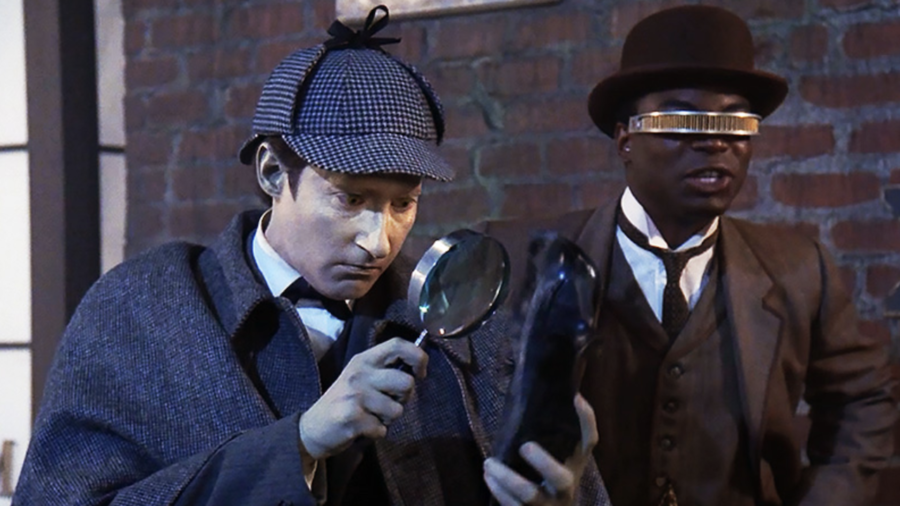
That’s how we got “Shades of Gray:” after spending so much money bringing the Borg to life, the TNG production crew had to create a clip show on a shoestring budget. It was also shot at a record pace of only three days. For context, most early episodes took eight days to shoot, and Rob Bowman was supremely annoyed that he previously had to shoot “Elementary, Dear Data” in only seven days because he felt so rushed. A three-day shoot was unheard of, and the proverbial need for speed is a big part of why this episode (which only featured three sets) is so colossally bad.
Totally Worth It

Arguably, though, “Shades of Gray” was worth it, because this episode was such a hot mess of low-budget slop, the producers had enough money to introduce the Borg into the franchise. They quickly became fan-favorite villains, eventually serving as the Big Bads of Star Trek: First Contact, widely considered the best of the TNG films. Later, they served as the main villains of Voyager before popping up to torment the Enterprise crew one last time in the final season of Star Trek: Picard.
Without the Borg, it’s entirely possible that Star Trek wouldn’t have become such a mainstream cultural phenomenon. Fortunately, these ruthless robots supercharged the franchise, giving fans the coolest villain since Khan. In a true bit of cosmic irony, though, we would never have gotten arguably the greatest bad guys in the franchise if it weren’t for the worst Star Trek episode ever made.
You must be logged in to post a comment Login