Entertainment
Star Trek’s Secret Trilogy Is Now Streaming For Free
By Chris Snellgrove
| Published


For the most part, the Star Trek movies are generally self-contained adventures, which is a good thing: it’s possible for a newcomer (likely dragged to the theater by a superfan) to enjoy these films without having watched the 100+ episodes that came before. That’s a big part of what made Star Trek (2009) so fun: packed with action scenes and unforgettable characters, this movie appealed to everyone, including those who never watched so much as a scene of The Original Series. But decades before that, Paramount gave us something that most fans didn’t even notice: a secret trilogy of interconnected films centered around the franchise’s most iconic character.
Taken on their own, the first three Star Trek movies (The Motion Picture, The Wrath of Khan, and The Search for Spock) are very different. The first is a slow, big-budget episode of TOS, the second is an action extravaganza, and the third is a character-driven, world-building drama. However, there’s something powerful that unites these movies, and once you notice, it will completely change how you view them. Here it is: for all their differences in story, theme, and tone, the first three Trek movies are a secret trilogy based around Leonard Nimoy’s Spock. Furthermore, it’s a trilogy designed to give him more character growth than anyone in the franchise!
Spock Was A Changed Man

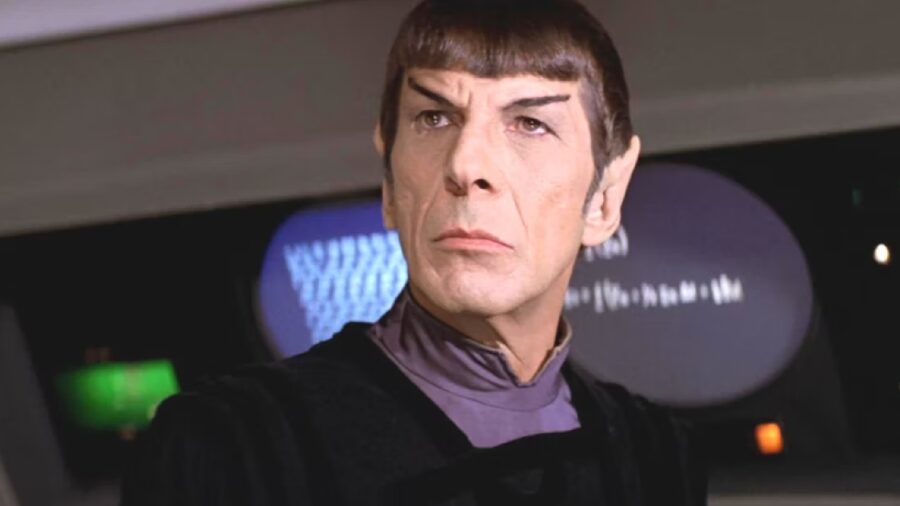
At the beginning of Star Trek: The Motion Picture, Spock is very different from the way we saw him in The Original Series. In that show, he periodically showed emotion, whether it was extreme sadness (like crying due to a creepy space virus in “The Naked Time”) or extreme happiness (like bursting into a huge grin when he discovered Kirk was alive in “Amok Time”). When TMP begins, he is undergoing the Kholinahr ritual, which is intended to fully purge him of emotion. This would make him the ultimate Vulcan, one who has chosen logic over everything else. However, he interrupts the ritual because he receives telepathic signals from V’ger.
V’ger is, of course, the giant, unstoppable space entity headed straight for Earth. Spock rejoins Kirk on the Enterprise, which is tasked with saving the planet. Everyone is happy to see him, but he is short and rather rude with them as a lingering effect of Kholinahr. Later, Spock gets in an EV suit and actually mind-melds with V’ger; when he recovers, he actually laughs at the irony that the giant vessel is like himself: a sentient being who aspired to pure logic, only to realize how little he actually understood. V’ger is haunted by questions that presumably haunt Spock, too: “Is this all that I am? Is there nothing more?”
The Needs Of The Many
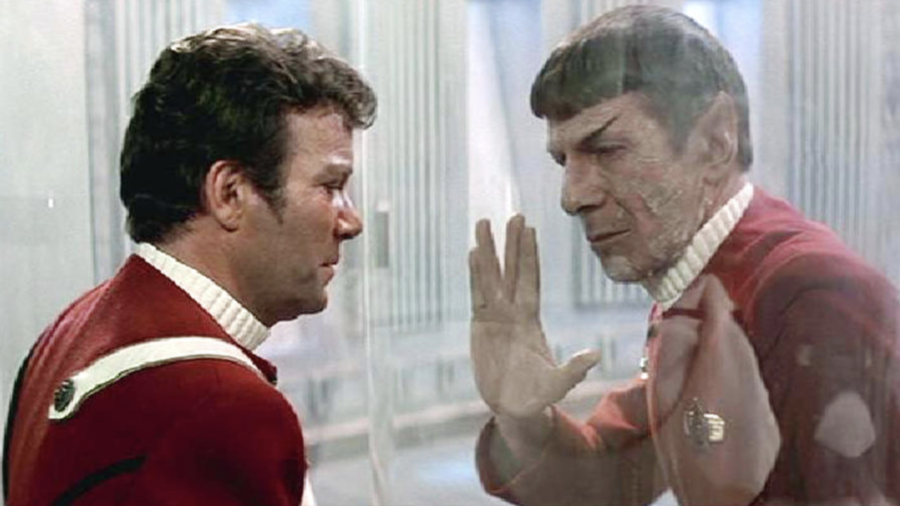
In true Star Trek fashion, they reach a kind of diplomatic solution with V’ger, effectively saving the Earth. But what does this franchise history lesson have to do with Trek’s secret trilogy? In The Wrath of Khan, Spock is effectively a new man, one transformed by his contact with V’ger. He still loves logic, claiming he has no ego to bruise and famously claiming that the needs of the many outweigh the needs of the few (or the one). But he pairs that with light humor in some of his interactions with Saavik (“You lied!” “I exaggerated”) and humanity in his interactions with Kirk (“I have been…and always shall be…your friend”).
Spock ultimately dies, poisoned by the radiation he received when saving the ship. It’s a touching moment, but most Star Trek fans don’t realize its significance. Spock has spent the film low-key exploring his half-human heritage: he enjoys reconnecting with his human friends, ribbing Kirk about his “shall we say, unique?” solution to the no-win scenario and even making gallows jokes before his death (when McCoy tells him no human can survive the radiation, he replies, “As you are so fond of observing, doctor, I am not human”). But he dies embracing the pure Vulcan logic of meeting the needs of the many (the entire crew) rather than the one (himself).
Somehow, Spock Returned

In Star Trek: The Motion Picture, Spock went from wanting to embrace pure logic to realizing that even logic has limitations. In The Wrath of Khan, he was happier because he was gently indulging in his human tendencies. Still, he died by the dictates of Vulcan logic. What happens in the next film? In The Search for Spock, we find out his body was resurrected by the Genesis device. Eventually, Kirk gets him to Vulcan, where his mind is safely transferred out of Dr. McCoy. Afterward, Kirk gives his very human reason for saving his oldest friend: “Because the needs of the one …outweigh the needs of the many.”
Spock learned the importance of emotions to understanding the universe in The Motion Picture, but he died following the dictates of Vulcan logic in The Wrath of Khan. After being reborn in The Search for Spock, he learned that logic doesn’t always tell us the right thing to do. Sometimes, it’s worth it to sacrifice your life to save your closest friends; other times, it’s worth it to throw your entire career away because a buddy needs you. Spock is half-human, half-Vulcan, and he finally realizes that understanding the universe means fully embracing the wisdom inherent in both logic and emotion.
Only The Beginning Of Wisdom
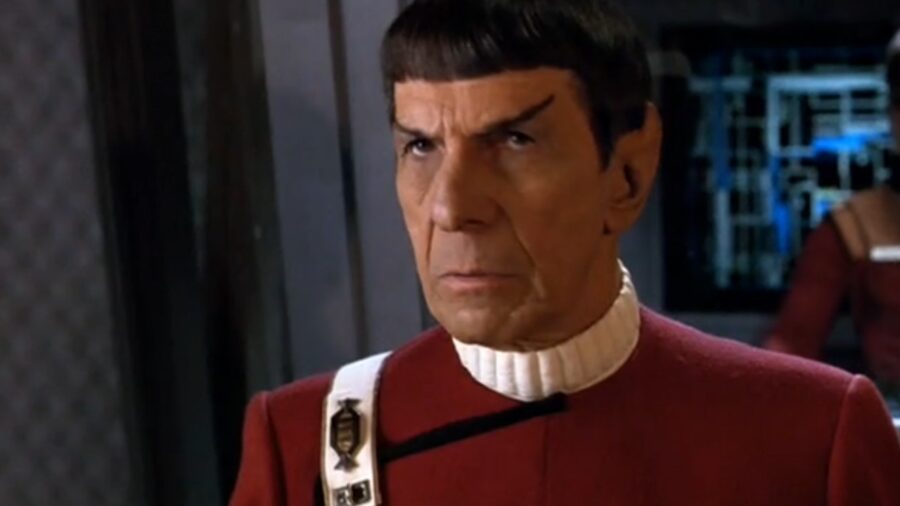
That’s what makes the first three Star Trek movies a secret trilogy: if you look past the colorful villains and all the Kirk drama (and boy, is there a lot of it), you’ll find that these movies are all about transforming Spock and deepening his character. That depth is evident in the final TOS film, The Undiscovered Country. There, he tells another Vulcan protege (who, notably, was originally written as Saavik) “that the universe will unfold as it should.” When she asked if this was logical, he responded, “Logic is the beginning of wisdom, Valeris, not the end.”
It’s something that Spock of The Original Series would never have said, and Spock at the beginning of The Motion Picture would have considered downright obscene. But thanks to the secret Star Trek trilogy, this Vulcan has realized that Kholinahr is basically a lie: embracing pure logic means blinding yourself to the greater mysteries of the universe. Perfectly combining logic and emotion, however, allows him to achieve insights that elude most of his entire race. If you want to see this famous character learn this powerful lesson, you don’t need to travel to Vulcan. Just travel over to the remote and head over to Tubi, where the first three Star Trek films are currently streaming for free!
You must be logged in to post a comment Login