Entertainment
Star Wars Finally Succeeded By Embracing Its Worst Failure
By Chris Snellgrove
| Published


Star Wars has been trying to frantically pull itself out of a tailspin for many years now. When did this franchise first start facing major problems, though? Arguably, the beginning of the end was Solo: A Star Wars Story. That movie’s budget had already ballooned once Lucasfilm switched directors, and many fans were already annoyed by The Last Jedi. They ended up voting with their dollars, and Solo ended up becoming the lowest-earning live-action Star Wars movie ever made. That’s a pretty grim achievement, one which was recently surpassed by an even lower-earning franchise film: The Mandalorian and Grogu.
While the Star Wars films continue to flounder, the franchise has found a bit more success on the small screen. Fans have generally loved shows like Andor, Ahsoka, and The Mandalorian (at least, the first two seasons), and that goes double for animated fare like Maul–Shadow Lord and the final season of The Clone Wars. What has made these shows so successful, though? Believe it or not, it all comes from embracing Star Wars’ biggest failure. That is, Lucasfilm finally learned to lean into the best parts of Solo, which audiences are now responding to like they never have before.
See You Later, Space Cowboy

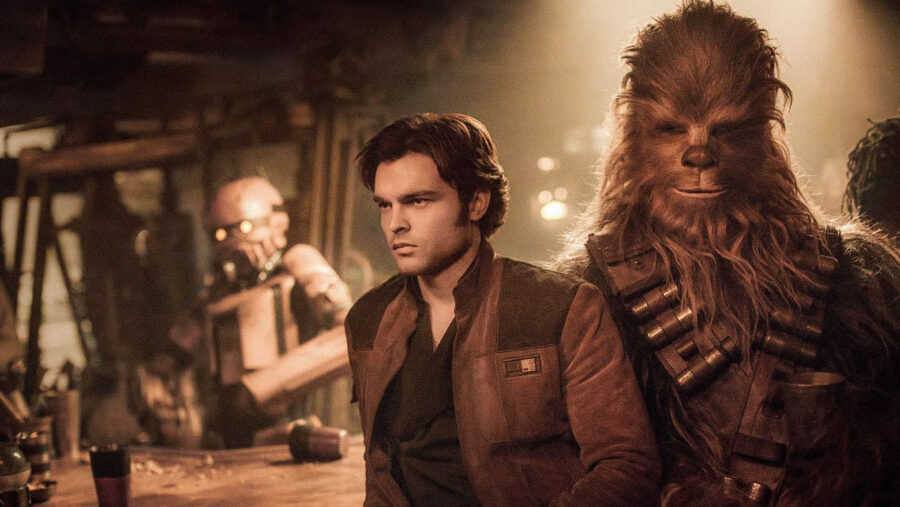
I’ve always had complicated feelings about Solo: A Star Wars Story. On the one hand, I think Lucasfilm made a huge mistake by firing Phil Lord and Christopher Miller as directors. These two went on to create the Spider-Verse movies, and I can’t help but think their more comedic take on a galaxy far, far away would have been awesome enough to change the fate of the franchise for the better. The final cut was directed by Ron Howard, who tried to create a more traditional sci-fi adventure. While I think Lord and Miller’s cut would have been better, Solo is still a great film: it has plenty of action, romance, and characterization, featuring actors who have surprisingly great chemistry.
It might have taken nearly a decade, but both Lucasfilm and the Star Wars fandom have begun belatedly acknowledging how great Solo is. How can you tell? Simple: some of the best TV shows in the franchise have taken their creative cues from that movie. The most obvious example is the recent animated series Maul–Shadow Lord. Part of what has made the show so successful is that audiences love its exploration of the seedier side of Star Wars, including vicious crime syndicates and bloodthirsty characters who would fit right in at the Mos Eisley cantina back in A New Hope.
The Best Shows Came From The Worst Movie

This was, of course, the driving narrative force of Solo: A Star Wars Story, which tracked Han Solo’s increasing involvement with assorted criminals and the vicious Crimson Dawn Syndicate. Back in 2018, fans thought it was weird for this movie to focus on characters who are (at best) morally grey instead of upstanding, morally upright heroes. Now, though, the most beloved Star Wars shows focus on these kinds of characters, and audiences just can’t get enough of them. This includes Andor, which showed how the Rebellion could never have thrived without characters who are willing to make hard decisions and even harder compromises in the name of the greater good.
Of course, part of what makes Cassian Andor a compelling protagonist is that, while he’s rough around the edges, he is determined to do the right thing. Arguably, this is another major inspiration from Solo: A Star Wars Story. In that film, Han Solo is the archetypal outlaw with a heart of gold. Aside from Andor, other popular characters were made in that mold, including Din Djarin from The Mandalorian, Boba Fett from The Book of Boba Fett, and Jod Na Nawood in Skeleton Crew.
Found Families And Dark Mentors

How else did Star Wars TV take its cues from Solo? Like that movie, there are multiple shows that emphasize the importance of found family. The core of The Mandalorian is the relationship between the titular character and the little baby Jedi that he adopts. Ahsoka, like Rebels before it, emphasizes how Ezra and Sabine are like siblings to each other. Incidentally, Ahsoka also borrows Solo’s use of a dark mentor character to demonstrate the relationship between Baylan Skoll and Shin Hati. For all its faults, The Acolyte also followed this trope when Osha rejected the Jedi and decided to train under Dark Side user Qmir.
The similarities go on, really. The Mandalorian, The Book of Boba Fett, and Andor all focused more on the ordinary people of the galaxy, something that arguably started with Solo. Additionally, Andor, Obi-Wan Kenobi, and The Book of Boba Fett expanded our knowledge of a familiar character, just like Solo did. Long story short? Solo wasn’t a perfect movie, but it’s far better than its reputation. If you need any proof, just look at the most ambitious TV shows in which Lucasfilm has spent nearly a decade creating new things from the creative building blocks of a box office disaster.
Killer TV shows growing from the corpse of the franchise’s first box office failure? Like Star Wars’ best character might put it, never tell me the odds!
You must be logged in to post a comment Login