Entertainment
Starfleet Academy’s End Reveals The Biggest Lie About Star Trek
By Chris Snellgrove
| Updated


Recently, Paramount made the surprisingly sudden decision to cancel Starfleet Academy shortly after the end of its first season. Starfleet Academy was designed to attract younger audiences, and it failed to do so. Its characters and storytelling drove away older fans while failing to capture that coveted youth demographic.
With any luck, Paramount will learn from this show’s failure and learn the truth behind the biggest lie in Star Trek. Namely, that the franchise must court younger viewers to survive. That’s never been true. In reality, simply following the blueprint for The Original Series is enough for new shows to attract both younger and older audiences, a formula that has worked for nearly four decades.
Fandom: The Next Generation

The most obvious example that the Original Series formula works is, of course, the success of Star Trek: The Next Generation. The show featured a new crew and new adventures, but at its heart, it was about the starship Enterprise and its mission to explore strange new worlds. We also got some entertaining new characters, but more of them are throwbacks to Kirk’s era than you might think.
The android Data was clearly meant as a stand-in for Spock, and like the legendary Vulcan before him, his attempts to understand what makes humans tick served as a reflection of our own humanity. Riker was (as confirmed by the Season 2 Writer’s Guide) modeled after Captain Kirk. Worf was an ongoing reminder of Kirk’s old nemesis, the Klingons. Dr. Pulaski channeled much of Dr. McCoy’s famous crankiness, and even wunderkind Wesley Crusher was an echo of Chekov, whom Gene Roddenberry created to appeal to younger audiences.
Simply put, Star Trek: The Next Generation very explicitly modeled itself after The Original Series. Its success was so (ahem) out of this world that it launched the franchise’s Golden Age. An era that ended only when Paramount finally began deviating from its winning formula.
Playing The Hits

It’s not hard to see how Star Trek: Voyager similarly built off the formula of The Original Series. As with TNG, producers once again focused on an intrepid crew constantly making contact with new and exciting alien life. The premise that our titular starship was stranded on the other side of the galaxy helped this show channel TOS even more explicitly by bringing back the vibe of going where (in a quite literal sense) no man had gone before.
There were, of course, parallels with TOS characters: Tuvok is Spock 3.0 (no, I’m not counting Xon, and you can’t make me!), and the grumpy Doctor is Dr. McCoy 3.0 (albeit a holographic one). Harry Kim was, like Wesley and Chekov before him, an attempt to appeal to younger audiences. Interestingly, Voyager shared significant DNA with the highly successful Next Generation: B’Elanna Torres was a new iteration of K’helyr, TNG’s popular half-human, half-Klingon. Seven of Nine was an ongoing reminder of Captain Picard’s assimilation. Finally, Tom Paris was very explicitly based on TNG’s Nick Locarno character, who was also played by Robert Duncan McNeil.
Even The Exception Followed The Rules

On paper, Deep Space Nine is the anomaly: as a show set on a space station, it is seemingly the antithesis of the Original Series formula. However, the early show still echoed the TOS focus of life on the frontier, and it echoed TNG more than you might think. The entire relationship between Cardassians and Bajorans was set up in TNG. It featured Miles O’Brien from the beginning, and it later added the fan-favorite TNG character, Worf.
Finally, by Season 3, Sisko had his very own starship with which to engage in adventures on either side of the wormhole. The addition of Worf and the Defiant made DS9 more like The Next Generation (itself an iteration of The Original Series) than ever before. Uncoincidentally, these changes also made the show popular enough to earn a dubious honor: it was the last Star Trek show to get seven seasons.
The Pattern Is Clear

Star Trek: Enterprise was infamously canceled after four seasons. Its first two seasons tried to follow The Original Series formula, though audiences didn’t cotton to changes like Vulcans (save for the hottie in the catsuit) being complete jerks. Season 3 tried to modernize the series’ formula by focusing on an ongoing story clearly inspired by 9/11. Season 4 righted the ship with some stellar episodes, but the damage was done, and the show ended with one of the worst finales in TV history.
The same thing happened to Star Trek: Discovery. While that show’s early days had its detractors, most fans agree that the first two seasons were the best. The show channeled TOS in some provocative ways, including illustrating the brutality of Starfleet’s earlier war with the Klingons and the horrors of the Mirror Universe. Audiences also loved the introduction of a young Captain Pike and Spock so much that they headlined Strange New Worlds, the beloved spinoff that is popular explicitly because it’s modeled so heavily after The Original Series.
Conversely, Star Trek: Picard didn’t get good until its final season, and that’s because it finally became one big cast reunion for The Next Generation. This season reunited our favorite TNG characters and even focused on familiar bad guys like the Borg. Fans loved this season so much that they practically begged Paramount to give us a Star Trek: Legacy spinoff series. Meanwhile, Starfleet Academy deviated from the formula entirely, focusing on different characters (young, vulgar cadets) and a different setting (the titular academy). Nobody begged for more; in fact, the show was canceled after one season due to low viewership.
The Blueprint Is There, Will Paramount Actually Use It?
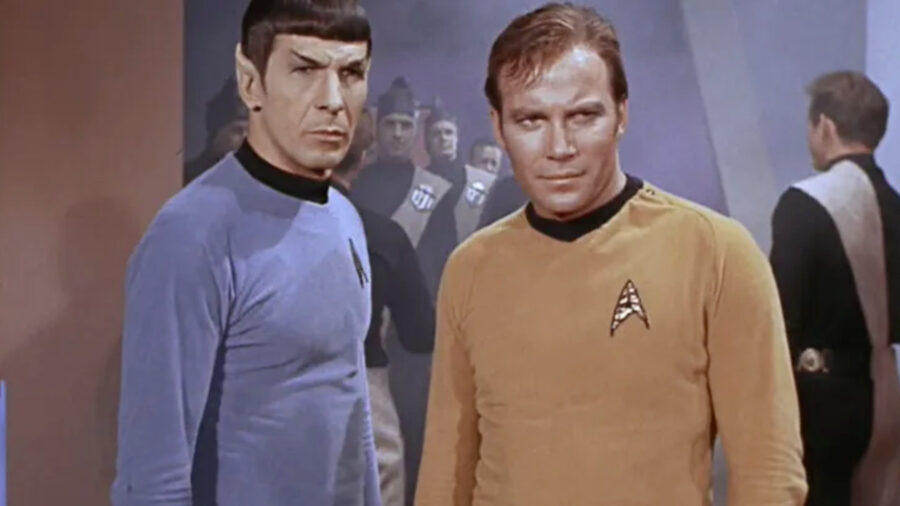
There you have it, folks. While each new Star Trek series gives the franchise a new coat of paint, it’s clear that the most successful shows are the ones that draw heavily from The Original Series or its successor show, The Next Generation. Some worry that sticking to a 60-year-old blueprint means that things will get repetitive and boring, but that’s the brilliance of Gene Roddenberry’s amazing creation: it allows for endless different stories, technologies, alien races, and so on. Fans just want the characters encountering all of this to be in the vein of Kirk and Picard’s iconic Trek through the stars.
Now, Paramount is on the cusp of reinventing this franchise yet again. Doubtlessly, there will be plenty of internal debates about the direction new shows and movies should take. Sadly, NuTrek, with its astonishing failure rate, is a startlingly expensive example of what not to do. From the most hardcore fans to the most casual viewers, nobody wants another slick sci-fi show that is Star Trek in name only.
By sticking to Roddenberry’s successful blueprint, Paramount can reinstate a new golden age for the franchise. Otherwise, they risk destroying their most vital IP and fully driving away the fans they will so desperately need when the dust finally settles on these endless mergers and acquisitions. If that happens, though, the Star Trek fandom has a handy catchphrase they should go ahead and start practicing: “Kurtzman, when the Trek fell!”
You must be logged in to post a comment Login