Entertainment
‘Stranger Things’ Easter Egg May Have Just Revealed the Future of Netflix’s New Stellar Sci-Fi Series

[Editor’s Note: The following contains spoilers for The Boroughs Season 1]
Summary
After the massive success of Stranger Things put Netflix at the forefront of sci-fi television, the Duffer Brothers return to the streamer with Upside Down Pictures’ The Boroughs, created by Jeffrey Addiss and Will Matthews (The Dark Crystal: Age of Resistance). From the get, the eight-episode series establishes a familiar Steven Spielberg-inspired whimsy, and immediately confronts viewers with a lurking danger, a threat that won’t let its Season 1 finale end on too much of a high. To break down that telling final shot, Collider’s Steve Weintraub sat down with stars Geena Davis, Denis O’Hare, and Clarke Peters for clues to future seasons.
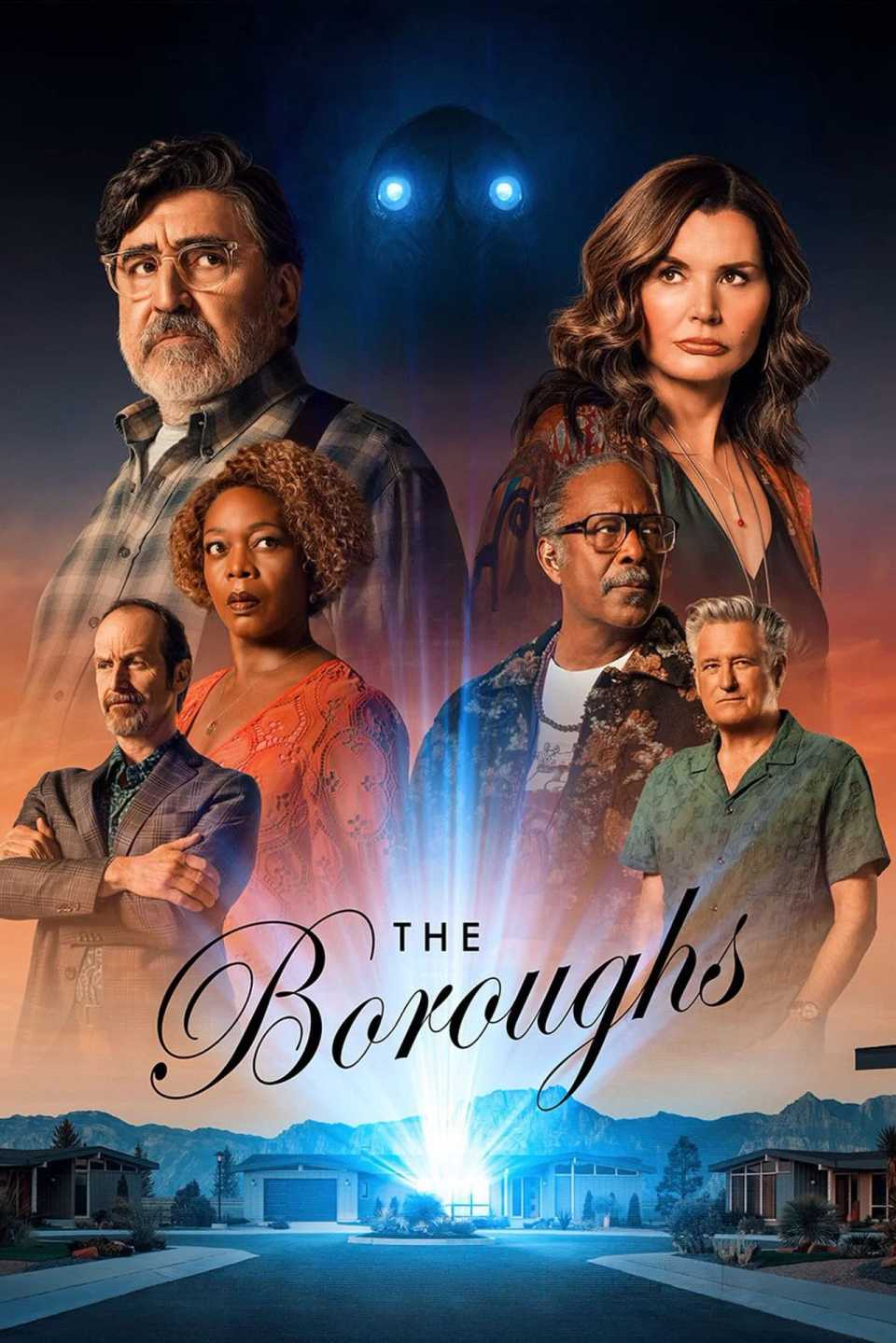
In the show, retiree Sam Cooper (Alfred Molina) reluctantly moves to a quaint retirement facility, The Boroughs, in the solitary desert of New Mexico. From the outside, the community is a picture-perfect escape, but this little patch of heaven, run by Blaine (Seth Numrich) and Anneliese Shaw (Alice Kremelberg), hides a deadly mystery that Sam and his new friends, Renee (Davis), Judy (Alfre Woodard), Art (Peters), and Wally (O’Hare) are determined to get to the bottom of.
Don’t miss the full conversation in the video above or the transcript below, where Davis, O’Hare, and Peters discuss the meaning of that final Stranger Things Easter egg shot, what they know about The Boroughs’ future, and what goes on between takes on set. The trio also reflects on their careers, recommending next watches for new fans, and sharing their preparation process for ambitious emotional scenes.
‘The Boroughs’ Stars on What to Watch Next
Geena Davis also denies that the Thelma & Louise callback hides any sinister secrets…


COLLIDER: So you read the script for Episode 5, and you see that you’re going to be in the front seat of a car overlooking a crevasse. Did you think, “Am I making another Thelma & Louise?”
GEENA DAVIS: Really? Is that what you thought? I’m so surprised. It didn’t occur to me. [Laughs] I don’t go over the cliff! That’s all we know.
When I saw it, though, I was like, “What?” There’s going to be a whole generation of people watching this that are younger, that actually will not have seen your work before. For each of you, after someone who hasn’t seen your work sees this, what’s the first thing you’d like them watching from your resume after this?
DAVIS: That’s an interesting question.
DENIS O’HARE: I definitely have a different fandom because of True Blood and [American] Horror Story. True Blood tends to skew, now, a little older, but Horror Story, some of these fars are, like, 17, 18, 16. The other day in LA, this kid said to me, “I was raised on you,” and I was like, “What?” “Yeah, I started watching you at 13.” And I was like, “Oh my god, how old are you now?” He’s 25. So, I definitely have that. But I would tell them definitely to go back and watch True Blood for me.
CLARKE PETERS: I would say go look at Treme. Yeah, I would say look at Treme because of the mysticism in Treme and the mysticism in this. There is a connection, and if they’re watching them both and they make the connection, then I will have done my job.
DAVIS: The Long Kiss Goodnight, I think, is the most important one to see. I mean, if they haven’t seen Thelma & Louise, I would say that movie. It holds up. It’s 35 years later, but it really does.
When you guys signed on for this, how much were you told about, “If the show’s a hit and we do more than one season, this is what we have planned,” and how much is it sort of like, “We’re just going to tell you nothing?”
PETERS: I got, “They’re going to tell you nothing.”
DAVIS: They tell you nothing. I don’t know anything about next season.
PETERS: Nothing. Notta, notta, notta. The business has changed so much that nowadays you get sides that have nothing. You have no context. Have you experienced this? No one wants to reveal anything, even to the people that they want to hire. So, they’re not going to tell us what’s going to happen in Season 5 — are you?
What Does Episode 8’s Final Shot Really Mean for ‘The Boroughs’?
All we’re saying is this didn’t bode well for Will in Stranger Things…

The ending of Episode 8 has Sam, Alfred [Molina]’s character, glitching with the mirror? When you read that in the script, or if you saw the episode, were you asking, “Okay, so, what does this mean?”
O’HARE: Well, the ending is too nice. It’s too jovial. It’s too normal. You know what I mean? You’re looking at it, and you’re going, “What? Where’s the underbelly here?” So when you see that glitch, you’re like, “Ah, right. Things are not solved. Things are not back to normal. Things are still dangerous,” which I love.
DAVIS: Yes. The characters think it’s all over, “We won,” but yeah.
PETERS: But even Sam doesn’t see it.
O’HARE: Exactly. He has his head down, which is great. I love that.
There’s also a part two to this because I studied the ending of the episode, and the last frame is this collapsing thing that almost goes into, like, a black hole, and I’m like, “What the hell is this?” Did you ask about that, or am I alone wondering what that last shot was?
O’HARE: Well, the visual style of the show, I think, is really another character. The very first shot of the very first episode is that the huge drone shot coming in. You’re coming in, coming in, coming in, and you go into the house to see Dee Wallace. That’s an amazing visual statement of someone. Who is that POV? Who is looking into Dee Wallace’s house? And at the end, who is that? You know what I mean?
100%. The Duffers have joked that this show is Stranger Things but with golf carts instead of bicycles. Did you hear that? What was your reaction?
DAVIS: [Laughs] I did hear that. I thought that was pretty clever.
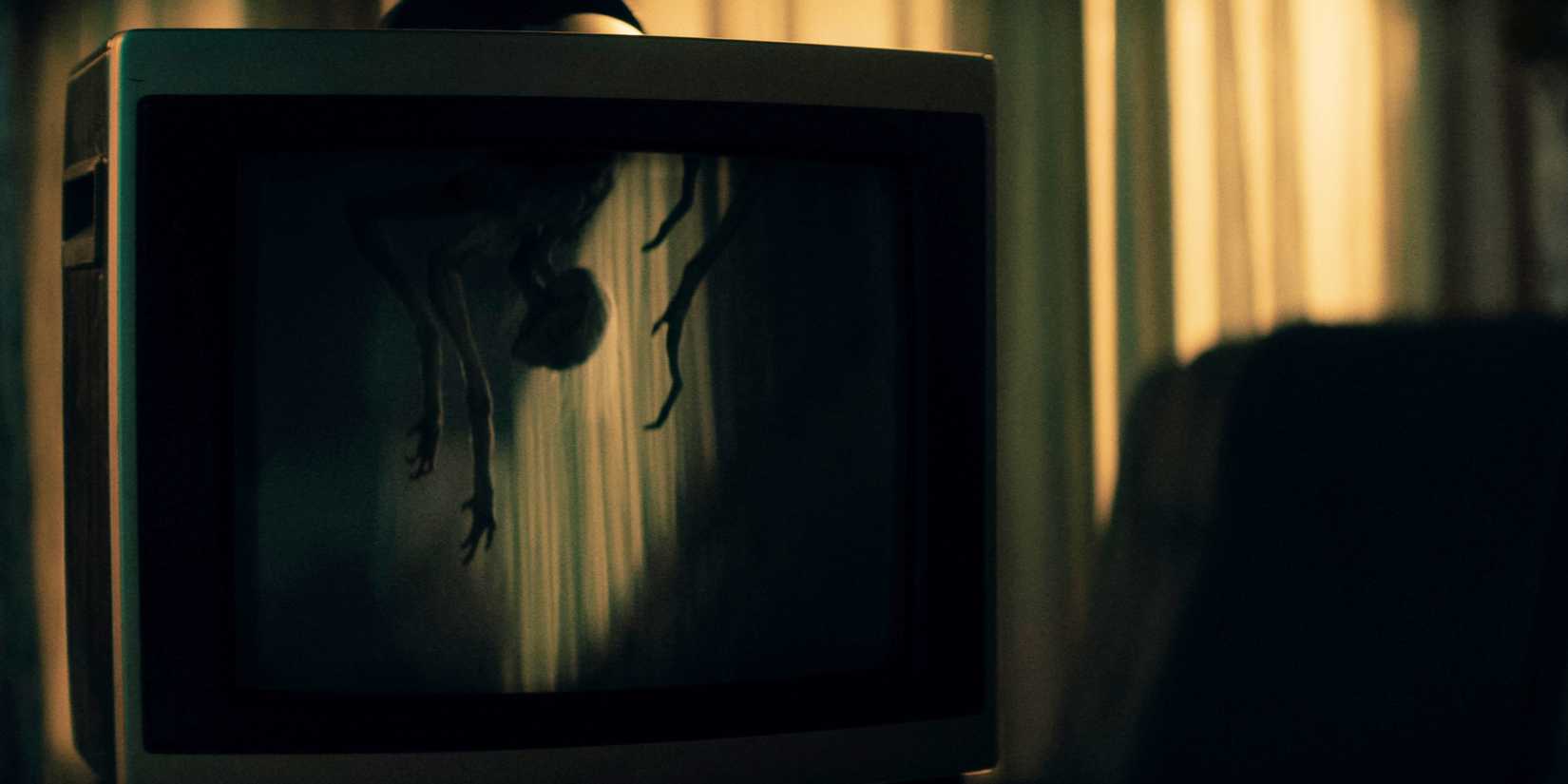
What’s cool about the show is that it has this ‘80s, Amblin-esque kind of thing. It’s a cool tone. Can you sort of talk about what it’s like to make one of those shows that has that magic realism, if you will?
O’HARE: Well, part of it is that the set was awesome.
DAVIS: Unbelievable.
O’HARE: The houses that we were living in, some of those houses were completely done. They were complete. You walk in, and it’s an actual house. Some were less complete. But all the visuals, the way the TV looks, even the logo of the Boroughs, it’s sort of ‘40s, ‘50s. Blaine and his wife, they definitely feel like June and Ward. We have a June and Ward line at one point. “Hi! Welcome home, Ward!” “Hi, June!” There are so many references to classic TV, like The Golden Girls are on TV, old movies, and it creates that world where you’re like, “Where are we?” We’re in a world of seeming perfection, which is hiding something else.
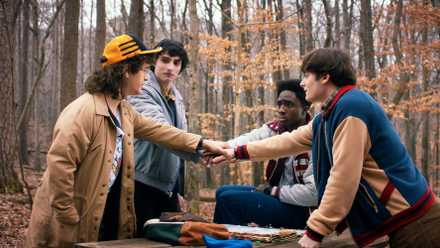

All Your ‘Stranger Things’ Series Finale Questions Answered By the Duffer Brothers [Exclusive]
Creators Matt and Ross Duffer address fan theories, “Byler,” deleted scenes, and answer our biggest questions after Season 5.
‘The Boroughs’ Cast Share Advice for Younger Generations
The trio also discuss how they prep for big emotional scenes.
The showrunners have mentioned that, according to some napkin math, the cast is like 350 years worth of acting experience. It’s a big number.
DAVIS: That’s a big number!
It is. So when the cameras stopped rolling in between takes, who’s the absolute troublemaker, or did you all have a very similar kind of work ethic/play ethic?
DAVIS: We fooled around a lot. Nobody was like, “Don’t bother me, I’m in my character.”
PETERS: No, it wasn’t like that. “Don’t take me out of my zone.” No, it was fun. Something we discovered last night, it was observed last night, is that in between our takes, we’d talk. In between the takes of younger generations, they go to the phone.
[Laughs] Sure.
PETERS: There’s a big difference in that and how that affects the individual and their performance as an ensemble. This is very much like that. So, what happens in between takes can be anything besides a phone.
I’m always curious how actors get ready for a really big emotional scene, so for all three of you, if you have a really big scene on a Monday, do you like to rehearse the full scene and get into all of it before you get to set, or how much do you sort of go halfway and want to save the the emotion, if you will, for when you’re actually on camera?
O’HARE: I think the weird thing for me to know is what is the shot sequence? What shot are you going to use? You know what I mean? Not that I’m saving it for the close-up, but if this is going to live in the close-up, let me know that so I can pace myself so I’m not blowing my wad on the two-shot. You know what I mean? So, you kind of want to know what they’re thinking about the architecture of how they’re going to build the scene. Because, I’ll speak for me, I’ve only got, like, four or five good takes in me for a big emotional thing. After that, I mean, maybe I’ll come back to something, but always, the first one’s not going to be my best, maybe not the second — I aim for three. Number three.

PETERS: That’s something I learned from him because last year, you were having that same conversation about a particular scene. I thought, “I’ve never thought about that.” Because coming from theater, you just do it, you just do it. I’m not worried about pacing. But that is something I learned from you. Thank you. Because recently, I had a big scene, and I was thinking, “I really want to mine that, but I don’t want to blow my wad, so to speak, to begin with,” and that conversation came back, so thank you. What he said. Definitely.
DAVIS: If it’s a big scene, I don’t like to rehearse it too much. I don’t want to just say the words without acting in a rehearsal, but I don’t want to go there, also. So, the less practice, the better for an important scene like that.
The Boroughs is streaming on Netflix now.

- Release Date
-
May 21, 2026
- Network
-
Netflix
- Showrunner
-
Jeffrey Addiss, Will Matthews
- Directors
-
Augustine Frizzell, Kyle Patrick Alvarez, Ben Taylor
You must be logged in to post a comment Login