Entertainment
The 10 Best Thriller Books of All Time, Ranked

Thriller movies and TV shows are great, but the genre is best experienced on the page. A visual medium can show the audience what is happening, but a book traps them inside the characters’ thoughts, fears, and paranoia. Thriller novels offer a sense of immersion that doesn’t need background music cues or lingering shots to offer the audience hints.
Instead, readers have to search for clues themselves, question every narrator, and essentially become a part of the mystery at hand. The tension here depends entirely on the author’s ability to control what the reader knows, and, more importantly, what they don’t. Given that, here is a list of the best thriller books of all time that continue to define the genre to this day.
10
‘The Girl With the Dragon Tattoo’ (2005)

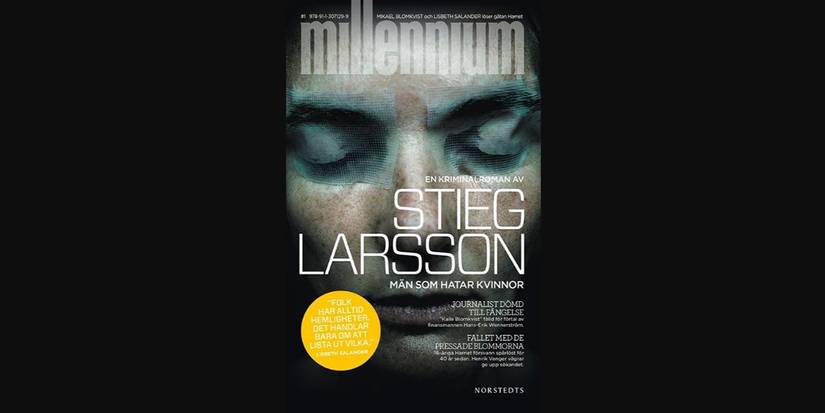
Stieg Larsson’s The Girl With the Dragon Tattoo is the first book in the Millennium series and serves as the perfect slow-burn thriller. The story follows disgraced financial journalist Mikael Blomkvist, whom wealthy industrialist Henrik Vanger hires to investigate the four-decade-old disappearance of his great-niece, Harriet. Henrik is convinced that someone within the enormous, deeply dysfunctional Vanger family was responsible for the crime. This leads Mikael on a sprawling investigation that brings him to Lisbeth Salander, a brilliant hacker and private investigator whose ability to uncover other people’s secrets makes her uniquely suited to this case built around generations of lies.
Mikael and Lisbeth are initially treated as the leads of two separate stories that unfold simultaneously. However, once they finally cross paths, the book becomes impossible to put down thanks to their unique dynamic. Larsson also gives the mystery far more weight than a conventional cold case. The novel’s original Swedish title translates to Men Who Hate Women, which reveals the uglier subject hiding beneath its missing-person premise.
9
‘The Day of the Jackal’ (1971)

Frederick Forsyth’s political thriller, The Day of the Jackal, begins in 1962, after repeated attempts by the far-right OAS to assassinate French President Charles de Gaulle have ended in disaster. The organization is heavily infiltrated by French intelligence, so its leaders decide their only remaining option is to hire someone the authorities have never seen before. That’s when the Jackal enters the story as a nameless English assassin who accepts the contract and begins constructing an extraordinarily detailed plan to kill one of the most heavily protected men in the world. Meanwhile, quiet and methodical police commissioner Claude Lebel is given the seemingly impossible task of identifying and stopping a killer whose real name, appearance, and location are completely unknown.
The genius of the novel is that readers already know de Gaulle survived. Forsyth cannot create suspense by making anyone wonder whether history will be rewritten, so he builds it in how dangerously close the Jackal might come to it. The two men barely share the page, yet their battle of patience and intelligence makes the novel feel as fast-paced as ever. Obviously, Forsyth’s background as a journalist gives the book a frightening sense of authenticity. He blends the fictional plot with real political tensions and genuine events surrounding the OAS to fully immerse the reader in an operation of this scale. This documentary-like realism completely redefines what readers expected from political thrillers, and remains the benchmark for the genre to this day.
8
‘The Silent Patient’ (2019)

Alex Michaelides’ The Silent Patient begins with an almost impossible mystery, which is what makes it such a compelling read. The story follows Alicia Berenson, a successful painter with a seemingly happy marriage. Things take a turn when one fateful evening, she shoots her husband Gabriel five times in the face. After the murder, she never speaks again, not even to defend herself or offer any kind of explanation. Her silence turns the case into a national obsession and eventually brings her to the Grove, a secure psychiatric facility. Years later, psychotherapist Theo Faber becomes determined to uncover the truth.
He believes that getting Alicia to speak will finally explain the murder, but his interest in her quickly becomes more personal than professional. Soon enough, Theo’s investigation leads him to believe that nearly everyone involved in the mystery is hiding something. The central question of the story is pretty simple. The readers constantly wonder why Alicia killed her husband, and every chapter of the novel keeps the pace moving to answer that question. The Silent Patient is best known for its final twist, but the reveal works because of how carefully the author builds everything that comes before it.
7
‘The Talented Mr. Ripley’ (1955)
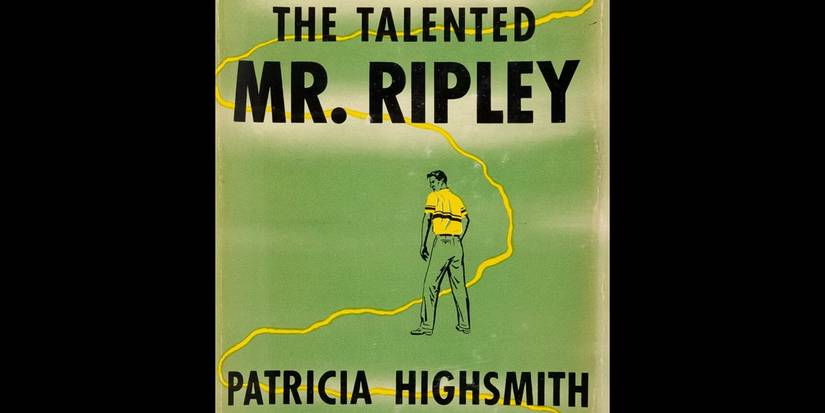
The Talented Mr. Ripley is Patricia Highsmith’s brilliant psychological thriller that is still an important part of pop culture today. The story introduces readers to Tom Ripley, a struggling young con artist surviving through petty scams in New York. His fortunes change when wealthy businessman Herbert Greenleaf offers to send him to Italy to convince his son, Dickie, to return home and join the family business. Tom barely knows Dickie, but he happily exaggerates their friendship for the free trip. Once he reaches the beautiful seaside village of Mongibello, however, he becomes fascinated by Dickie’s money, confidence, and carefree lifestyle. The catch is that becoming Dickie’s friend isn’t enough.
Tom slowly begins to believe he deserves Dickie’s life more than Dickie does, and this obsession leads him into murder, identity theft, and an increasingly complicated web of lies. Highsmith traps readers inside Tom’s mind while he does all these unhinged, selfish things. As he switches between identities and attempts to stay ahead of the police, the tension comes from never knowing what he might do next, or how much further he is willing to go to protect a life he has stolen. The novel became the first of five books about Ripley, but the opening installment remains one of the most iconic crime stories ever told.
6
‘The Bourne Identity’ (1980)

The Bourne Identity begins with a man being pulled from the Mediterranean Sea. His body is filled with bullets and his memory almost completely erased. He doesn’t even remember his name or where he comes from. All he knows is that his instincts tell him how to fight, escape surveillance, and recognize danger before anyone else does. The only clue is a Swiss bank-account number hidden beneath his skin. When he follows it to Zurich, he discovers millions of francs, the name Jason Bourne, and several armed men who seem very determined to stop him from learning anything else. That is the intriguing premise of Robert Ludlum’s genre-defining thriller novel, but the story is far from over here.
The author keeps complicating the central character’s identity every step of the way. The evidence suggests that he may be a professional assassin known as Cain, yet other clues point toward a much stronger covert operation involving the CIA. That forces Bourne to hunt for the truth while questioning whether the person he used to be is someone he should even want to remember. Unlike the considerably simpler film adaptation (which later turned into multiple rewatchable Bourne movies), the novel does not provide one easy answer and move on. It keeps peeling away layers until Bourne’s past becomes more morally complicated than the reader expects.
5
‘Rebecca’ (1938)
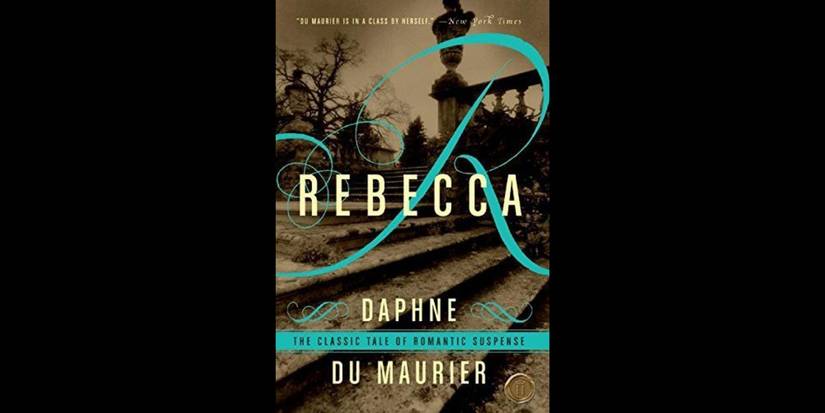
It’s easy to mistake Daphne du Maurier’s Rebecca for a romance in the beginning, but it slowly reveals its much darker narrative. The story follows an unnamed narrator, a shy young woman working as a paid companion in Monte Carlo when she meets the wealthy and recently widowed Maxim de Winter. Their courtship moves quickly, and before long, she becomes the second Mrs. de Winter and returns with him to Manderley, his enormous estate on the Cornwall coast. However, instead of beginning a perfect new life, she finds herself living in the shadow of Maxim’s first wife, Rebecca, who drowned less than a year earlier.
The most fascinating part of the novel is how Rebecca dominates almost every page, even though she is dead. Her belongings remain untouched, the staff still compare everything to the way she once ran the house, and her former maid, Mrs. Danvers, makes it clear that the new Mrs. de Winter will never be considered a worthy replacement. It’s almost as if Rebecca is haunting the narrator, which gives the book a unique, unsettling quality. All of that slowly builds up to the mystery surrounding Rebecca’s final moments, but even after the truth surfaces, Rebecca never offers the readers a clear resolution, which becomes the novel’s greatest strength.
4
‘The Spy Who Came in from the Cold’ (1963)
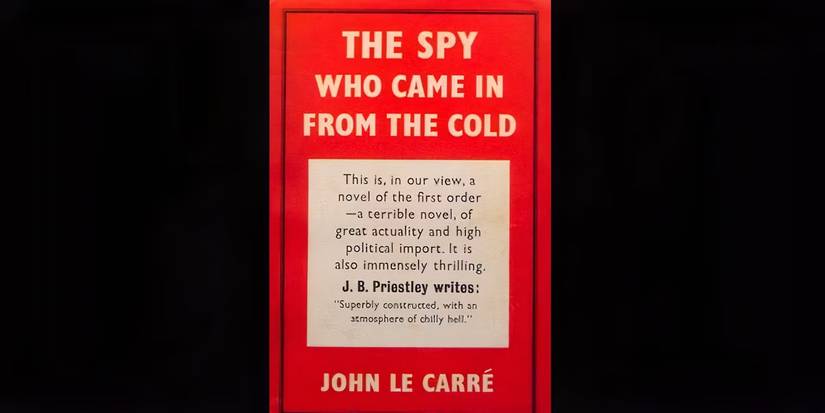
The Spy Who Came in from the Cold by John le Carré strips away the glamor mainstream entertainment associated with espionage. The story follows worn-down British intelligence officer Alec Leamas, whose network in East Germany has been systematically destroyed by Hans-Dieter Mundt, a ruthless counterintelligence chief. After watching his final agent get shot while attempting to cross the Berlin Wall, Leamas returns to London expecting retirement. Instead, Control offers him one last operation to publicly destroy his own life, pose as a bitter former agent, and convince East German intelligence that Mundt has secretly been working for Britain. Leamas begins drinking heavily, loses his job, and allows himself to appear like a man who has been abandoned by the country he once served. The performance eventually attracts the attention of East German agents, who believe he may be willing to sell them British secrets.
Once they make contact, Leamas is pulled deeper into a dangerous intelligence operation where everyone has their own version of the truth. This uncertainty is what makes the novel so gripping, but its moral bleakness is what made it revolutionary. It’s important to remember that the story was published when James Bond was transforming the spy thriller genre. However, The Spy Who Came in from the Cold presented spies as exhausted professionals working for institutions that treat them as expendable. The novel’s final stretch is devastating because its betrayals are not grand or theatrical, but cold and completely believable. The Spy Who Came in from the Cold did not simply make the spy novel darker. It exposed the uncomfortable possibility that, in the real world of espionage, the good side may not exist after all.
3
‘Gone Girl’ (2012)
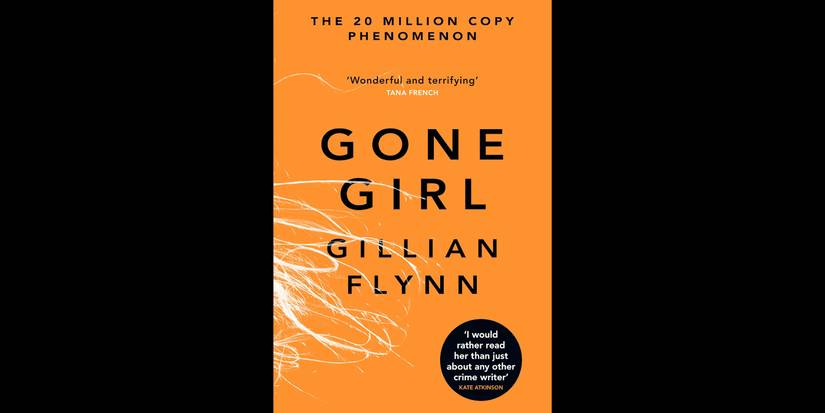
Gillian Flynn’s Gone Girl begins on Nick and Amy Dunne’s 5th wedding anniversary, when Amy suddenly disappears from their home in North Carthage, Missouri. The living room shows signs of a struggle, and the police immediately begin asking difficult questions. What makes things worse, though, is that Nick doesn’t behave like a grieving husband. He avoids simple questions and repeatedly lies about his marriage, and soon enough, the public decides that he might be the person responsible for Amy’s disappearance. The novel unfolds through Nick’s account of the investigation and entries from Amy’s diary, which trace their relationship from an exciting New York romance to an increasingly unhappy marriage. At first, Amy’s memories appear to explain what Nick is hiding.
However, the details in their stories do not always match, and both narrators carefully control what they allow the reader to see. The result is a mystery where the reader doesn’t know who to trust, and their loyalties are always shifting. That’s what makes Gone Girl more than just a missing-person mystery. The book is a chilling examination of the institution of marriage and the pretenses people operate under when they are falling in love. The story is dark, funny, uncomfortable, and impossible to predict. Gone Girl turns a troubled marriage into psychological warfare in a way that still feels fresh.
2
‘Red Dragon’ (1981)

Thomas Harris’ Red Dragon follows former FBI profiler Will Graham, who retired after nearly losing his life while capturing Hannibal Lecter. Graham has an unusual ability to understand how killers think, but that talent comes at a high cost. Entering their minds has left him physically scarred, mentally exhausted, and afraid of how easily he can recognize their impulses within himself. The premise picks up when two families are murdered in their homes under disturbingly similar circumstances, and FBI agent Jack Crawford asks Graham to return for one final investigation. The killer, nicknamed the Tooth Fairy by the press, appears to choose his victims at random and plans his attacks around the full moon. In a race against time, Graham begins studying crime scenes, home videos, and the smallest behavioral details in search of a pattern.
When the investigation stalls, he reluctantly turns to Lecter, while knowing that asking for his help also gives the imprisoned killer another opportunity to manipulate him. Lecter is not the novel’s main villain, though. That role belongs to Francis Dolarhyde, a deeply disturbed man who believes he is transforming into the Great Red Dragon depicted in a William Blake painting. Harris spends a surprising amount of time inside Dolarhyde’s mind to show how childhood abuse, shame, and violence shaped him. The author does not excuse his crimes, but turns him into a far more unsettling character than a faceless murderer. This psychological depth separates Red Dragon from a standard serial-killer thriller. The investigation is tense and carefully detailed, but the novel becomes truly frightening when it forces readers to examine the darkness humans hide within themselves.
1
‘And Then There Were None’ (1939)

Agatha Christie’s And Then There Were None is a classic whodunit that brings ten strangers to an isolated mansion on Soldier Island. Each person has received a different invitation, yet none of them has actually met the mysterious host. Soon after their arrival, a recorded voice accuses every guest of being responsible for someone’s death. Before the group can understand what is happening, one of them suddenly dies. That’s not all, though. The guests soon realize that the deaths appear to be following the lines of a disturbing nursery rhyme displayed throughout the house. The bad weather cuts off their only route back to the mainland, and the group desperately begins searching the island for their absent host.
However, when they find no one else, they start to wonder whether the killer is one of them. That is where the story’s suspense comes from. The readers know that there is no detective coming to solve the case, and that no character can be fully trusted. Every new death reduces the number of suspects while also increasing the danger for everyone left alive. It’s easy to see how many modern books and films have borrowed this exact formula, but as they say, the first time is the charm.
You must be logged in to post a comment Login