Entertainment
The 10 Best War Movies in Film History

Following World War I, the 1920s saw the war genre become one of cinema’s most popular, and that’s a trend that hasn’t really stopped since. It’s a genre that has produced several of the greatest movies in film history, one that has remained timeless thanks to how it puts the very concept of war—the ultimate form of human conflict—into a dramatic package that one can experience safely from the comfort of a seat.
Whether it’s a hilarious satire like Dr. Strangelove or a gut-wrenching drama like Come And See, the best war movies in film history prove how intimately this genre can speak to people’s innermost fears and anxieties regarding the state of the world and its conflicts. Anyone looking to check the most essential war masterpieces off their list ought to watch these gems at least once in their lives.
10
‘Dr. Strangelove or: How I Learned to Stop Worrying and Love the Bomb’ (1964)
Considering just how serious and inherently sensitive of a topic war is, most of history’s greatest war movies have been dramas. Every now and then, though, war comedies can be of vital importance, exposing the pure idiocy and absurdity of military conflict in a way so exaggerated that one can’t help but laugh. And as far as war comedies go, it doesn’t get much better or much more essential than Stanley Kubrick‘s Dr. Strangelove.
Loosely based on the thriller novel Red Alert by Peter George, who co-wrote the screenplay (one of the best of the ’60s) with Kubrick and Terry Southern, Dr. Strangelove is absolutely brilliant in how it blends the horrifying absurdity of nuclear paranoia with genuinely hilarious dark comedy. Its themes were a product of its Cold War times, but they nonetheless have aged terrifyingly well.
9
‘Incendies’ (2010)


Nowadays, Denis Villeneuve has firmly established himself as one of the greatest filmmakers currently working in Hollywood; but before he made the jump over the border, he was making some of the best Canadian movies of all time. Case in point, and what some still consider to be his best film to date: Incendies, a mystery drama based on Wajdi Mouawad‘s play of the same name, itself inspired by parts of the life of Lebanese communist militant Souha Bechara.
This film is a gut-wrenching tragedy through and through, and definitely not for those without a remarkably strong stomach, but that doesn’t make it any less of a must-see. But far from just hinging on the shock value of its big twist, it’s a genuinely marvelously-crafted masterpiece dealing with how the cyclical horrors of war only breed violence, trauma, and darkness. It’s a magnificent achievement anchored by Lubna Azabal‘s towering performance.
8
‘Saving Private Ryan’ (1998)


Steven Spielberg, father of blockbusters, is the mind behind several of the greatest and most entertaining popcorn movies in history. It just so happens, however, that one of his greatest films to date isn’t a popcorn flick at all, but the absolutely devastating Saving Private Ryan. Inspired by the books of Stephen E. Ambrose and accounts of multiple soldiers, it has been widely praised as one of the most horrifyingly realistic and authentic war movies ever made.
A common criticism of action-packed war movies is that they can sensationalize military conflict by making it seem exciting, but that’s definitely not the case with Saving Private Ryan, one of the best Oscar-winning period movies ever. Its combat sequences are absolutely brutal, its character writing is refreshingly nuanced and complex, and Spielberg’s direction is some of the best ’90s cinema ever saw.
7
‘Paths of Glory’ (1957)
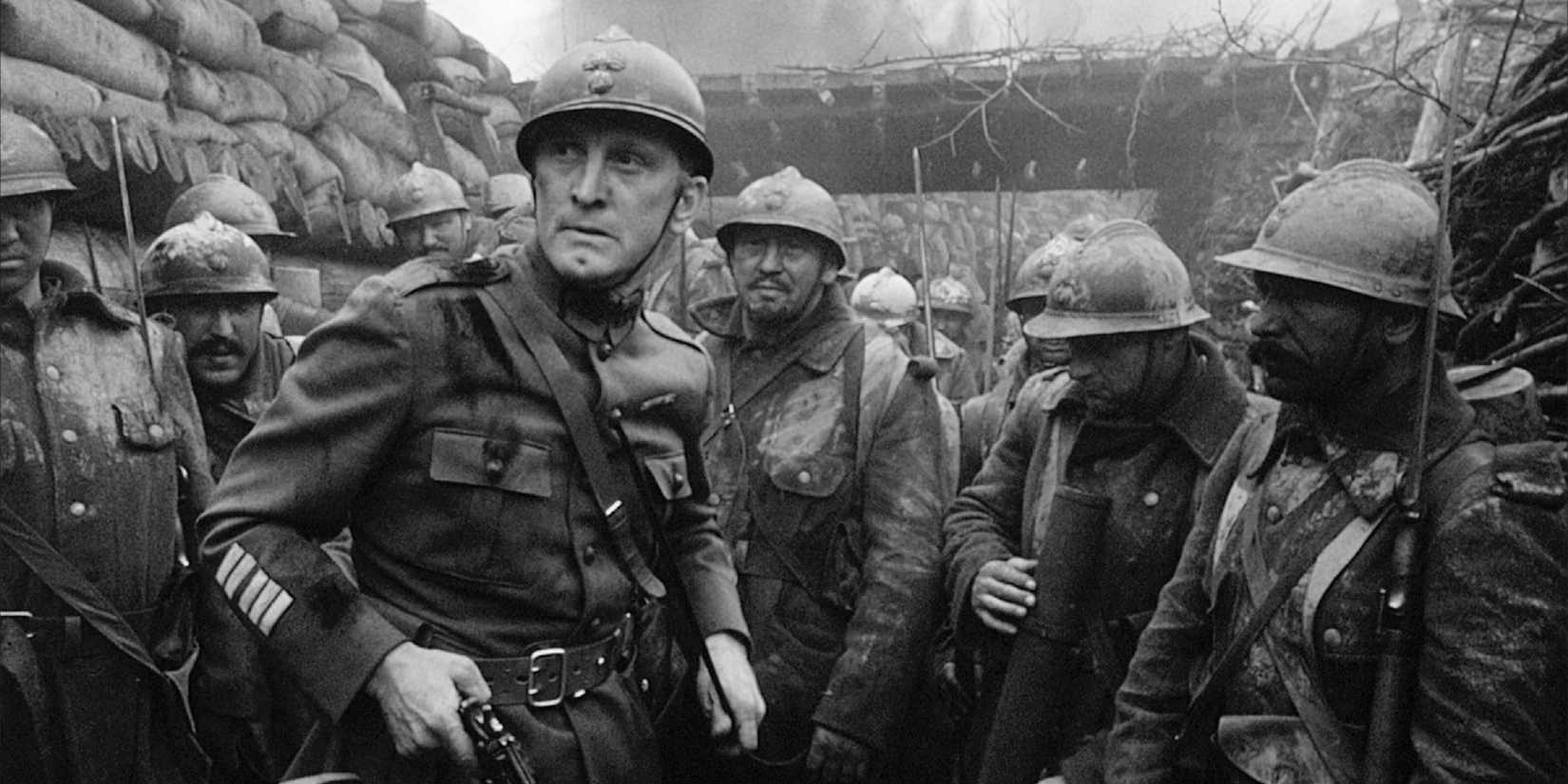
Many still regard Stanley Kubrick as the single greatest filmmaker in the history of cinema, and purely considering that he has made several of history’s greatest war pictures (consider this Full Metal Jacket‘s honorable mention), it isn’t the least bit hard to see why. His best war movie came relatively early into his career: Paths of Glory, whose anti-military sentiments made it severely controversial upon release.
As the years have passed, however, not only have the controversies died down: Paths of Glory is now universally considered one of the most perfect and timeless war movies in film history. It’s one of Kubrick’s quietest, subtlest, and most refreshingly humanist movies, a surprisingly subdued war drama that dares to searingly critique military bureaucracy and institutional hypocrisy. For all those who prefer the human side of the war genre rather than the action-driven side, it’s a must-see.
6
‘The Human Condition III: A Soldier’s Prayer’ (1961)
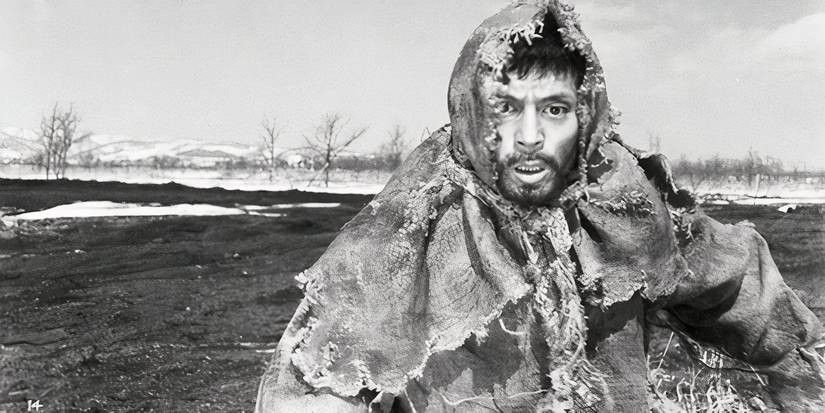
Masaki Kobayashi was one of the greatest Japanese filmmakers of all time, and though it’s hard to point to a single one of his films as his best, any installment of his Human Condition trilogy (based on Junpei Gomikawa‘s six-part novel) could have a strong claim to the title. The best of the three is arguably the conclusion, A Soldier’s Prayer, the best way to cap off one of the most universally acclaimed movie trilogies ever.
Bolstered by Tatsuya Nakadai‘s tour-de-force performance, one of the best in the history of war cinema, A Soldier’s Prayer offers a beautifully humane yet undeniably devastating climax to this nine-hour anti-war epic. It’s a film all about the wonders of the endurance of the human spirit, but far from being saccharine or overly optimistic, it never shies away from the horrors of war or the brutality of fighting for survival.
5
‘Schindler’s List’ (1993)

As if any more proof were needed that Steven Spielberg is far more than just the biggest name in the history of blockbuster filmmaking, Schindler’s List—an entirely serious dramatic biopic that earned seven Academy Awards—is almost universally regarded as his magnum opus. It is, indeed, an achievement unlike anything else that the war biopic genre had ever seen before or has ever seen since.
Schindler’s List is nothing short of one of the best drama movies in film history, an emotionally devastating yet powerfully hopeful celebration of the humanity and compassion that managed to seep itself out of cracks in the darkest corners of the Holocaust. Full of unforgettable moments, performances, and music by John Williams, it really is one of the most hard-hitting war dramas ever made for the big screen.
4
‘Apocalypse Now’ (1979)

The making of Francis Ford Coppola‘s Apocalypse Now was one of the most infamously hellish production processes in the history of film, but considering that what came out of it is one of the greatest feature films of all time, it’s hard to say that it wasn’t worth it. Hollywood has made plenty of Vietnam War movies over the years, but none have ever been—or will likely ever be—better than this.
A loose adaptation of Joseph Conrad‘s 1899 novella Heart of Darkness, a book written as a scathing critique of Europe’s colonization of Africa, Apocalypse Now transposes those themes to the Vietnam War to speak about the hypocrisy of imperialism, war’s breakdown of humanity, and the psychology of madness. All in all, it’s one of the best American movies of the ’70s, as there’s virtually nothing to point out as a negative when watching this absolute masterclass in war filmmaking.
3
‘Come And See’ (1985)
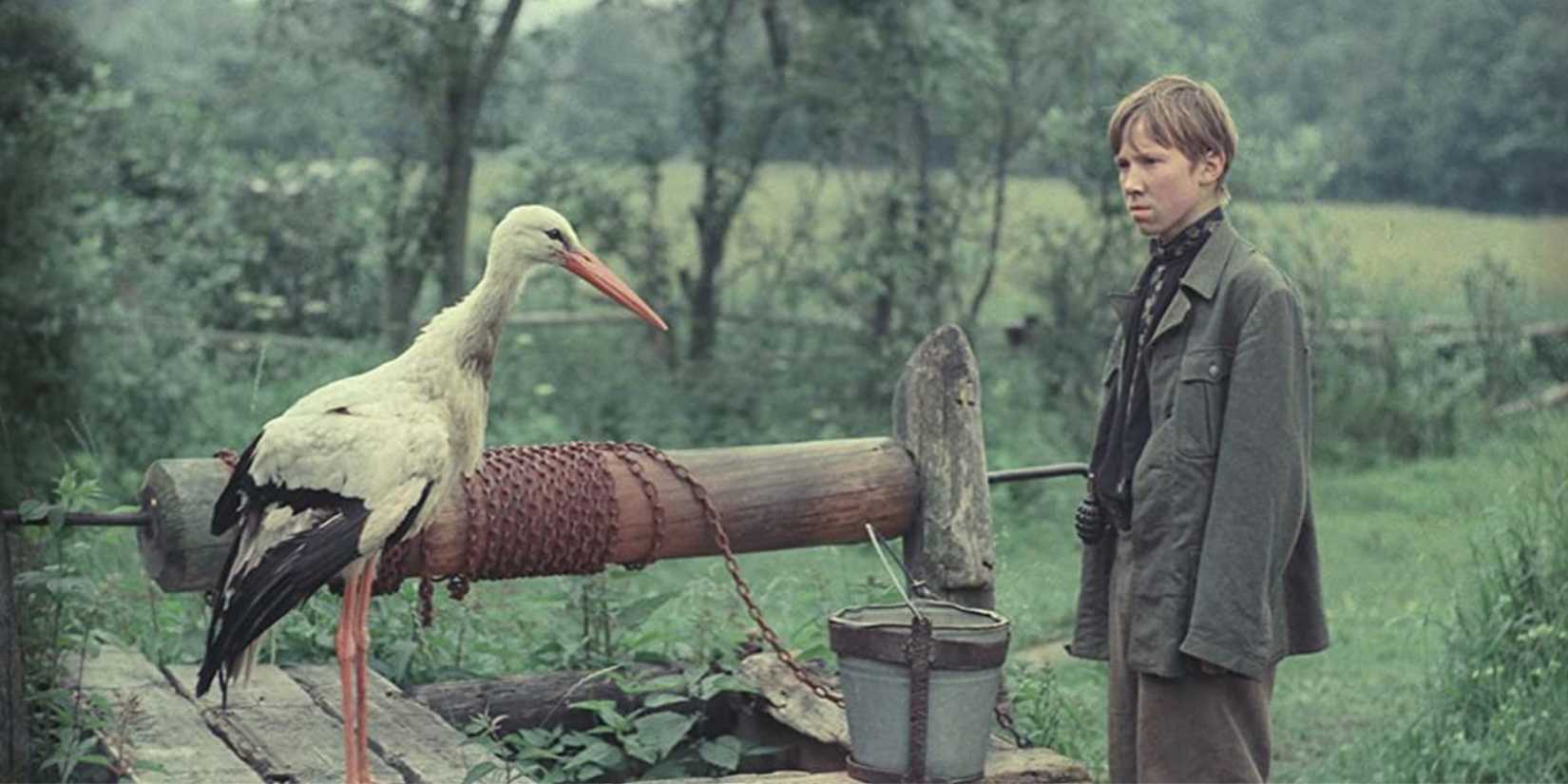
The Soviet Union made several of the greatest films of all time throughout its brief existence, many of them war movies, and few of them better than Elem Klimov‘s Come And See. It’s easily one of the heaviest movies of the 20th century, a film so dark that Klimov had to fight through years of censorship and bureaucratic pushback in order to finally get it out there. The result feels entirely like the uncompromised vision of an artist in full control of his craft.
Indeed, Come And See is no traditional war movie. Powerfully surreal, intensely philosophical, and so unapologetically brutal that it almost feels like a horror drama at times, it’s certainly not a masterpiece for the faint of heart. But even still, Klimov’s direction is so perfect and young Aleksei Kravchenko‘s transformational performance as the boy through whose eyes we see the story is so powerful that Come And See is essential viewing for any cinephile.
2
‘Casablanca’ (1942)
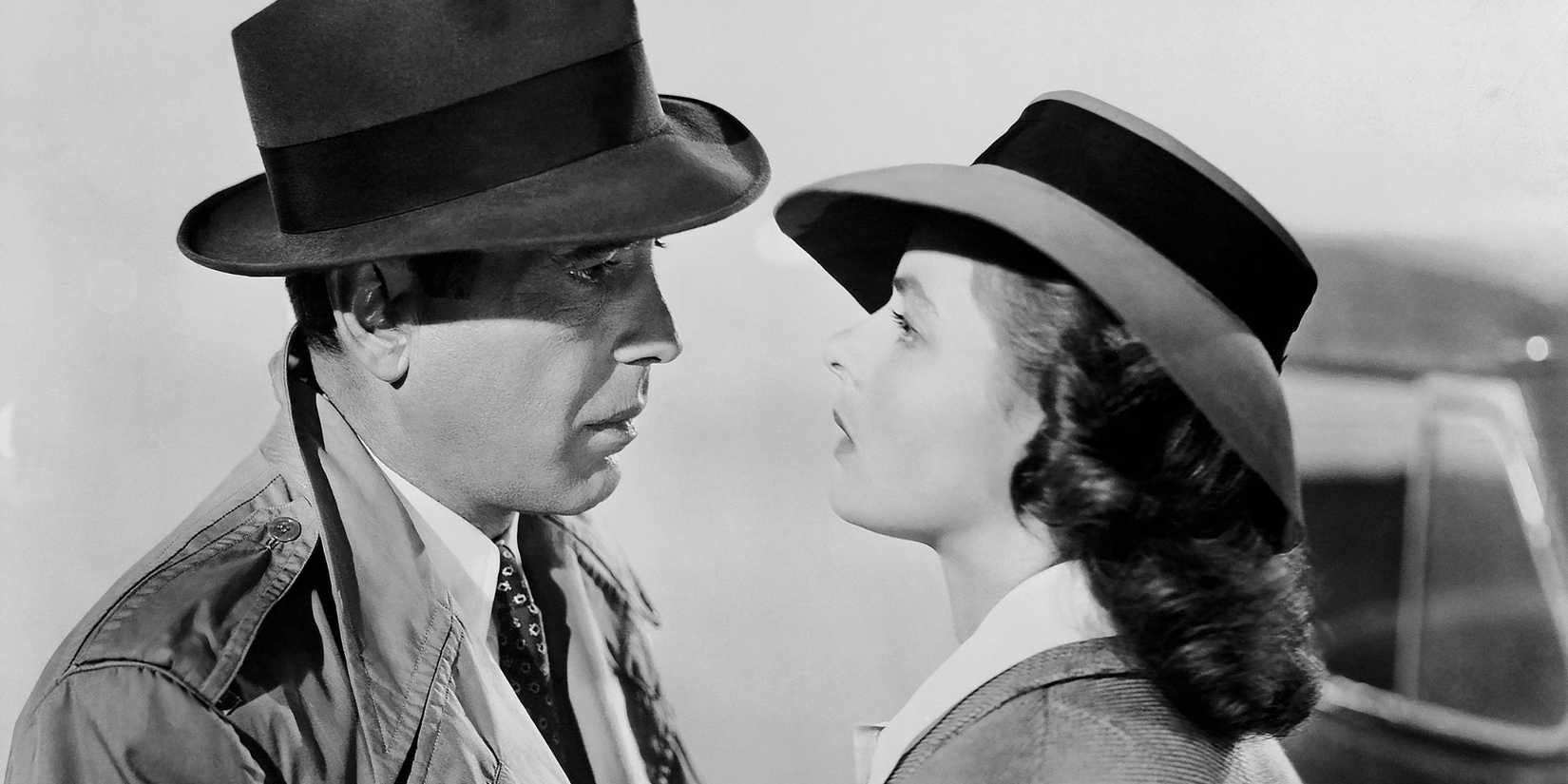
There are countless superlatives that could reasonably apply to Michael Curtiz‘s Casablanca. It’s one of the most romantic movies ever made, one of the most enrapturing Hollywood war pictures ever made, and certainly the best film made in the United States during World War II. There are remarkably few—if any—Golden-Age Hollywood movies more iconic than this, and few war films more deserving of being considered among the greatest ever made.
Indeed, all in all, Casablanca is one of the most perfect feature films in history, even if virtually no one involved in its production actually believed the project would become anything transcendental. Commercially, its performance was nothing extraordinary. But on top of winning three Academy Awards, it has aged as one of the most essential classics in film history, with some of the best acting, some of the most memorable characters, some of the most quotable dialogue, and one of the best endings in movie history.
1
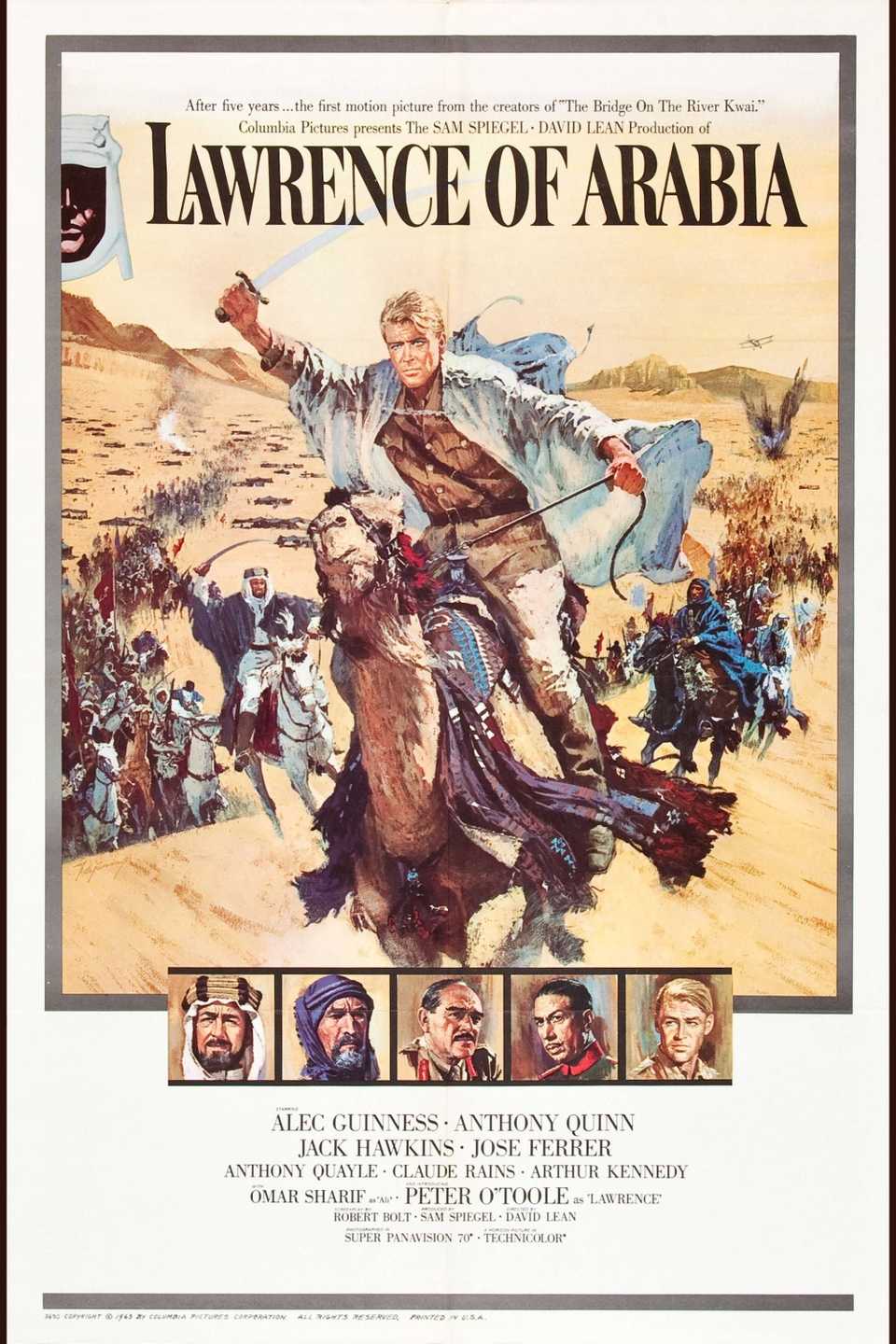
‘Lawrence of Arabia’ (1962)

There is no film quite like Lawrence of Arabia, a biopic epic made by David Lean, the greatest master of the cinematic epic genre. Winner of seven Academy Awards, this paragon of British-American cinema is not only one of the best historical epics of all time, but also one of the best biopics of all time, and arguably the single greatest war movie in film history.
Staggeringly vast and sweeping in scale yet surprisingly intimate and character-driven in scope and execution, Lawrence of Arabia is a cinematic achievement unlike anything else the Seventh Art has ever seen. It’s visually striking, Maurice Jarre‘s score is legendary, the performances (Peter O’Toole‘s first-ever lead performance most of all) are incredible, the writing is some of the best of the ’60s, and Lean’s direction is some of the best in film history.

Lawrence of Arabia
- Release Date
-
December 11, 1962
- Runtime
-
228 minutes
- Director
-
David Lean
- Writers
-
Robert Bolt, Michael Wilson
You must be logged in to post a comment Login