Entertainment
The 10 Darkest Animated Movies of All Time, Ranked

Animated movies are usually associated with family-friendly entertainment aimed at kids because the use of color and creativity appeals to children with heartwarming stories. However, animation is a medium for all ages and can address many topics. As the movie industry grows, studios aim animated movies toward an older demographic, with titles such as the Spider-Verse movies.
However, some animated movies go beyond having an older demographic. They address themes that aren’t afraid to explore the darkest corners of life and the human psyche, even putting adults on edge. Animation also has a secret side that can get extremely dark, even if it doesn’t feature overly dark imagery. Whether it be the terrifying setting, plot, or messages, these movies are unafraid to address darker yet thought-provoking subjects.
10
‘Akira’ (1988)


Thirty-one years after the nuclear destruction of Tokyo, Kaneda goes on a journey to save his friend Tetsuo from a secret government program experimenting on him. Kaneda must face the government, the military, and the scientists responsible for the suffering they’re causing Tetsuo until his powers suddenly manifest, leading to a battle between them.
Akira tells a dark story set in a post-apocalyptic world, and while the setting isn’t familiar, the story could very well be. It shows the dark side of the government and its unknown and terrifying antics, which cause an unwitting young man to go through unspeakable pain. The dark story, paired with gruesome imagery, makes it an unsettling yet intriguing watch, contributing to its subsequent legacy. Indeed, Akira has become a cult classic and a prime example of the great heights Japanese anime can often achieve.
9
‘Bambi’ (1942)


There isn’t a soul on this Earth unfamiliar with Bambi, as the classic story of a young doe explores the horrors and wonders of the forest. The story follows Bambi as he experiences life with his mother’s and friends’ help until they are ready to go on a journey of love and terror as the looming threat of man is ever present.
While Bambi isn’t as dark as many other animated efforts, the sheer shock and disparity between darkness and age rating make it infamous. Families and kids went into the movie expecting a fun and wholesome movie about wildlife, but instead, they got a lifetime of trauma from the iconic scene of Bambi’s mother’s death and the continuous horrors man commits, such as burning the forest. Despite its surprisingly dark nature, Bambi is one of the best 1942 movies and a timeless classic that further strengthens Disney’s legacy.
8
‘Wizards’ (1977)

Wizards is a uniquely crafted animated movie that was Mark Hamill’s debut film just before his appearance as the titular Luke Skywalker in Star Wars Episode IV: A New Hope. After his brother, Blackwolf, unjustly takes the throne from their mother, Avatar goes on a journey to end his brother’s tyrannical rule. The film features a creative world and a colorful cast of characters in this bizarre story.
Ralph Bakshi is known for creating dark and mature animated movies, and Wizards continues this trend. The mystical world might leave some believing it to be a family-friendly fantasy, but that couldn’t be further from the truth. With multiple character deaths, explicit imagery, use of actual war footage, and depictions of Nazis, Wizards is far more demanding than the average movie, animated or otherwise. The darkness is subtle and in-your-face, with shocking deaths and ruthless storytelling.
7
‘The Secret of NIMH’ (1982)

Known for his oddly dark children’s movies, director Don Bluth made his directorial debut with The Secret of NIMH. The film tackles the sensitive topic of animal testing and its inhumane nature, hoping to teach audiences the horrors that are actually happening. It follows a field mouse as she looks for a new place to move her family due to the extended reach of farmers. However, all she discovers are enhanced rats, which are the result of a testing facility not too far away.
The Secret of NIMH is another movie that is way darker than expected. Because of the age rating, the film doesn’t contain any specific imagery or scenes but has a disturbing tone and unsettling moments that would scare any child. It took a while before Bluth could get the film off the ground, but the wait was worth it. He eventually got it made, and it would become one of his best.
6
‘Coraline’ (2009)

Based on the book by Neil Gaiman, Coraline is another stop-motion masterpiece by director Henry Selick. After moving into a new home, Coraline finds a secret passage leading to another world very similar to hers. Everything seems much better here until her other family tries to force her to stay, and other terrifying secrets emerge.
Despite being PG, Coraline uses stop-motion animation to the fullest, enhancing the creepiness and delivering a horror movie for children. The film’s style is inherently creepy, and the events and the oddly dark villain’s motivations enhance its eerie nature. Even darker than the overt horror aspects are the subtext, hidden messages, and theories about living in an abusive home and the subtleties of character motivations and history.
5
‘Watership Down’ (1978)

Watership Down has received multiple adaptations, including a Netflix version and a graphic novel based on the book, but the 1978 animated movie perfectly encapsulates the complex story and dark themes. Fiver, a young rabbit, dreams that their land will be destroyed, so he convinces some friends to go on a journey to find a new home. During this journey, they encounter many threats and obstacles, such as evil rabbits, a raging river, and a rat cemetery.
The realistic art style enhances the already disturbing events in the heavy animated movie, such as the bloody war zone and the black rabbit of death. The haunting chases between the protagonists and the rabid evil rabbits are enough to send shivers down the spines of adults. Despite its PG rating, Watership Down is filled with blood and even cannibalism as it kills off some of the cutest creatures. It might never feature anything explicitly, but the suggestion of danger is ever-present, making it more emotionally impactful.
4
‘Perfect Blue’ (1997)

One of Satoshi Kon‘s masterpieces, Perfect Blue, is an anime film about the horrors of celebrity life and the effect fans have on their favorite stars. After singer Mimi decides to move on from music in favor of acting, her life turns upside down, and reality blends into fantasy when her fans abuse her. Soon, Mimi is haunted by a figure from her past and harassed by a stalker.
Unlike Western animated films, anime movies are no strangers to making them dark. The unsettling Perfect Blue slowly shows the protagonist’s downfall and the delusions she experiences. The events of the film are truly disturbing as her paranoia and psychosis develop from the murders surrounding her and the backlash from the public. Perfect Blue is an unsettling story that makes fans reflect on their actions towards celebrities and proves animation isn’t just for kids.
3
‘American Pop’ (1981)

Bakshi made an even more disturbing movie, this time focusing more on the real world and a family of Russian immigrants. American Pop follows several characters with a love for music, which they try to make into a career until something goes wrong. Zalmie, Benny, Tony, and Pete are the generations of the Belinsky family and can never seem to catch a break from tragedy.
Part of what makes American Pop so dark is the constant loop of hope/passion and tragedy, as each character has a rough life but lives through music and ultimately meets some grim fate. Whether it be a dying wife, a death in war, or drug addiction, each member goes through a terrible fate. Watching American Pop gets more depressing and hopeless as it continues to torture every single character. The family’s tragedies are supposed to parallel popular American music in the 20th century, making the film all the more dark as it is based in reality.
2
‘Guillermo del Toro’s Pinocchio’ (2022)

Guillermo del Toro’s Pinocchio is a modern take on the classic novel that leans into brutality and darkness. After the death of his son, Geppetto builds a puppet brought to life by a fairy. Inexperienced but enthusiastic, Pinocchio embarks on an adventure trying to find a place for himself in fascist Italy. The film won the Oscar for Best Animated Film as it reimagines Pinocchio into a darker, humanistic story.
As dark as it could get while still being PG, Guillermo del Toro’s Pinocchio features striking moments of exploding fish, war montages, and burning at the stake. Even the creation of Pinocchio is shrouded in darkness, as Geppetto builds him from guilt and depression over the loss of his son. The film, which goes through two World Wars, doesn’t hold back and shows Mussolini and the war effort. Guillermo del Toro’s Pinocchio is haunting, and despite ending on a somewhat happy note, it still sees the immortal Pinocchio bury all his friends and family.
1
‘Grave of the Fireflies’ (1988)
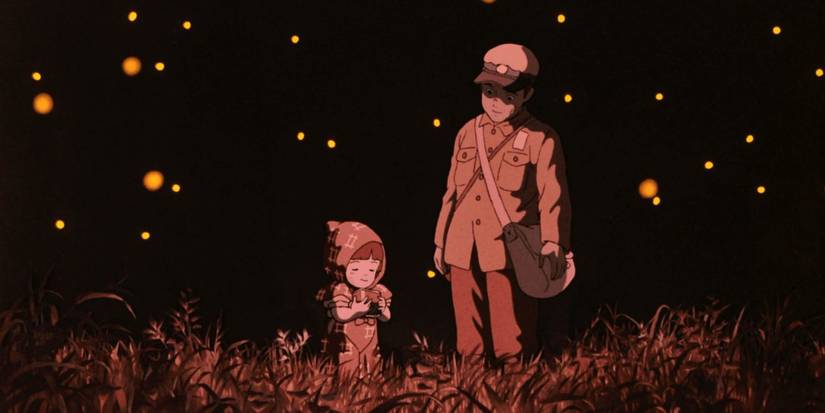
Grave of the Fireflies is based on the book of the same name and was inspired by the author’s real life; he wrote it as a coping mechanism because of his guilt for surviving and his sister dying. The film follows Seita and his two-year-old sister Setsuko as they try to survive during the American bombings of Japan. The movie starts with their deaths as their spirits reconnect, recounting their time trying to survive.
Despite being known for their whimsical fantasy stories, Studio Ghibli made one of the darkest movies ever. Any war story is going to be sad to some degree, but focusing on two children and focusing on their survival makes for a heart-wrenching story. To make it even sadder, the author wrote it as what should have happened, giving the audience an insight into his guilt. The film tried to lessen the depression by showing the siblings’ deaths at the beginning, but all that did was ensure the audience that things would never get better. Grave of the Fireflies is a horrific tale of war that highlights the conflict’s atrocities and how little people matter, making it incredibly dark and depressing and one of the best and most influential animated movies ever.


Grave of the Fireflies
- Release Date
-
April 16, 1988
- Runtime
-
89 Mins
- Director
-
Isao Takahata
- Writers
-
Akiyuki Nosaka, Isao Takahata


You must be logged in to post a comment Login