Entertainment
The 10 Darkest Comedy Movies of All Time, Ranked

Comedy movies are one of the purest forms of entertainment. Often made to be lighthearted and relatable in order to satisfy the tastes of a general audience, the primary goal of a comedy is to generate laughs. This is not to say comedies lack nuance — comedy itself is subjective, thus making it one of the hardest genres to write. But what’s even more difficult? Making an audience laugh at something that’s normally far from funny.
Dark comedies share a similar framework to regular comedies; they can utilize physical comedy, setup and punchlines, sight gags, and observational humor. The differentiating factor that separates comedy and dark comedy is the situation that the humor is drawn from. Dark comedies generate humor from subject matter generally considered unfunny or taboo, challenging notions of what comedy is. These are the darkest comedy movies out there, to the point where viewers might feel guilty for laughing along, even though they shouldn’t.
10
‘The Voices’ (2014)


Jerry (Ryan Reynolds) is an all-around nice guy: he doesn’t really have any friends but works a steady 9-5 job at his small town’s bathtub factory and is well-liked by his coworkers. After taking an interest in his colleague Fiona (Gemma Arterton), Jerry secures a date with her. After she stands him up, however, his dark past, sinister urges, and malevolent talking cat lead Jerry on a path of violence and destruction.
An underappreciated movie in general, The Voices is a comedy that’s as twisted as it’s charming. Reynolds is fantastic as the soft-spoken, unassuming serial killer with a seriously disturbing backstory. It’s a bold and colorful movie that’s more macabre than outright violent. As unsettling as the dive into Jerry’s disturbed mind gets, The Voices balances nastiness and comedy effectively, making for a tonal blend that is suitably dark but consistently funny and enjoyable.
9
‘Four Lions’ (2010)


Four fumbling British terrorists plan and set out to commit an atrocity against innocents, but their collective ineptitude prevents the group from being much of a threat. Four Lions is an outrageously funny comedy that weaponizes a sharply satirical screenplay against terrorism.
Four Lions is a prime example of a dark comedy that successfully generates humor from an unfunny topic. The cast of dimwitted extremists benefits from excellent comedic and dramatic performances; Riz Ahmed, especially, shines as the terrorist group’s leader. Four Lions certainly isn’t for everyone — some may find it distasteful or downright offensive, but it’s a daring comedy that always keeps the bad guys as the butt of the joke.
8
‘Seven Psychopaths’ (2012)

When three friends (Colin Farrell, Sam Rockwell, and Christopher Walken) unknowingly kidnap the prized Shih Tzu of a notorious gangster (Woody Harrelson), the criminal underworld of Los Angeles is flipped on its head. From acclaimed writer/director Martin McDonagh, Seven Psychopaths is a high-energy crime comedy bursting with colorful characters, narrative twists, and stylized violence.
While Seven Psychopaths doesn’t tout the most original screenplay, it benefits from a star-studded cast at the top of their game. Derogatory in all the right ways, Seven Psychopaths is a funny and wildly entertaining ride for those who can stomach some strong violence. Comedy isn’t often accompanied by deaths this plentiful in supply, but the absurdity of it all makes it difficult not to laugh at.
7
‘Fear and Loathing in Las Vegas’ (1998)

Raoul Duke (Johnny Depp), an eccentric journalist, travels to Las Vegas to provide coverage of a motorcycle race. Accompanied by his unhinged lawyer, Dr. Gonzo (Benicio del Toro), the two embark on an odyssey fueled by virtually every drug in existence.
Terry Gilliam is an oddball director, and Fear and Loathing in Las Vegas is arguably his outright funniest movie to date. Duke and Gonzo’s delirious antics are ludicrously entertaining, if a little aimless, elevated by a great performance from the ever-committed Benicio del Toro. While not exactly disturbing, Fear and Loathing in Las Vegas highlights an intense drug-fueled bender that contains rather unsettling depictions of hallucinations, spurring distressing behavior from the film’s lead characters. Fear and Loathing in Las Vegas is a cinematic fever dream that is unlike any comedy ever made before.
6
‘Election’ (1999)

High school teacher Jim McAllister (Matthew Broderick) develops feelings of contempt towards one of his students, the overly ambitious Tracy Flick (Reese Witherspoon), amid the campaigning for the school’s student-body presidential election. To deny her a landslide victory, Jim convinces the dim but likable Paul Metzler (Chris Klein) to oppose Tracy in the race. Unfortunately for Jim, this decision sets in motion a series of events that threatens to ruin his entire life.
Election is a fiery, hilarious, and razor-sharp comedy with a cynical edge. Broderick is great as the conniving teacher, but it’s the Oscar-winning Reese Witherspoon who’s behind most of the movie’s funniest moments. Election is unapologetically mean-spirited — the lengths Jim goes to deny Tracy her victory are downright malicious, especially so considering his position of authority over her as a teacher. Election is a darkly comedic social satire that finds humor in immorality.
5
‘Dr. Strangelove or: How I Learned to Stop Worrying and Love the Bomb’ (1964)

After an overzealous American Air Force general calls for a bombing attack on the Soviet Union, a group of politicians and military advisors seek to rectify the mistake before it’s too late. Dr. Strangelove or: How I Learned to Stop Worrying and Love the Bomb showcases Stanley Kubrick‘s anti-war sentiments and his affinity for off-beat humor.
Not only one of the greatest satires ever made, Dr. Strangelove operates on an entirely different wavelength than most other comedies. The jokes are prickly, pitch-black, and absurd, but the backdrop and real-world parallels (especially considering when the movie was made) are eerily serious. Dr. Strangelove is a masterful lampooning of the established government with an unfortunately ever-present message — after all, nuclear annihilation makes for a pretty strong punchline.
4
‘Heathers’ (1988)

In a Midwest high school, a trio of cruel girls, all named Heather, govern the social infrastructure. Fed up with the trio’s merciless reign, Veronica Sawyer (Winona Ryder) exacts a revenge plot with the help of a new kid named J.D. (Christian Slater). A rebellion is born, and a deadly firestorm of deception, teenage fury, and general malevolence rips through the school.
Heathers served as the vitriolic answer to the melodrama of ’80s high school movies. Disagreeable and often unpleasant yet wickedly entertaining and funny, Heathers really shouldn’t work as well as it does. It’s an unruly movie that does not shy away from showcasing the collective savagery associated with the high school experience. Heathers may prove too mean-spirited and problematic for some, but it’s a bold, pointed comedy that does not hold back.
3
‘Pink Flamingos’ (1972)

John Waters‘ perverse phenomenon Pink Flamingos details the irreverent lifestyle of Divine — she and her family are recognized as the “filthiest people alive.” Unfortunately for them, a married couple seeks to strip Divine and her family of that title and claim it for themselves. Their respective depravity seemingly knows no limits as a war of bad taste is waged.
Assuredly one of the most disgusting movies ever made, Pink Flamingos is a masterwork of debauchery and deviant entertainment. Thankfully, for how revolting Pink Flamingos can be, it’s also remarkably funny and endlessly quotable. Both a dark and a gross-out comedy, this masterclass of questionable content continues to shock anyone brave enough to venture a glimpse at some truly repugnant setpieces, many of which are unsimulated.
2
‘In Bruges’ (2008)

After a botched contract job, Irish hitmen Ray (Colin Farrell) and Ken (Brendan Gleeson) are instructed to lie low in the quiet town of Bruges, Belgium. While Ken is content with enjoying the serenity and rich history of Bruges, Ray’s boredom leads to contempt for the town and its people. Eventually, Ray receives special orders from his boss to execute a new contract with an unexpected target.
In Bruges is a grim comedy bolstered by two excellent lead performances. Farrell’s quick-witted brand of foul-mouthed humor balances nicely with Gleeson’s stoic and almost fatherly reserve. When the melancholic narrative escalates into violence, it’s quick and gruesome. While its darker undertones aren’t fully unearthed until the movie’s final act, In Bruges features some shocking developments and fittingly poignant observations surrounding guilt, death and friendship.
1
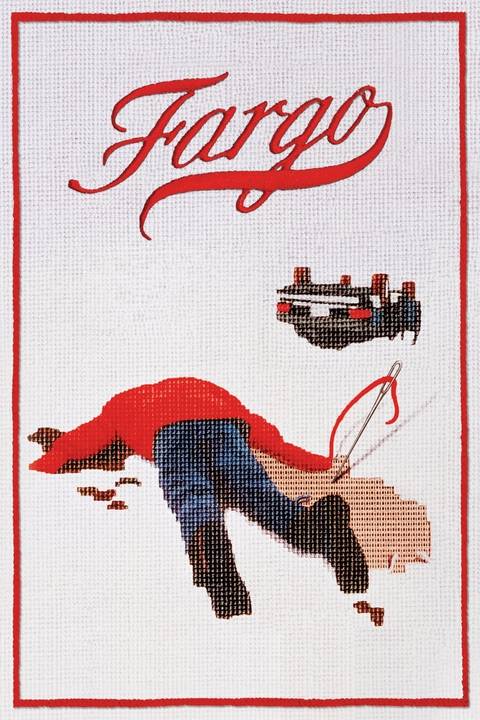
‘Fargo’ (1996)

In a small Minnesotan town, a used car salesman named Jerry Lundegaard (William H. Macy) finds himself in a financial bind. Jerry hatches a harebrained scheme to hire two goons (Steve Buscemi and Peter Stormare) to kidnap his wife and demand ransom money from her wealthy father. Things go awry when Jerry’s henchmen only grow more reckless, and a talky yet tenacious police chief (Frances McDormand) catches wind of their malfeasance.
A benchmark entry into the dark comedy subgenre, Fargo is a pop-culture phenomenon that only gets better with age. As harsh as some of the violence can be, McDormand shines as the affable police chief with a comically thick accent that never fails to amuse. Still, Fargo is not a lighthearted affair; the narrative’s bleak nature and sudden brutality will not be to everyone’s taste, especially when a woodchipper gets involved.

Fargo
- Release Date
-
March 8, 1996
- Runtime
-
98 minutes
- Director
-
Joel Coen
- Writers
-
Joel Coen, Ethan Coen
You must be logged in to post a comment Login