Entertainment
The 10 Greatest American Movie Screenplays of All Time, Ranked

It all starts with the screenplay. It’s an adage almost any film student learns, and one that’s at the crux of what makes a good movie. Sure, there have been some experimental films made without any script to speak of, and more that have only used their scripts as loose guidelines rather than hardened rules, but more often than not, the best movies have the best scripts. It’s true for cinema worldwide, but more specifically in America.
Before a certain someone to whom words seemingly have no meaning made it so, America had no official language. We’re a country of a thousand different languages and dialects built up from indigenous and immigrant cultures with a few hundred years’ worth of historical repression, appropriation, and macaronisms. Words have meaning, but sometimes it’s hard to agree on what that meaning is, and there are some great American masterpieces that have used words on the page to try to make some meaning out of nothing. These are the greatest American movie screenplays of all time, proving that the pen really is mightier.
10
‘Aliens’ (1986)


Action is the genre least associated with great writing. When so many classic action movies seem to amount to cheesy one-liners and explosions, it can be easy to forget the incredible amount of work that goes into the structuring of these films. It wouldn’t be controversial to propose that James Cameron is the greatest action director of all time, but when it comes to his screenplays, it becomes a harder sell. They may be unsubtle in their characterizations and feature dialogue that could sound stilted no matter who delivers it, but nobody writes action like Cameron. Look no further than his script for the sci-fi action sequel Aliens for proof.
The script for the original Alien is a beast of different fathers, featuring the cosmic concepts of Dan O’Bannon and Ronald Shusett and the stripped-down efficiency of Walter Hill and David Giler. Aliens is all Cameron. From the first lines that describe the stars shining like the love of God, it is an evocative script that is explicitly visual. Even without the benefit of knowing what the final film looks like, it’s incredibly easy to picture every image from Cameron’s descriptions, and it’s never more clear than in the action sequences. The relentless pacing of Aliens is all on the page.
9
‘Finding Nemo’ (2003)

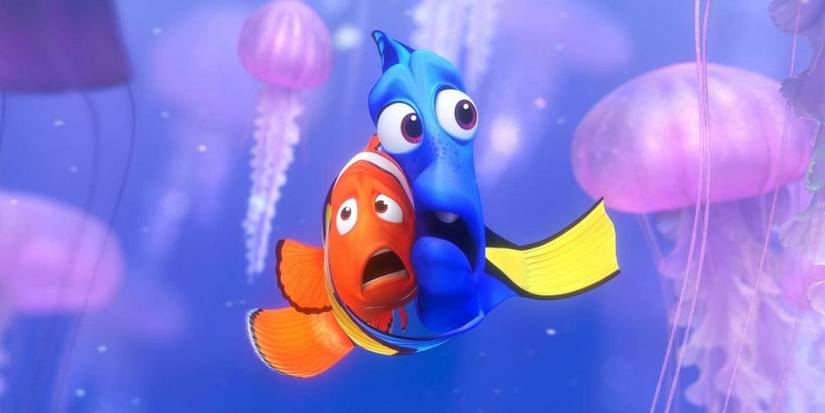
Reviews and criticism of animation often focus on the visuals more than the script, but there’s just as much magic in the screenplays of some of the best animated films as there is in the beautiful imagery. On occasion, even the Academy Awards have recognized the quality scripts of several American animated movies, with Pixar taking eight of the nine total nominations. The studio has offered incredibly well-crafted films that combine character-driven comedy and perfectly structured storytelling, but it’s Finding Nemo that has the greatest screenplay.
Co-written by director Andrew Stanton along with work by Pixar stalwart Bob Peterson and animation writer David Reynolds, the script for Finding Nemo started with the emotional basis of the father-son storyline, then fleshed out through research into sea life and storyboard tests to improve the story beats and humor. The extensive rewrites resulted in a final screenplay free of any extraneous elements that didn’t serve either a narrative or character purpose. The scenes are structured with purpose, and the action and humor are all informed by the characters and situations. It’s that special process that made Pixar such an unstoppable creative juggernaut for two decades.
8
‘The Silence of the Lambs’ (1991)
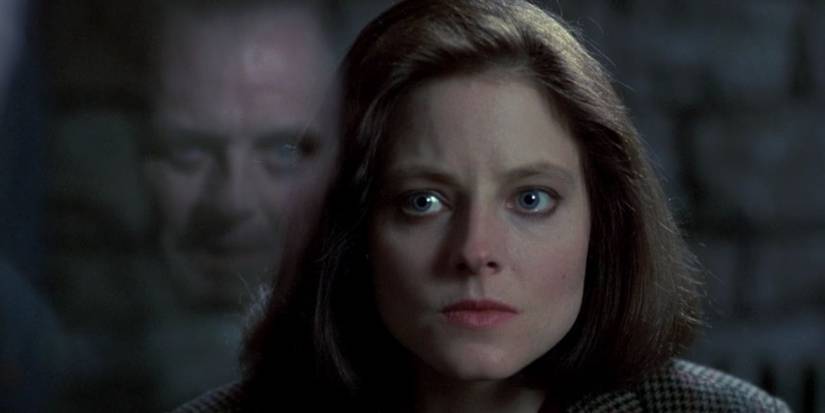
Sometimes it’s hard to define what makes an effective horror screenplay. What makes a movie effectively frightening or scary is often a combination of performances, camera blocking, editing and score. Those elements are almost always absent on the page, but the adaptation of Thomas Harris‘ novel The Silence of the Lambs by Ted Tally succeeds not because the script is in and of itself scary to read, but for how effectively it builds the character dynamics and efficiently compacts the source material.
The horror is in the essence of the situations, and the script molds them around the characters. It fairly faithfully adapts the novel, with some minor differences in backstory and condensing of events, but what it gets perfect is the characters. The interactions between Clarice Starling and Hannibal Lecter are the crux of the narrative, and the script transposes much of their dialogue straight from the novel. Tally takes a lot directly from Harris but makes key adjustments in condensing scenes and even shifting moments to give Starling more agency as a character.
7
‘Butch Cassidy and the Sundance Kid’ (1969)
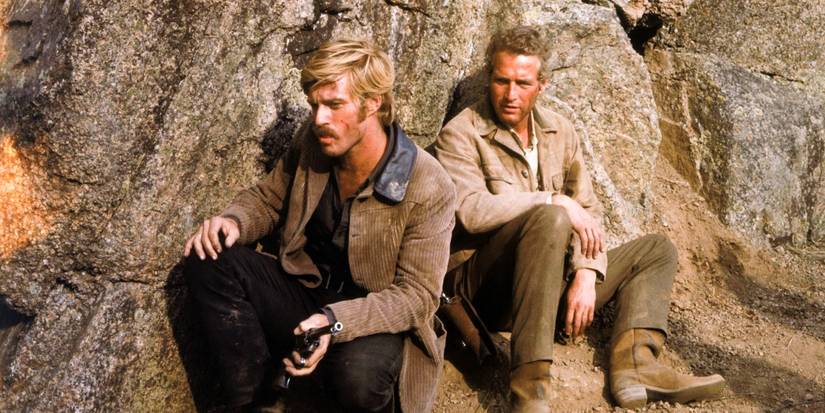
Westerns are a part of American iconography. There’s something about that period that ignites people’s passion for the country. From as early as the dime store novels about the exploits of cowboys and outlaws, which were published while those figures were still alive and shooting, there has been a concerted effort to mythologize and romanticize the Old West. In film, plenty of classic Western movies conform to that romanticization, and an almost equal number have taken revisionist approaches. The most outstanding Western screenplay comes from the legendary writer William Goldman with the quintessential buddy movie Butch Cassidy and the Sundance Kid.
Less dark revisionism than playful anachronism, the film is built on banter, but Goldman’s work is filled with far more detail than you might assume based on the final product. His screenplay for Butch Cassidy and the Sundance Kid contains a kind of authorial control in its visual descriptions. Not all of that is reflected in the final film, but the intent is clear from the screenplay and the rhythms are right there on the page. The relationship between the two titular outlaws is tangible even without the benefit of two world-class movie stars reciting the dialogue, and Goldman’s screenplay reads like almost no other.
6
‘Being John Malkovich’ (1999)

The fantasy genre allows writers to work with fewer creative restrictions—when you don’t need to explain the how or why behind something absurd or impossible, it opens all kinds of narrative possibilities. Never one to let a narrative possibility go unexplored, Charlie Kaufman used fantasy to explore identity and celebrity in the idiosyncratic Being John Malkovich. It’s one of the most original American screenplays ever written, taking an already outlandish premise into completely unexpected territory.
Kaufman cobbled the script together from a variety of ideas from two separate scripts before settling on the core premise of a portal that allows those who go through it to enter the mind of actor John Malkovich. That premise could go in a dozen different directions, several of which Kaufman teases out early on before it fully engages with one. The blending of reality with fantasy through a celebrity persona had been attempted to a certain degree before Being John Malkovich, and has several times since, but never with the free-flowing creativity that Kaufman excels at.
5
‘Back to the Future’ (1985)

Science fiction is just as potent with possibilities as fantasy, just from a different angle. Concepts like interstellar exploration, genetic mutation, or time travel allow for all kinds of creative storytelling. Many writers have mined the genre for cosmic stories that question the nature of our existence or futuristic examinations of current social issues, but none are as perfectly written as the one that asked what it might be like to meet our parents when they were teenagers. That was the impetus for Bob Gale to develop the screenplay for Back to the Future with Robert Zemeckis.
It’s a brilliantly simple premise, and science fiction just happens to be the mechanism that Gale and Zemeckis used to send Michael J. Fox‘s Marty McFly back in time to 1955. The character could have just as easily been transported by a magical wish or curse, but sci-fi gave Gale and Zemeckis some perfect opportunities for time travel gags and plot devices. There’s also a brilliant use of setup and payoff in the screenplay by Gale and Zemeckis that’s been the standard-bearer for screenwriting since. Back to the Future is perfectly constructed sci-fi.
4
‘Fargo’ (1994)

When it comes to crime movies, the contenders for the best are too many and too varied to choose from, from The Godfather to Goodfellas to Heat. There are too many noirs, classic and neo, to mention, but it’s hard to beat the Coen Brothers. They’ve made neo-noirs inspired by the work of Dashiell Hammett (Miller’s Crossing), Raymond Chandler (The Big Lebowski), and James M. Cain (The Man Who Wasn’t There). Their best is the one that was distinctly all their own, though. Fargo is a Midwest noir with no real precursor, a true original that inspired many others.
The film has all the requisite archetypes needed for a noir. The Ordinary Guy who gets in over his head; the Ruthless Killers; the Hard-Boiled Detective. Except the Coens give all those archetypes a “Minnesota Nice” makeover. The Ordinary Guy is a cowardly car salesman, the Ruthless Killers are a dimwitted motormouth and his monosyllabic friend, and the Hard-Boiled Detective is a pregnant police chief whose husband paints mallards for postage stamps. The Coens also pull the clever narrative trick of falsely claiming the film is based on a true story. Any script that can effectively deliver a pivotal plot point between two characters that feature in no other scenes, while one shovels snow, no less, is doing something special.
3
‘All About Eve’ (1950)

A sharply written satire may be the most appreciated kind of screenplay. Bad satires that are too broad to make any piercing points or that think they’re smarter than they are can be painful to watch. When one is pitched perfectly, it makes it all the more impressive. That’s when you get movies like Dr. Strangelove, The Death of Stalin and Network, but the best biting satire has to be All About Eve. It’s a Broadway-bound satire of age, fame and ambition that’s perfectly written.
The original story that inspired writer-director Joseph L. Mankiewicz, The Wisdom of Eve by Mary Orr, had already been adapted as a radio play by Orr. Mankiewicz saw potential in the story of an actress whose life is taken away from her by an obsessed fan, and wanted to expand it with his own ideas. The result is an endlessly witty, incredibly thorny classic. The heightened melodrama, wicked wit, and queer-coded characters have made All About Eve a major text in queer cinema, but its script is universally delightful.
2
‘Casablanca’ (1942)

It’s been said there’s a thin line between love and hate, and romantic movies love to walk that line and embrace the tension within it. Whether it’s the tension of a “will they won’t they” classic like When Harry Met Sally… or that between the acrimony and nostalgia that comes from a break-up, like in Eternal Sunshine of the Spotless Mind, there are many American romances for audiences to fall in love with. No romance has more perfect tension, or more memorable dialogue, than the WWII classic Casablanca. It’s one of the most quotable movies of all time, without a doubt, but it’s also just a perfectly told story.
Unlike the other screenplays on this list, Casablanca wasn’t the work of one creative mind. The script was based on the unproduced play Everybody Comes to Rick’s by Joan Alison and Murray Burnett, and had separate drafts written by Julius and Philip Epstein and Howard Koch, with uncredited work by Casey Robinson. It’s the culmination of multiple influences and writers, but the result is completely cohesive. Moment to moment, scene by scene, it’s the most perfect romance, and its bittersweet ending is the most perfect in Hollywood history.
1
‘Chinatown’ (1974)
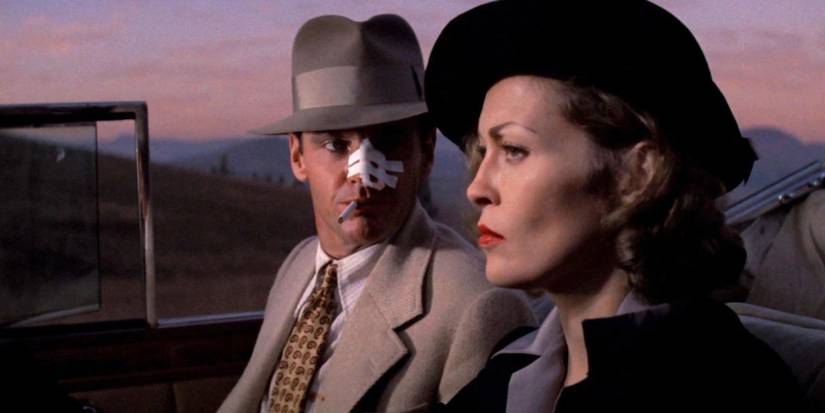
There are many great screenplays that haven’t been mentioned yet. American classics of every genre like action (Die Hard), animation (Anomalisa), horror (Get Out), Western (Unforgiven), fantasy (The Lord of the Rings), and crime (L.A. Confidential). Forget genre, it’s Chinatown. The New Hollywood neo-noir masterpiece written by Robert Towne, with uncredited revisions by problematic director Roman Polanski and Towne’s writing partner Edward Taylor, Chinatown is a perfectly structured mystery with complex characters and dialogue that cuts to the bone.
It’s a masterclass in subjectivity, allowing the audience to experience every turn of its plot alongside private eye Jake Gittes as he unravels a dark conspiracy. Every detail builds upon the next, and every layer that’s peeled back reveals an even uglier underside. It takes the twists and turns of classic noir but applies them with ’70s cynicism, exploring the underbelly of Los Angeles with an explicitness in its language that those made in the Hays Code heyday could never even approach. Chinatown is an American masterpiece with the best-written screenplay of all time.
You must be logged in to post a comment Login