Entertainment
The 10 Greatest Comedy Movies Based on Books, Ranked

Adaptations are tricky, providing filmmakers with strong source material but also increasing the risk that some things might get lost in translation. For this reason, countless readers have been let down by tepid adaptations of their favorite books. That said, a lot of adaptations do succeed, and this is particularly evident when looking at comedies. A lot of terrific comedy films were actually based on solid, if not particularly memorable, novels, upping the humor and breathing life into the characters.
The list is long but includes movies like Silver Linings Playbook and The Devil Wears Prada. Through performances and left direction, these adaptations manage to surpass their source material. Even The Princess Bride, which was a fantastic book, is better in cinematic form. With this in mind, here are the ten best comedy movies based on books, from coming-of-age classics to wacky family movies. Whether they lean into slapstick humor or sharp wit, these films manage to respect their literary origins while making a mark of their own.
10
‘The Devil Wears Prada’ (2006)


“By all means, move at a glacial pace. You know how that thrills me.” Anne Hathaway turns in a charming lead performance in this fun adaptation of Lauren Weisberger‘s bestselling novel. She plays Andy Sachs, an aspiring journalist who lands a job as an assistant to the formidable Miranda Priestly (Meryl Streep), editor-in-chief of a high-fashion magazine. As Andy navigates the cutthroat world of fashion, she finds herself torn between her personal life and the demands of her ruthless boss.
The movie is entertaining and well-crafted; light and effervescent but also sleek. On the storytelling side, Aline Brosh McKenna‘s screenplay not only stays true to the essence of the novel but also elevates it, while David Frankel’s economical direction adds a perfect touch. The performances are the real highlight, however, with Streep turning in some of her very best work. She rightly received an Oscar nod for her efforts. Stanley Tucci is also fantastic in his supporting part as art director Nigel.
9
‘Mrs. Doubtfire’ (1993)


“Help is on the way, dear! Based on Anne Fine‘s novel Alias Madame Doubtfire, this heartwarming gem follows Daniel Hillard (Robin Williams), a struggling actor who disguises himself as an elderly British nanny to spend more time with his children after his divorce. Under the guise of Mrs. Doubtfire, Daniel learns more about his family and becomes a better father, all while trying to keep his double life under wraps.
It’s a zany and slightly twisted premise, but Williams carries the project with his energetic and versatile performance. Cleverly, the humor appeals to both young and mature audiences, with sly, risqué jokes woven subtly into the dialogue. But the comedy is also balanced out with a lot of emotion and genuine family drama. Not every scene sticks the landing, but, overall, Mrs. Doubtfire makes for an enjoyable slice of ’80s entertainment. There’s a reason it grossed $441m worldwide against a budget of just $25m.
8
‘Fast Times at Ridgemont High’ (1982)

“All I need are some tasty waves, a cool buzz, and I’m fine.” Another ’80s classic, Fast Times at Ridgemont High is a hilarious (and apparently painfully accurate) depiction of teenage life in that decade. The film follows a group of students at Ridgemont High, including surfer dude Jeff Spicoli (Sean Penn), as they navigate the highs and lows of adolescence, from relationships to part-time jobs and the complexities of growing up.
The movie was based on a book by future filmmaker Cameron Crowe (Jerry Maguire, Almost Famous), who was then still a journalist. It works as both a comedy and a social commentary, full of raunchiness but also genuine emotion. Director Amy Heckerling approaches the characters with care and without judgment, making for a movie that was both of its time and ahead of it. Over the following decades, it would exert a strong influence on the teen comedy genre.
7
‘Mean Girls’ (2004)

“On Wednesdays we wear pink.” If Fast Times is a defining statement on teenagerhood in the 1980s, Mean Girls is one for the 2000s. Penned by Tina Fey from the nonfiction book Queen Bees and Wannabes by Rosalind Wiseman, it centers on Cady Heron (Lindsay Lohan), a new student attempting to survive the complex social hierarchy of her new school. The movie was a huge hit on release and quickly became iconic, thanks to its insightful script and defiance of teen movie stereotypes.
The sharp screenplay brings to life the absurdities of high school cliques and the power dynamics at play. (In many ways, the movie’s rampant cattiness was a harbinger of social media.) The acting is also great, with great work from future stars like Rachel McAdams as well as SNL alums like Amy Poehler and Tim Meadows. For all these reasons, Mean Girls has become a cultural touchstone. How long will it remain enjoyable? The limit does not exist.
6
‘High Fidelity’ (2000)

“Did I listen to pop music because I was miserable? Or was I miserable because I listened to pop music?” John Cusack leads this adaptation of Nick Hornby‘s novel as Rob Gordon, a record store owner in Chicago who recounts his top five breakups and reflects on his past relationships. Most of all, he pines for his ex Laura (Iben Hjejle). Bursting with witty dialogue and a stellar soundtrack, High Fidelity is an infectious exploration of love, identity, and personal growth.
The screenwriters (including Cusack himself) do a great job of translating the book to the screen. Their changes (like relocating the setting from London to Chicago) are generally for the better, and they retained the first-person narrative by having Rob frequently talk directly to the audience. In addition to Cusack, Jack Black also delivers a scene-stealing performance as an obnoxious record store clerk, one which greatly boosted his profile and enabled many of the roles to follow.
5
‘Election’ (1999)

“Pick Flick!” Election, based on the novel by Tom Perrotta, is a satirical comedy about a high school election that spirals out of control. At the heart of the mayhem are two oddball characters: Tracy Flick (Reese Witherspoon), an overachieving student determined to win the election for class president, and history teacher Jim McAllister (Matthew Broderick), who will go to any length to prevent Tracy from winning.
It’s a biting commentary on ambition, ethics, and power, packaged within plentiful gags. Much of the movie’s success is thanks to Witherspoon. She turns in some of her finest work here as the wacky but terrifying Tracy, an embodiment of unrestrained power-hunger. Her complex character ultimately flips the script and is the movie’s real animating force. Not for nothing, Barack Obama has reportedly named Election as his all-time favorite movie about politics. It has aged well and remains possibly Alexander Payne‘s funniest project.
4
‘M*A*S*H’ (1970)

“Attention, attention. All personnel report to the compound for ‘M*A*S*H.’” Before the long-running TV series, there was this classic black comedy film directed by Robert Altman (Nashville, The Player). It’s based on Richard Hooker‘s book MASH: A Novel About Three Army Doctors, set during the Korean War. The plot centers on the irreverent antics of surgeons Hawkeye Pierce (Donald Sutherland) and Trapper John (Elliott Gould), who use humor and pranks to cope with the horrors of war. While it’s filled with jokes, the film also poignantly addresses the toll that war takes on those involved.
The movie is endlessly irreverent (seemingly poking at every sacred cow) and often crass but conveyed through sophisticated camerawork and a sneakily smart script. It’s also thoroughly absurd, in a way that recalls Joseph Heller‘s Catch-22. The hard-edged humor and clear-eyed take on war resonated with viewers on release, making M*A*S*H a box office hit.
3
‘Breakfast at Tiffany’s’ (1961)

“You call yourself a free spirit, a ‘wild thing,’ and you’re terrified somebody’s gonna stick you in a cage.” Audrey Hepburn is at her most iconic in this one as Holly Golightly, a New York socialite with a mysterious past who charms everyone she meets, including her new neighbor, Paul Varjak (George Peppard). But, while Holly appears carefree and whimsical, her life is far more complex than it seems, as she struggles with identity, love, and survival in the big city.
Breakfast at Tiffany’s is a delightful mix of romance and comedy, ranking among the most beloved movies of the 1960s. What many fans may not know is that it was based on a novella by Truman Capote, the author of In Cold Blood. The writer complained that the movie deviated too much from the source material, although even Capote admitted that it was enjoyable, saying, “The movie is a confection — a sugar and spice confection.”
2
‘Silver Linings Playbook’ (2012)

“You have to do everything you can, and if you stay positive, you have a shot at a silver lining.” Based on Matthew Quick‘s novel, Silver Linings Playbook tells the story of Pat Solitano (Bradley Cooper), a man with bipolar who returns to live with his parents after being released from a mental health facility. Determined to reconcile with his estranged wife, Pat meets Tiffany (Jennifer Lawrence), a young widow with her own emotional struggles. Together, they form an unlikely bond and discover new ways to find happiness.
The book was well-received, but the movie takes everything good about it and ups it by a factor of ten. It’s wonderfully eccentric and madcap, shot through with humor and drive and unexpected emotional twists. The film could have been sentimental but is instead energetic and fresh. It helps that the acting is great, not just from the leads but also from the supporting players like Chris Tucker, Jacki Weaver, and Robert De Niro.
1
‘The Princess Bride’ (1987)
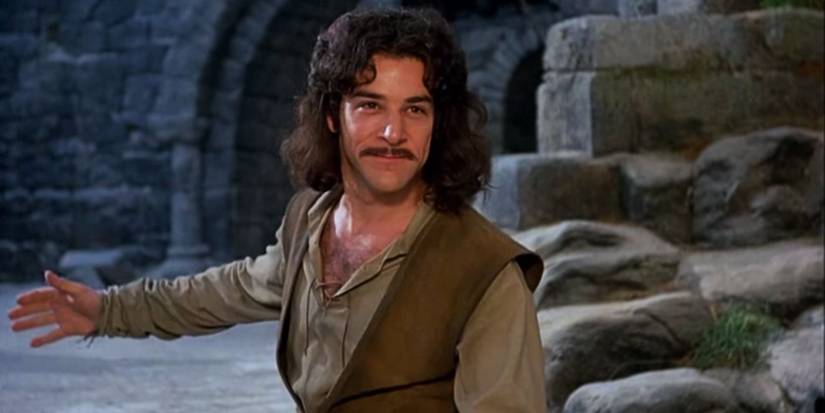
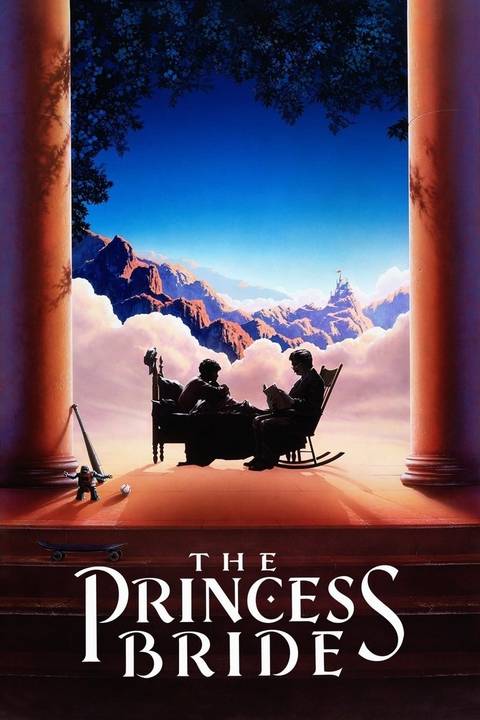
“As you wish.” When it comes to the best comedy movies based on books, it’s very hard to top The Princess Bride, which was adapted by writer William Goldman from his own 1973 novel. Both the book and the film are fantastic, radiating a joy that can’t help but be infectious. It’s a fairy tale adventure centering on Westley (Cary Elwes), who embarks on a quest to rescue his true love, Princess Buttercup (Robin Wright), from the evil Prince Humperdinck (Chris Sarandon).
Along the way, Westley encounters a cast of colorful characters, including the giant Fezzik (André the Giant), the vengeful Inigo Montoya (Mandy Patinkin), and the cunning Vizzini (Wallace Shawn). The film is pure fun from start to finish, jam-packed with quirkiness and memorable dialogue. Practically every second line is quotable. A genuine classic, The Princess Bride remains entertaining today and has aged a lot more gracefully than most of its ’80s peers.

You must be logged in to post a comment Login