Entertainment
The 10 Greatest Movie Screenplays of the ’60s, Ranked

Aflutter with civil rights movements, anti-war protests, the sexual revolution, and the rebellious vitriol of the young rejecting old rules, the 1960s were a time of profound social evolution, and the art of the era reflects this. Cinema, in particular, underwent a drastic transition throughout the decade as the Hays Code’s gradual diminishment and the collapsing studio system collided with these cultural shifts to produce a spectacular array of groundbreaking movies that pushed boundaries and broke rules while ushering in a new status quo of harsh, realistic drama.
The greatest screenplays of the ‘60s delved into this changing worldview with total conviction. Rom-coms entertained more serious and sensual ideals. Crime sagas were suddenly laced with graphic violence. And drama went from being purely an exploration of character to a dissection of societal pillars. Even comedy and horror capitalized on this age of upheaval and turmoil. With their ability to capture this zeitgeist of revolution while adhering to the foundations of storytelling, these screenplays of the ’60s stand tall among the greatest cinema has ever seen.
10
‘Harakiri’ (1962)


Widely regarded as being one of the greatest samurai movies ever made, Harakiri spins a simmering mystery-revenge thriller into a piercing deconstruction of notions of honor and justice that surround institutional power. It follows aging warrior Hanshiro (Tatsuya Nakadai) as he requests that a feudal lord allow him to commit seppuku in his palace. As the ceremony begins, Hanshiro shares his past, including his connection to Chijiiwa Motomoe (Akira Ishihama), who attended the same feudal lord’s palace months prior, also asking to commit seppuku.
Through intricate non-linear storytelling, Harakiri presents an enthralling enigma of kinship, tragedy, and hidden motives that unfurls with masterful precision. Shinobu Hashimoto’s screenplay excels at making Hanshiro’s recounting of his past not just a poignant story of desperation, but a gripping psychological duel as well. Hashimoto commands dread and tension, building up to what is the greatest and most rewarding final duel in samurai cinema before landing one final blow with an ending of grim realism that meditates on the nature of corruption and deceit in halls of power.
9
‘Bonnie and Clyde’ (1967)

Beginning in the late 1960s, American New Wave cinema saw Hollywood films pivot towards gritty and more confronting stories steeped in cynical realism. Released in 1967, Bonnie and Clyde was a driving force in the early days of this artistic movement. David Newman and Robert Benton’s hard-edged screenplay went a long way in shattering studio conventions and industry taboos by mixing extreme violence, anti-hero ferocity, and visceral anti-establishment sentiment.
Not only did it reinvent Hollywood norms, but the crime classic also delivers an arresting immersion in the folklore hysteria that engulfed Depression-era America surrounding the infamous crime spree of Bonnie Parker (Faye Dunaway) and Clyde Barrow (Warren Beatty). In 1960s America, Bonnie and Clyde catered to a fantasy of rebellion and freedom. In today’s world, it is a pioneering classic that has influenced the medium for nearly 60 years. Its screenplay is as paramount to this as its unflinching depiction of violence and its two iconic lead performances.
8
‘The Graduate’ (1967)

Acidic, ferocious, and brilliant at turning the alienation and aimlessness of youth into a challenging revolt against the old world, The Graduate is an ageless masterclass of satire and groundbreaking writing. It also does a fascinating thing with its protagonist, making Benjamin Braddock (Dustin Hoffman) a vessel of inertia, uncertainty, and passive angst. In stark contrast to most cinematic lead characters who drive the story with their wants and needs, The Graduate uses Ben’s inactivity as a catalyst.
It follows the recent college graduate as his drifting existence of career indecision is jolted when he is seduced by Mrs. Robinson (Anne Bancroft), a bored housewife and family friend. Their troublesome tryst grows increasingly complicated when Ben starts to fall in love with Mrs. Robinson’s daughter, Elaine (Katharine Ross). Written by Buck Henry and Calder Willingham as an adaptation of Charles Webb’s novella, The Graduate captures the striking generational divide between youths and their parents in 1960s America with stunning naturalism. The ending is iconic, pondering what reality awaits when the fiery fantasy of youthful rebellion ends.
7
‘Psycho’ (1960)

Many of the great screenplays of the ‘60s are renowned for their groundbreaking impact regarding thematic ideas and graphic content. While Psycho has all of this in spades, the film’s story is even more well known for its revolutionary structure that sees the protagonist killed at the midpoint and the second half of the film become a creeping detective thriller. More than just a great exponent of a plot twist, however, Joseph Stefano’s screenplay is also a masterclass in audience manipulation, subversion, and narrative pacing.
It should never be overlooked that Stefano’s screenplay offers the perfect platform for Alfred Hitchcock to exhibit his trademark mastery of suspense, a point that should also be attributed to Robert Bloch, the author of the original novel. Also delivering one of cinema’s all-time best villains and serving as a faultless example of how information can be revealed and hidden to maximize tension, Psycho is a phenomenal, genre-defining triumph that soars off the back of its sometimes-underappreciated screenwriting.
6
‘Lawrence of Arabia’ (1962)
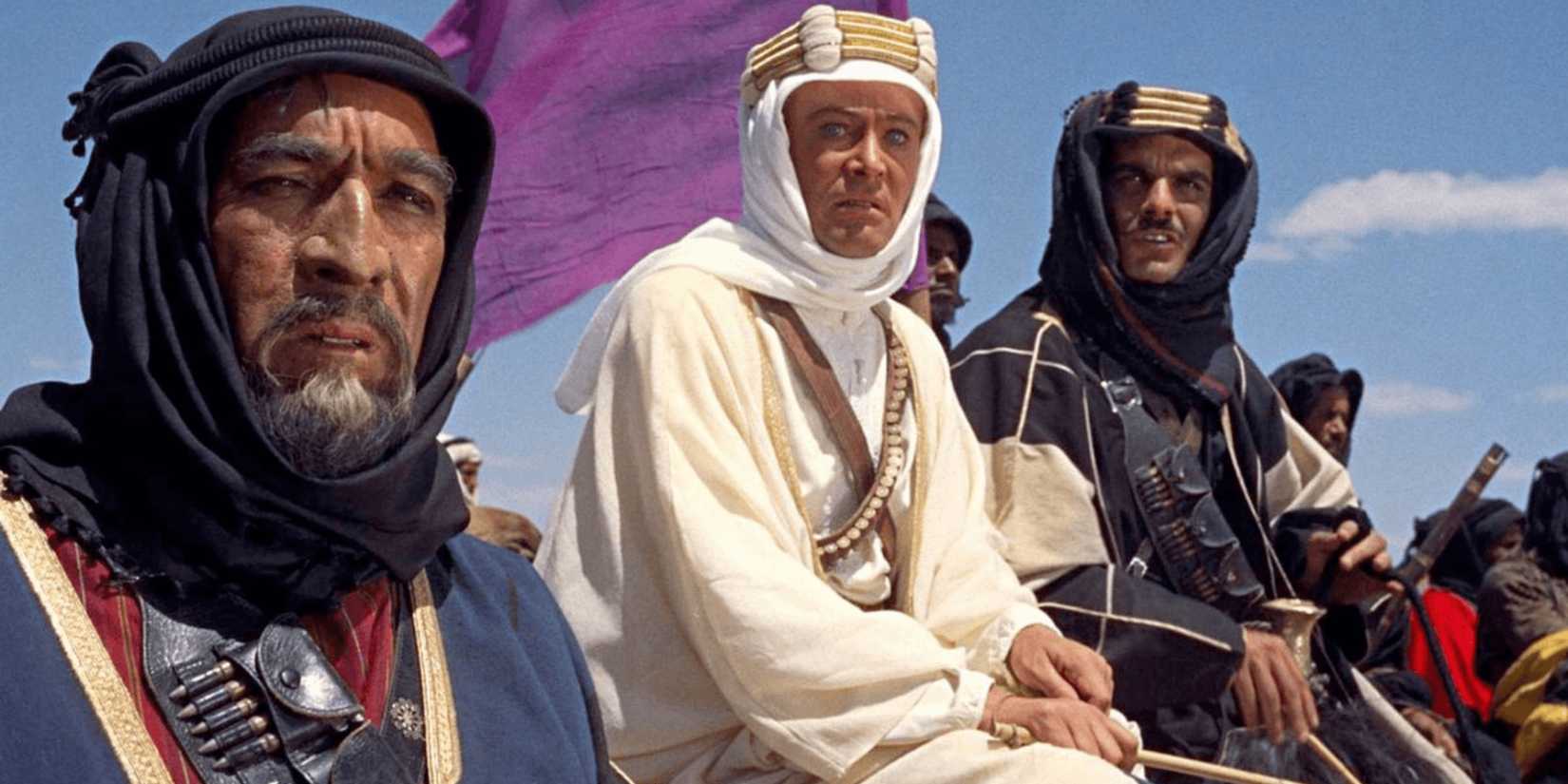
The grandeur and glamour of epic cinema had been well established in Hollywood long before Lawrence of Arabia was released in 1962. However, the biographical war drama brought an intimacy and complexity to the genre that is as timeless as it was groundbreaking. Written by Robert Bolt and Michael Wilson, it dramatizes the WWI exploits of T. E. Lawrence (Peter O’Toole), an English soldier who unites the feuding Arab tribes to fight as one force against the Ottoman Empire.
It is famous for its picturesque cinematography depicting sweeping desert landscapes with elegant beauty and imposing scale. Yet it also thrives by using the sheer scope of its 227-minute runtime to explore Lawrence with depth, making for a gripping descent into the psychology of a brilliant though flawed man. Additionally, many of the scene transitions and actor directions are explicitly stated in the screenplay, meaning that Bolt and Wilson deserve at least some of the credit that has long been attributed almost exclusively to director David Lean and the phenomenal ensemble cast.
5
‘To Kill a Mockingbird’ (1962)
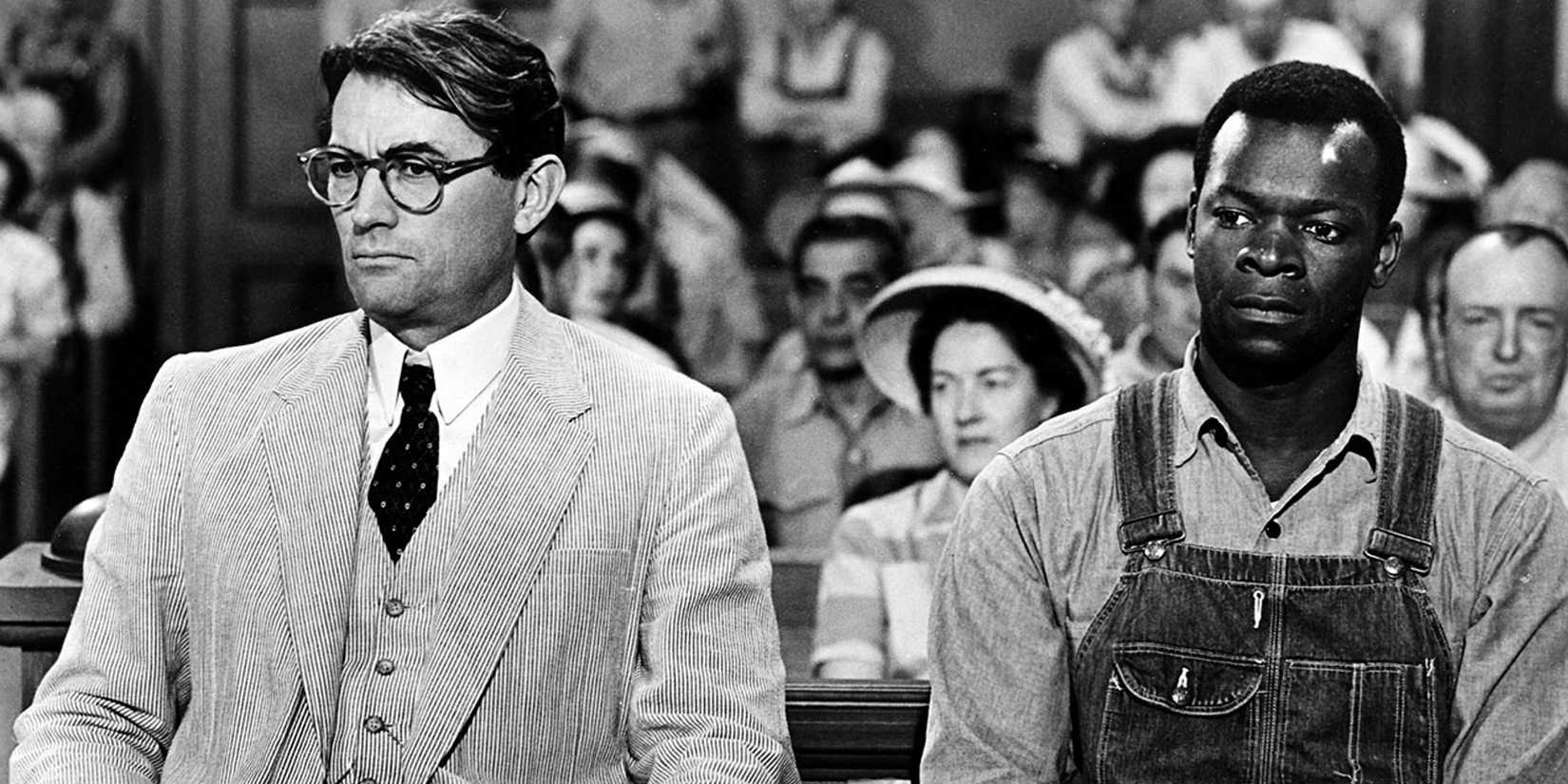
The nature of adaptation brings with it a certain pressure to honor the source material while making intelligent changes that allow the story to translate to the screen. This pressure is amplified when the adaptation is of a recently released, universally admired instant classic. Horton Foote mastered the art all the same, however, with his screenplay based on Harper Lee’s To Kill a Mockingbird, which would see him win Best Adapted Screenplay at the Academy Awards.
By maintaining the soul of the book, sharpening essential thematic ideas, and respecting the child’s perspective of the world, Foote excels at reconfiguring the story for the screen while staying true to its core. Such is the magnificence of the screenplay. To Kill a Mockingbird remains not only one of the greatest courtroom dramas of all time, but an enduring dissection of systemic racism in American society complemented by the wisdom and rhythm of the dialogue and the puncturing poignancy of the story.
4
‘Butch Cassidy and the Sundance Kid’ (1969)

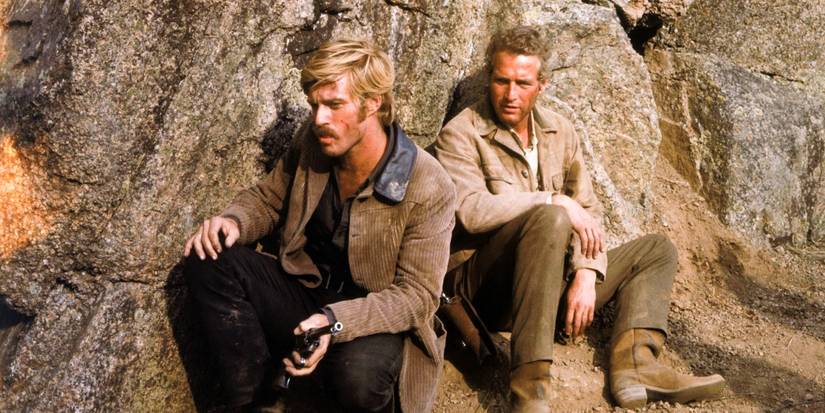
By the late 1960s, Westerns had been a dominant force in Hollywood for over 30 years, and while the genre would soon enter a temporary decline, many filmmakers were releasing masterpieces through subverting its traditional form. The Wild Bunch is an example of this that deserves acknowledgment (and could easily have appeared on this list), but the very best might just be Butch Cassidy and the Sundance Kid.
Defined by the excellence of William Goldman’s Oscar-winning screenplay, it transforms the stoic heroism of the genre into a pioneering triumph of buddy-movie charm through its emphasis on the friendship of its titular duo. Furthermore, the biographical tale never seeks to idolize the titular duo, instead depicting them as struggling outlaws on the run whose efforts to flee a relentless “super-posse” work beautifully in tandem with a meditative exploration of the final days of the Old West. The narrative pacing, memorable dialogue, and litany of iconic scenes only enhance the screenplay’s endeavor to reinvent Western drama and innovate buddy-action cinema forevermore.
3
‘High and Low’ (1963)
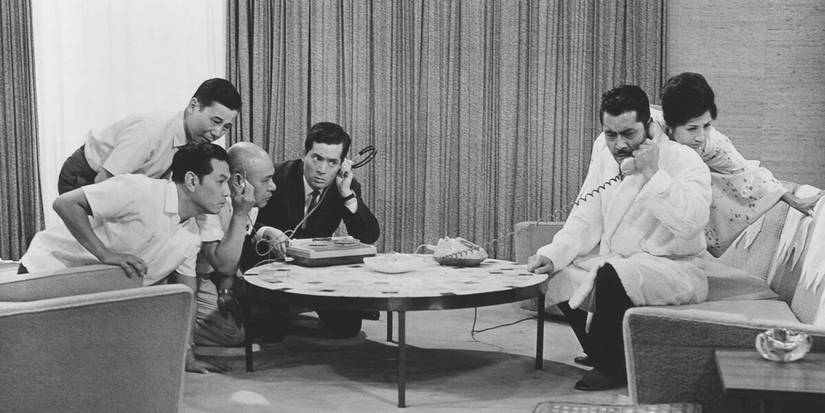
Many of the great screenplays of the 1960s are tied to the groundbreaking edge of New Hollywood cinema, but, like the aforementioned Harakiri, High and Low is ample proof that the decade saw great screenplays in the international scene as well. Directed by Akira Kurosawa, who also worked on the screenplay with Hideo Oguni, Ryūzō Kikushima, and Eijirō Hisaishi, the 1963 crime classic is a brilliant deconstruction of class divides and morality revolving around a wealthy executive forced to decide between saving his business or paying the ransom for his chauffeur’s kidnapped son.
A masterclass in structure, the first half of High and Low operates as a taut chamber drama as the hostage situation unfurls mostly in just one room. The second half then shifts gears to operate as a sprawling, fast-paced police procedural following detectives as they try to apprehend the culprit. Faultless pacing, strong social commentary, and rich visual symbolism compound the brilliance of the plotting, allowing the premise of a ransom negotiation to serve as an unforgettable case study of the human condition.
2
‘Dr. Strangelove’ (1962)

Few genres are as difficult to write as comedy. The complexity of the genre only grows when the story in question is aiming at humanity’s gravest nightmares and most terrible qualities. Perhaps no comedy movie excels in this regard as well as Dr. Strangelove, which, written by Terry Southern, Peter George, and director Stanley Kubrick, unfolds as an acidic and barbed political satire. It revolves around the U.S. President’s shambolic efforts to avert calamity when a general goes rogue and sanctions a nuclear attack on the Soviet Union.
Interestingly, Peter George’s source material—the 1958 novel Red Alert—runs as a hard drama. Kubrick’s decision to pivot to dark comedy is inspired as it transforms the high-stakes political tension into a ferocious critique of power, bureaucracy, and the illusion of order when the burden of responsibility arises. It also juxtaposes its grounded, deadpan tone with inflections of absurd mockery, allowing the movie to occupy an air of madness that is as infectiously hilarious as it is phenomenally written. It remains the greatest political comedy screenplay cinema has ever seen.
1
‘The Apartment’ (1960)

The latter part of the 1960s generated so many great screenplays, but it is at the dawn of the decade that the best screenplay of the era is found. Written by I. A. L. Diamond and Billy Wilder (who also directed), The Apartment excels as a razor-sharp and biting satire of corporate culture and a heart-melting romantic comedy laced with charm and tenderness, all while delivering incredibly efficient storytelling and faultless, subtext-rich dialogue.
Its ability to mix a wholesome love story with bitter dramatic punch is exceptional, mastering the art of shifting between tones with elegance and fluidity. The story oscillates between Baxter (Jack Lemmon) and Fran’s (Shirley MacLaine) heartwarming romantic playfulness and poignant beats of loneliness, workplace misconduct, and even attempted suicide with astonishing grace. Additionally, the set-ups and payoffs, the character designs and dynamics, and even the premise itself are all brilliantly handled, making The Apartment the very best movie of the 1960s, screenplay-wise.
You must be logged in to post a comment Login