Entertainment
The 10 Greatest Sci-Fi Books That You Haven’t Read

From classics like Frankenstein to modern masterpieces like Project Hail Mary, there are plenty of books out there that pretty much any die-hard fan of the science fiction genre has read. Throughout the years, however, there have also been plenty of exceptional sci-fi books which have somehow slipped under most bookworms’ radars. But underappreciated though they may be, these absolute gems of speculative fiction storytelling should still be considered essential reading.
Anyone looking for a few great books to add to their “sci-fi titles to read” list ought to check out these gems, both old and new. Hugely imaginative, emotionally and intellectually compelling, and all-around masterclasses in how to write a great sci-fi story, these books may not often receive nearly as much praise as they deserve, but they absolutely should.
‘The Last Man’ (1826)


Considering that it was her Frankenstein; or, The Modern Prometheus, which she began writing at the tender age of 18, that practically birthed science fiction, Mary Shelley‘s importance to the history of the genre truly can’t be overstated. It’s such a paragon of sci-fi storytelling, however, that it tends to overshadow the rest of Shelley’s bibliography. One of her most underrated works came eight years after Frankenstein: The Last Man, a post-apocalyptic novel following the sole survivor of a global bubonic plague pandemic.
It’s one of the most perfect sci-fi books that nobody remembers, a must-read for anyone who found Frankenstein and Shelley’s writing style even the slightest bit intriguing. It’s a pioneering work of dystopian sci-fi and a surprisingly scathing critique of imperialism, and though critics at the time misunderstood and largely overlooked it, modern readers and scholars have come to appreciate its brilliance.
‘Perdido Street Station’ (2000)

The 20th century saw the publication of the vast majority of history’s greatest sci-fi books, and what a great way to close off the era 2000 was, since it saw the publication of masterpieces like British writer China Miéville‘s Perdido Street Station. The first installment in the New Crobuzon trilogy, this dystopian novel follows an eccentric scientist’s quest to help an alien, which ends up unleashing a city-devouring nightmare.
It’s one of the best soft sci-fi books of all time, its stylish blend of sci-fi and horror elements coming together flawlessly to craft one of the most delightfully bizarre sci-fi books the 2000s ever saw. Though it won several awards (including a prestigious Arthur C. Clarke Award), its surrealist “weird fiction” sensibilities and dense prose have kept it as a relatively niche cult classic for 26 years. It’s about time that began to change.
‘Grass’ (1989)


The first novel in Sheri S. Tepper‘s Arbai trilogy, Grass is an eco-feminist and climate-fiction extravaganza about the titular planet, a green-covered utopia that’s the only known world in the universe immune to a terminal plague that’s slowly ravaging humanity’s interstellar empire. Considering that the book was a critical success nominated for both the Hugo and Locus Awards in 1990, it’s all the more of a tragedy how it has fallen into relative obscurity.
But lesser-known though it may be, Grass is still a masterfully confrontational and provocative novel that isn’t afraid to be critical of patriarchal power structures, organized religion, and particularly ecological destruction. It’s perfect for those who prefer cli-fi authors who don’t mince their words, as well as for those who enjoy breathtakingly beautiful worldbuilding and deeply layered thematic work.
‘Neverness’ (1988)

Arthurian legend has always been a big point of inspiration for many a speculative fiction author, but it’s usually fantasy books that it inspires. David Zindell‘s Neverness, on the other hand, is one of the best sci-fi books inspired by Arthurian tales, particularly Sir Thomas Malory‘s 15th-century Middle English work Le Morte d’Arthur. In this futuristic space epic, a young pilot embarks on a universe-trotting quest to unlock the secrets of human evolution.
Wonderfully ambitious and full of expansive worldbuilding, Neverness is one of those forgotten sci-fi books that have aged beautifully. Zindell’s poetic, almost lyrical prose complements the lush worldbuilding and the grand philosophical scope of the story perfectly. Indeed, all in all, Neverness is one of those epic space operas that deserve to be as highly praised as cornerstones of the genre like Dune and Hyperion.
‘The Gone-Away World’ (2008)

The Gone-Away World is one of the most impressive sci-fi debut novels that the 21st century has thus far seen, introducing the world to the now highly-regarded British novelist Nick Harkaway, son of the legendary John le Carré. In this post-apocalyptic satire, two childhood friends must save the world when a huge pipeline carrying a reality-preserving substance catches fire.
There’s something here for everyone. Harkaway, proving that talent flows through his family’s veins, balances romance, mystery, and sci-fi thriller elements like an absolute pro, delivering a reading experience as delectably diverse as it is surprisingly funny. But as humorous as it can be, The Gone-Away World can also be powerfully moving and existential, exploring themes like nuclear paranoia and the end of the world with a sheer philosophical depth the genre doesn’t often see.
‘Engine Summer’ (1979)

The 1970s were among the best decades of all time for science fiction literature, and at least as far as this particular genre goes, John Crowley‘s Engine Summer is one of the best books of the ’70s. A rewrite of Crowley’s unpublished first novel, Learning to Live With It, Engine Summer is a post-apocalyptic coming-of-age tale about Rush That Speaks, a young man who leaves his peaceful community to explore what’s left of human civilization.
Crowley perfectly blends beautifully poetic, slow-burning prose with an optimistic view of the world that rejects the grimness that tends to plague most post-apocalyptic stories, making this a must-read for fans of the likes of Star Trek. Those who love post-apocalyptic sci-fi but are tired of despair-filled dystopias should love Engine Summer, a masterfully plotted gem whose quiet and contemplative tone is as refreshing as it is bittersweet.
‘The Carpet Makers’ (1995)

German author Andreas Eschbach‘s The Carpet Makers, also published as The Hair Carpet Weavers, was originally successful in the German-speaking world alone. It wouldn’t be until its French translation was published in 1998 that it would begin to garner international appeal, and its English translation in 2005 made it far more widely available. Even to this day, however, this tale about a galactic empire where generations of men on low-tech planets spend their lives weaving carpets for the God-Emperor still doesn’t receive the love it deserves.
The hugely inventive premise alone should be enough to make The Carpet Makers a modern classic; but as if that weren’t enough, there’s also the quiet elegance of Eschbach’s prose, the narrative’s thematic depth, and the unique structure that makes the story flow like a multi-vignette literary puzzle. Smart, tragic, and thought-provoking, it’s a brilliant existentialist exploration of humanity’s need for a feeling of purpose.
‘Blindsight’ (2006)
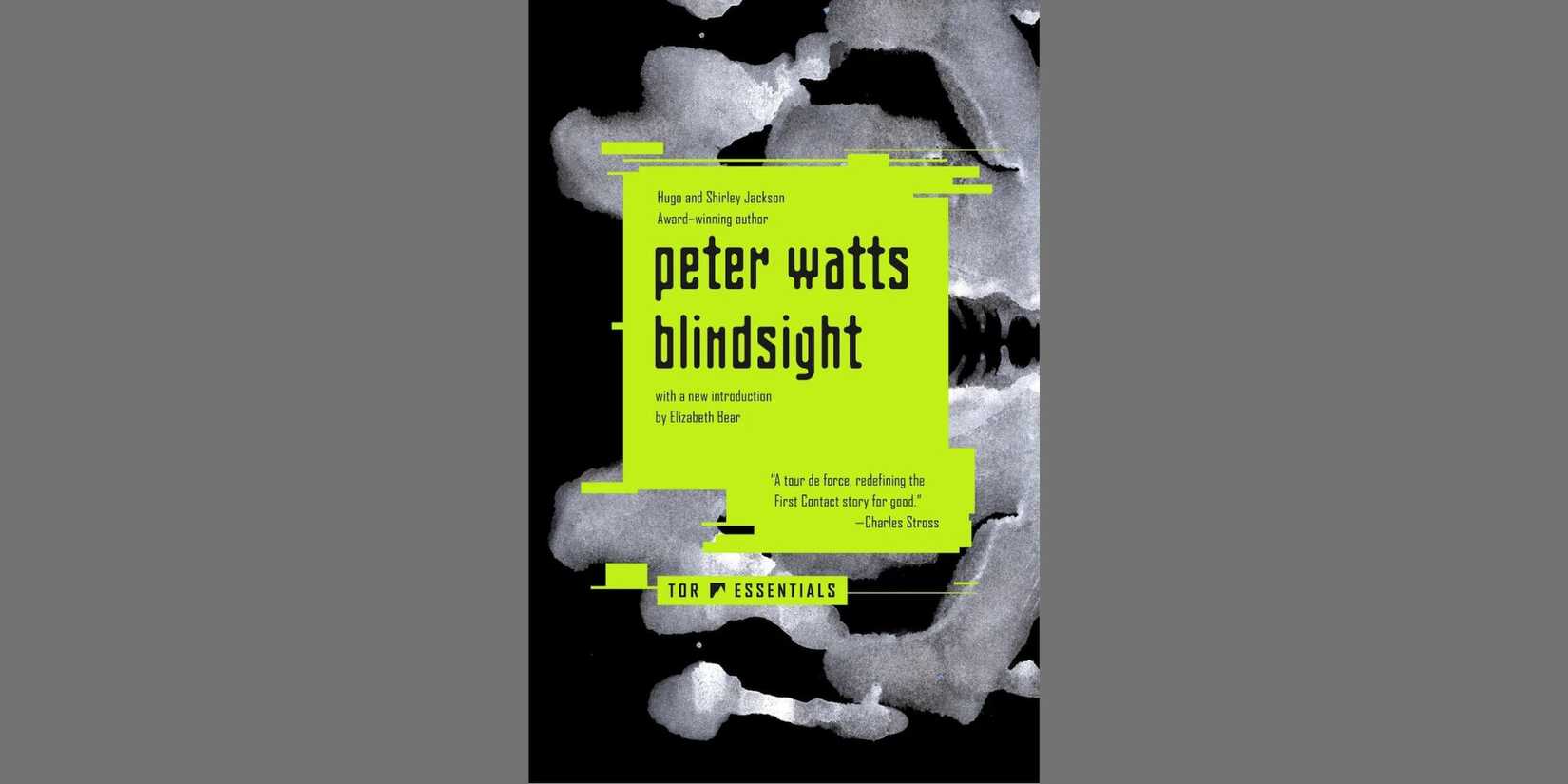
Canadian author Peter Watts‘ Blindsight, nominated for the Hugo and Locus Awards, is a relatively well-known novel within the community of die-hard hard science fiction fans. Outside of that niche, however, it typically doesn’t receive nearly as much recognition—even though it deserves it. In it, a first-contact mission brings into question whether human consciousness and sentience are actually evolutionary advantages.
The result of such a philosophically fascinating premise is one of the best sci-fi books of the 2000s, one that forces the reader to grapple with their own humanity in ways that few other sci-fi masterpieces ever could. Blindsight is a complete revolution of the first contact subgenre, its hard science elements exquisitely rigorous and its plotting perfectly balanced with the profoundly layered thematic work.
‘The Invincible’ (1964)

Polish writer Stanisław Lem is best-known for the philosophical sci-fi masterpiece Solaris, but there are other seriously amazing books in his bibliography, the most underappreciated of which is the hard sci-fi gem The Invincible. A true pioneer in introducing elements like microbots and artificial swarm intelligence to science fiction, The Invincible follows the crew of a space cruiser as they land on a desolate planet to investigate the mysterious disappearance of their sister ship.
Nanotech and the other hard sci-fi elements that The Invincible was one of the first-ever novels to deal with may not feel all that novel by modern standards, but the book itself still feels surprisingly fresh and groundbreaking today. For fans of hard sci-fi that’s truly and passionately focused on its scientific elements, this should prove to be an irresistible reading experience, one infused with some of the most fascinating thematic work any sci-fi book from the ’60s ever saw.
‘Hard to Be a God’ (1964)

Years after adapting Lem’s Solaris for the big screen, Soviet auteur Andrei Tarkovsky adapted Soviet duo Arkady and Boris Strugatsky‘s Roadside Picnic in Stalker. With the years’ passage, that novella has come to be the one that the writers are best-known for. There’s a certain other incredible masterpiece in their bibliography, however, which deserves to be infinitely more mainstream: Hard to Be a God, where an undercover operative from a futuristic Earth is sent to observe the events of a feudal alien planet without ever interfering.
With this premise as their scaffolding, the Strugatskys potently critique totalitarianism and explore the fragility of human culture in all sorts of thought-provoking ways. The tone is pitch-black to the point of being harrowing at times, as Hard to Be a God explores the psychological toll of the prime directive of non-interference with a level of chilling depth the genre rarely sees. It’s one of the heaviest sci-fi books ever, but essential reading nonetheless.
You must be logged in to post a comment Login