
Entertainment
The 30 biggest Oscar snubs of all time

:max_bytes(150000):strip_icc():format(jpeg)/PSYCHO-Anthony-Perkins-ARRIVAL-amy-adams-VERTIGO-James-Stewart-020626-e1e15ca45edc45f2bc3467bd87c01370.jpg)
Let’s face it: The Academy doesn’t always get it right.

Entertainment
Tom Bergeron receives 'sweet, shiny' gift from “DWTS” team 5 months after returning to guest judge
:max_bytes(150000):strip_icc():format(jpeg)/TOM-BERGERON-DWTS-040326-1-22b7888a2fb44d3797254b50af068274.jpg)
The former host of the competitive ABC ballroom series exited in 2020 after objecting to the casting of Sean Spicer.
Entertainment
Dakota Mortensen will be edited out of “Vanderpump Villa” amid Taylor Frankie Paul domestic assault investigation
:max_bytes(150000):strip_icc():format(jpeg)/dakota-mortensen-taylor-frankie-paul-secret-lives-of-mormon-wives-091024-c0112a3ff8c24db68d213ca7fe2d13fc.jpg)
Mortensen and other “Secret Lives of Mormon Wives” personalities were set to guest on an episode of the Hulu reality series.
By Joshua Tyler
| Published

Some of the best science fiction ever written has never been adapted into a feature film, specifically because it’s so complex and so good that no one in Hollywood is sure it’s filmable. That was true of Dune for decades, and why it took so long for there to be another movie attempt after David Lynch’s version in the 80s fell flat. And it’s why a man once called the Dean of Science Fiction, Robert A. Heinlein, has had so few of his top works adapted.
In 2013, one of those unfilmable Sci-Fi masterpieces finally got the big-budget movie production fans had craved, but what was supposed to be a franchise starter turned into a disappointing misfire. It should have been a triumph for science fiction, but instead, it sputtered and faded into nothing.
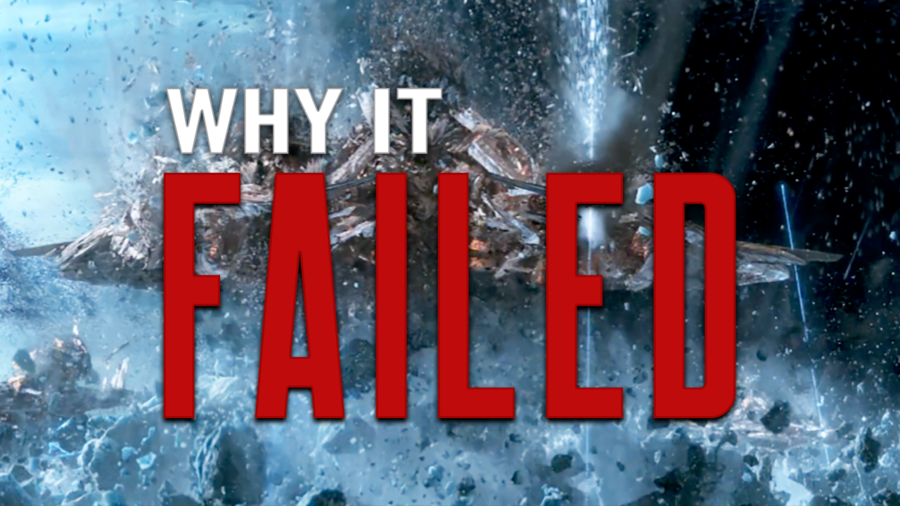
This is why Ender’s Game failed.
One Of Sci-Fi’s Most Influential Works

When Orson Scott Card’s Ender’s Game hit shelves in 1985, it wasn’t just another sci-fi novel. It became a phenomenon, a winner of both the Hugo and Nebula Awards, one of the most influential works of modern speculative fiction.
The story of Andrew “Ender” Wiggin, a child genius trained to lead humanity’s war against a deadly alien species, wasn’t just about aliens or battle tactics. It explored the complex psychological and moral dilemmas of warfare, the manipulation of youth, and the destructive consequences of sacrifice. Fans of the book could only dream of seeing it brought to life on the big screen.
Meeting The High Expectations Of A Classic

For years, Ender’s Game was considered “unfilmable.” The novel is filled with internal conflict and deeply philosophical themes, much of which takes place in the mind of its young protagonist, Ender. At its core, the story is about how far one should go in the pursuit of victory, particularly when that victory is achieved through manipulation and deceit.
The novel’s focus on the psychological aspects of war, leadership, and morality made it a challenging proposition for Hollywood. As author Orson Scott Card himself put it, the entire story takes place in Ender’s head, which made it difficult to translate into a medium that relies heavily on visual storytelling.
By the early 2000s, the appetite for sci-fi adaptations had grown, and the success of films like The Hunger Games and Divergent meant that Ender’s Game had a chance to find an audience. In 2008, the rights to the novel were purchased by OddLot Entertainment, and production was set in motion.

Gavin Hood, director of Tsotsi, which won an Academy Award for Best Foreign Language Film, was hired to direct. Unfortunately, Gavin Hood was also the director of X-Men Origins: Wolverine, a film regarded as one of the worst superhero movies of all time.
The script was adapted by Hood and a team of writers, with Hood also taking on a significant role as a producer. The film was greenlit with a $110 million budget, and the studio set its sights on creating a new blockbuster franchise.
A Cast That Should Have Worked

The cast of Ender’s Game was stacked with both rising stars and seasoned veterans, including Asa Butterfield (Ender Wiggin), Harrison Ford (Colonel Graff), Viola Davis (Major Anderson), Ben Kingsley (Mazer Rackham), Hailee Steinfeld (Petra Arkanian), and Abigail Breslin (Valentine Wiggin). The casting seemed like a win.
Asa Butterfield, who had already impressed in Hugo (2011), was a solid choice to bring Ender to life. Harrison Ford, a blockbuster icon, was well cast as the hard-nosed military commander Colonel Graff. And Ben Kingsley, who was no stranger to playing complex roles, took on the mysterious Mazer Rackham.

Despite the talent involved, the performances themselves didn’t quite land the way they needed to. Asa Butterfield’s portrayal of Ender was solid, but the character lacked the emotional depth and ruthless intelligence that made Ender so compelling in the novel.
While Butterfield’s portrayal captured Ender’s vulnerability and youth, it didn’t do enough to convey his internal struggle and the cold logic that underpins his decision-making. This lack of depth made Ender a less sympathetic character, and that’s a critical flaw in a film that is supposed to be about the cost of sacrifice.

Harrison Ford’s Colonel Graff was the most well-executed performance in the film. Ford has always been excellent at playing grumpy figures with a hidden moral ambiguity, and his performance as Graff was no exception. Still, Ford’s talent couldn’t fully elevate the film, which was undercut by a script that failed to highlight the complexity of Graff’s role as both mentor and manipulator.
Plot Divergence

The movie version of Ender’s Game stays reasonably faithful to the basic outline of the novel. Still, the differences in tone, pacing, and emotional content were significant enough to turn off fans of the book and leave casual moviegoers cold.
The basic premise is the same: young Ender Wiggin is recruited into a military academy, where he trains in increasingly difficult simulations that ultimately lead him to command the final battle against the Formic aliens. Along the way, Ender faces harsh mentors, personal isolation, and ethical dilemmas as he rises through the ranks.

The most critical difference between the novel and the film is the portrayal of Ender’s ruthlessness. In the book, Ender is a strategist who uses extreme methods to secure victory. He’s emotionally cold, willing to sacrifice anything, including his own humanity, to ensure the survival of the human race. This makes his eventual realization of what he’s done all the more tragic.
The movie softens Ender’s character. His decisions are framed less as calculated acts of cold logic and more as mistakes or accidents. This shift in characterization removed much of the complexity that made the book so powerful.

The movie also drops a significant subplot from the book: the full exploration of Ender’s relationship with his brother, Peter, and his sister, Valentine. These relationships were central to Ender’s development in the novel, highlighting the emotional cost of his isolation and his struggle with his violent tendencies. In the film, these relationships are barely explored, and while Abigail Breslin does a good job as Valentine, the emotional stakes of Ender’s personal life are significantly downplayed.
Rushing Through The Good Parts

The production values of Ender’s Game were top-notch, with sleek visuals, futuristic sets, and impressive special effects. The movie had a grand look, and its CGI-heavy battle sequences, including the simulation-style training sessions, were visually striking. Maybe it could have felt a little more lived-in, but the movie’s look works well.
The film’s pacing, however, hurt its ability to deliver the emotional depth required for such a complex story. While the book takes its time building Ender’s character, exploring his thoughts, motivations, and moral dilemmas, the movie rushes through key moments.
The time spent on battle simulations and training montages could have been used to explore the emotional and philosophical underpinnings of Ender’s actions. Instead, the audience is left with a series of disconnected, action-heavy scenes that fail to deliver the gut-punch that makes the novel so compelling.
Ender’s Game Fails On Release

Despite the pedigree of the book, the talented cast, and the high production values, Ender’s Game underperformed at the box office. The film grossed around $125 million worldwide, just barely covering its $110 million budget. Given the expectations for a blockbuster franchise, this was a significant disappointment. The film struggled to capture the audience’s attention in a crowded 2013 marketplace.
Critics were divided, with the film sitting at 62% on Rotten Tomatoes and a slightly better 6.6/10 on IMDb. While some praised the visuals and performances, many felt the film failed to capture the complexity and depth of the source material. The softened portrayal of Ender and the lack of emotional engagement were recurring criticisms.
Why Ender’s Game Failed

Over the years, Ender’s Game has gained a small following, particularly among fans of the book. The film’s availability on streaming services has given it new life, but it hasn’t generated the cultural impact its creators hoped for. The desire for a franchise never materialized, and the film remains a curiosity in the world of sci-fi adaptations.
Ender’s Game failed because it didn’t capture the heart of Orson Scott Card’s novel. It lost the story’s soul in its attempt to soften it. The themes of leadership, sacrifice, and the morality of war were there, but they were rushed past. The film missed its chance to resonate with audiences in the way the novel did, and as a result, Ender’s Game is now another example of a great book that just didn’t translate well to the screen.
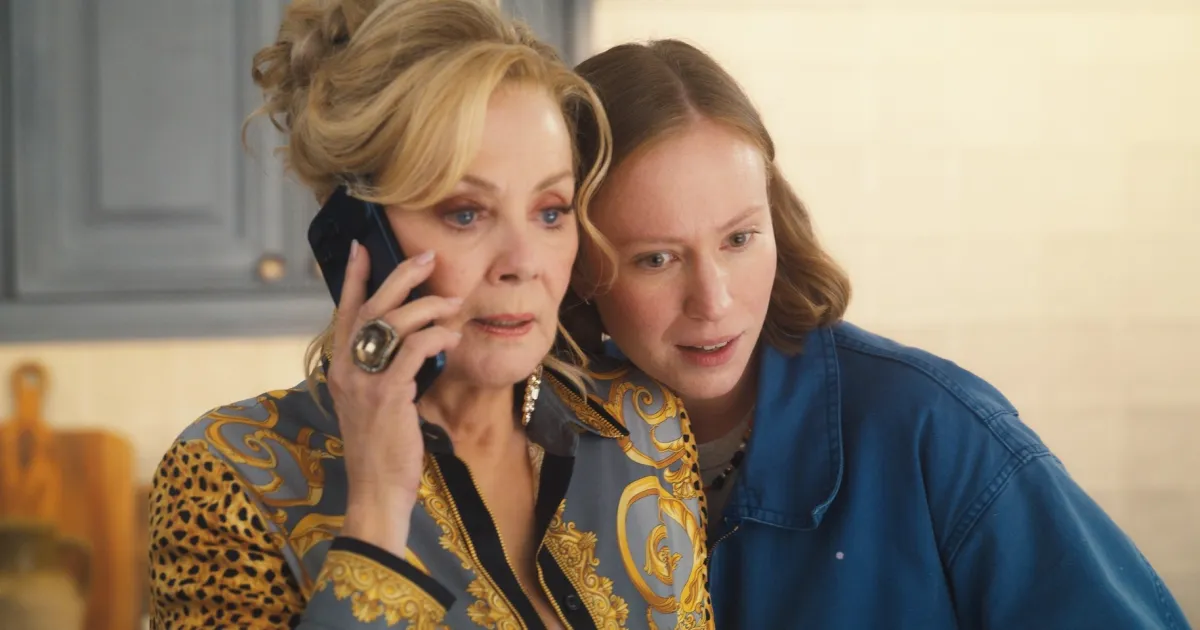
HBO Max is bringing the laughs in April with the fifth and final season of its signature comedy series Hacks.
The end of Hacks is definitely going to leave a gap in the streamer’s lineup of new sitcoms, but Rooster seems poised for a long run.
Schitt’s Creek has also recently arrived on HBO Max, and binge-watching all six seasons should keep comedy lovers busy.
You can find those shows alongside the Watch With Us team’s picks for the must-watch HBO Max sitcoms.
Need more recommendations? Then check out the Great New Movies on Netflix, Max, Hulu, Amazon Prime Video and More, the Best Movies on Amazon Prime Video Right Now, the Best Movies on Hulu Right Now and Best Movies on Netflix Right Now.

The entire landscape of the movie-making industry has changed in the last 15 years, and while most of this can be credited to the rise (and some would argue fall) of the MCU, other superhero movies predate its existence that have helped shape this new generation of Hollywood. Long before it was Tom Holland swinging around New York as the webhead, it was Tobey Maguire protecting the city as Spider-Man in a trio of movies from director Sam Raimi, which helped pave the way for the MCU as we know it. Even Oscar-winning director Christopher Nolan spent a large chunk of his career working with Christian Bale to develop three Batman movies, all of which are widely regarded as among the best superhero movies ever made.
The last solo Batman movie to release in theaters came all the way back in 2022, with the Matt Reeves-directed film starring Robert Pattinson, Andy Serkis, Jeffrey Wright, and more. It’s been years, but the sequel to The Batman is finally moving forward, with Pattinson confirming this week that he is leaving to begin work on the film soon. The Batman Part II is currently scheduled for release on October 1, 2027, but fans will be treated to another film led by The Dark Knight before then. A new Batman animated movie, Batman: Knightfall Part 1, was announced last year on October 20 at the Warner Bros animated panel at New York Comic-Con. Almost six months later, it’s finally been announced that the film will screen this summer at the Annecy International Animation Film Festival, which is being held between June 21 and June 27. Batman: Knightfall Part 1 will likely get a wide release sometime later this year, following the Annecy screenings this summer.

Find Out if You’re a Wizard of Oz Whiz — The Yellow Brick Collider Movie Quiz!
The Wizard of Oz used to be televised around Easter every year. So in that tradition, we’re taking this opportunity to test your Emerald City acumen.
Who Else Stars in ‘The Batman Part II’?
In addition to Robert Pattinson returning as Bruce Wayne, Andy Serkis returning as Alfred, and Jeffrey Wright returning as Commisioner Gordon, The Batman Part II also stars Colin Farrell as Penguin and Barry Keoghan as Joker. Zoë Kravitz is not expected to have a role after her character, Catwoman, seemingly left Gotham at the end of the first film. Scarlett Johansson and Sebastian Stan have also been cast in The Batman Part II, and while details about Johansson’s role are being kept under wraps, Stan is reportedly set to play Harvey Dent, aka Two-Face.
Stay tuned to Collider for more updates and coverage of both Batman: Knightfall Part 1 and The Batman Part 2.

- Release Date
-
March 4, 2022
- Runtime
-
176 minutes
- Director
-
Matt Reeves
- Writers
-
Matt Reeves, Peter Craig, Bob Kane, Bill Finger
Entertainment
Days of Our Lives: Stefano’s Will Delivers Shocking Bombshell – EJ’s Family War Ignites!

Days of Our Lives reveals EJ DiMera (Dan Feuerriegel) is setting up a family gathering to finally read his dead father Stefano DiMera‘s (Joseph Mascolo) will. Already EJ expects that things are going to get absurd when his siblings and the rest of the family gather to hear what they are getting from the Phoenix.
It’s finally time for the family to hear Stefano’s last will and testament and find out where the big bucks are going. We have a whole lot to discuss about the DiMera drama coming soon. Let’s dive right in!
When Will The Will Reading Happen on Days of Our Lives?
We don’t know the exact date of the will reading. But it looks like it is going to happen in April. But it may actually be closer to sweeps. We’ll talk about that more in a minute. So EJ seems really certain that he knows everything that his dad put into his last will and testament. And he mentioned that Stefano had him draft the will. So, since he wrote it, you know, EJ thinks he knows what’s in there. But maybe he never saw the final version of Stefano’s will.
For years, his dad was gone. And it was only recently that Dr. Rolf (Richard Wharton) revealed to EJ that his father died before Rolf could get back to Stefano because he had been sick and that’s why Rolf had the Phoenix ring that he hand delivered to EJ. So there is a chance that Stefano made changes to the document when he was MIA for all those years.
If you remember, EJ and his siblings, Kristen DiMera (Stacy Haiduk), Chad DiMera, and Tony DiMera (Thaao Penghlis), were all shocked to find out that the bones they dug up in the crypt belonged to their father, Stefano. Obviously, they had all suspected that their dad was dead. But the confirmation from Rafe Hernandez (Galen Gering) that it was Stefano put a lid to any questions about his mortality.
How Stefano’s Bones Got There on DOOL
And do you remember hearing how the bones got there? It was when hired henchman Liam Selejko (Hank Northrop) was moving supplies into the crypt for the kidnapping. Of course, he says he didn’t know it was a kidnapping, but Stefano’s bones fell out of a sarcophagus and Liam panicked and he buried them in the dirt floor of the mausoleum. But even before all this, Stefano was presumed dead because his body had never been recovered and nobody had seen him for many, many years.
As of now, only EJ knows the story of his dad’s final days, thanks to what Dr. Rolf told him in private when he gave EJ the ring from Stefano. And that was also when Rolf told EJ that he was the one who personally brought Stefano’s remains back to Salem to put them in the crypt. That was after Rolf returned to find Stefano on the island and that he had been dead too long. He was too far gone even for Dr. Rolf to resurrect Stefano for like the 14th time.
Who Will Attend the Will Reading on Days?
So, it’s been a few months since EJ and his siblings learned that their father died. And while everybody was really sad, Kristen was the most dramatically grief-stricken. But of course, she was already unhinged because her brother Peter Blake had just died. So, Kristen was grieving two huge losses. Tony and Chad had their own unique relationships with Stefano, but not even EJ’s siblings know that Stefano wanted EJ to have the Phoenix ring. Stefano leaving that to EJ is a sure sign that he’s the heir apparent. Perhaps because among his kids, EJ is most like Stefano.
So Cat Greene (AnnaLynne McCord) is making the arrangements for the will reading get together. And I wonder if EJ is going to have her invite Megan Hathaway (Miranda Wilson). She might risk her freedom to find out what is in Stefano’s will. If you remember, Megan left Salem via Rolf’s submarine to escape charges involving her keeping Bo Brady, Marlena Evans, Kayla Brady (Mary Beth Evans), and Kate Roberts (Lauren Koslow) captive. So, we may not get a glimpse of Megan. But she could phone in like they used to have some out of town DiMeras do for board meetings and votes. And we would never really hear them speak on the phone.
Tony’s Surprising Move on DOOL
And of course, Tony may come back to town with his wife, Anna DiMera (Leann Hunley). And until recently, you know, Tony never wanted much to do with the family business. That was until Titan took it. And then Tony recruited Theo Carver (Cameron Johnson) to become CEO. And then he had Gabi Hernandez (Cherie Jimenez) help him undermine the Kiriakis family to get it back. But we know Tony and Anna enjoy those DiMera dollars that keep them flush enough where they can do all their globe trotting adventures.
Recast Chad Returns to Days of Our Lives
So, I also wonder if recast Chad DiMera and his recast kids Thomas Banks and Charlotte DiMera are going to return to Salem just in time for the reading. It would be interesting after a couple of months offscreen if Chad burst in right as things are getting good at the mansion. Spoilers already suggest that Connor Floyd is bringing a whole different edge and different vibe to Chad.
So, he may be more demanding about wanting a piece of the DiMera pie for himself and his kiddos. We’re going to have new Chad arriving in Salem on April 21st, right before May Sweeps kicks off. So, the will reading may be delayed until a few weeks from now. That may be the event that brings him back to town.
Will Lexie Be Awake on Days?
And we got to wonder if Lexie Carver (Nikki Crawford) is going to be awake in time to hear her late father’s will. Theo got to see his mom is alive this week, but she’s not awake yet. And Lexie never wanted much to do with Stefano’s business. But Lexie might like to know whether her son Theo was mentioned in her dad’s will. So, we’ll see if Lexie has woken up and she’s on her feet by the time EJ gathers the family to announce who gets what. And I’m sure he’s counting on himself getting the most, not just money, but power.
Also, he’s plotting to keep his son Johnny DiMera (Carson Boatman) running DiMera. And I suspect EJ is counting on Lexie being alive as the way that EJ can help get Theo out of Johnny’s way because Theo should know that Lexie would not react positively if she woke up and he is in the CEO chair at DiMera. I also wonder if there are any clauses in the will about who Stefano wanted to run DiMera.
Also, there’s the question of whether Johnny will show up to the will reading because he’s softening on his dad and decided he’s not going to go back to Titan after they screwed him over. EJ just saved the adoption and now Johnny has turned to him for this Bonnie Kiriakis (Judi Evans) copyright mess.
What Surprises Await on DOOL?
So, all in all, we pretty much know who’s going to be on the guest list. But, there may be some surprises. And we got to wonder about the absurdity that EJ warned his assistant Cat about. With lots of big personalities in the room and tensions running high about other ongoing DiMera drama on Days of our Lives.
Honestly, anything is possible, including, and I would love to see this, a not so dead Stefan DiMera (Brandon Barash) showing up. His death was suspicious and recent. And honestly, he might have been the one that got rid of Vivian Alamain (Louise Sorel) before EJ’s hitman could get there to take care of her. So, we could see Stefan come out of seclusion to contest the will and win back his wife Gabi or Stefan might just want a chunk of change.
EJ In for a Shock on Days of Our Lives
And I really think EJ is going to be taken by surprise by what comes out at the reading. Mostly, I suspect this because EJ is so sure he knows what it says, but he’s not seen Stefano’s last will document in quite a while. So, I’m looking forward to seeing how chaotic it’s going to get at the will reading.
And the look on EJ’s face if it turns out that Stefano did indeed change things up. Or, you never know, maybe Madame Vivian possibly pulled off one more excellent forgery before she was taken out or ran off. So, we’ll see.
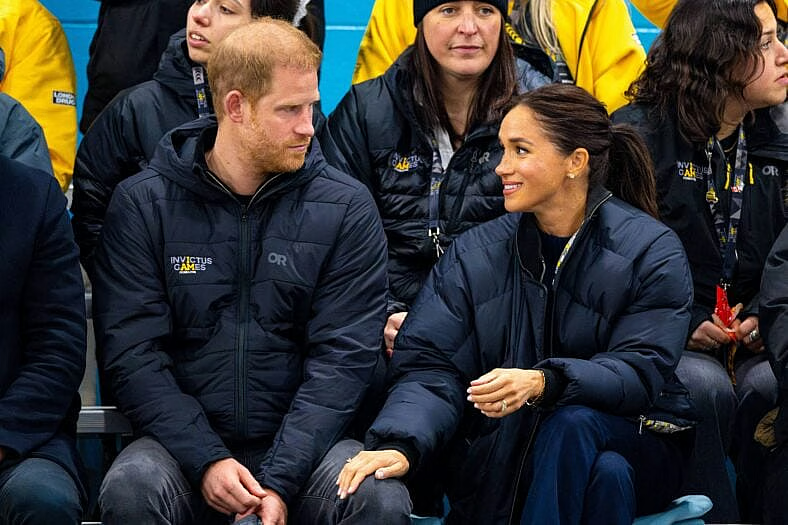
Meghan Markle and Prince Harry have reportedly been left off the guest list for the 2026 Met Gala, despite the annual event drawing a packed crowd of A-list celebrities and fashion heavyweights.
Reports suggest the Duchess of Sussex may have hoped her ties to figures like Beyoncé and Serena Williams would help her land an invite, but that apparently did not happen.
Anna Wintour has been cited as a major factor behind the alleged snub, amid long-running reports of tension between the Vogue boss and the former actress.
Online, the reaction has been brutal, with many commenters treating the omission as proof that Markle’s Hollywood standing is not what it once was.
Meghan Markle ‘Left Off’ Met Gala Guest List

NewsNation has published a report claiming Markle and Harry were omitted from the guest list for the 2026 Met Gala, with the outlet leaning heavily on anonymous sources to make its case.
The piece goes on to suggest that Wintour remains unimpressed with the Sussexes, portraying Markle in particular as someone fashion insiders view as overly demanding and attention-seeking.
The report links that alleged perception to previous tensions around British Vogue and claims of friction over editorial control. The supposed criticism of Markle also extends to her appearance at a Balenciaga show in Paris, where she was reportedly seen as behaving like the star of the event.
Markle’s Reported Snub Sparks Questions About Friendship With Beyoncé
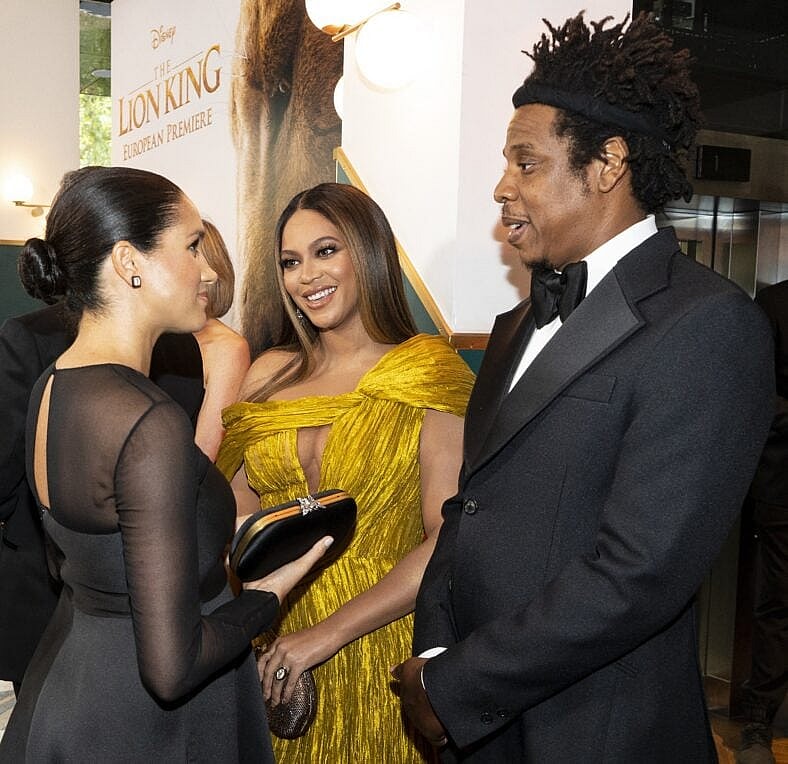
According to NewsNation, Meghan Markle saw her loose connection to Beyoncé as a possible way into the Met Gala orbit.
But as The Blast reported in March, the “Cowboy Carter” singer has allegedly been trying to put some distance between herself and the Duchess. One source close to Beyoncé reportedly claimed Markle had come across as “desperate” to the singer and her inner circle.
This perspective appears to have made its way to the public arena, too, with some on social media questioning whether the two have ever truly been friends.
“Meghan is friends with Beyoncé, but Beyoncé is not friends with Meghan, that’s how I see it,” one Reddit user writes. “My question is, will she EVER get invited?”
Meghan Markle Also Ridiculed For Other ‘One-Sided’ Friendships
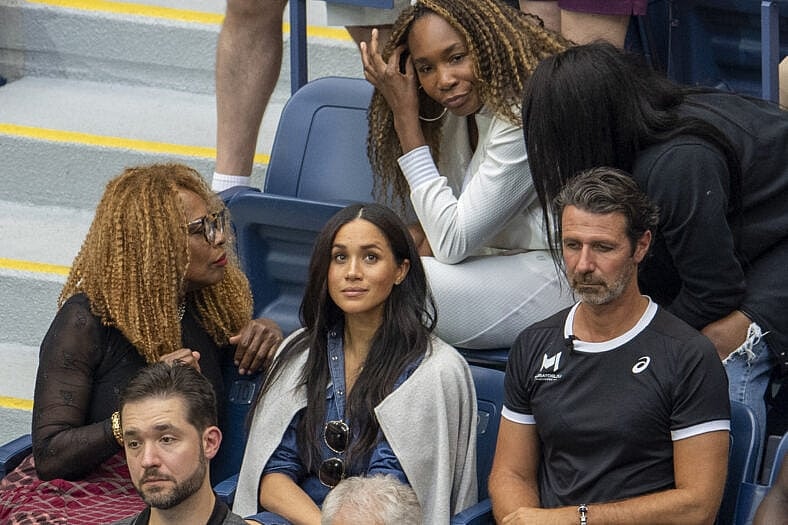
Beyond Beyoncé, some social media users are also questioning whether Markle has overstated the closeness of her relationships with other celebrities.
Her connection to the Williams sisters, in particular, has come under renewed scrutiny. On her former lifestyle blog, The Tig, Markle once wrote that Serena had “quickly become a confidante,” describing her as someone she texted while traveling and could casually meet for lunch.
On Reddit, however, one commenter appears to cast doubt on how mutual that bond really was.
“Meghan is just as close to Beyoncé as she is to Serena Williams, who only accepted her as a friend once she found out that Meagain was going to marry a prince, which would give Serena the chance to attend a royal wedding,” the user writes.
Fans Question Markle’s ‘A-List’ Status In Hollywood
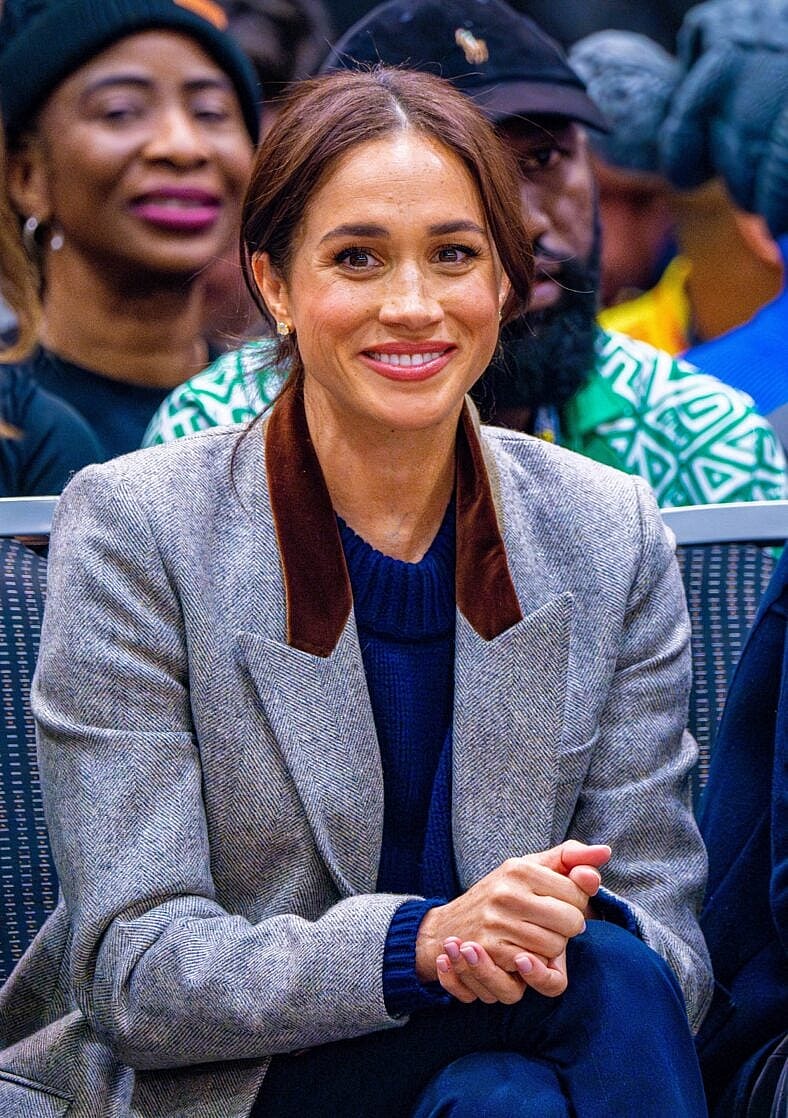
At the height of Markle’s pre-marriage Hollywood career, a 2016 feature on Vanity Fair described her as “the star of ‘Suits,’” while also noting that she had built The Tig and amassed a large social following.
As a recognized actress with a central role on a long-running legal drama, Markle had achieved industry legitimacy and was successfully expanding into digital lifestyle branding through her blog.
In contrast, social media users today appear to feel that she has lost that status and is indeed not deserving of an invite to the Met Gala.
“Meg is on her decline period,” one commenter says, with another adding, “She is no fashion icon, so not deserving of an invite.”
Meghan Markle Spotted On Easter Shopping Trip In Montecito
While the internet continues to buzz over reports that she and Harry were left off the Met Gala guest list, Markle appears to be shifting her focus to Easter preparations at home.
The mother of two was spotted on April 1 during a quiet stop at a family-owned toy store in Montecito, the California community where she and Harry are raising their children after stepping back from royal duties. According to PEOPLE, Markle picked up Magic Rabbit playing cards and Magic Castle Sea Monkeys while browsing the store.
Entertainment
Young and the Restless Next Week: Malcolm’s Explosive Return – Adam Caught Cheating in Bombshell!

Young and the Restless thrilling new spoilers for next week include Malcolm Winters‘s (Shemar Moore) return and another big surprise comeback. Plus, Adam Newman (Mark Grossman) seems ready to cheat on Chelsea Newman (Melissa Claire Egan) if he needs to.
We’ve got the latest Y&R spoilers for the week of April 6th, including more action in Las Vegas, more schemes. And Cane Ashby (Billy Flynn) is making desperate moves with Phyllis Summers (Michelle Stafford).
Adam and Nick in Sin City on Young and the Restless
All right, first let’s talk about what’s going down with Adam and Nick Newman (Joshua Morrow) in Sin City. This past week, Adam scored big brownie points with Riza Thompson (Tina Casciani) when he won a lot of cash. And next week, she’s facing more pressure from both Adam and Matt Clark (Roger Howarth).
Adam keeps telling Riza he wants to meet her new partner, although Adam is already quite certain that it is Matt, but Riza doesn’t know he knows. Meanwhile, Matt’s been hearing about Spyder from Riza for a long time and a lot more recently, but she hasn’t told Matt his real name, Adam Newman, even though Riza well knows it.
Chelsea & Sharon Worried on Y&R
Also, this past week, Sharon Newman (Sharon Case) and Chelsea called Nick while he was all groggy on fentanyl. And both of them are concerned. And Sharon and Chelsea are also worried about Adam, honestly. In particular Chelsea should be worried because by the end of the week Adam and Riza are getting hot and heavy. So, looks like Adam has slipped back into the role of Spider a little too thoroughly, including a very personal relationship with Riza.
And next week on Y&R continuing to flirt and to work Riza and she tells him if things go well tonight, maybe they can celebrate later. And it looks like she may finally set up Matt and Adam to come face to face with no idea how explosive that will be. The problem is Nick is so out of it and so drugged up. I think he’s going to be a liability and not an asset.
So Adam tells Riza next week that he’s looking forward to their celebration as they’re making out. And then later, Adam’s back in the room with Nick, who asked Adam how far he’s willing to go with Riza. That question comes next week. And my guess is that Adam’s moral compass is a little off right now because he’s back in Vegas, but also he already told Nick and Victor Newman (Eric Braeden) both that he will do anything to get the Matt threat away from the family and anything might be sliding into Riza’s sheets.
Nick’s Addiction Getting Worse on Young and the Restless
Also next week, as we head into more drama with Nick popping more of Matt’s fentanyl pills. And of course, he still has the bonus baggie of mystery drugs in his pocket, obviously, more lives may be at risk. In a recent interview, Josh Morrow teased just how bad things may get.
The actor said because of this addiction, if Nick did something horrible and somebody he loved was hurt or somehow somebody he cared about paid a price for his addiction, Josh Morrow said that would be what is rock bottom for Nick. And I definitely think we’re heading that way.
Jack Wants Revenge on Victor
Also, next week we’re going to see Jack Abbott (Peter Bergman) continuing to work on Nikki Newman (Melody Thomas Scott). He wants her to help him get revenge on Victor for what he had done to him. And Nikki keeps trying to tell Jack, “Please lay down the sword. Accelerating things isn’t going to help.” But Jack is determined because Victor basically set him up to be sexually assaulted.
Also, next week, we’re going to see Diane Jenkins (Susan Walters) finally face to face with Jack as they stand in the wreckage of their marriage after Victor has blown it apart after Kyle Abbott (Michael Mealor) left to take a call this week on Friday. Jack walked in and saw Diane. So, we’re going to pick up with that again on Monday. And of course, she really wants to believe Jack that he was drugged and that Patty Williams (Stacy Haiduk) took advantage.
Diane at a Crossroads on Y&R
But the drug seemed to have worn off pretty fast because by the time Billy Abbott (Jason Thompson), Diane, and Kyle got to the yacht, you know, Jack seemed okay. So maybe it was some fast acting drug that Patty gave them both that would get out of Jack’s system fast. I’m sure that Victor planned it all that way to make Jack look guilty of sin and like a cheater on Young and the Restless.
Many People Plotting Against Victor on Young and the Restless
Meanwhile, there’s actually an increasing number of people plotting against Victor. And one of them may succeed, but of course, he’s plotting against so many people right now as well. At this point, Victor has primarily one person on his side in all this. And that is Victoria Newman (Amelia Heinle).
She keeps enabling and making excuses for his terrible actions, just like Nikki taught her to do. But Claire Grace Newman (Hayley Erin) may also soon take Victor’s side because honestly she’s used to letting bad people get away with stuff like the way her aunt Jordan raised her to do.
Cane and Phyllis Team Up?
Also next week, Cane and Phyllis have an important chat at the GCAC. This past week, Cane asked Holden Novak to help him make a move against Victor. And obviously Holden’s going to do it because he works for him. And we knew that Cane wasn’t going to let it slide that Victor conspired with Lily Winters (Christel Khalil) to pretend that she and their kids were kidnapped.
Young and the Restless spoilers have Cane and Phyllis together at the bar and then on the couches hanging out at the GCAC in a very intense conversation. And I suspect Cane may be trying to convince Phyllis to work together to take down Victor. But since Phyllis has what she wants already, what’s her incentive to plot with Cane? We’ll see.
Malcolm Winters Returns to Young and the Restless with Big News
Also next week, Shemar Moore is back as Malcolm Winters and Vivica A. Fox returns as Stephanie Simmons. Their first air date is April 7th and the news they deliver is supposed to shock all of Genoa City and have long-lasting after effects. Shemar Moore and Vivica taped an arc and then they left, but right now Shemar Moore is back taping again for a follow-up arc.
Next week, Malcolm walks into the GCAC and Lily is happy to see him. Later, Malcolm’s with Stephanie and she says she still remembers how excited Olivia and Drucilla were to set them up. Thought they were perfect for each other.
Other Spoilers For Y&R Next Week
We’re also going to see Sally Spectra (Courtney Hope) and Billy making some big plans. Plus, Crazy Patty causes more issues between Jack and Diane. And I’m sure that will make Victor very happy. We’re also going to see more of Nikki and Victor’s marriage suffering.
Their marriage is paying the cost of these revenge plans of his and his greed and just his anger. While Nikki thought that her leaving Victor was going to be short-term and she still misses him, now Nikki finally recognizes that she may not be able to get back with Victor anytime soon, if ever. Nikki told Jack that bitter truth and then sent her daughter over to get more clothes.
Nikki & Victor both Digging in Their Heels on Young and the Restless
Meanwhile, when asked by Victoria about it, we have Victor saying that Nikki has to come to him. I’m sure Victor wants to see Nikki on his doorstep on her knees begging. And at this point, he’s so consumed by revenge that he’s prioritizing that over love and honestly over everything else in his life.
Things are getting really intense all over the canvas on Young and the Restless. Be sure to check out our complete weekly spoilers video coming soon for the week of April 6th through the 10th. Don’t miss a minute of Y&R next week. We’re going to have big stars and it’s going to get wild.
Coasting past the reigning champion Project Hail Mary, this week’s The Super Mario Galaxy Movie is looking to follow in its predecessor’s footsteps to deliver a humongous box-office haul. The animated sequel has already broken Project Hail Mary‘s opening-day record for this year, grossing a massive $34 million on Wednesday. The movie is poised to deliver the biggest debut of the year so far, even if it isn’t able to match the staggering performance of The Super Mario Bros. Movie from three years ago. Released in 2023, the video game adaptation found the rare four-quadrant sweet spot, pleasing children and their parents alike. It grossed more than $200 million in its five-day extended debut, and more than $1.3 billion worldwide in its lifetime run.
Directed by Aaron Horvath and Michael Jelenic, who also helmed the sequel, The Super Mario Bros. Movie received mixed reviews, but was lapped up by audiences. Viewers awarded it an A grade on CinemaScore, alongside a “Verified Hot” 95% audience score on Rotten Tomatoes. Featuring the voices of returning cast members Chris Pratt, Charlie Day, Anya Taylor-Joy, and Jack Black, alongside newcomers Glen Powell, Benny Safdie, and Brie Larson, The Super Mario Galaxy Movie has earned a 90% audience score on Rotten Tomatoes as well as an A- grade on CinemaScore. The sequel has also fallen short of its predecessor on the critical front, with a 42% critics’ score on Rotten Tomatoes, compared to the 59% that the original film currently has.

Party Down in Pawnee — Adam Scott Comedies Collide in Today’s Collider TV Quiz!
Whether you’re an innie or an outie, you’ve undoubtedly enjoyed the workplace comedies of Adam Scott. Let’s all cater to this state auditor.
Here’s How Much ‘The Super Mario Galaxy Movie’ Is Projected To Gross
The website’s consensus reads, “Packed with colorful world-building that’s as frenetic as it is weightless, The Super Mario Galaxy Movie‘s visuals are often out of this world, but the threadbare story ultimately loses its Milky Way.” Produced on a reported budget of $110 million, the movie is currently eyeing around $130 million across the traditional three-day frame, and around $190 million across the extended Easter weekend. Also opening this weekend is The Drama, the darkly humorous romantic comedy starring Zendaya and Robert Pattinson. The Drama will hope to perform better than last year’s Materialists, which eventually made it past $110 million worldwide. Zendaya’s new film holds a “Certified Fresh” critics’ score on Rotten Tomatoes and should provide much-needed counterprogramming for adults while The Super Mario Galaxy Movie dominates. Stay tuned to Collider for more updates.

- Release Date
-
April 1, 2026
- Runtime
-
98 Minutes
- Director
-
Aaron Horvath, Michael Jelenic, Pierre Leduc, Fabien Polack
- Writers
-
Matthew Fogel
- Producers
-
Chris Meledandri, Shigeru Miyamoto
Entertainment
Jack Black gives update on Tenacious D reunion ahead of “SNL” hosting gig following Kyle Gass' Trump shooting remarks
:max_bytes(150000):strip_icc():format(jpeg)/jack-black-tout-bc8727e9f40c4704bb63c2022731e3ca.jpg)
Gass previously alluded to the group reuniting after apologizing for his remark about an assassination attempt on Trump.

Penrith Panthers vs Melbourne Storm Tips, Odds, Teams & Predictions – NRL Round 5 2026

AI companies are building huge natural gas plants to power data centers. What could go wrong?

M61 employment park planned for green land


-

 NewsBeat7 days ago
The Story hosts event on Durham’s historic registers
-

 NewsBeat1 day ago
Steven Gerrard disagrees with Gary Neville over ‘shock’ Chelsea and Arsenal claim | Football
-

 Sports7 days ago
Sweet Sixteen Game Thread: Tide vs Michigan
-
Entertainment4 days ago
Fans slam 'heartbreaking' Barbie Dream Fest convention debacle with 'cardboard cutout' experience
-

 Business20 hours ago
No Jackpot Winner and $194 Million Prize Rolls Over
-

 Crypto World2 days ago
Gold Price Prediction: Worst Month in 17 Years fo Save Haven Rock
-
 Entertainment6 days ago
Lana Del Rey Celebrates Her Husband’s 51st Birthday In New Post
-
Crypto World3 days ago
Dems press CFTC, ethics board on prediction-market insider trades
-

 Tech5 days ago
The Pixel 10a doesn’t have a camera bump, and it’s great
-

 Tech5 days ago
Avatar Legends: The Fighting Game comes out in July and it looks pretty slick
-

 Sports3 days ago
Tallest college basketball player ever, standing at 7-foot-9, entering transfer portal
-

 Tech3 days ago
EE TV is using AI to help you find something to watch
-

 Fashion6 days ago
Amazon Sundays: Soft Spring Layers
-

 Business2 days ago
Login and Checkout Issues Spark Merchant Frustration
-

 Tech5 days ago
Elon Musk’s last co-founder reportedly leaves xAI
-

 Fashion7 days ago
When Evening Dressing Gets Colorful for Spring
-

 Tech3 days ago
How to back up your iPhone & iPad to your Mac before something goes wrong
-

 Tech4 days ago
Apple will hide your email address from apps and websites, but not cops
-

 Politics4 days ago
Should Trump Be Scared Strait?
-

 Crypto World4 days ago
U.S. rule change may open trillions in 401(k) funds to crypto
You must be logged in to post a comment Login